





























































































In 1926, an alchemical work was published in Paris under a signature that cannot be associated with a face with certainty. The name printed on the cover is Fulcanelli. No birth certificate, authenticated portrait, or official career makes it possible to construct a biography. Yet around this signature, real people met, worked, and transmitted knowledge: a young disciple named Eugène Canseliet, a painter named Julien Champagne, an erudite bookseller named Pierre Dujols, and a Parisian publisher, Jean Schemit. The true interest of the Fulcanelli affair begins in this circle, long before the extraordinary stories that would fuel his fame.
The anonymous author occupies a unique place in the history of French alchemy. He asserts the continuity of an operative Hermetic path at a time when the history of science readily presents alchemy as a bygone stage. The published text is not received merely as an old document brought back into circulation: it carries the voice of a contemporary who knows intimately the traditions he defends. This is a strong position in a century when occultist schools are multiplying and ancient knowledge is being reread through new categories.
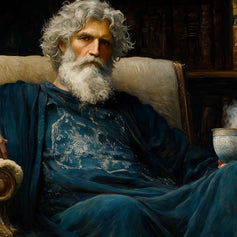
The mystery has become almost as famous as the man himself. Some have proposed identifying Fulcanelli as Julien Champagne, Pierre Dujols, a scientist, another Hermetic author, or a group working under a common name. Eugène Canseliet, by contrast, maintained that he had personally known a master distinct from his contemporaries. He even recounted a late encounter in Spain with a man who was said to have lived for more than a century. Such a story deserves to be heard in its context, but it also requires distinguishing transmitted accounts, indirect testimonies, and verifiable documents.
This is neither an attempt to tear down a major figure in occultism nor to turn a hypothesis into established fact. The alchemical tradition deserves a cultivated perspective, attentive to its practices, lineages, and vocabulary. History deserves the same rigor. Fulcanelli offers an exceptional case in which a very emphatic transmission meets an identity that still eludes investigators. This tension explains his influence and the debates that have accompanied it for a century.
A New Voice in the Paris of the Alchemists
Paris in the early 20th century had an intense Hermetic life. Occultism benefited there from an intellectual revival at the end of the 19th century, driven notably by Papus, Stanislas de Guaita, Oswald Wirth, and their correspondents. Specialized journals, lectures, bookstores, study societies, and private circles kept the reading of ancient traditions alive. Researchers moved among Kabbalah, astrology, ceremonial magic, Christian symbolism, Martinism, and Rosicrucianism. These fields did not form a uniform school, but they shared a curiosity about the hidden laws of nature and the transmissions inherited from earlier centuries.
Alchemy exists within this environment without being entirely identified with it. For its defenders, the Great Work is not reducible to a poetic way of speaking about the human being. Ancient texts describe a search into matter and its transformations, conducted within a doctrinal framework in which the quality of substances, the conditions of the experiment, and the signs recognized by the adept all matter. There are, of course, spiritual interpretations of this quest, but operative continuity remains at the center of the path claimed by Fulcanelli and Canseliet.
Antiquarian bookstores play a considerable role in this continuity. Before digital access to libraries, an untraceable manuscript, a rare edition, or an engraving could require years of research. Specialist booksellers do more than sell books: they connect readers, circulate references, and also provide access to private collections. An annotation, a piece of correspondence, or an old book can be enough to open a new line of inquiry. Pierre Dujols belongs to this world, where bibliographical erudition and Hermetic research meet daily.
The place of modern science is more complex than a simple opposition. Chemistry profoundly changed the instruments and explanations of matter, but 20th-century alchemists do not necessarily consider themselves the heirs of an ancient error. Some maintain that the Hermetic tradition preserves a perspective on natural operations that contemporary disciplines do not exhaust. The historian can describe this doctrine precisely without claiming to settle, from a distance, the entirety of the experiences asserted.
It was in this context that a work signed by Fulcanelli appeared in 1926 through Jean Schemit, under the title The Mystery of the Cathedrals. The aim here is not to revisit its demonstrations, but to examine the material elements surrounding its publication. Eugène Canseliet wrote the preface; Julien Champagne created the drawings. The bibliographic records and copies of this edition make it possible to verify the names, publisher, and date. The master’s signature thus appears within a collective work whose visible participants can be identified.
In 1930, a second publication appeared with the same publisher, The Dwellings of the Philosophers. The André Breton collection preserves a copy catalogued with Canseliet’s preface and forty plates after Champagne. This historical object makes it possible to establish that Fulcanelli is not a later attribution: the pseudonym was indeed used during the interwar period, in an edition intended for readers capable of recognizing references to the alchemical tradition.
The name itself has prompted interpretations. Some have proposed hearing Vulcan, the god of fire and the forge, associated with Elijah, a biblical figure linked to fire. The hypothesis is consistent with the language of metals and Christian tradition, but it identifies no individual. Antoine Faivre, a specialist in Western esotericism, pointed out that this possible etymology does not provide a civil-identity key. A hermetic name may be chosen for its symbolic significance without revealing the documents necessary for a biography.
The hidden signature belongs to a long history. Authors in occult traditions have adopted order names, mottos, attributions to past masters, or signatures that indicate allegiance rather than family origin. The gesture may protect a person, signify membership, or shift attention toward the teaching. In Fulcanelli’s case, it produces an exceptional effect: the power of the published word continues to grow, while the private individual remains impossible to find. The separation between reputation and identity would become the driving force behind dozens of investigations.
Canseliet, Champagne, and Dujols, the faces of the circle
Eugène Canseliet, born in 1899, is the most important witness. He claims to have met Fulcanelli when he was young, received genuine training from him, and become his disciple. The two prefaces published under his master’s name present this relationship to readers. Subsequently, Canseliet does not merely defend an editorial legacy: he pursues his own research, publishes, exchanges ideas with other alchemists, and publicly testifies to the teachings he received. His commitment spans several decades.
His position imposes a fundamental distinction. A disciple may sincerely recount what he believes he experienced, without every biographical detail being verifiable. Canseliet is a source of primary importance for understanding the tradition transmitted from Fulcanelli onward. By that quality alone, he is not a birth certificate for the master he describes. The indications of age, disappearance, or alchemical achievement that he provides must be presented as his own. Taking them seriously does not require abandoning this precision.
An interview published in Le Monde in October 1971 makes it possible to gauge the persistence of his vocation. In it, Canseliet explains the central place occupied by the completion of the Great Work in his life. He defends a demanding conception of alchemy, in which material work and spiritual experience do not exclude each other. This document, contemporary with his life, bears witness to a genuine and lasting commitment. It does not answer the question of Fulcanelli's identity, but it sheds light on the authority that the disciple helped to build.
Julien Champagne brings another dimension to the matter. A painter, draftsman, and familiar figure in hermetic circles, he illustrated the first two editions. His talent can be verified in the preserved plates. This material presence places him very close to the publishing enterprise. He knew the world of researchers and mastered the graphic language expected by his readers. An illustration in an alchemical book is not here an arbitrary ornament: it draws on historical codes and iconographic choices that require genuine training.
Champagne was nevertheless not merely a collaborator whose name appeared on a title page. Testimonies report that he presented himself as Fulcanelli. Robert Ambelain and other investigators examined this lead. It is a serious one because it has witnesses and fits within a documented network. But presenting oneself under a name does not, by itself, prove that one wrote all the texts published under that signature. In a milieu attached to secrecy, such a claim can serve several purposes.
Pierre Dujols offers a third profile. Born in 1862, this bookseller and scholar possesses considerable knowledge of hermetic texts. He is associated with the intellectual exchanges in which Champagne and Canseliet moved. His age, command of the sources, and familiarity with the tradition make his candidacy credible in the eyes of some researchers. However, being the person capable of providing references to an author does not automatically mean being that author. A scholarly network encourages the circulation of ideas among several people.
Some of the knowledge necessary for a publication may come from exchanges of which almost nothing remains. A bookseller recommends a rare copy; a draftsman identifies an architectural feature; an experienced alchemist explains a traditional expression; a disciple gathers manuscripts or facilitates their publication. These activities can shape a work without erasing the figure who bears responsibility for it. The distinction between author, inspiration, and collaborator therefore remains essential when examining the Parisian group.
The initials F. C. H., encountered in connection with this transmission, have been linked to the “Fraternity of Heliopolis.” The name evokes the City of the Sun, a clear resonance in traditions where light and fire occupy a place of primary importance. The group’s precise reality nevertheless remains difficult to define. It would be imprudent to present as fully known an organization whose archives, members, and rules have not been reconstructed with the certainty required for an officially documented society.
Jean Schemit, finally, recalls the importance of editorial work. A text becomes a lasting reference only at the end of a chain of decisions, preparations, and publications. The publisher gives manuscripts their form, gathers the illustrations, organizes distribution, and ensures their preservation in libraries. It is thanks to these traces that the name Fulcanelli can be situated in real history. Without them, all that would remain would be a set of competing accounts of a figure who is difficult to grasp.
The proposed identities put to the test by the testimonies
The first major hypothesis identifies Julien Champagne as the real Fulcanelli. It is based on the painter's participation in the publishing project and on several statements attributed to those around him. Robert Ambelain defended this identification during the 20th century; Geneviève Dubois reexamines it on the basis of documents, personal relationships, and letters. Her investigation into the alchemical revival shows that Champagne had connections with several major figures in the Parisian hermetic milieu.
The difficulty remains Canseliet's testimony. He presents his master as a person distinct from Champagne. This does not mean automatically accepting his word, but rather explaining the disagreement. If Champagne was Fulcanelli, why would his disciple have maintained a different version for so many years? A convention of discretion, an identity game, or a desire to preserve the figure of a master may be considered, but these are interpretations that themselves require evidence.
Pierre Dujols is another major proposal. His erudition appears compatible with the mastery of hermetic literature attributed to Fulcanelli. He also belongs to an older generation than Canseliet and Champagne, which better fits the portrait of an elderly master passed down by his disciple. These correspondences constitute arguments for possibility. Yet they provide neither a manuscript unquestionably attributable to Dujols nor an independent statement establishing that the bookseller signed under this pseudonym.
The third proposal considers Fulcanelli to be a collective name or a figure created through the collaboration of several men. Dujols may have contributed his knowledge of texts, Champagne the drawings and certain interpretations, and Canseliet the editorial elements and continuity of transmission. Such an interpretation explains the proximity of their skills. But no editorial collaboration, in itself, proves that the principal author did not exist. Works published under an individual name regularly rely on proofreaders, informants, and assistants.
René Schwaller de Lubicz also appears in the debate. A philosopher and researcher of symbolism, he moved within part of the same milieu. Geneviève Dubois presents connections between Schwaller and Champagne that raise questions about the circulation of ideas. These exchanges are historically interesting because they outline an esoteric culture in which research responded to research. They are not enough to establish that Schwaller was personally the man identified as Fulcanelli.
Other researchers have put forward the names of scientists, notably Jules Violle, or those of literary figures. These theories rely on correspondences in dates, scientific knowledge, or presumed characteristics. Yet a correspondence does not have the same value as direct testimony, and direct testimony does not have the same value as a publication archive. The investigation must rank the documents by evidentiary value. Without this, almost any scholar familiar with chemistry and history could become a candidate.
Some have even thought that Canseliet himself created Fulcanelli. His role in the transmission explains this possibility, but his young age at the beginning of the claimed events and the presence of other collaborators require precise proof. The disciple may have written, organized, or prepared texts without having fabricated the master's person from scratch. Conversely, Canseliet's fidelity to his account does not constitute definitive proof of the existence of an author outside the group.
Geneviève Dubois notably demonstrated the value of examining letters and relationships between people rather than trying to identify a face through simple resemblance. Her conclusions remain contested. It is also important not to merge two problems: determining who actually wrote the books, and identifying who transmitted the knowledge invoked by them. A master may teach without writing; a disciple may give form to words they received; several scholars may enrich a text. The same answer is not necessarily valid for all these functions.
This caution is faithful to the tradition of transmitted knowledge. Lineage matters, but a lineage must be recounted without confusing degrees of certainty. The adept, the witness, and the researcher do not have the same responsibility. One who receives may pass on what they have learned; one who writes history must point out the gaps they encounter. Knowledge of the hermetic world gains nothing by concealing these differences, and research has no need to disparage teaching in order to respect them.
The vanished master and the story of his longevity
Canseliet's testimony describes a Fulcanelli who was already elderly at the time of their first meetings. According to this account, the adept had reached an extraordinary degree of realization before withdrawing from public life. The completion of the Great Work and the master's disappearance are thus brought together. This way of recounting a destiny belongs to the world of initiatory traditions, where fulfillment does not necessarily coincide with the pursuit of social recognition.
The year 1839, regularly given as Fulcanelli's year of birth, comes from information transmitted through Canseliet. When a recent work reproduces it, it does not necessarily provide a new document. Ten publications repeating the same recollection do not become ten independent witnesses. This mechanism deserves attention because it affects many occultist biographies. A date passed down by a disciple can eventually take on the appearance of a civil-status record, even though it still rests solely on the original account.
The most famous episode took place in Spain. In an interview with Jacques Pradel, reprinted by the magazine 3e Millénaire, Canseliet recounts having seen Fulcanelli again in 1952 near Seville. He claims that the master was 113 years old and appeared considerably younger to him. The account is detailed and strongly personal. Thus, Canseliet did indeed give testimony about this encounter. But, to our knowledge, there is no identity document or series of independent documents that would confirm the identity and age of the man he describes.
Alchemical doctrine historically gives a place to promises of regeneration and to the idea of matter brought to a higher state. This aspect explains the interest aroused by the Spanish account. Historical inquiry cannot, however, turn the longevity attributed to a master into an established fact solely on the basis of an interview. One can acknowledge the event's importance for the disciple while recognizing the limits of what the archives allow us to demonstrate.
Jacques Bergier contributed to another stage in the name's fame. With Louis Pauwels, he published The Morning of the Magicians in 1960. Bergier recounts an encounter there with a figure presented as Fulcanelli and associates this figure with the concerns aroused by science's newfound power over matter. Antoine Faivre recalls this testimony in his encyclopedic entry. From then on, the words attributed to the master became part of postwar reflections on energy, technological dangers, and ancient traditions of knowledge.
The documented fact - Bergier published this account - must be distinguished from the encounter itself, whose identification is not confirmed by a body of independent evidence. This nuance matters all the more because the episode circulated in the press and in popular works. The name Fulcanelli became a way of linking the traditional laboratory to the modern laboratory. It gave rise to a figure accessible to a readership far broader than that of the French alchemical circles between the two world wars.
The story of intelligence services searching for the alchemist after the Second World War belongs to the same legacy. It has been repeated in several publications, but it cannot be treated as a fully documented official operation without presenting the corresponding archives. Above all, it attests to the appeal exerted by an elusive scholar whom some imagine to have possessed knowledge predating the discoveries of modern physics. This later figure must not eclipse the historical figure built around the 1926 and 1930 editions.
Two levels thus emerge. On the first, there are books, dates, a publisher, a disciple, and an illustrator. On the second, there are the disappearance, the accomplished adept, Spain, and the exceptional longevity. Both belong to the history of Fulcanelli’s reception, but their documentary strength is not identical. Distinguishing between them makes it possible to read the case without reducing its significance to the mere search for a civil identity.
An influence that surpassed his secret name
Fulcanelli’s importance does not depend solely on the mystery. His publications helped preserve the idea that Western alchemy could be transmitted as a demanding path of knowledge, rather than as a succession of scholarly curiosities. The language of the adept, the claimed precision of the correspondences, and the dialogue between matter and symbol resonated with readers eager to approach the ancient teachings in their coherence.
Canseliet’s role is decisive in sustaining this legacy. After the original publications, he continued his research and expanded his exchanges with others. New readers discovered the master through his disciple, who in turn became a hermetic authority. This situation is familiar in many traditions: the teaching of an absent master continues to exist through the fidelity and responsibility of those who received it. It also explains why Canseliet’s testimonies occupy such a significant place, even when they cannot be confirmed by other archives.
The expansion of the readership during the 1960s further changed how the work was received. Alchemy entered popular culture, widely circulated essays, and new conversations about the relationship between science and ancient traditions. For some, Fulcanelli became the model of a researcher working outside academic institutions, capable of bringing several fields of knowledge into dialogue. This image is inspiring, but it can also create a figure who is easier to admire than to understand.
Historical research offers a fruitful counterpoint. Antoine Faivre and specialists in Western esotericism study occultists within their social, intellectual, and publishing contexts. This perspective reminds us that hermetic circles are made up of people who write, read, experiment, oppose one another, and collaborate. Alchemy does not inhabit a world removed from all history: it is carried by workshops, libraries, and human relationships. Fulcanelli is inseparable from the Paris that gave him a printed existence.
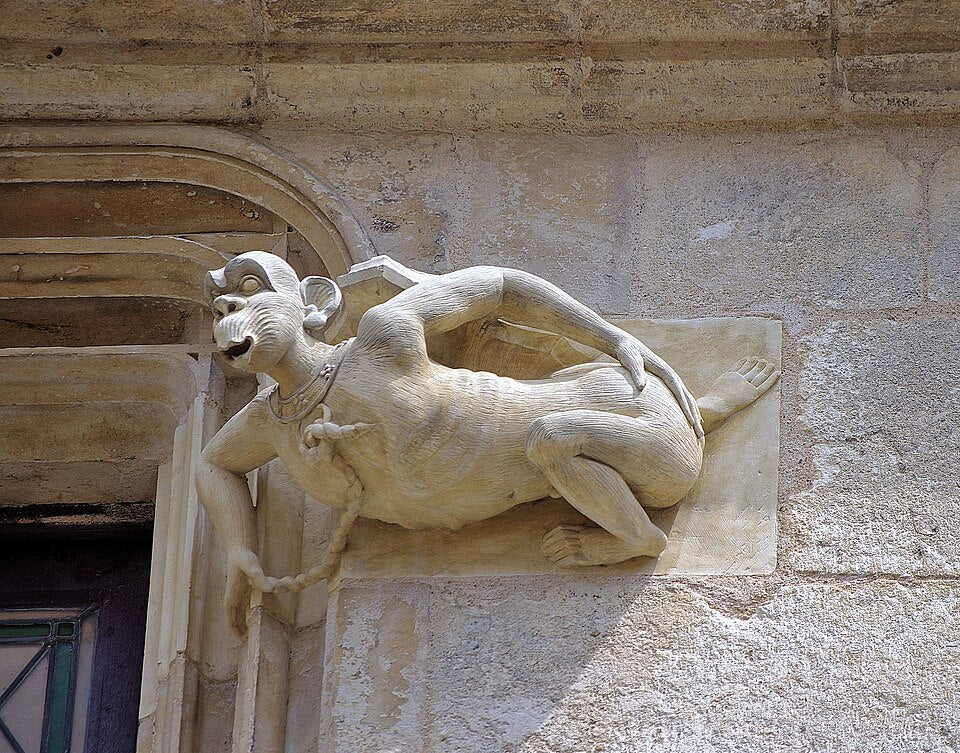
His legacy has also changed the way some readers view art and monuments. A sculpture, an engraved motto, or an architectural decoration may receive a hermetic interpretation. But knowledge of symbols requires distinguishing between the historically attested use of a motif and the interpretation an author assigns to it. Not every ancient stone needs to have revealed an alchemical secret for the tradition of correspondences to remain interesting. Rigor gives this reading a solidity that the accumulation of tenuous connections could never provide.
This vast field can be explored through our articles devoted to alchemical symbols, the language of the birds, and the materia prima. These notions have their own roots and their own history. Mentioning them here is enough to situate Fulcanelli's intellectual environment without revisiting the content of the works that bear his name.
The Fulcanelli case ultimately recalls the difference between the authority of a teaching and the fascination exerted by a hidden figure. It is legitimate to seek an author's identity. It is equally legitimate to study the people around him and verify their testimony. But the history of alchemy cannot be reduced to an investigation of literary police work. Understanding a transmission also involves networks, libraries, techniques, and the reasons why ancient knowledge retains a place in the present.
The certain evidence is already enough to form a remarkable story: two works published between the wars, a master identified by a pseudonym, a faithful disciple, an artist associated with the editions, a bookseller whose erudition fuels the hypotheses, and a legacy that spans generations. What remains uncertain does not need to be filled in artificially. Neither the Champagne hypothesis, nor Dujols's candidacy, nor the idea of a collective work has achieved the status of a definitive identification.
Fulcanelli thus remains the faceless alchemist of the 20th century. We know the concrete traces of his appearance and the men who defended his memory. We also know that the stories of longevity and disappearance belong to a tradition whose details cannot all be verified. This does not diminish the importance of this figure in the history of French hermeticism. The secret name may continue to resist discovery; Fulcanelli’s place in the revival of alchemy, however, is very real.
Sources and documents
Antoine Faivre, “Fulcanelli”, Encyclopædia Universalis, record available for consultation at the Sceaux Media Library (2017).
André Breton Collection, bibliographic record of Demeures philosophales, Paris, Jean Schemit, 1930, with a preface by Eugène Canseliet and illustrations by Julien Champagne.
Bibliographic record of the 1926 Jean Schemit edition ; Alcor Editions, presentation of the reissues of the two volumes.
Geneviève Dubois, Fulcanelli and the Alchemical Revival, Destiny Books, 2005, presentation and excerpt from the investigation.
Interview with Eugène Canseliet by Jacques Pradel ; interview published in Le Monde, October 1, 1971.
Christer Böke and John Koopmans, “Fulcanelli’s Most Likely Identity”, part one, followed by part two, Alchemy Journal, 2006. An investigation into identity hypotheses, whose conclusions remain debated.
Documentary illustration credit: courtyard of the Hôtel Lallemant in Bourges, photograph by Patrick Monchicourt (Morio60), 2012, Wikimedia Commons, CC BY-SA 2.0 license. Alternative text: “Hôtel Lallemant in Bourges, Renaissance architecture associated with the history of alchemy and Fulcanelli”.

Par Olivier of Aeternum
Passionate about esoteric traditions and the history of the occult from the earliest civilizations to the 18th century, I share some articles on these topics. I am also co-creator of the online esoteric shop Aeternum.