



















































































































A hand suspended on a door, a glass eye hung in a home, a sign carved near a fireplace, an amulet worn against the chest, or a prayer inscribed on a small object belong to very distant eras and cultures. Yet they can all follow the same logic: turning away evil before it crosses a boundary. This function is what we call apotropaic.
The word may sound scholarly, but the idea is very concrete. The Académie française traces “apotropaic” to the Greek apotropaios, “that which turns away evils,” formed from apo, “away, aside,” and trepein, “to turn.” An apotropaic object, formula, or rite does not necessarily seek to fight a force: it marks a boundary, diverts, repels, or makes access symbolically difficult.
Apotropaic magic is not an independent tradition with a single book, religion, or set of symbols. It is a function found in many systems: ancient Egypt, the Greek and Roman worlds, Mediterranean evil-eye traditions, folk Christianity, domestic protections in modern Europe, and contemporary esoteric practices.
This definition helps explain why very different objects can belong to the same family without having the same origin. An Egyptian Eye of Horus, a Greek gorgoneion, a khamsa, a Nazar eye, and a mark carved into a roof frame do not tell the same story. They share only a protective function.
What exactly does “apotropaic magic” mean?
The simplest meaning is “magic that turns away.” The protective object or gesture is placed between what one wishes to preserve and what is feared. This threat may take the form of the evil eye, bad luck, a hostile spirit, sorcery attributed to someone else, or a danger described in the community’s religious language.
This logic produces several types of protection. Some are worn: amulets, medals, engraved stones, small pouches, or pendants. Others are placed: a sign above a door, a protective eye in a home, a cross near an entrance, an object hidden beneath a threshold. Still others rely on the spoken word: a prayer, formula, psalm, or inscription.
The same object can also change function depending on the context. A bell can call people to prayer, announce a presence, or take on a protective function. A pentacle can serve a specific purpose in a grimoire or be worn for protection. A religious image may be an expression of devotion before becoming part of a popular protective practice.
The term “apotropaic” is therefore especially useful because it does not force all these objects into a single religious category. It allows their role to be described without erasing their history.
| Form | Principle | Historical examples | Possible current use |
|---|---|---|---|
| Worn amulet | Keeping protection close to the body. | Oudjat Eye, Roman amulets, khamsa. | Nazar, medal, talisman, or stone associated with protection. |
| Frontal sign | Presenting a protective image to danger before passing through. | Greek gorgoneion, painted eyes on certain supports. | Symbol placed near an entrance or on an altar. |
| Threshold mark | Protecting a point of passage in a building. | Hexafoils, Marian marks, and other inscriptions in British buildings. | Sign or prayer placed near a door or window. |
| Concealed object | Creating a hidden defense within the structure of a place. | 17th- and 18th-century witch bottles. | To be distinguished from contemporary spell jars. |
| Speech or inscription | Giving verbal form to a request for protection. | Prayers, sacred names, protective formulas. | Psalm, prayer, personal formula, or text drawn from a tradition one follows. |
| Sound | Marking a space and its opening or closing. | Small bells and sound-making objects in several protective contexts. | Ritual bell or ringing at the beginning and end of a working. |
Is ancient Egypt the cradle of apotropaic magic?
It would be excessive to give it that title. Protections against evil appear in several ancient civilizations, and the evidence does not establish a single “cradle.” Egypt, however, provides an exceptional body of amulets whose protective function is very well documented.
One of the most famous examples is the Oudjat Eye. The Metropolitan Museum of Art holds many examples, including one made of carnelian and dated to around 2150 to 1950 BCE. The motif depicts the Eye of Horus restored after its injury. Its Egyptian name refers to what has become “healthy” or “whole” again. In the Egyptian funerary and religious system, it represents restoration, regeneration, and protection.
Oudjat amulets were used for both the dead and the living. Their material, color, placement, and accompanying words could contribute to their function. The amulet should therefore not be reduced to a design someone simply found “pretty” or universally protective: it belonged to a specific Egyptian religious system.
This distinction matters for contemporary practices. You can use the Eye of Horus as a symbol of protection, but it is better to know its history rather than present it as the direct ancestor of all eye-shaped amulets. Our Horus page explores the deity and its mythological cycle in greater depth.
Why are Medusa and the Gorgon apotropaic?
In Greek art, the head of Medusa - the gorgoneion - appears on architecture, vases, weapons, and other objects. The Metropolitan Museum notes that its most common interpretation is apotropaic: a dangerous image is used to repel another threat. The Gorgon’s frontal face looks directly at whoever faces it, which is unusual in Greek art.
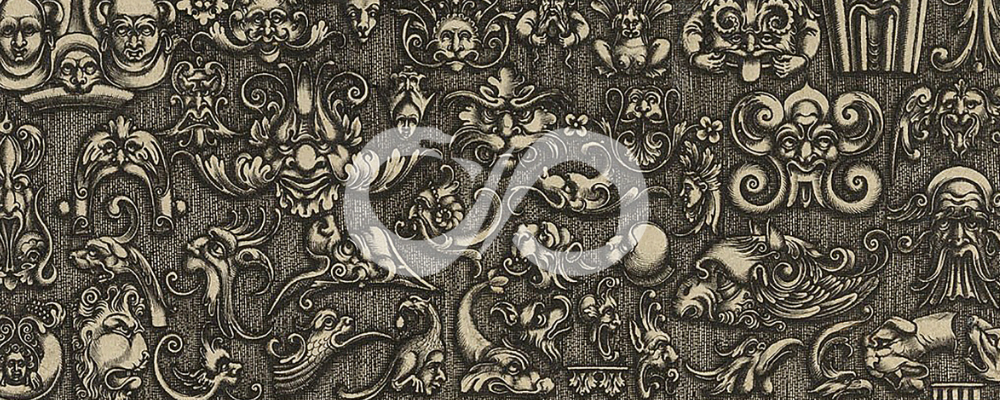
This principle offers an important key to apotropaic magic: what protects is not necessarily gentle or reassuring. A monstrous figure may serve precisely because it impresses, threatens, or sends fear back outward. The protector then takes on an appearance you would not want to encounter as an adversary.
This mechanism explains why grimacing faces, enormous eyes, or aggressive forms appear on protective objects. However, this interpretation should not automatically be applied to every monstrous sculpture. Its function depends on the context, placement, and available evidence.
Why did the Romans use provocative symbols?
The Roman world clearly shows that protection can use images designed to shock, distract, or neutralize the envious gaze. The Metropolitan Museum houses several bronze phallic amulets from the 1st century. One combines a phallus, male genitals, and a mano fica, a hand gesture in which the thumb passes between two fingers. The museum label identifies these motifs as apotropaic devices directed against the evil eye.
These objects remind us that our modern categories of “beautiful,” “religious,” or “proper” are not always helpful for understanding ancient forms of protection. Laughter, obscenity, exaggeration, and provocation could all be part of symbolic defense.
The principle is similar to that of the Gorgon, without being a copy of it. In both cases, the protective object confronts danger with an image that is impossible to ignore. Apotropaic magic can therefore work through intimidation, mockery, visual confrontation, or symbolic reversal.
What is the connection between apotropaic magic and the evil eye?
The evil eye is one of the major apotropaic traditions of the Mediterranean basin and the Middle East. Protection may take the form of a hand, an eye, a spoken word, or an object worn on the person.
The khamsa is a well-documented example. The British Museum holds a hand-shaped amulet made in Gaza between 1900 and the 1930s. Its catalog describes it as an object intended to protect against the “evil eye” or “envious eye.” The museum also notes the long-standing protective function of the hand in the Middle East and North Africa.
The Nazar Eye belongs to another family of visual protection. It does not represent the evil eye itself: it is worn or placed to ward it off. At Aeternum, the Nazar Eye Amulet and the 7-Knot Nazar Eye Bracelet let you incorporate this symbol into a personal practice.
The new guide Evil Eye: History, Symbols, and Protective Practices explores separately the history of the Nazar, the khamsa, the Eye of Horus, and the oil-in-water test.
Why are protective marks concentrated around doors and windows?
A threshold separates two spaces. It is a very clear physical boundary and, in ritual thought, a boundary naturally lends itself to protection. Doors, windows, fireplaces, and passageways become the places where the outside meets the inside.
This logic appears in European architecture. Historic England documents ritual marks known as apotropaic in old buildings, near openings, fireplaces, and other structural features. The best-known motifs include hexafoils, six-lobed rosettes drawn with a compass.
Their meaning is not always certain. Historic England clearly states that several interpretations exist: geometric exercise, solar symbol, or ritual protection. The apotropaic interpretation is still the most widely accepted today in many contexts, especially when a group of marks is concentrated around areas of passage.
Other marks are associated with the Virgin Mary, such as certain intersecting “V” shapes interpreted in connection with Virgo Virginum. Here again, caution is needed: an isolated carved letter is not automatically a protective invocation. The building and the location matter as much as the sign.
Were “witches’ marks” made by witches?
No. The English name is confusing. These marks are specifically studied as signs intended to protect against a threat attributed to witches or spirits, not as signatures left by them.
Historic England prefers the terms “ritual protection marks” or “apotropaic marks.” They are found in churches, houses, barns, cellars, and roof timbers. Their presence in hard-to-reach places also shows that they were not simply visible graffiti intended for visitors.
At the Tower of London, for example, MOLA archaeologists studied a significant group of apotropaic marks in the Queen’s House. They appear alongside carpenters’ marks and other inscriptions, reminding us of an important rule: all ancient traces must be put back into context before being interpreted as protective.
Is a witch bottle a spell jar?
No, not in the historical sense. The comparison is tempting because both are ritual vessels, but witch bottles are a much more specific archaeological phenomenon.
MOLA runs a research program dedicated to 17th- and 18th-century protection bottles. These glass or stoneware vessels could contain pins, nails, thorns, urine, nail clippings, or other items. They were then hidden beneath a floor, near a hearth, in a fireplace, or beneath a threshold. Researchers interpret them as objects of ritual protection or as preparations directed against witchcraft.
This practice should not be renamed “spell jar” as if the two objects were identical. Contemporary spell jars form a much broader modern category: love, prosperity, protection, personal intention, plants, stones, or papers. They may draw inspiration from ancient bottle magic traditions, but they do not automatically replicate the 17th-century English witch bottle.
| Point | Historical witch bottle | Contemporary spell jar |
|---|---|---|
| Period | A phenomenon particularly well documented in 17th- and 18th-century England. | Current category of bottle magic. |
| Function | Protection against witchcraft or preparation of counter-magic. | Protection, love, prosperity, luck, or another intention. |
| Contents | Pins, nails, thorns, urine, hair, or other materials, depending on the examples. | Plants, salts, stones, papers, waxes, and ingredients chosen according to the practice. |
| Location | Hidden beneath the floor, at a threshold, near a hearth or fireplace. | Altar, shelf, bag, workspace, or location defined by the user. |
| Historical interpretation | An archaeological object whose function depends on the context in which it was found. | A contemporary practice that can freely draw on several traditions. |
Are gargoyles always apotropaic?
No. This was one of the points that needed correction in the old article. The practical function of a gargoyle is to carry rainwater away from the walls. Grotesque and monstrous sculptures may be given a symbolic, moral, or protective interpretation depending on the building and period, but it is too categorical to say that the medieval gargoyle was created as an “anti-demon” in every case.
It is better to distinguish between certain architectural function and possible symbolic interpretation. The monstrous face may be part of an apotropaic aesthetic comparable to that of other protective figures, but historians must allow for other possible functions: moral warning, decoration, satire, or simply the sculptor’s whim.
This caution applies to all historical magic. A symbol is not apotropaic just because it “looks” protective. You need to consider where it is found, what it is associated with, and what the sources support.
Can Christian protection be apotropaic?
Yes, if “apotropaic” is used as a descriptive term. A cross placed at a threshold, a protective medal, a prayer against danger, or a Marian symbol carved into a house can serve to ward off evil within a Christian context.
This does not mean that all Christian devotion is “magical.” An apotropaic function can be found in religious practice even when its practitioners do not use the language of magic themselves.
At Aeternum, the Magic of the Saints collection brings together items rooted in popular Christianity and its ritual extensions. Novenas, medals, and prayers can thus be used in protective practices when they remain consistent with the figure being invoked.
What is the difference between an amulet, a talisman, and an apotropaic object?
These terms overlap, but they are not exact synonyms. Apotropaic describes the function: warding off a feared influence. Amulet generally refers to an object worn or kept for protection. Talisman may have a more specific function: attracting, strengthening, supporting an operation, or representing a force.
A Nazar is therefore an apotropaic amulet. A pentacle intended to attract a favor is not necessarily apotropaic. A protective pentacle may be. A stone worn for courage can become a talisman without directly serving a warding function.
| Term | What it describes | Example | Useful question |
|---|---|---|---|
| Apotropaic | A protective or deflecting function. | Nazar placed by a door. | What are you seeking to repel or prevent from crossing the boundary? |
| Amulet | A protective object worn or kept close. | Khamsa, medallion, protective eye. | What protection does this object represent in its context? |
| Talisman | An item charged with a specific purpose or influence. | Pentacle, seal, consecrated object. | What should the talisman support or attract? |
| Phylactery | Depending on the period, an item containing or bearing a protective or religious text. | Short text carried or kept. | What text does it contain, and which tradition does it belong to? |
How can you build apotropaic protection today?
The simplest approach is to start with a real boundary. You do not choose an object first; you choose what you want to protect. This could be the threshold of your home, your workspace, your altar, or an object you use in a rite.
Next, choose just one protective language. If you work with the Nazar, place it where its purpose is clear: the entrance, a bag, or an exposed space. If you work with a Christian symbol, prioritize the prayer or devotion associated with it. If you work with a pentacle, identify its source and purpose before consecrating it.
The third step is to state the boundary. A short sentence is enough: “This place remains closed to hostility, envy, and anything that seeks to disturb its peace.” You can use a prayer from your tradition instead of a personal formula.
Finish by defining how it will be maintained. A suspended amulet can stay in place. A dish of salt should be replaced at set intervals. A candle is for a one-time rite. An inscription can remain as long as its surface exists. Setting a clear duration prevents protection from becoming a constant check.
Protecting a threshold with a symbol and salt
Clean the entrance and first check the practical protections: lock, window, lighting, and access. Then place a Nazar Eye Amulet inside near the door, or choose another symbol from your path.
Put a small amount of salt in a dry dish. The salt does not need to be scattered on the floor. Our article Magical Salts: Types, Uses, and Rituals helps you choose a form suited to this work.
Speak your protective formula once or for a set period. Leave the symbol in place. Replace the salt on the chosen date and discard the old salt with household waste. Do not interpret its moisture, crystallization, or color as a measure of hostility from outside: salt naturally reacts to its environment.
Consecrating an object for a protective purpose
Clean the object physically according to its material. Then place it on a clean cloth. You can begin the work with a bell, a prayer, or a brief smoke cleansing. If you use incense, choose a format you can supervise and air out the room.
Place your hands around the object without trying to add more gestures. State its purpose: “This object marks my boundary and reminds me of the protection I choose to maintain.” If the object belongs to a specific tradition, use its own prayer or formula instead.
You can explore this practice further with our guide How to consecrate a new magical object?. The Amulets & Talismans collection also lets you choose a medium whose symbolism is already defined.
How can you apply the apotropaic approach to an entire home?
To create symbolic protection for your home, identify its points of entry: the front door, windows in use, the fireplace or balcony, and then the ritual space. Pair each location with a medium whose function you know. Aeternum amulets and talismans let you choose symbols and formats suited to these different spaces.
You can place a sign at the entrance, a short prayer near the altar, and a discreet protective object in the room where you work. If you add salt, water, or smoke cleansing, give each action a different purpose. Accumulating identical protective objects does not make a place safer.
Our guide How to properly cleanse your home? explains ritual cleansing practices. The distinction is useful: cleansing means restoring order to a space; protection means maintaining a boundary after that restoration.
Which Aeternum mediums align with an apotropaic approach?
| Medium | Function | Placement or use | Key takeaways |
|---|---|---|---|
| Nazar Eye | Symbolically deflect the envious gaze. | Entrance, bag, personal space. | Connect it to the Mediterranean history of the evil eye. |
| 7-Knot Nazar Bracelet | Worn protection. | On the wrist, according to the intended use of the item. | The item accompanies the person rather than the place. |
| Amulets & Talismans | Protection or another function depending on the symbol. | Wear, altar, or placement. | Check the specific function of each motif. |
| Protection Magic | Build a broader working. | Depending on the product: candle, oil, salt, ritual medium. | A well-chosen selection is better than an accumulation. |
| Saint Magic | Protection through prayer and intercession. | Altar, novena, medal, or prayer. | Respect the figure and devotion in question. |
What mistakes should you avoid when discussing apotropaic magic?
The first mistake is to create a universal lineage. The fact that several cultures use an eye, a hand, or a circle does not mean they all copied the same source. Simple forms can reappear easily and take on very different meanings.
The second mistake is to turn an archaeological interpretation into a certainty. Protective marks on European buildings are a good example: some are very plausibly ritual; others may be compass exercises, construction marks, or graffiti.
The third mistake is to confuse a historical witch bottle with any contemporary magical bottle. The former belong to a specific archaeological corpus; the latter now cover many different intentions.
The fourth mistake is to think an old object was “more powerful” because it is old. Its value comes from its context and what it teaches us about a practice. A modern amulet can be entirely coherent if you understand its symbolism and use.
The final mistake is to experience protection as a constant war. A well-designed apotropaic practice establishes a boundary, then lets you return to ordinary life. If every incident becomes proof that protection must be reinforced, the rite loses its function as a framework.
Frequently Asked Questions About Apotropaic Magic
Is apotropaic magic only used to ward off spirits?
No. It may target the evil eye, bad luck, feared witchcraft, a hostile influence, or a danger described in the religious language of the tradition in question.
Is a talisman always apotropaic?
No. A talisman can attract an influence, support success, or represent a force. It is apotropaic when its primary function is to ward off or prevent a threat.
Is an amulet always apotropaic?
The protective function is central to the idea of an amulet, but actual uses vary. The object's historical and religious context should be considered.
Are the Eye of Horus and the Nazar the same symbol?
No. The Eye of Horus belongs to ancient Egypt and the cycle of Horus; the Nazar belongs to other Mediterranean traditions concerning the evil eye. Their protective function makes them comparable, but they should not be confused.
Was Medusa’s head really used for protection?
The gorgoneion is widely interpreted as apotropaic in Greek art. Its frontal, menacing face was meant to ward off other dangers, although each object must be interpreted in context.
What are witches’ marks?
This term refers to a group of marks found in old British buildings. Many are studied as signs of ritual protection. They were intended to protect against a threat attributed to witchcraft or spirits, not to signify a witch's practice.
Were hexafoils always magical?
No. Historic England notes that their function is debated. Their interpretation as protective marks is compelling in some contexts, but an isolated hexafoil may also be a geometric exercise or serve another purpose.
Is a witch bottle an ancient spell jar?
Not exactly. The English witch bottle has a specific historical and archaeological context, centered on counter-witchcraft and protection. The modern spell jar covers a much wider range of intentions.
Were gargoyles made to repel demons?
The definite function of a gargoyle is to drain water. Some grotesque sculptures may be interpreted as protective, but this explanation should not be applied to all medieval gargoyles.
Can you practice apotropaic magic without following a particular religion?
Yes, if you use the term in a functional sense. You can choose a protective symbol and a personal formula. However, if you borrow an object from a specific religion or culture, learn about its context.
Where should you place apotropaic protection?
The threshold is a classic location: a door, window, or passageway. A protection worn on the body stays close to you. An altar object protects the ritual space instead. Placement should match its function.
How many protections does a house need?
There is no ideal number. A symbol at the threshold, a prayer, or a purification ritual followed by clear protection may be enough. Multiplying objects does not automatically bring greater coherence.
Understanding protection before accumulating symbols
Apotropaic magic spans history because it answers a very simple question: how do you make a boundary tangible? An Egyptian places a Wedjat eye, a Greek displays the face of the Gorgon, a Roman wears a provocative amulet, a family hangs a khamsa, and a resident of early modern England carves a rosette or hides a bottle near the hearth.
These practices are not chapters of a single tradition. Instead, they show the creativity with which each society transforms protection into image, material, word, or placement.
For modern practice, this lesson remains useful. First choose what you are protecting, then the symbol that truly belongs to your path. Give it a specific function and a clear place. Protection then becomes a coherent framework rather than a collection of objects whose meaning is lost.
You can continue with our guide to the evil eye, discover amulets and talismans, or browse the Protection Magic collection.
Sources and further reading
Definition and etymology. Dictionary of the Académie française, 9th edition, entry “apotropaic”: derived from the Greek apotropaios, “that which turns away evils.”
Ancient Egypt. The Metropolitan Museum of Art, entries on Wedjat Eye Amulets, including the carnelian example dated to around 2150–1950 BCE and examples from the New Kingdom and Ptolemaic period.
Gorgon and Medusa. The Metropolitan Museum of Art, “Medusa in Ancient Greek Art,” on the apotropaic interpretation of the gorgoneion in Greek art.
Rome. The Metropolitan Museum of Art, Bronze phallic amulet, 1st century: an entry describing the phallus, male organs, and mano fica as apotropaic devices against the evil eye.
Khamsa and evil eye. British Museum, a hand-shaped amulet made in Gaza between 1900 and the 1930s, described as protection against the “evil eye” or “eye of envy.”
Building protection marks. Historic England, “What Are Witches’ Marks?” and “Witches’ Marks: Apotropaic and Carpenters’ Marks,” on hexafoils, inscriptions, and marks placed in old buildings.
Witch bottles. Museum of London Archaeology, “Witch bottles concealed and revealed” program, research on 17th- and 18th-century vessels used as ritual protections or preparations against witchcraft.

Par Olivier of Aeternum
Passionate about esoteric traditions and the history of the occult from the earliest civilizations to the 18th century, I share some articles on these topics. I am also co-creator of the online esoteric shop Aeternum.













1 comment on Apotropaic Magic: History, Symbols, and Protections