



















































































































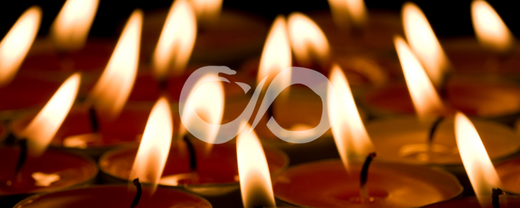
A flame rises, narrows, flickers, or leans. In a candle ritual, these variations naturally attract the eye. They can become the basis for a symbolic reading, provided we do not forget that a flame is first and foremost a combustion phenomenon: the length of the wick, the amount of wax feeding it, a draft, or residue in the pool of melted wax directly alters its behavior.
To interpret a candle flame, therefore begin by observing the material causes, then apply a symbolic convention chosen before the session. A large flame does not automatically herald success; crackling does not prove outside communication; a flame that goes out does not doom your work. The reading becomes far more interesting when you distinguish what stems from the candle, what stems from the environment, and what you then decide to do with it in a divination practice.
This guide offers you a complete method: preparing the candle, recognizing the main flame behaviors, keeping an observation journal, and developing an interpretation without forcing the signs. It complements our article on anointing candles and our guide to candle magic.
What is divination by flame called?
Fire divination broadly falls under pyromancy. Ancient sources and divination compendiums describe several techniques based on how a fire catches, burns, smokes, or divides. Lychnomancy more specifically concerns the reading of lamps or candle flames. In some modern descriptions, three candles are arranged in a triangle and their behavior is compared. [1]
These categories have never constituted a universal, immutable language. Systems vary according to the era and the author. A divided flame could be given a favorable meaning in one method and an unfavorable one in another. Some older rules also depended on material conditions that we understand better today: air movement, the amount of fuel, the shape of the wick, or impurities. The section devoted to lychnomancy itself emphasizes the influence of drafts and the observer’s breath. [2]
For a contemporary practice, it is therefore more consistent to choose a clear convention than to gather every interpretation found in different books. You can read a flame as a symbolic medium, just like a card reading, without claiming that a physical behavior necessarily has an occult meaning.
Why does a flame change shape?
A candle works thanks to its wick. The wax melts around it, rises by capillary action, and then vaporizes near the flame. These vapors are what burn. The wick therefore acts as a fuel-delivery system: if it supplies too much fuel, the flame may become too large and produce soot; if it supplies too little, the flame may weaken or go out. [3]
A steady flame generally has a regular teardrop shape. When an air current distorts it, combustion becomes less balanced, and unburned carbon particles may escape as smoke. A wick that is too long can also cause a tall flame, flare-ups, and black deposits. These variations are therefore not irrelevant to observation: before interpreting a sign, you need to know whether your setup itself is producing it. [4]
Why is the flame blue at the base and yellow above?
The color of a candle flame is not uniform. A small blue area generally appears at the base, where the oxygen supply and the initial combustion reactions are significant. The large bright yellow area is produced in part by heated carbon particles that emit light before fully burning. Seeing blue at the base and yellow above it is therefore part of a candle’s normal operation. [5]
A change in color can become a reference point in a divination method if you have planned for it, but it should not be interpreted without comparing it with the normal appearance of your candle. A useful first exercise is to observe several candles of the same model without asking any question, so you can learn their usual burning behavior.
What should you check before interpreting anything?
Place the candle on a stable candle holder, on a heat-resistant surface. Keep curtains, papers, and flammable objects away. Avoid open windows, fans, and air vents that can tilt or make the flame flicker. Candle-use recommendations also emphasize wick length and the absence of debris in the wax. [6]
Then follow the product label. The recommended wick length, burn time, and relighting method depend on the model. A candle that has already burned for several hours is not in the same condition as a new taper. If you compare several sessions, note this detail.
When you have used an anointing oil, make sure it remains on the cool sides and that no excess has reached the wick or the wax pool. Our guide to anointing a candle explains this preparation in detail. Herbs, powders, or papers should stay beside the candle, not in the combustion area.
How should you read the main flame behaviors?
The following table distinguishes three levels: observation, common physical causes, and a possible symbolic interpretation. The latter is neither a diagnosis nor an absolute rule. It serves as a vocabulary for a coherent personal practice.
| Observation | What to check | Possible symbolic interpretation |
|---|---|---|
| High and steady flame | Wick long enough, good wax supply, and no draft. If the flame becomes excessive, check the wick length. | Momentum, availability, or a strongly carried intention. Read it as a dynamic, not as a guarantee of results. |
| Low but steady flame | Short wick, limited wax flow, candle type, or combustion phase. | Quiet work, slow progress, or need for continuity. Avoid inferring an automatic refusal. |
| Weak flame threatening to go out | Drowned wick, insufficient fuel, wax around the wick, or combustion defect. | In a symbolic convention: effort lacking support or a situation to reassess. Correct the candle first. |
| Dancing or flickering flame | Draft, movement of people, ventilation, or wick shape. | Movement, instability, or a situation undergoing reorganization if no physical cause explains the phenomenon. |
| Leaning flame | Lateral airflow or bent wick. | Orientation toward a subject, movement, or dominant influence in a method that uses directions. |
| Crackling | Debris, moisture, formulation, wick, or foreign material near the flame. | Communication, tension, or an event that calls for attention in certain traditions. Do not interpret it as a definite voice. |
| Split flame | Split wick, carbon buildup, or a particular wick structure. | Two paths, two influences, or divided attention, provided this sign is part of your method. |
| Smoke or soot | Wick too long, draft, disrupted combustion, debris, or excess additions. | Obstacle, overload, or need for clarification after checking the physical setup. |
| Spontaneous extinguishing | Wick submerged in wax, insufficient wax available, a draft, or a problem with the holder. | Pause, end of the session, or work to be reviewed in a chosen reading. Never an obligatory condemnation of the ritual. |
What does a large flame mean?
A flame that is higher than usual immediately catches the eye. Yet the first question is not “is this positive?” but “is this candle burning normally?” A wick that is too long increases the flame’s fuel supply and can cause excessive burning, flare-ups, or soot. A large flame that becomes unstable therefore requires checking and, if necessary, extinguishing according to the manufacturer’s instructions. [4]
In a symbolic reading, a steady large flame may represent clear momentum, a strongly activated intention, or a situation that is quickly gaining strength. The important word remains “may.” It does not prove that your request will succeed, or that it will succeed quickly.
For a green candle prepared with an intention of prosperity, you could write: “The flame is higher than during my previous session, but remains steady. I choose to read it as momentum in the project.” This wording separates your observation from your interpretation. You can then reread your journal without confusing the two.
What does a small flame mean?
A small, steady flame can be perfectly normal for certain candles or at certain points during their burn. The wick’s size, the candle’s diameter, and the amount of wax available directly influence the height. A small flame therefore does not necessarily mean that the ritual “lacks energy.”
In a divinatory framework, it may represent underlying work, a measured pace, or a request that requires consistency. If the flame remains clean and steady, you can contrast its discretion with a spectacular flare-up: the former suggests endurance, while the latter suggests impulse.
A flame that becomes abnormally weak, however, requires checking. If the wick becomes submerged in wax, struggles to stay lit, or the burn seems faulty, extinguish it and let it cool before making any adjustments. Symbolic interpretation should not lead you to keep a candle that is not burning properly.
How should you interpret a dancing flame?
Movement is the easiest thing to overinterpret. A flame reacts to the slightest draft. A partially open window, ventilation, an opening door, or someone passing nearby is enough to make it flicker. The National Candle Association specifically recommends avoiding drafts to ensure an even burn and limit smoke. [4]
So close off the obvious sources of movement and observe again. If the flame immediately becomes steady, you have your explanation. Do not retain the initial flicker as a “sign” while ignoring the draft that produced it.
If the movement persists under stable conditions, you may assign it a meaning in your method: agitation, change, hesitation, or several interacting factors. Write down what you observe before choosing the word. For example: “Short oscillations for approximately two minutes; no draft detected; I associate them with an unstable phase in my decision.”
What does a flame tilted to one side mean?
A flame generally leans in the direction imposed by air movement. The wick itself may also bend. Before any directional interpretation, turn your attention to these two causes. Do not move the candle while it is burning: wait until it has gone out and cooled if you need to modify the setup.
In some personal practices, directions may be given symbolic significance: toward a petition paper, toward a photograph, toward the inside or outside of a device. This language must be defined before lighting. If you decide afterward that the right means “yes” solely because the flame leaned to the right, you are creating the rule from the result.
You can prepare four markers around the candle holder at a safe distance and note their function in your journal. This method gives your observation a genuine structure. However, it does not allow you to identify a hidden person or prove an external influence.
Why does a candle crackle?
Crackling may come from the wick, debris, foreign material, or uneven combustion. Plant material near the flame notably increases the amount of combustible material. This is an additional reason to keep ritual herbs and powders on separate holders when the candle was not designed to receive them.
The earlier article presented the crackling as “communication with external forces.” This interpretation may exist within a symbolic system, but it should not be presented as the cause of the noise. If you use crackling as a sign, phrase it instead as follows: “In my convention, crackling without an identified cause leads me to pay attention to communication or tension.”
This allows you to avoid two extremes: reducing everything to a phenomenon with no ritual value, or turning every sound into a message addressed personally to you. Divination lies precisely in constructing a symbolic language whose limits you understand.
How should smoke and soot be interpreted?
A properly used candle produces a relatively stable flame. A flame disturbed by too much or too little air may release carbon particles in the form of visible smoke. A wick that is too long may also encourage soot. The first response to black smoke should therefore be to examine how the candle is functioning, not to declare the presence of an invisible obstacle. [4]
In a symbolic practice, smoke may represent a lack of clarity or difficulty moving forward. The meaning remains more interesting when it accompanies a real observation: “The candle began to smoke after an hour; the wick has a carbon deposit. I will correct that first.” If the next burn remains normal, there is no reason to maintain a dramatic interpretation.
On a candle in a container, a black mark on the glass may result from the same factors. Follow the product instructions and do not try to wipe a hot container. A soot mark is not an automatic record of the “energies” encountered during the rite.
What does a double or divided flame mean?
A wick may split, develop a carbon deposit, or form several small glowing points. The phenomenon can create the impression of a double flame. Examine the wick when it is cold during the next session. If the behavior becomes excessive, follow the candle’s instructions rather than maintaining abnormal burning to observe the sign for longer.
Historically, some pyromantic practices did indeed assign meaning to the number of points on a flame. However, old reference works show that these omens could vary. [1] You can therefore use the division as an image of two directions, two interlocutors, or two priorities, but only within a framework established in advance.
A question such as “What are the two forces at work in my choice?” may be more appropriate for this symbol than a conclusion such as “Two people are acting against me.” The first opens up reflection; the second asserts a fact that the flame cannot establish.
What does it mean when a candle goes out on its own?
A candle may go out because the wick receives too little fuel, because it becomes drowned in wax, or because a draft snuffs out the flame. The National Candle Association notes that the wick must provide the right amount of vaporized wax: too little fuel, and the flame eventually goes out. [3]
If this happens, do not relight it immediately by adding oil or another substance. Let it cool and check the condition of the wick and the pool of wax according to the manufacturer’s instructions. You can finish your prayer without a flame. The ritual does not need to become a struggle against the candle.
In a symbolic reading, the flame going out may mark a pause, a conclusion, or the need to rephrase the session. It does not necessarily mean “no,” failure, or a hostile presence. If you decided before the session that a complete extinguishing marks the end of the work, respect that convention and record it as such.
Can the Colors of the Flame Be Interpreted?
A normal flame has several zones. The blue visible at the base belongs to the combustion process, while the bright yellow zone is associated with carbon particles carried at high temperature. These colors do not become supernatural because they appear very clear in a photograph or in a dark room. [5]
If you wish to build a color vocabulary, begin by learning what the candle normally looks like. A blue flame at the base cannot serve every evening as an exception announcing protection, since it is part of normal combustion. The symbolic color of the candle, on the other hand, can be chosen before the rite according to your intention.
At Aeternum, you can thus prepare a white candle for a dedication to peace or purification, a black candle for banishing or protection work, a green candle for a theme of growth and abundance, or a red candle for passion and strength. The correspondence is then determined before lighting.
How do you practice a five-step flame reading?
1. Define the Question and the Convention
Choose a question that can be explored, rather than proof to obtain. “What aspect of this project deserves my attention during this session?” works better than “Is this person lying to me?” Then write down the observations to which you will assign meaning: stability, movement, height, direction, extinguishing. You do not need to interpret everything.
2. Stabilize the Environment
Place the candle away from drafts, on its holder and according to its instructions. Note the type of candle, the condition of the wick, and any preparations made before lighting it. If you anointed the candle, simply indicate the oil and the direction of the anointing. Your procedure becomes reproducible.
3. Observe Without Commenting Immediately
During the first few minutes, note only what is visible: “steady flame,” “medium height,” “two oscillations when the door opened.” Separating description from interpretation limits the temptation to turn every variation into an immediate answer.
4. Ruling out identifiable causes
A flicker after someone walks past does not count in your reading if your method requires an undisturbed flame. Smoke caused by a wick that is too long calls for a correction. This filter does not “destroy” the magic; it protects the consistency of your observation.
5. Building a summary after the session
Once the candle has gone out and the materials are safely stored, reread your notes. Choose one or two phenomena that are genuinely persistent. Then write down their symbolic interpretation and a practical question. For example: “The flame remained low but steady; I see this as slow progress. What step can I maintain without artificially speeding up the project?”
This last sentence is the most useful: it turns the reading into structured reflection. You do not have to wait for the candle to provide a complete verdict.
How do you keep a flame-reading journal?
A journal allows you to compare what you interpret with the actual conditions of each session. Record the date, candle, color, question, preparation, duration, and environment. Then write down the raw observation followed by your interpretation. Keep the two columns separate.
| To note | Example | Why it is useful |
|---|---|---|
| Question | “What pace should I set for launching this project?” | Avoids changing the subject according to what the flame does. |
| Candle | Green candle, first burning. | Allows you to compare observations on a known medium. |
| Conditions | Windows closed, no direct ventilation. | Helps identify the causes of flickering. |
| Observation | Medium, steady flame for twenty minutes. | Preserves the fact before the interpretation. |
| Selected reading | Continuity and steady progress. | Makes your symbolic convention visible. |
| Action or reflection | Maintain the schedule rather than trying to speed things up. | Connects the session to a concrete decision. |
After several sessions, you will be able to recognize the habits specific to your candles. If one model consistently burns with a small flame, this characteristic loses its exceptional nature. That is precisely the value of a journal: getting to know the medium better before interpreting its variations.
Four examples of annotated readings
A prosperity candle with a high but steady flame
You prepare a green candle with a request related to developing a business. The wick was prepared according to the instructions, the environment remains stable, and the flame appears higher than during your usual sessions, without smoke or flickering.
You can write: “normal physical phenomenon; tall and steady flame.” Your symbolic reading can then be: “momentum, ability to move forward, a phase of mobilization.” The conclusion is not “money is coming quickly.” It can become: “I will use this period of momentum to complete the planned steps.”
A protection candle flickering near a window
A white candle burns during a home-protection working. The flame sways strongly. You notice that a window is slightly open. Close it when this can be done without moving the candle, then observe. The flame stabilizes.
The flickering is not included in the reading. You have identified its cause. This is a good exercise in discernment: a serious symbolic practice does not need to treat every phenomenon as an omen.
A weak flame after applying too much anointing oil
You prepared a candle with too much oil, and part of the product moved toward the upper area. The flame becomes irregular. In this case, the priority is not to interpret a “blockage.” Extinguish it according to the instructions, let it cool, and do not try again by adding another layer.
The session can be closed with your words. For the next one, follow the method in our anointing guide: use a minimal amount on the cool sides and leave the wick unobstructed. A preparation error becomes useful information about the technique, not a verdict on your intention.
Crackling during a divination session
A blue candle accompanies a tarot session. You hear several small crackles. Before interpreting them as communication, check the wick and make sure there are no fragments in the pool of wax. If the burn remains normal and your convention associates this sound with communication, note it as a possible symbol.
Your summary could be: “Several crackles with no visible cause; I choose to connect them with the theme of communication. I check my reading to see whether this question is truly present.” The candle does not replace the cards; it adds an element to compare with the rest of the session.
How do you build a small flame-observation ritual?
Choose a simple ritual candle and a suitable candle holder. Write a reflection question in your journal. You can consecrate the candle with words alone or anoint it with Aeternum anointing oil when its product page and the holder allow it. Keep the setup simple so you do not multiply the causes of variation.
Before lighting the candle, decide that you will observe only three criteria: stability, height, and extinguishing. Deliberately ignore the other details. This limitation gives the session structure. Light the candle, take a few minutes of silence, then record your observations at spaced intervals without approaching the flame.
After the allotted time, extinguish the candle according to its instructions and let it cool. Then review your notes. Choose one interpretation and one question to pursue in your practice or daily life. The work is finished when you have written your summary and put away the materials.
During the next session, keep the same criteria. You will be able to compare the observations. If you change candle models, note it: the flame’s usual height may be different.
What mistakes should be avoided when interpreting flames?
Interpreting before observing. If you are determined to find confirmation, every movement will eventually look like the answer you hoped for. First write down the phenomenon, and only then its meaning.
Changing the rules afterward. A flame leans to the left and you suddenly decide that left means “no”: the rule is being constructed from the result. Define the directions before lighting the candle or do not use them.
Attributing every combustion problem to the ritual. A flooded wick remains a flooded wick. A draft remains a draft. Being able to identify an ordinary cause strengthens your practice rather than diminishing it.
Adding more materials to make the signs stronger. More oil, herbs stuck to the wax, or powders near the wick alter the combustion. Keep materials separate unless the candle was made to contain them and its intended use calls for it.
Reading a personal threat into every anomaly. A flame that crackles, splits, or goes out does not identify an enemy, an attack, or an entity. These themes require other sources of understanding and should not be inferred from a single candle behavior.
Frequently asked questions about interpreting flames
Does a large flame mean that the ritual will succeed?
No. It may become a symbol of momentum in your method, but its height also depends on the wick and the supply of wax. First check that the candle is burning normally.
Does a small flame mean a refusal?
No. It may be due to how the candle burns or to a short wick. In a symbolic reading, you may choose the theme of a slow pace or continuity without treating it as an automatic “no.”
Why does my flame move when no one is touching the candle?
Air circulates even without direct contact: ventilation, a door, movement in the room, or convection around the candle. Check the environment before interpreting this movement.
Does a crackling flame indicate a presence?
This is not a conclusion that can be drawn from crackling. Check the wick, debris, and combustion. You can then use the sound as a symbol of communication if your method calls for it.
What does a blue flame mean?
A blue area at the base is part of a candle’s normal combustion. Its presence is therefore not, by itself, an exceptional sign. [5]
Why does a candle produce black smoke?
A wick that is too long, a draft, or disturbed burning can produce visible soot. Extinguish the candle if it is burning abnormally, let it cool, then follow the product instructions before resuming. [4]
Does a flame going out mean that I should abandon my work?
Not necessarily. First check the material causes. You can finish your prayer, note the event, and decide to resume later or end the session. No divinatory language imposes a universal conclusion.
Can a novena candle’s flame be read?
You can observe a novena candle according to the product instructions, but do not alter the container or the top to produce more signs. The wick and the wax in the glass respond to their own design.
Do I need to watch the flame throughout the entire burn?
No. Safety monitoring does not mean continuous divinatory observation. Take a few notes at selected times and keep the candle within your field of view. Staring at a flame for a long time does not automatically improve the reading.
Can two flames be compared at the same time?
Yes, in a method that calls for it, but candles of different sizes do not make for a fair comparison. For an exercise, choose two identical candles and keep sufficient distance between them so they do not interfere with each other. [6]
Should I take a photo of the flame?
A photograph can help preserve a visual reference without getting closer to the candle. However, it captures only a fraction of a second and does not show the entire burn. Use it as a note, not as evidence superior to observation over time.
What should I do if a sign makes me uncomfortable?
End the session and put away the materials once everything is cool. You do not have to continue a reading that worries you. Return to your question later, or set it aside. A divination practice should be able to stop without requiring a second ritual to “correct” the first.
Observe the flame without making it say more than it shows
Reading a flame becomes richer when we accept its two dimensions. The candle obeys precise physical phenomena: wick, wax, oxygen, and drafts. Divination adds a chosen symbolic language to it. One does not cancel out the other. On the contrary, knowing how the medium works allows you to reserve interpretation for observations that truly deserve your attention.
To prepare for your sessions, explore our ritual candles, our candle holders, and our Aeternum anointing oils. Start with a simple candle, one question, and a few observation criteria. Your journal will do the rest: it will teach you to recognize the usual flame, significant variations in your method, and the difference between a beautiful symbolic image and a conclusion reached too quickly.
Sources and Further Reading
[1] Pyromancy and Omens by Fire. “Pyromancy,” Encyclopedia of Occultism and Parapsychology, an overview of the omens attributed to flames in divination traditions.
[2] Lychnomancy. “Lychnomancy,” Encyclopedia of Occultism and Parapsychology, an example of interpreting several flames and a note on the influence of drafts.
[3] The Role of the Wick. National Candle Association, Elements of a Candle: Wicks, how the wax supply works and the effects of too much or too little fuel.
[4] Steady Flame, Flickering, and Smoke. National Candle Association, Expert Tips, effects of drafts, an overly long wick, and unbalanced burning.
[5] Flame Colors. National Candle Association, Candle Science, description of the blue, dark, and yellow zones of a candle flame.
[6] Using a Candle. National Candle Association, Candle Safety Tips, setup, distance from flammable materials, monitoring, and extinguishing.

Par Olivier of Aeternum
Passionate about esoteric traditions and the history of the occult from the earliest civilizations to the 18th century, I share some articles on these topics. I am also co-creator of the online esoteric shop Aeternum.













