





























































































The Phoenix is the bird that is reborn after its own death. Greek and Roman authors recount that it lives for a very long period before disappearing in fire or through a funerary process from which a new bird is born. The story varies according to the texts, but rebirth remains its core. Christianity makes it an image of the Resurrection of Christ, and alchemy later adopts the bird as an emblem of matter renewed by fire. The Phoenix thus becomes one of the great Western symbols of regeneration.
| Nature | Legendary bird reborn after its death |
|---|---|
| Ancient sources | Greek and Roman authors |
| Egyptian connection | Compared with the Bennu bird, without the two traditions being perfectly identical |
| Christianity | Emblem of the Resurrection |
| Alchemy | Image of regeneration through fire |
What do ancient authors recount?
Ancient accounts do not all tell the same story. Herodotus reports an Egyptian tradition concerning an exceptional bird associated with Heliopolis; other authors describe an extremely long life cycle and a rebirth after death.
Later versions emphasize the fire, the funeral pyre, and the birth of a new bird from the ashes. This is the image that dominates the Western imagination.
The stable point is therefore not every detail of the story, but the structure of regeneration: the bird dies and another appears from it.
What is its connection with the Bennu bird?
The Greek Phoenix has been compared with the Egyptian Bennu, a bird associated with the sun, Heliopolis, and regeneration. The two traditions share a solar setting and a connection with renewal.
Nevertheless, it would be too simplistic to completely identify Bennu and the Phoenix. Greek accounts rework Egyptian material in their own literary language.
The scarab provides another example of Egyptian solar regeneration, but its symbolic history remains independent of that of the Phoenix.
Why does the Phoenix represent the Resurrection?
Christians in the early centuries saw in the bird that returns to life a natural image of the resurrection of the dead and of Christ.
This interpretation runs through medieval and modern Christian art. The Metropolitan Museum houses a series depicting the theological virtues in which the Phoenix is the attribute of Hope and explicitly symbolizes Christ’s Resurrection.
An eighteenth-century Portuguese chasuble housed in the same museum associates IHS with a Phoenix rising from its ashes. The image then functions as a visual commentary on the name of Jesus.
How does it enter the language of the Great Work?
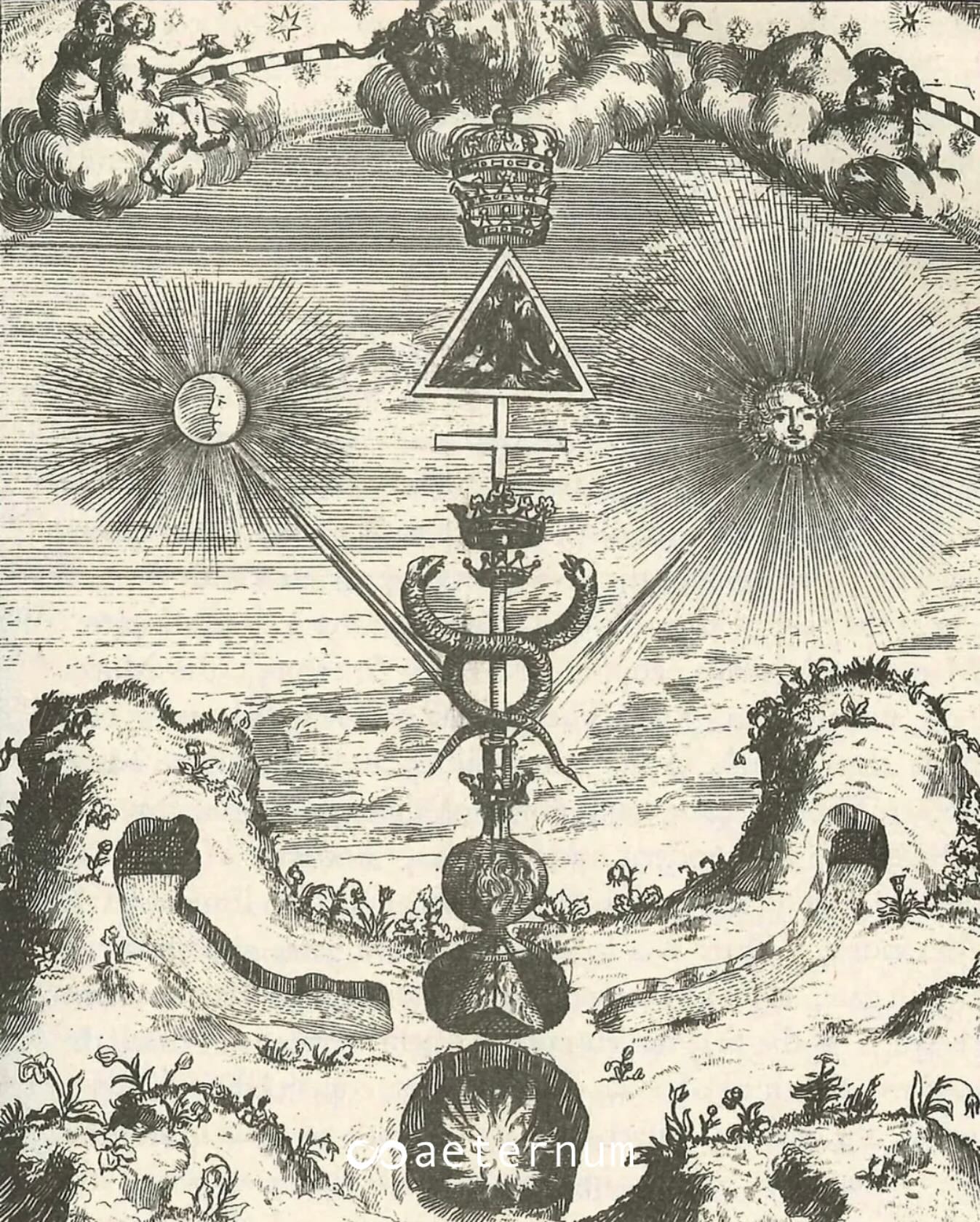
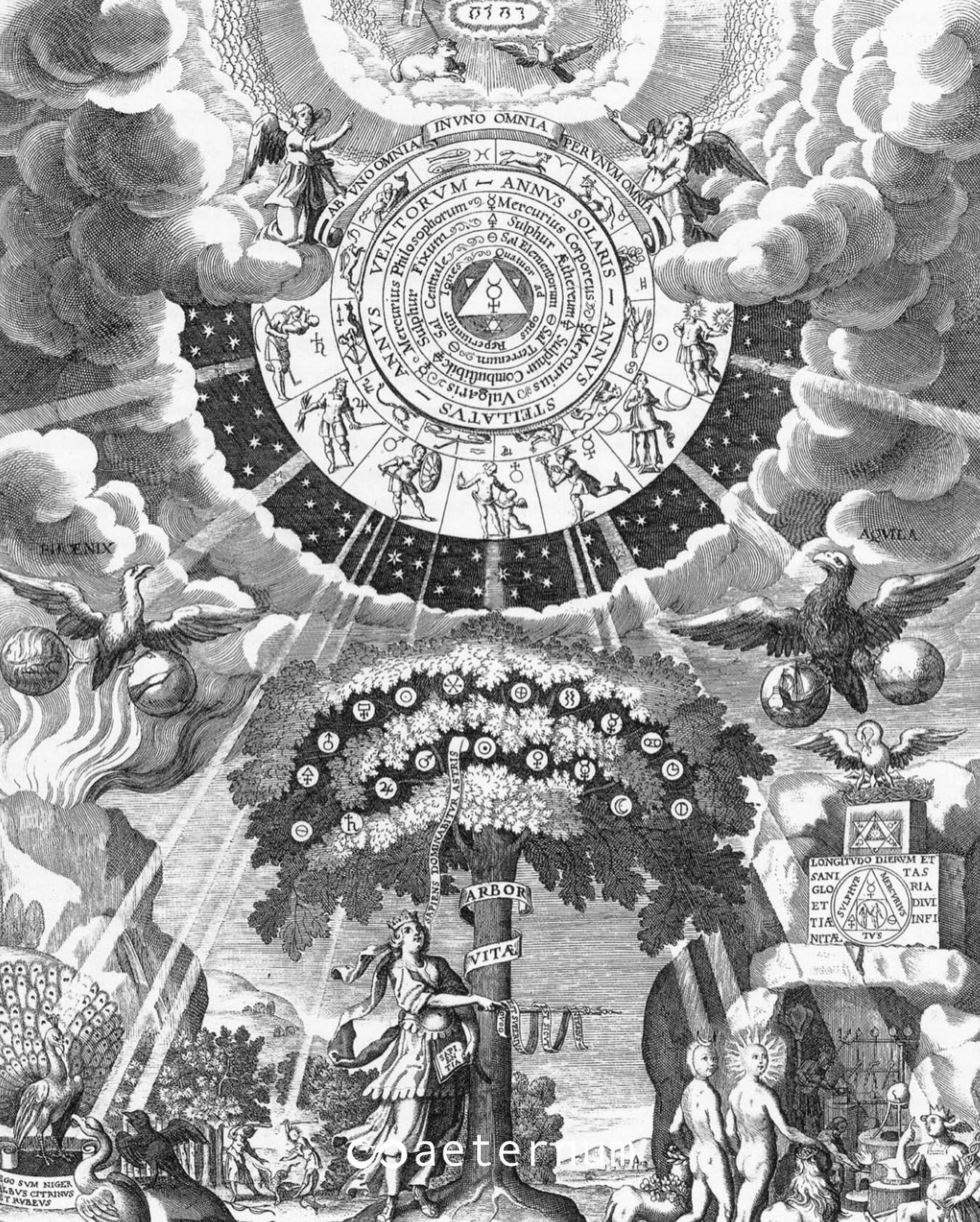
Alchemy readily adopts animals capable of expressing transformation, death, and regeneration. The Phoenix offers a perfect image of matter passing through fire and emerging in a renewed form.
Alchemical emblems can therefore use the bird to mark a phase of perfection or rebirth after the destruction of a previous state.
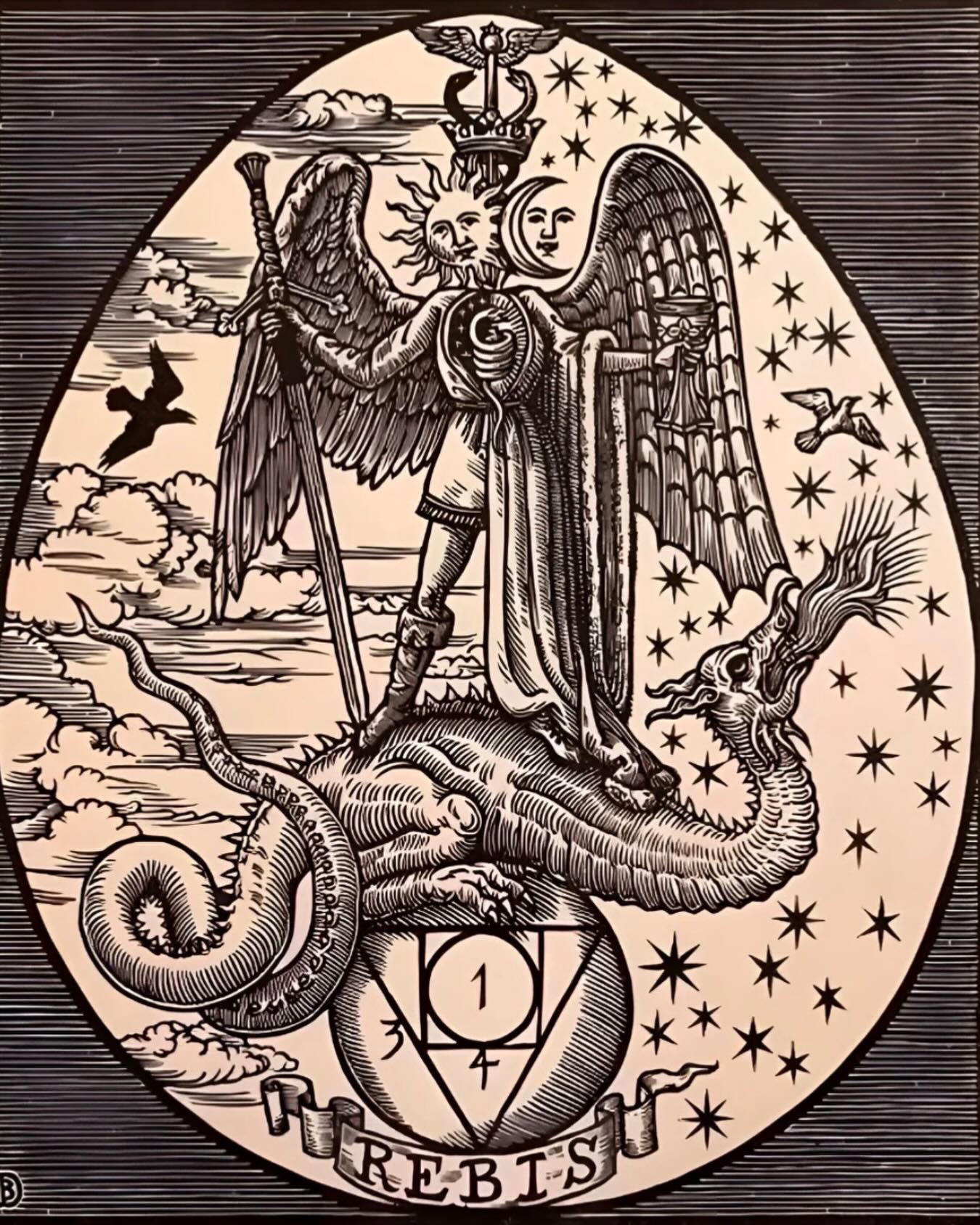
The Rebis, the Ouroboros, and the Phoenix present three different ways of representing transformation, union, and renewal in the alchemical imagination.
Why does it become the universal symbol of rebirth?
The expression “rising from the ashes” detached the Phoenix from its religious and alchemical contexts, turning it into a general metaphor for resilience and renewal.
This modern interpretation remains faithful to the core of the story, even though it erases the complexity of ancient and Christian traditions.
The Phoenix works so well as a symbol because its story can be understood immediately: destruction is not the end; it prepares the way for a new birth. This narrative structure has enabled it to endure through more than two millennia of images and texts.
Sources and historical context
The Metropolitan Museum of Art houses a representation of Hope accompanied by a Phoenix, identified as a symbol of Christ’s Resurrection. An eighteenth-century Portuguese chasuble also associates the Phoenix rising from its ashes with the IHS monogram.