





























































































Basile Valentin is an emblematic figure of alchemy, traditionally presented as a 15th-century Benedictine monk who became an alchemist. His name is associated with several treatises published in the early 17th century, including The Twelve Keys of Philosophy and The Triumphal Chariot of Antimony, which enjoyed great success throughout Europe. The real existence of this character nevertheless remains shrouded in a relatively mysterious aura, but his writings strongly influenced the development of the emerging science of chemistry.
Legendary origins and uncertain identity
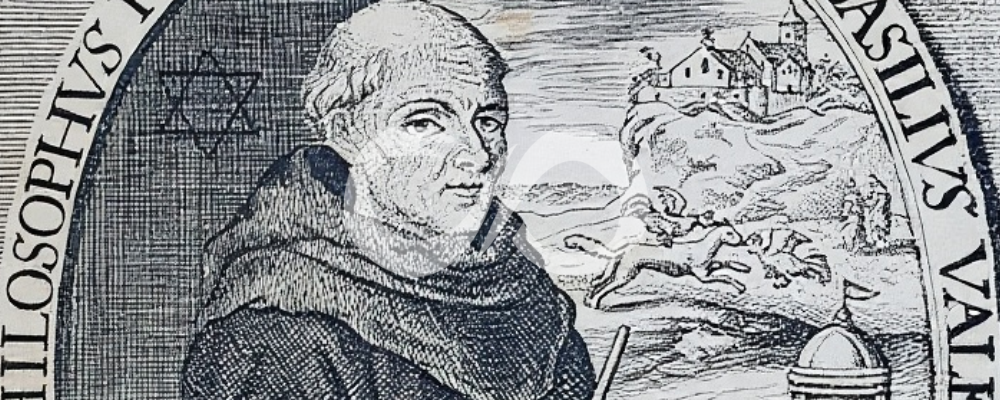
Very few verifiable details are available about Basile Valentin’s life. Tradition holds that he was born around 1394 and became a Benedictine monk at the Saint Peter’s Monastery in Erfurt, Germany, around 1413, but no documentary evidence supports this. In reality, his historical existence is highly uncertain: no monk by this name is mentioned in the monastic archives of Germany. Historians consider Basile Valentin to have been probably fictitious, a pseudonym used by one or more German authors in the late 16th century. As early as the 18th century, researchers suggested that the real author of the works attributed to Basile Valentin was Johann Thölde, a German salt entrepreneur who lived from 1565 to 1624. Modern research confirms that at least part of Basile Valentin’s writings did indeed come from Johann Thölde, while suggesting that other anonymous authors may have contributed to this collective work. Moreover, Johann Thölde was the first editor of the treatises published under the name Basile Valentin, and he himself signed five of them at the beginning of the 17th century. The true Basile Valentin therefore remains a mysterious figure, perhaps purely legendary, concealing the identities of later authors.
Scientific work and chemical discoveries
Whatever the identity of the author hidden behind the name Basile Valentin, the writings attributed to him reveal an in-depth knowledge of the chemistry of the time. They contain descriptions of innovative processes and precise experimental observations. Basile Valentin explains how to obtain ammonia by heating sal ammoniac (ammonium chloride) in the presence of alkalis, and how to produce hydrochloric acid through a reaction between sea salt (sodium chloride) and “oil of vitriol” (sulfuric acid). He also details the preparation of concentrated sulfuric acid itself, then called oil of vitriol, by distilling mixtures of sulfates. His experiments also covered the chemistry of metals: Basile Valentin highlighted the properties of antimony and its compounds. In The Triumphal Chariot of Antimony, he praised the medicinal virtues of antimony sulfide (stibnite), contrasting them with the treatments of classical medicine inherited from Galen. Thanks to all these contributions, some authors have described Basile Valentin as a “precursor” - or even as the father of modern chemistry - so significant was his impact on the development of the emerging chemical science through his discoveries and experimental approach. Moreover, a mineral discovered later, valentinite (antimony oxide Sb₂O₃), was named in his honor in the 19th century.
Main attributed alchemical treatises
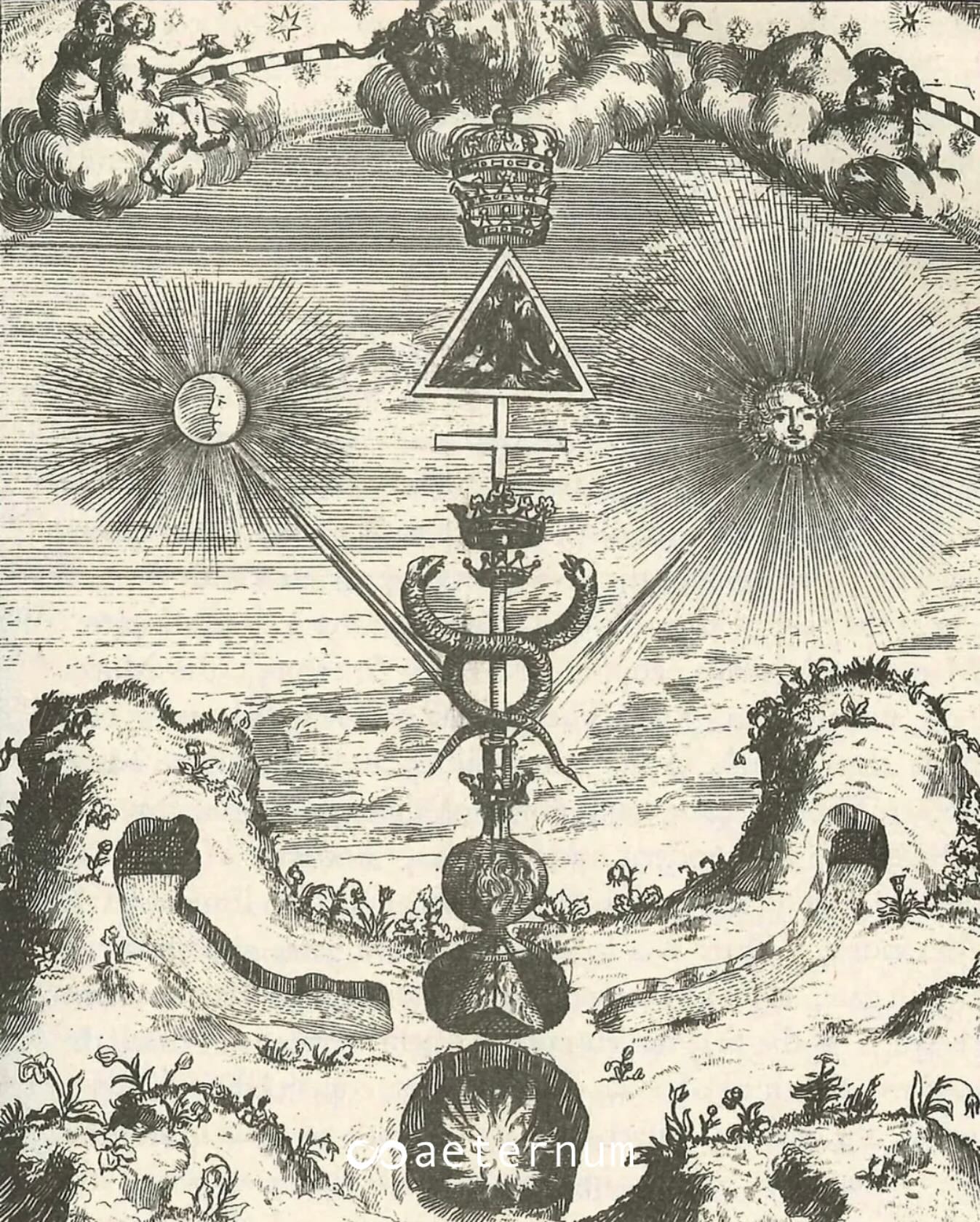
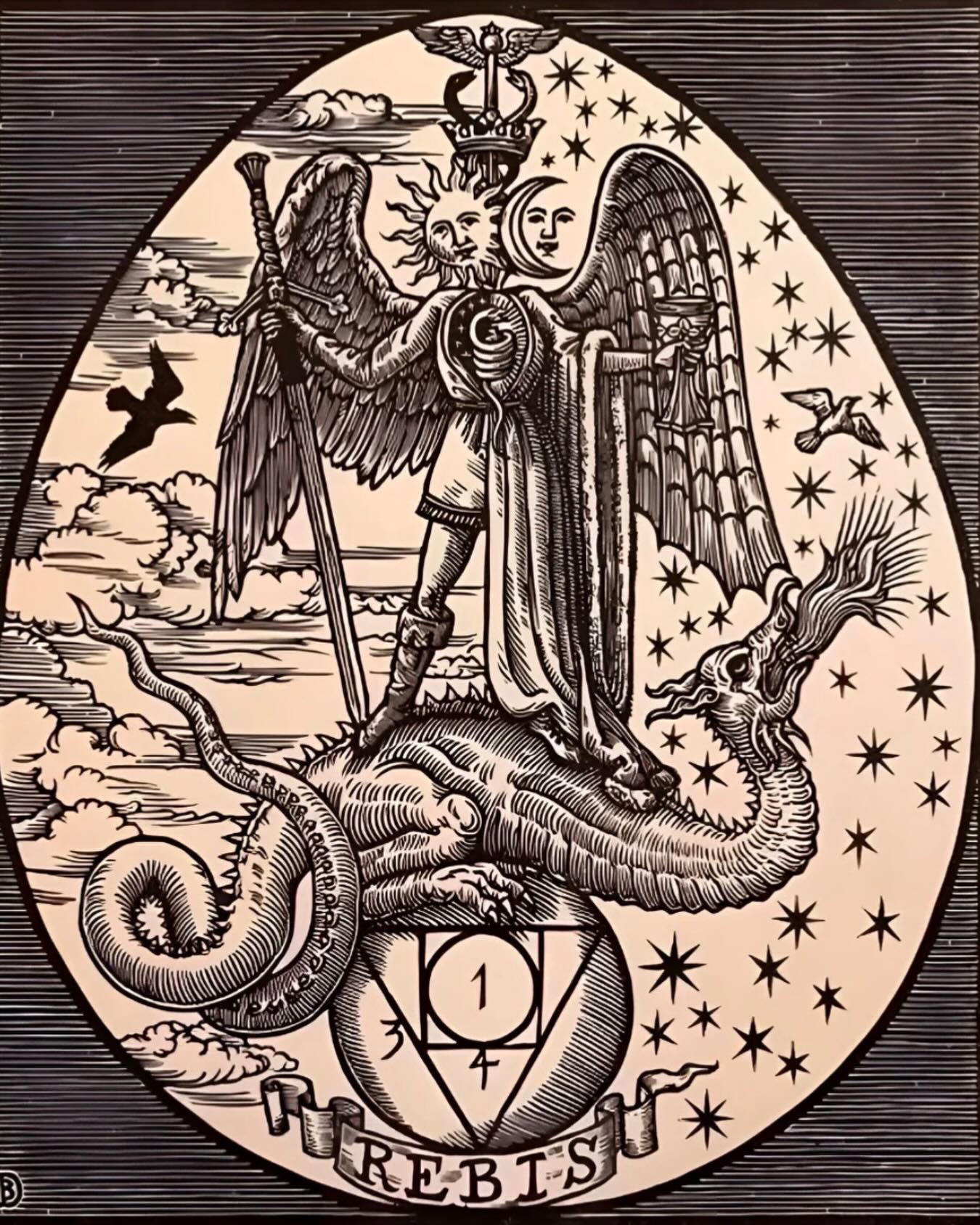
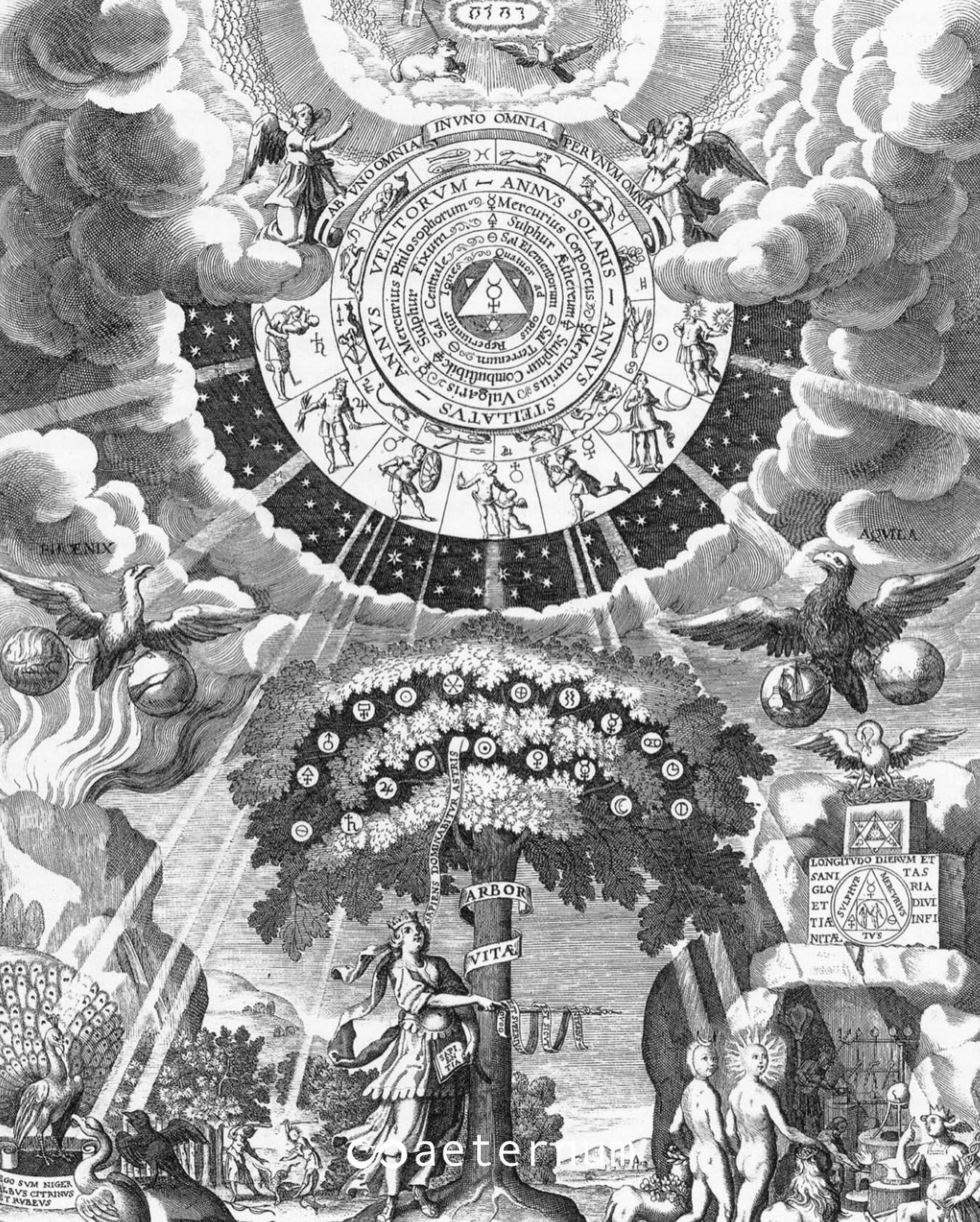
Several influential alchemical treatises from the 17th and 18th centuries were published under the name Basile Valentin, forming a legendary corpus of hermetic literature. The most famous of them is The Twelve Keys of Philosophy, an allegorical text that supposedly presents the stages of alchemical transmutation in symbolic form. This work is said to have first appeared in German around 1600, and it underwent numerous reprints and translations. In 1618, the alchemist Michael Maier published a Latin version included in the collection Tripus Aureus, enriched with remarkable symbolic engravings to accompany each “key” to the mystery. Another major text is The Triumphal Chariot of Antimony (Triumphwagen des Antimonii), published in Leipzig in 1604. Under this evocative title, Basile Valentin presents the properties and therapeutic uses of antimony, taking the side of “spagyric” medicine (the alchemical medicine of the tradition of Paracelsus) against the scholastic medicine of his time. Other notable works include Azoth, or the Means of Making the Philosophers’ Hidden Gold (published in 1624) and The Last Testament (around 1651). In Azoth, Basile Valentin discusses philosophical mercury and the alchemical principles of transmutation, while The Last Testament veiledly reveals the secret of “VITRIOL,” an esoteric acronym designating the formula of the philosopher’s stone. Even after the publication of these principal works, new alchemical texts continued to appear under the name Basile Valentin until the end of the 17th century, showing that this pseudonym enjoyed immense prestige in hermetic circles at the time.
Influence and legacy
The writings attributed to Basile Valentin exerted a significant influence on alchemy and proto-chemistry in the centuries that followed. Thanks to Johann Thölde and other publishers, these treatises were widely disseminated throughout learned Europe. From the 17th century onward, they were translated into Latin and then into the principal vernacular languages (French, English, Russian,...), contributing to their international renown. In particular, The Triumphal Chariot of Antimony was available in English as early as 1661, allowing English scholars and apothecaries to benefit from the knowledge it contained. Taken together, these works, combining empirical knowledge of emerging chemistry with alchemical symbolism, formed a link between the medieval tradition and the scientific advances of the modern era. Even today, historians of science recognize the importance of this corpus: it bears witness to the pivotal moment when operative alchemy began to transform into scientific chemistry. The name Basile Valentin thus remains associated with the transition between two worldviews. As evidence of this legacy, a famous anecdote about him has circulated since the 19th century: it is said that the monk Basile Valentin discovered the nutritional virtues of antimony by administering this mineral to pigs to fatten them, and then tried to share it with the monks of his monastery - sadly, they are said to have all died from it, hence the nickname “anti-monk” allegedly given to antimony ever since. Although apocryphal and told in a humorous tone, this legend illustrates antimony’s dubious reputation, both literally and figuratively, throughout history and contributes to the semi-legendary character surrounding Basile Valentin.

Par Olivier of Aeternum
Passionate about esoteric traditions and the history of the occult from the earliest civilizations to the 18th century, I share some articles on these topics. I am also co-creator of the online esoteric shop Aeternum.