



















































































































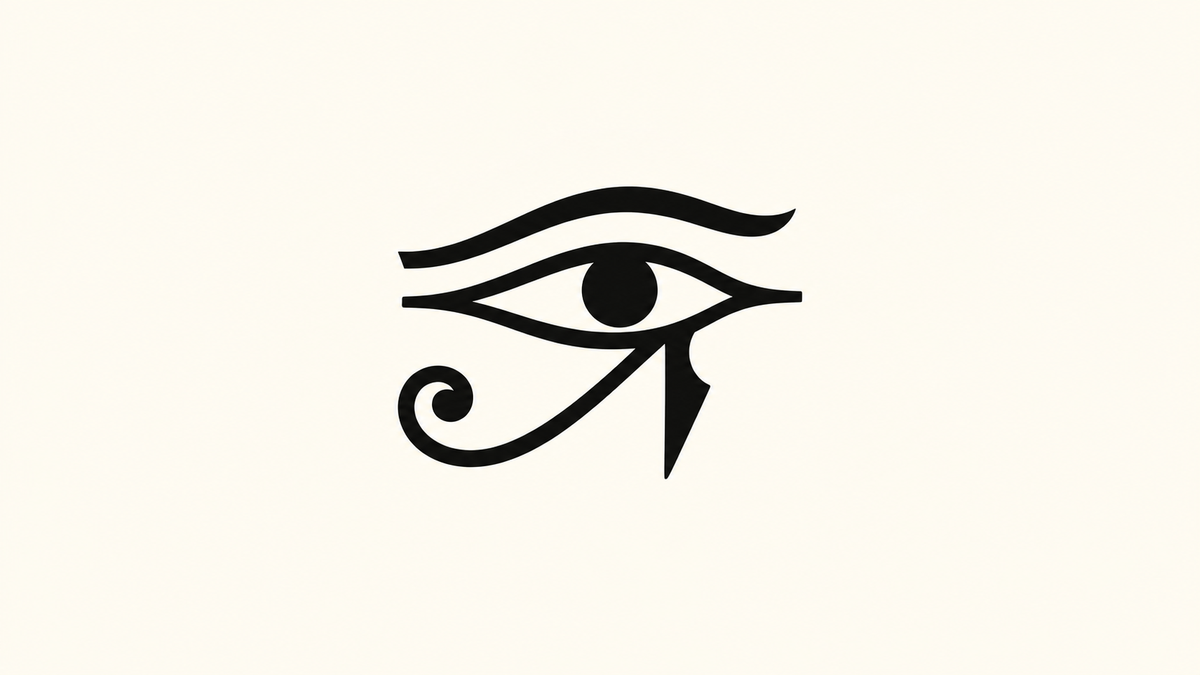
The Eye of Ra refers to a solar power personified in several Egyptian goddesses. It is not a fixed drawing comparable to the Wedjat eye alone. Hathor, Sekhmet, Bastet, Tefnut, Mut, or Wadjet can act as the “Eye of Ra” depending on the stories and temples. This power is both protective and formidable: it acts for the solar god, combats his enemies, and sometimes must be pacified after its anger.
| Nature | Divine power and function, not a single glyph |
|---|---|
| Solar god | Ra / Amun-Ra |
| Associated goddesses | Hathor, Sekhmet, Bastet, Tefnut, Mut, Wadjet, Isis depending on the context |
| Functions | Protection, destruction of enemies, return of solar power |
| To distinguish | Wedjat eye / Eye of Horus |
Is the Eye of Ra a specific graphic symbol?
No. The expression primarily refers to a divine function. A goddess can become the Eye of Ra without being represented by the same emblem in every scene.
The Metropolitan Museum describes several goddesses as agents and counterparts of the solar god, capable of embodying this function.
An image of a lioness, cobra, cow, or human goddess can therefore represent the Eye of Ra, depending on the context.
Why do several goddesses bear this title?
The power of the solar eye can be attributed to several major Egyptian goddesses. Hathor, Sekhmet, and Bastet are particularly important within this group.
The Met holds amulets in which Hathor and Bastet are united in the same solar program, indicating the closeness of their functions.
Plurality is not a contradiction: Egyptian religion allows the same power to be expressed through several divine figures.
What role does the Distant Goddess play?
One story tells that a goddess who is the Eye of Ra leaves Egypt in anger and travels south. Her absence weakens the solar order.
Thoth or other gods must persuade her to return. Her return restores prosperity and balance.
The Met presents this story as a major theme in goddess cults during the Third Intermediate Period.
Why is the solar power also beneficial?
The Eye of Ra destroys the solar god’s enemies, but its power is not solely hostile. Once appeased, the goddess becomes a protector of the king and humanity.
The same power can therefore attack and protect depending on the relationship established with it.
This ambivalence is also reflected in the uraeus, the royal cobra that threatens enemies while defending the ruler.
What is the difference from the Eye of Horus?
The Eye of Horus, or wedjat, is linked to the story of an injured eye that was later restored and to the idea of recovered wholeness.
The Eye of Ra refers to a solar power personified by goddesses. The two traditions may overlap, but they are not identical.
This distinction prevents all Egyptian eyes from being reduced to a single generic symbol.
Historical sources and reference points
The Metropolitan Museum of Art presents Hathor, Mut-Sekhmet-Bastet, Tefnut, Wadjet, and Isis as goddesses of the Eye of Ra. Its study of the Distant Goddess explains their role as protective and fearsome solar powers.










