































































































The Sirens of Greek mythology are not creatures of the depths, but figures of height, perched on shores between sky and sea, between knowledge and loss, between beauty and death. Long before they became mermaids, they were those bird-women with an unforgettable song. By returning to their original myth, we rediscover an image more complex, more ambivalent, and far more powerful than the one attributed to them today. And perhaps, if one listens closely, their voices can still be heard by those who know how to resist... or yield.
First Mentions of Sirens in Ancient Accounts
The myth of the Sirens took root in ancient Greece, and its oldest known mention appears in Homer's Odyssey (8th century BC). In Book XII of this epic, the hero Odysseus is warned by the sorceress Circe of the mortal danger posed by these mysterious creatures. When he reaches the island of the Sirens, Odysseus follows her advice: he plugs his sailors' ears with wax and has himself firmly tied to the mast of his ship so that he can hear their song without succumbing to temptation. Homer depicts the island of the Sirens as a deceptively idyllic place - a flower-filled meadow beside the sea - yet strewn with the dried bones of unfortunate sailors enchanted by their voices. Indeed, no navigator could listen to the captivating song of these beings with impunity: anyone who approached ran aground on the reefs and perished, a victim of the Sirens' fatal seduction.
Homer gives few physical details about his Sirens, focusing above all on their enchanting voices and the irresistible power of their music. He specifies neither their exact number nor their appearance, merely describing them as “women with enchanting voices” stationed on the shore. However, the Homeric text uses a dual grammatical form when referring to the Sirens, suggesting that there were only two in this original account. Later, an ancient scholion on this passage would confirm this interpretation, while other later traditions would mention three Sirens or more, assigning them various symbolic names. In any case, it is this episode from the Odyssey - in which Odysseus succeeds in outwitting the Sirens' trap - that constitutes the first significant literary appearance of these creatures. From the outset, it establishes the myth's main features: a song of supernatural beauty bearing a deceptive promise, and mortal danger for those who surrender to it.
A Half-Woman, Half-Bird Appearance
Unlike the later popular imagery that would turn Sirens into fish-women swimming through the waves, the original Sirens of Greek mythology had nothing resembling a mermaid's form. Ancient sources describe them as hybrid creatures, half-women and half-birds, moving on land or through the air rather than in water. According to the mythographer Apollodorus (1st - 2nd century AD), “from the waist down, they had the appearance of birds.” In other words, Greek Sirens were imagined with a woman's upper body (a human head and chest) atop a bird's body equipped with clawed feet and wings. Artists of antiquity represented them extensively in this form: archaic and classical Greek pottery, for example, shows Odysseus tied to his mast, facing bird-women with outspread wings, perched on cliffs or flying around the ship.

Odysseus and the Sirens. Source
Significantly, Homer himself does not specify the animal nature of the Sirens in his text. Later authors and iconography would firmly establish their winged appearance. Ovid (1st century BC), in his Metamorphoses, explicitly refers to bird-bodied Sirens: he recounts that they did not always have wings, but acquired them through metamorphosis (see the following section). They are therefore far removed from the mermaid of maritime legends - in reality, ancient Sirens are associated with land and sky far more than with the aquatic element. This half-woman, half-bird appearance, attested as early as the 8th century BC in the Greek world, endured throughout antiquity and even beyond: winged Sirens can still be found in early medieval art, until the image of the fish-woman gradually replaced it centuries later.
Temptation, Knowledge, and Death
If the Sirens exert such fascination, it is because their myth crystallizes a powerful symbol of mortal temptation. In the Odyssey, Odysseus is drawn toward the Sirens' intoxicating song, which promises him wonders beyond imagination. The Homeric text thus suggests that these beings offer the promise of unlimited knowledge: they claim to know everything that happens on the nurturing earth, including the secrets of the Trojan War in which the hero took part. As Odysseus approaches, the Sirens call out to him, boasting of their omniscience and assuring him that, if he agrees to listen to them, he will depart “content and richer in knowledge.” Yet the prodigious knowledge they proclaim is a treacherous lure, for anyone who yields to their call is condemned to perish at once. The Sirens therefore embody the irresistible allure of forbidden knowledge or enchanting pleasure that leads to ruin.
Indeed, Homer describes their bewitching song with evocative expressions: a voice “fresh and clear” and melodies “sweet as honey,” capable of charming even the last of their listeners. Beneath this sonic beauty lies death - the whitened bones on their shore bear witness to it. In Greek tradition, the Sirens are thus seen as fatal temptresses, symbols of the dangers of seduction and straying from one's path. Various ancient authors interpreted their song allegorically, seeing in it, for example, a metaphor for poetry or knowledge whose allure can divert a person from their course. In every case, the myth's lesson is clear: yielding to the Sirens' song amounts to signing one's death warrant, so harmful is what lies behind the harmony of their voices. This expression has also entered everyday language to describe allowing oneself to be seduced by a dangerous temptation. From the outset, Greek Sirens therefore appear as guardians of forbidden knowledge and fatal pleasure, challenging the reason and prudence of the heroes who cross their path.
The Evolution of the Myth
Mythological Origins and Metamorphoses of the Sirens
The origin of the Sirens in mythology is not told in a single, consistent manner: several versions coexisted from antiquity onward, seeking to explain how these winged creatures came into being. Most of these origin stories link the Sirens to aquatic or inspiring divinities, which makes sense for beings that are both maritime (through their setting) and musical. According to the most widespread tradition, the Sirens were the daughters of the river god Achelous and a Muse - sources disagree about the mother's identity, naming in turn the Muse Calliope (goddess of epic poetry), Melpomene (goddess of song), or Terpsichore. This lineage immediately endowed them with an extraordinary voice and a half-terrestrial, half-aquatic heritage. Other authors assign them different parents: according to the philosopher Plutarch, the Sirens were born of the sea god Phorcys and the nymph Ceto, while a legend reported by Libanius claims that they sprang from the blood of the river Achelous when he was wounded by Heracles. In the Roman version reported by certain commentators, the Sirens were originally merely mortal young women, companions of the goddess Persephone (Kore): unable to prevent Hades from abducting their friend, they were punished - by Demeter, Persephone's mother - by being transformed into half-woman, half-bird monsters.
A related variant, popularized by Ovid in his Metamorphoses, presents this transformation not as a punishment but as a request: distraught after losing Persephone, the young women allegedly asked the gods to give them wings so that they could search for her on land and sea, and the gods granted their request. So as not to deprive them of the beauty of their song, the divinities also left them their human faces and voices. Whatever the version, the connection with Persephone gives the Sirens an ambiguous dimension: because they were attached to the goddess of the Underworld, they belonged to the chthonic world (subterranean and linked to death), yet they also retained something celestial through their wings and their song inherited from the Muses. This duality (half-divine, half-demonic, celestial and infernal at once) nourished the rich symbolism of the Sirens in the later tradition.
Among the later stories that enrich their myth is the episode of the musical competition with the Muses. Proud of their incomparable vocal talent, the Sirens one day challenged the nine Muses to a singing contest. The Muses prevailed and, to punish the Sirens' arrogance, the victorious divinities plucked out their feathers and made crowns from them. Humiliated and deprived of the ability to fly, the Sirens had to remain on their rocky island, watching for new victims. This anecdote, reported by certain later sources, once again emphasizes the motif of divine punishment for the Sirens' hubris (excessive pride), while explaining why they are imagined as trapped on a rock in the middle of the sea.
The Sirens in Greco-Roman Stories and Art
Over time, the myth of the Sirens became integrated into other legendary cycles and underwent notable variations. Homer had made the Sirens an isolated episode in Odysseus's journey, with no further fate for these creatures once the hero was out of their reach. Later authors sometimes imagined what happened to the Sirens after their encounter with Odysseus. A tradition reported in texts from the Trojan cycle holds that, after failing to charm Odysseus, the Sirens, despairing at seeing their song defeated, killed themselves by throwing themselves into the sea from their rock. This tragic ending would fulfill a prophecy that the Sirens would die as soon as a mortal succeeded in resisting them. Other legends, by contrast, place the Sirens' definitive defeat somewhat earlier: in late Greek mythology, they are said to have confronted the heroes Jason and the Argonauts, long before Odysseus's return. When the Argonauts' ship passed near their island, the Sirens began their fatal song, but Orpheus, the crew's musician, made his lyre and voice resound with such beauty that he drowned out and surpassed the Sirens' music. Enchanted by Orpheus's divine art, the terrible enchantresses were silenced and the ship was able to pass safely. Only the sailor Boutes, nevertheless bewitched, threw himself into the water to join them, but he was rescued just in time by the goddess Aphrodite. Once again, the legend ends with the Sirens' suicide, defeated and humiliated at seeing mortals escape their power.
In Roman literature, the Sirens appear more allusively, often under the pens of poets inspired by Homer. Hyginus, a Latin compiler (1st century AD), briefly mentions the Sirens in his Fables, retelling the story of their transformation and giving them names. Ovid, as we have seen, offers an elegiac version of their metamorphosis connected to Persephone. Virgil and Propertius refer to them poetically to symbolize a dangerous attraction. In general, the Romans inherited the myth from the Greeks and adapted it to their taste for the fantastic and marvelous, without profoundly altering its underlying narrative. They did, however, help spread the Sirens' renown throughout the Empire, so that their image endured in the late imperial period and beyond.
Furthermore, the number and identity of the Sirens varied according to ancient sources. Homer, as mentioned, gives no indication of their names or number. Later, some authors speak of two Sirens, others of three, or even four. The most common tradition eventually settled on three Sirens. They were given meaningful names, almost always connected with their enchanting voices or seductive power: Parthenope (“maiden-faced”), Ligeia (“the clear-voiced”), and Leucosia (“the white one”) form a trio mentioned by authors such as Apollonius of Rhodes and Strabo. Other versions provide different lists of names (Aglaope, Thelxiepeia, Molpe), but the symbolism remains similar and emphasizes the song's deceptive beauty. In certain local legends of southern Italy, each Siren is even associated with a place: the Bay of Naples, for example, was said to have received Parthenope's remains, giving its name to the ancient city of Parthenope (the precursor of Naples). These geographical associations demonstrate how deeply rooted the myth was in Greco-Roman culture, where people readily integrated the Sirens into the local mythology of the Mediterranean coasts.
Finally, the iconography and symbolism of the Sirens evolved during late antiquity. While in the classical period they are found mainly in scenes connected with the Odyssey (Odysseus tied to the mast facing the Sirens), in the Hellenistic and then Roman periods they also began to be depicted in funerary contexts. Figures of Sirens were sculpted on stelae and sarcophagi, particularly in Greece and Etruria, where they adorned funerary monuments. Their presence beside the dead can be explained by the psychopomp dimension (guide of souls) attributed to them at that time: creatures halfway between life and death, linked to Persephone and the Underworld, the Sirens were assimilated to consoling spirits guiding the deceased's soul or mourning their passing. In his play Helen, Euripides explicitly refers to this funerary role by calling the Sirens “winged maidens, daughters of Earth,” invited to join their songs with the laments for the dead. Thus, in popular Greco-Roman religion, the Sirens became a symbol of passage to the afterlife: their sad or melancholy song over tombs eased the ordeal of death and echoed human funeral songs. This aspect completes the multifaceted portrait of the ancient Sirens, at once fearsome musicians and guardians of the world of the dead.
The Legacy of the Greek Sirens
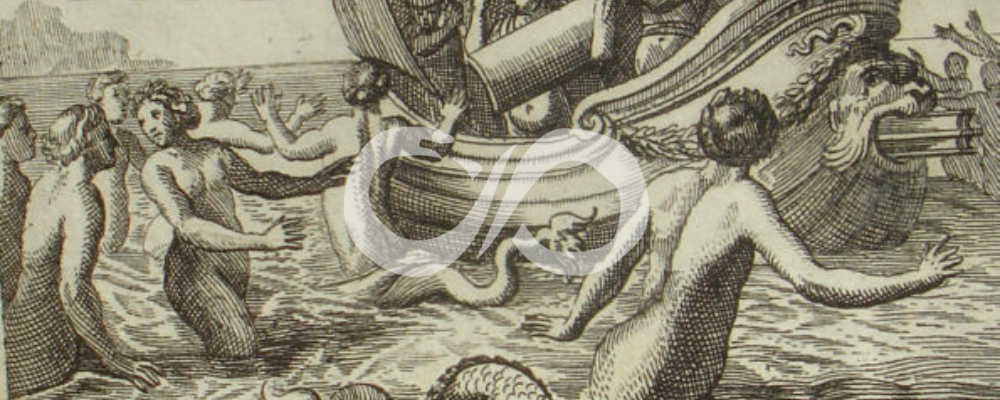
The Greek myth of the Sirens exerted a lasting influence on later cultures, far beyond antiquity. The Romans had already transmitted it, but it was especially during the Middle Ages that the figure of the Siren underwent a notable transformation, blending with other legendary creatures. Indeed, the Greek Sirens - terrestrial bird-women - gradually came to be assimilated with the fish-women of Nordic and medieval legends. Medieval bestiaries, which compiled fabulous creatures alongside Christian morality, created a curious syncretism: they retained the term and the idea of Homer's singing, seductive Siren, but depicted her with a fish tail and no wings. It was, in a sense, a cross between the classical winged Siren and the “sea woman” of northern traditions. This process of iconographic transformation unfolded over many centuries. According to researchers, the bird-woman type, which appeared in the Greek world in the 8th century BC, remained in place almost until the end of the Middle Ages, truly giving way to the fish-Siren only around the year 1000. The first known text to explicitly mention a Siren with a fish tail dates from the 6th century AD (a Latin treatise entitled De monstris), and art historians note that no visual representation of a half-woman, half-fish Siren appeared before the 11th - 12th centuries. This shows how slow and gradual the transition was.

Odysseus seduced by the Sirens. Source
Why this shift toward the aquatic Siren? The appeal of sea stories and the incorporation of local elements contributed to it. Through successive copies and adaptations, the image of the Siren adapted to regional imaginations: in medieval Christian Europe, she continued to be seen as a treacherous temptress (theologians would view her as an allegory of lust or the devil's voice luring the sinner's soul), but she was now imagined swimming in the ocean, comb and mirror in hand, like the sea nymphs and undines of northern tales. The word “siren” itself came, in the Romance languages, to designate the fish-tailed creature that English calls a mermaid (literally “daughter of the sea”). This semantic evolution cemented the confusion between the Homeric Siren and the legendary fish-woman. Nevertheless, the lineage remains clear: it was the Greek myth that provided the narrative and symbolic foundation. The mermaid-melusines of the Middle Ages and the mermaids of modern tales (from Hans Christian Andersen to Walt Disney) all inherit, through the filters of time, the story of the Sirens of the Tyrrhenian Sea.
Thus, the Siren of Greek mythology - a bird-woman with an intoxicating song - constitutes the original source of a universal imagination of the supernatural femme fatale. From antiquity to the present day, her legacy can be seen in the many incarnations this figure has taken: a cruel Muse challenging Greek heroes, a tempting demon of Christian mythographers, and later a fairy of the sea. Far from being a simple sailors' fable, the Sirens' song resonates as a timeless echo of the dangers of temptation and the allure of forbidden knowledge. And although our Sirens today are aquatic creatures with scaly tails, we must not forget that at the origin of the myth, it was the Greeks who first sang the troubling melody of the winged Sirens.
Sources:
-
Homer, Odyssey, Book XII (translations and commentaries)
-
Apollodorus, Library (Epitome VII, 18)
-
Ovid, Metamorphoses, Book V
-
Hyginus, Fables, CX25, CX41
-
Euripides, Helen
-
Jacqueline Leclercq-Marx, The Siren in the Thought and Art of Antiquity, Brussels, Royal Academy of Belgium, 1997
-
Anne-Laure Fontenel, “The Sirens, Bird-Women with Enchanting Voices,” Odysseum (Museum of the History of Marseille), 2023
-
Odette Touchefeu-Meynier, “When Does the Fish-Siren Date From?”, Belgian Review of Philology and History, 1962
-
Eurêkoi/BPI Response - Public Information Library: “How Did We Go from Bird-Sirens to Fish-Sirens?” (available online)

Par Olivier of Aeternum
Passionate about esoteric traditions and the history of the occult from the earliest civilizations to the 18th century, I share some articles on these topics. I am also co-creator of the online esoteric shop Aeternum.