



















































































































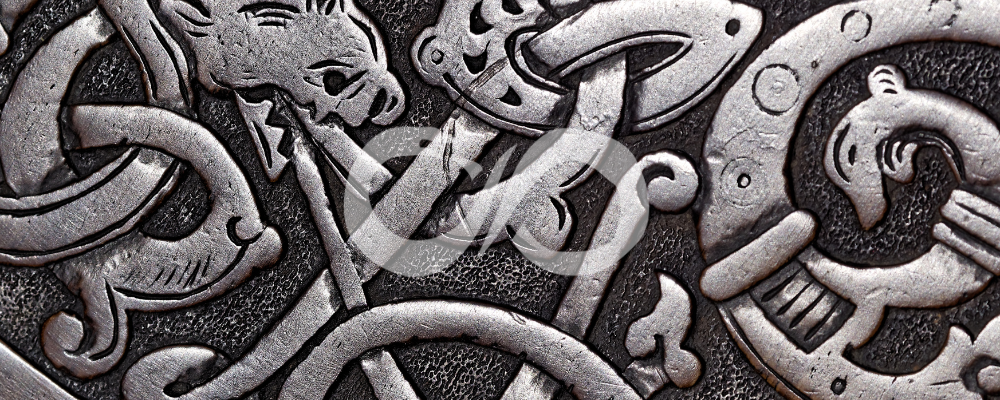
Ásatrú is a Germanic-Norse (also called Scandinavian) neo-pagan religion that seeks to revive the spiritual tradition of the ancient Vikings and pre-Christian Germanic peoples. Its name, borrowed from modern Icelandic, literally means “faith in the Æsir” - that is, faith in the gods of the Norse pantheon. Officially recognized as a state religion in Iceland since 1973, and then in Denmark in 2003, Ásatrú has spread to many Western countries (North America, Europe, ...) including France, where there were around one thousand followers by 2015. Both a serious reconstructionist movement and a spiritual path, Ásatrú draws its teachings from the Icelandic sagas and the medieval Eddas (the major sources of Norse mythology).
Historical origins and the neo-pagan revival
The ancient Scandinavian peoples practiced a polytheistic religion venerating the Norse gods long before the arrival of Christianity, without giving it a specific name. It was only after Christianization, completed between the 11th and 12th centuries (symbolized by the legendary destruction of the temple at Uppsala in 1087), that medieval Scandinavians referred to their former religion by the term Forn Siðr (“ancient custom” in Old Norse). With the imposition of Christianity, these ancient pagan practices almost completely disappeared from the Middle Ages onward. For centuries, all that remained of the Norse religion was a mythological and literary heritage, passed down through chronicles and cultural memory, but without a community of organized followers.
After this eclipse lasting several centuries, renewed interest in Norse religion emerged in the 19th century, in the context of Romanticism and rising nationalism in Northern Europe. In Sweden in particular, Romantic authors and scholars such as Erik Gustaf Geijer and the literary society Götiska Förbundet (founded in 1811) brought Scandinavian myths and Viking figures back into prominence. The word Ásatrú itself appeared during this period: it can be found in 1870 in a work by Norwegian composer Edvard Grieg, and then in 1885 in an Icelandic newspaper, to designate the revived “religion of the Æsir.” At the beginning of the 20th century, the first neo-pagan organizations devoted to the Germanic-Norse gods emerged, notably in Germany with the founding in 1913 of the Germanische Glaubens-Gemeinschaft (“Germanic Faith Community”) by Ludwig Fahrenkrog.

It was nevertheless at the end of the 1960s and the beginning of the 1970s that Ásatrú experienced its second revival, the one that gave rise to today’s communities. In 1973, in Iceland, a poet and farmer named Sveinbjörn Beinteinsson succeeded in having Ásatrú officially recognized as a religion by the state. He founded the Ásatrúarfélagið (Ásatrú Association), which still exists today and has become the country’s largest non-Christian organization. At the same time, in the United States, a veteran named Stephen McNallen launched the magazine The Runestone and founded the Ásatrú Free Assembly in 1974 (later renamed the Ásatrú Folk Assembly), helping establish the movement in North America. In the following decades, Ásatrú became organized in many countries: a national association was established in Norway in 1996, in Denmark in 1997 (officially recognized in 2003), and later in Sweden, Spain, France, and elsewhere. Today, Ásatrú groups (called kindreds or families) can be found on every continent where the European diaspora is present. The exact number of members worldwide is difficult to estimate, but there are said to be several tens of thousands of active practitioners - including approximately 5,000 to 6,000 formally registered as such in the early 2010s, according to some sources. As a sign of its vitality, Ásatrú has even been the religion with the highest relative growth in Iceland in recent years, and it has recently had a temple under construction there to host its ceremonies.
Deities and worldview
Ásatrú beliefs are rooted in Norse mythology, as it has come down to us through the Eddas and medieval sagas. The Viking pantheon is rich in numerous deities, organized into two major families: the Æsir, celestial gods of Odin’s clan, and the Vanir, gods associated with fertility and nature. Among the Æsir are major gods such as Odin (sovereign god of wisdom and magic), Thor (god of thunder and protector of humanity), Tyr (god of justice and courage), Frigg (goddess of the home and family), and Baldr (god of light). The Vanir include Freyr and Freyja, brother and sister associated with fertility, love, and prosperity, as well as Njörd, the god of the sea. Ásatrú followers - called Ásatrúar in Icelandic - honor all these gods according to their personal affinities, without any exclusive worship of a single deity. Nevertheless, many give special importance to Odin, regarded as the “All-Father” and a source of profound wisdom through the sacred poem Hávamál (“Sayings of the High One,” attributed to Odin himself). This poem, preserved in the Poetic Edda, contains much advice on proper conduct and how to live, making Odin a central ethical guide in the eyes of many Ásatrúar.
Ásatrú differs from monotheistic religions through an entirely different worldview. First, the Norse gods are neither perfect nor immortal: they are powerful and wise, but possess weaknesses, and are destined to die one day during Ragnarök (the “Twilight of the Gods” in mythology). This mortality of the gods is fascinating to Ásatrúar because it makes these deities closer to human beings. Relations between humans and gods resemble less a relationship of submission than a form of friendship or partnership: the gods may offer protection and inspiration, but humans retain their free will and do not hesitate to “scold” a god who disappoints them. In ancient Scandinavia, it was not uncommon for a farmer to temporarily stop making offerings to a god who had let him down and instead seek out another deity - a mindset very foreign to the exclusivism of monotheistic religions, and one that made the adoption of Christianity difficult in these regions.

Furthermore, Ásatrú imposes no rigid dogma or immutable revelation. Most Ásatrúar do not take the myths literally as historical truths, but view them as metaphorical symbolism carrying spiritual teachings. There is no single theology or absolute orthodoxy in Ásatrú; on the contrary, the religion allows for a certain diversity of interpretations and encourages everyone to reflect for themselves on the meaning of the ancient stories. Likewise, there is no centralized clergy or authoritative sacred text (apart from collections of myths). Each group or individual may have their own reading of the legends, as long as the general spirit of the tradition is respected. Ásatrú is reconstructionist: followers seriously study the available historical sources (poems, sagas, archaeology) and attempt to reconstruct a modern practice that remains continuous with the ancient religion of the Scandinavians. Naturally, it is impossible to reproduce identically a religion that is a thousand years old; common sense requires adapting certain things (the blood sacrifices of the Viking Age - human or animal - are excluded from current practice). Nevertheless, the intention is to remain as faithful as possible to the spirit of the ancient faith while living in the modern world.
Finally, the place of nature is paramount in Ásatrú spirituality. Like many pagan traditions, Ásatrú maintains a sacred relationship with nature and the cycles of the world. The earth, forests, mountains, and stars are perceived as living and divine - personified through gods or spirits (Jörd, the Earth goddess, or Thor, whose lightning streaks across the sky). Ásatrúar therefore tend to venerate Nature itself alongside the gods: spending time outdoors, sensing the sacred character of a landscape, and respecting living beings are integral parts of their philosophy. This ecological sensitivity often goes hand in hand with the idea that polytheism is more harmonious with nature than monotheism; among some Ásatrúar, one finds criticism of a modern world considered disconnected from the Earth and an ideal of a way of life more in tune with natural rhythms. This profound respect for life forms part of the Ásatrú worldview: humans are an integral part of nature alongside other creatures, and should honor this kinship rather than seek to dominate it.
Rites and practices of Ásatrú
Despite the millennium separating us from the Viking Age, Ásatrú ritual practices draw extensively on descriptions left by medieval sagas and chronicles, adapted to contemporary sensibilities. The central rite is the blót (an Old Norse term meaning “sacrifice/veneration”). In the past, the blót involved sacrificing an animal (or, failing that, offering food and drink) in honor of a deity during major seasonal festivals or significant events. Today, blóts are communal ceremonies during which participants share a drink (generally mead, beer, or wine) and food while symbolically offering a portion to the gods. In practice, the ritual takes place outdoors, around an altar that may be as simple as a campfire or a bowl placed on sacred ground. The godhi (priest/priestess) or person leading the ceremony fills a horn or cup with drink, invokes the gods, and blesses the assembly. Then, in turn, each person makes a toast to the deities or ancestors they wish to honor: they drink in their name, may say a few words or prayers, and then pour some of the drink onto the earth as an offering to invisible powers. The atmosphere of the blót is intended to be both convivial and sacred: it is less a fixed liturgy than a symbolic feast shared with the gods, in joy, music, and mutual respect. Some of the consecrated food and drink is consumed by the participants (recalling the “feast of the gods” in ancient texts), while some is poured into nature (earth, spring, or fire) for the deities.
Ásatrúar generally celebrate several annual festivals marking the cycles of nature, based on what is known about ancient Norse calendars. Typical celebrations include: Yule (Jól), the winter solstice festival around December 21, corresponding to the renewal of the sun and giving rise to Christmas; the Spring Blót (dedicated to nature’s awakening, sometimes held around the March equinox or at the end of April); the Summer Solstice (midsommar, around June 21, a festival of light); and the Winter Nights in autumn (around the end of October, marking the end of the harvest and honoring the ancestors, comparable to Samhain among other peoples). The exact names and dates vary according to groups and countries, as local traditions may influence the calendar: in Sweden, for example, the Dísablót is mentioned in spring, along with other festivals drawn from the sagas. What matters is that these celebrations give rhythm to the year and allow the community to gather regularly to strengthen bonds among its members and with the sacred.
In addition to seasonal blóts, Ásatrúar sometimes practice other more personal rites. The symbel (or sumbel) is a form of ritual banquet centered on successive toasts made by each guest: a horn is passed around, and each person raises it in honor, in turn, of a god, an ancestor, and then to make an oath or a wish. It is a ritual of sacred speech, in which the act of drinking a toast consecrates the promise spoken or the memory evoked, creating strong cohesion among the participants. In addition, some followers engage in divination practices (particularly through runes), meditation on Eddic poems, or even revived forms of Norse shamanism such as seiðr (an ancient ecstatic ritual of clairvoyance and magic associated with the goddesses Freyja and Frigg). These esoteric aspects remain optional, however, and vary according to each person’s inclination: Ásatrú imposes no uniform mystical creed, leaving room for individual freedom.

In terms of symbols, Ásatrú has adopted several emblems drawn from Viking iconography. The main one is undoubtedly Thor’s hammer, called Mjöllnir in Old Norse, which many followers wear as a pendant as a sign of allegiance and protection. According to mythology, this hammer is the magical weapon of the god Thor, enabling him to defend the world against the forces of chaos. Wearing it around the neck today is a way for Ásatrúar to proudly display their attachment to the Norse gods, much like a crucifix for a Christian. Archaeological excavations have unearthed dozens of small hammer-shaped pendants dating from the Viking Age (between the 9th and 11th centuries) - evidence that this custom already existed when Norse paganism was alive. Contemporary followers therefore reclaim an ancient symbol that had survived in legends. Other popular symbols include the Valknut (three interlocking triangles associated with Odin and the afterlife), the Vegvísir (Icelandic runic compass), the Irminsul (sacred Saxon pillar), and the wolf and raven motif (companions of the gods Odin and Tyr). All these symbols readily adorn altars, jewelry, and even the skin of believers in the form of tattoos, visually asserting Ásatrú identity.
Values and ethics in everyday life
Ásatrú, as a spirituality, is not limited to honoring ancient gods: it is also a way of life that influences the behavior and mindset of its practitioners on a daily basis. Although there is no formally established universal moral code (no “tablets of law” dictated by the gods), Ásatrú culture emphasizes a set of virtues inherited from the spirit of the sagas. These are known as the “Nine Noble Virtues” - courage, truth, honor, fidelity, discipline, hospitality, perseverance, independence, and industriousness - which Ásatrúar strive to cultivate in their lives. It should be noted that this list of nine virtues is actually a modern formulation, proposed in the 1970s by Stephen McNallen and other pioneers of the Ásatrú revival in the United States. Although it is loosely inspired by maxims found in the Hávamál or the sagas, it has no direct equivalent in the original Viking religion (where morality remained contextual and pragmatic). Nevertheless, these virtues serve as reference points for many followers today in guiding their actions. For example, the value of honor - very prominent in the sagas - encourages an Ásatrúar to keep their word and accept responsibility; hospitality encourages them to be welcoming and generous toward others; courage gives them the strength to face trials with dignity, and so on. These ideals bring Ásatrú closer to the rediscovery of a “Viking” ethos adapted to the modern world, without falling into caricature: it is not about theatrically playing the warrior, but about being authentic, upright, and reliable in everyday life. Moreover, it is not appearance or physical strength that determines a believer’s worth, but their tenacity and personal commitment to their faith and actions.
Individual freedom therefore occupies an important place in Ásatrú ethics. Unlike many religions, the Eddas contain no list of sins or universal prohibitions that must not be transgressed. Morality is instead a matter of personal honor and natural consequences: every action has repercussions (good or bad reputation, fate’s backlash), and each person is responsible for their choices. Ásatrú values a balance between freedom and responsibility: fully enjoying life and its earthly pleasures while accepting one’s duties toward family, community, and the gods. Certain attitudes considered sinful in other religions, such as pride, are not condemned here - on the contrary, healthy self-respect is viewed positively as long as it does not degenerate into destructive arrogance. Likewise, Ásatrú has no concepts of original sin, the need for redemption, or salvation of the soul: existence after death is considered pragmatically (souls join different realms of the dead according to their lives, or perhaps are reincarnated within the family line), without a universal final judgment. The result is a very present-centered philosophy of life: the emphasis is on living well here and now, with honor and intensity, rather than seeking perfection or salvation in the afterlife.
In everyday life, being Ásatrú can therefore subtly transform one’s way of being. Many followers say that this religion has changed their relationship with themselves and others: keeping one’s word becomes a sacred imperative (since in Viking society, a person’s worth rested on the strength of their kept oath). An Ásatrúar learns to think before speaking or making promises and to act consistently with their values, because their honor is constantly at stake. Moreover, being rooted in Norse mythology, where heroism and loyalty occupy a central place, can inspire each person to face life’s difficulties with courage, like an “everyday hero.” Ásatrú spirituality thus offers a strong framework for identity: for some, particularly those of Northern European ancestry, it is a way to reconnect with their cultural and family roots and restore meaning to forgotten traditions. For others, from different backgrounds but attracted to this path, Ásatrú represents a quest for alternative spirituality outside the major monotheisms, one that values autonomy and an intimate connection with nature. The rediscovery of the Norse gods then offers an answer for some, proposing a living, communal, embodied religion experienced through concrete actions (festivals, mutual aid, study of texts, communion with nature) rather than abstract dogmas.
Over the course of half a century, Ásatrú has thus evolved from a few circles of enthusiasts into a worldwide movement embodying the revival of the Norse faith. Between historical heritage and modern creativity, this religion has found a narrative balance: that of a journey through time in which Viking gods live again through the men and women of today. For some, it is a way to walk in the footsteps of their Scandinavian ancestors while adapting their rites to life in the 21st century. For others, it is the discovery of an original spirituality that breaks with established dogmas and invites them to reconnect with nature and the sacred in everyday life. As the Icelandic poet converted to Ásatrú, Sveinbjörn Beinteinsson, wrote: “The paths of the ancient gods have faded, but our footsteps carve them anew into the frozen earth; and on the wind-swept hills, one can once again hear the thunder of Thor and the song of Odin...”. Without a doubt, Odin’s song has not finished echoing for generations to come.
Sources:
-
Wikipedia (FR) - Ásatrú: a very comprehensive page tracing the history of the movement, modern practices, and the various organizations around the world.
-
VICE France - “I Met French Viking Pagans” (2017), by Théo Ribeton: a report on the Enfants d’Yggdrasill and their practices.
-
Stefanie von Schnurbein - Norse Revival: Transformations of Germanic Neopaganism (2016): a reference academic work on the contemporary development of Norse paganism in Europe.
Ed. Brill Academic Publishers. -
Mattias Gardell - Gods of the Blood: The Pagan Revival and White Separatism (2003): a critical study of identity-based excesses in certain currents of Germanic-Norse neo-paganism.
-
Jérôme Lusseyran - “Believers in the Pagan Revival,” in Sciences Humaines, no. 282, 2016: a popular sociology article on Ásatrú and other contemporary pagan spiritualities.
-
Didier Rance - Les Nouvelles Religions (Cerf, 2002): a chapter on Ásatrú and neo-pagan spiritualities.
-
Axel Rood - “Asatru Historiography: Constructing the Heathen Past,” in Journal of Religion in Europe, vol. 13, no. 4 (2020): an academic article analyzing how modern Ásatrú reconstructs the Viking past.
-
Interview with members of the Ásatrúarfélagið (Iceland)

Par Olivier of Aeternum
Passionate about esoteric traditions and the history of the occult from the earliest civilizations to the 18th century, I share some articles on these topics. I am also co-creator of the online esoteric shop Aeternum.













