



















































































































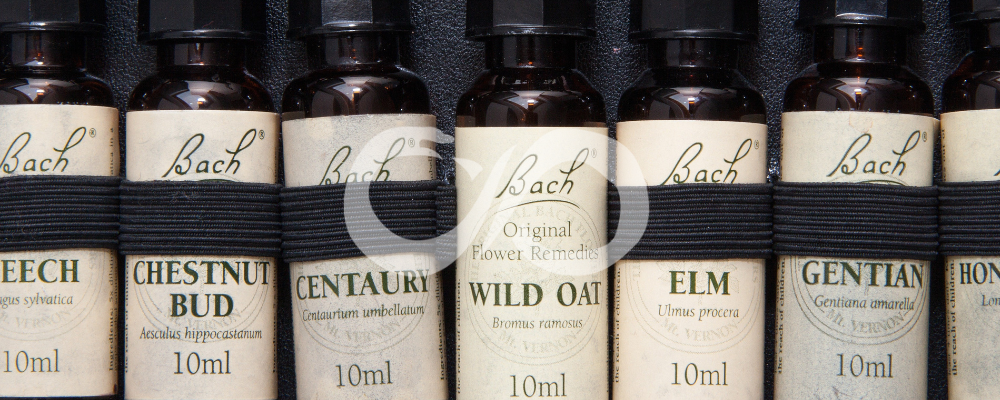
You recognize an emotion, but you still do not know which flower corresponds to it. A specific fear is not quite the same as an apprehension without a cause; a lack of confidence differs from a passing feeling of being overwhelmed. Bach flowers offer precisely a range of nuances for putting these experiences into words. Their value in a personal approach lies in this attention to how you experience a situation.
At Aeternum, our selection of Gaïalab Bach flowers allows you to choose a single elixir or a blend based on a clearly described emotional profile. This guide will help you make that choice: the history of Edward Bach, a table of the 38 preparations, comparisons between similar flowers, and practical examples. You can then find the shop references and their suggested uses directly.
What are Bach flowers?
Bach flowers are a system of flower preparations developed by British doctor Edward Bach in the 1930s. He associated them with emotional states and inner qualities that he hoped would help people regain. His method is based on 38 basic preparations, presented in The Twelve Healers and Other Remedies, and later classified into seven groups. [1]
The choice does not begin with the name of a disease, but with how the person describes their current state: hesitation, impatience, discouragement, attachment to the past, or difficulty setting a boundary. This precision is what makes the range so rich. Thus, two people facing the same professional interview may consider different flowers depending on what they actually feel.
A flower elixir is not an oil, herbal tea, or concentrated plant extract. The preparation involves water, a selected plant, and a process specific to the method; an alcoholic preservative is then added to many bottles. The base and composition should therefore be read on the product label, rather than inferred from its name alone. [2]
The words “flower” and “remedy,” found in the Bach tradition, also require some context. The range includes trees, a preparation made from buds, and Rock Water, which is not a flower. Today, our Gaïalab elixirs are presented as food supplements; they are not medicines.
Who was Edward Bach?
A British doctor attentive to the individual
Edward Bach was born in 1886 near Birmingham. He studied medicine in Birmingham and then in London, before working as a doctor and researcher in bacteriology. His career also led him to homeopathy. Over the course of his research, he increasingly focused on personality and emotional reactions rather than solely on naming a disorder. [3]
Flower preparations developed during this second phase of his work. Bach left his London practice in 1930 to devote himself to researching plants and developing a method he wanted to make accessible. The repertory continued to take shape until 1935. He died in November 1936, at the age of 50. [3]
Mount Vernon and the transmission of the method
In 1934, Bach settled at Mount Vernon, in the village of Brightwell-cum-Sotwell, England. This house became the setting for the final period of his work. Nora Weeks accompanied him in his research, then played a major role in preserving and passing on the method after his death. The Bach Centre continues this mission today from this location. [3]
This history explains the place given to Bach’s texts when choosing a flower. The profiles are not merely words added to colorful bottles. They belong to a defined system, with nuances that readers can compare. Returning to this repertory helps avoid overly general associations, such as designating one flower for every annoyance.
How should Bach’s emotional approach be understood?
In his thinking, Bach established a connection between a person’s inner state, attitudes, and health. This conception belongs to his doctrine. His book associates each preparation with a profile, then describes an opposing or rebalanced quality: courage, confidence, flexibility, presence, or perseverance. These qualities provide direction when making a choice, without constituting proven medical effects for each flower. [1]
For personal use, the repertory can serve as a language of observation. Saying “I am stressed” remains very broad. Saying “I am afraid of a specific situation,” “I doubt my abilities,” or “I can no longer refuse requests” already helps you better understand the situation. You can then read the corresponding profiles and choose the one in which you recognize yourself.
This approach does not require you to confine yourself to an identity. You may recognize yourself in a profile today without making it your definitive character. A flower chosen for a period of change does not oblige you to keep the same choice for years.
Difficult emotions are not faults. Fear, sadness, and anger can have a place in the human experience. The purpose of choosing a flower is not to demand a permanently positive mood, but to look precisely at what deserves your attention. A lasting difficulty may also call for a conversation, a change in daily life, or professional support.
How are flower elixirs prepared?
The sun method and the boiling method
The Bach Centre distinguishes two methods. The sun method places the flowers on the surface of spring water, under the sun. The boiling method is suitable for preparations in which the plant material is heated in water. The precise instructions depend on the flower; this is not an improvised infusion made from just any bouquet. [2]
After the plant material is removed, the original preparation is preserved with brandy using the method described by the Centre. Stock bottles are then obtained by dilution. These manufacturing stages should be distinguished from simply using a commercial bottle: the reader does not need to reproduce the entire process to use an elixir. [2]
What distinguishes an elixir from another plant-based product
An essential oil concentrates volatile aromatic substances; an herbal tea extracts components with water; a Bach elixir follows its own flower-preparation method. The plant’s name alone is therefore not enough to make these products interchangeable. White Chestnut is not used like an anointing oil, and a dried plant intended for ritual use does not replace its elixir.
The brand’s recipe, the medium, the presence of alcohol, and the instructions provide useful points of reference when making a purchase. For a personal blend, use only elixirs intended for this purpose and suitable instructions. Do not prepare a drinkable elixir from plants picked at random.
Why choose Gaïalab Bach flowers at Aeternum?
Our Gaïalab Bach flower range includes single-flower elixirs and the Urgency complex, in 10 ml bottles. The product pages present preparations made in France. The compositions of the single-flower elixirs list spring water, cognac, and the corresponding flower preparation; ingredients marked with an asterisk come from organic farming.
The value of a single-flower elixir is its clarity. You choose a flower for a precise profile, then keep that reference point throughout your observation. The English name appears beside the French name, making it easier to read a book or compare it with the original repertory.
Our product pages explain the emotional purpose of each reference, its composition, and how to use it. The table below provides an initial guide; the comparisons that follow then help you distinguish between two similar flowers. You can take your time making this choice rather than immediately gathering a large number of bottles.
French manufacturing and organic labeling describe characteristics of the range. They provide information about production and ingredients, without replacing an examination of clinical results. Further on, you will find a section devoted to this distinction, so you can choose your elixirs with complete information.
What are the seven groups of Bach flowers?
In Bach’s system, the 38 preparations are divided into seven emotional groups. These families help with orientation; they do not replace choosing a flower within the group. The same word, such as “fear,” can encompass an identifiable worry, a vague apprehension, or concern for someone close to you. [1]
| Group | Question to help guide you | A few flowers to compare |
|---|---|---|
| Fear | Does the fear have a specific object, or does it remain difficult to name? | Mimulus, Aspen, Red Chestnut. |
| Uncertainty | Is hesitation, a lack of confidence in my judgment, or loss of momentum the dominant feeling? | Scleranthus, Cerato, Gentian. |
| Lack of interest in the present | Is my attention turning toward the past, daydreaming, or repetitive thoughts? | Honeysuckle, Clematis, White Chestnut. |
| Loneliness | What makes relating to others difficult at this moment? | Water Violet, Impatiens, Heather. |
| Sensitivity to influences and ideas | Do I find it difficult to set a boundary or maintain my direction? | Centaury, Walnut, Agrimony. |
| Discouragement or despair | Do doubt, overload, self-reproach, or loss of hope take up all the space? | Larch, Elm, Pine, Sweet Chestnut. |
| Excessive concern for the well-being of others | Does the way I help leave room for other people’s freedom and for my own flexibility? | Chicory, Vervain, Vine, Rock Water. |
These groups help avoid an overly broad search, but they should not lead you to choose a flower by mechanical elimination. Read the profile that draws you in, then check that it matches what you are experiencing now.
The 38 Bach flowers and their emotional profiles
The table uses the names from the directory, with accessible wording for the profiles and the quality sought in the method. The last column presents Bach’s emotional orientation, not a promise of therapeutic effect. The references available from Aeternum are linked to their product page. [1]
| Flower and English name | Profile to recognize | Quality sought through the method |
|---|---|---|
| Agrimony — Agrimony, No. 1 | Hiding one’s concerns behind a cheerful appearance. | Sincerity with oneself and inner peace. |
| Aspen — Aspen, No. 2 | Feeling a vague apprehension without a clearly identified cause. | Confidence in the face of the unknown. |
| Beech — Beech, No. 3 | Being highly critical and finding it difficult to tolerate differences. | Tolerance and understanding. |
| Centaury — Centaury, No. 4 | Accepting requests beyond one’s own limits. | Self-assertion in the help one provides. |
| Cerato — Cerato, No. 5 | Doubting one’s judgment and constantly seeking confirmation. | Confidence in one’s judgment. |
| Cherry Plum — Cherry Plum, No. 6 | Fear of losing control of one’s reactions. | Calm and self-control. |
| Chestnut Bud — Chestnut Bud, No. 7 | Repeating an experience without learning from it. | Learning from and paying attention to experience. |
| Chicory — Chicory, No. 8 | Expecting a great deal in return for the affection and attention given. | Emotional generosity and freedom in relationships. |
| Clematis — Clematis, No. 9 | Taking refuge in daydreaming and losing touch with what is happening. | Presence and engagement in everyday life. |
| Crab Apple — Crab Apple, No. 10 | Focusing on an imperfection or a feeling of being unclean. | Self-acceptance and a sense of proportion. |
| Elm — Elm, No. 11 | Feeling temporarily overwhelmed by one’s responsibilities. | Confidence in one’s ability to organize and accomplish things. |
| Gentian — Gentian, No. 12 | Becoming discouraged after an identifiable obstacle or setback. | Perseverance and confidence in what lies ahead. |
| Gorse — Gorse, No. 13 | No longer hoping for favorable change. | Openness to a new possibility. |
| Heather — Heather, No. 14 | Bringing conversations back to one’s own concerns and seeking constant presence. | Listening and mutual connection. |
| Holly — Holly, No. 15 | Feeling jealousy, suspicion, or hostility. | Openness of heart and confidence in relationships. |
| Honeysuckle — Honeysuckle, No. 16 | Remaining attached to the past to the point of neglecting the present. | Being present in current life without denying one’s memories. |
| Hornbeam — Hornbeam, No. 17 | Struggling to get going with everyday tasks. | Drive to get started. |
| Impatiens — Impatiens, No. 18 | Finding slowness difficult to tolerate and wanting to speed up the pace. | Patience and relaxation in interactions. |
| Larch — Larch, No. 19 | Believing oneself less capable than others and hesitating to try. | Confidence to get started. |
| Mimulus — Mimulus, No. 20 | Experiencing a fear whose object can be named. | Courage in identified situations. |
| Mustard — Mustard, No. 21 | Feeling overwhelmed by sadness for no apparent reason. | A return to a clearer mood in the language of the method. |
| Oak — Oak, No. 22 | Continue struggling without taking a break. | Perseverance compatible with one’s limits. |
| Olive — Olive, no. 23 | Describing oneself as drained after a period of exertion. | Renewal and readiness for rest. |
| Pine — Pine, no. 24 | Blaming oneself extensively and feeling responsible beyond one’s share. | Fairness toward oneself and recognition of one’s limits. |
| Red Chestnut — Red Chestnut, no. 25 | Worrying excessively about loved ones. | Confidence and measured care. |
| Rock Rose — Rock Rose, no. 26 | Experiencing intense fright or terror in the Bach profile. | Courage and stability in the face of fear. |
| Rock Water — Rock Water, no. 27 | Imposing very strict rules on oneself and showing little flexibility. | Flexibility and kindness toward oneself. |
| Scleranthus — Scleranthus, no. 28 | Oscillating between two possibilities. | Stability in decision-making. |
| Star of Bethlehem — Star of Bethlehem, no. 29 | Retaining the emotional imprint of distressing news or an upsetting event. | Comfort through flower therapy. |
| Sweet Chestnut — Sweet Chestnut, no. 30 | Feeling that one has reached the end of one’s resources. | Openness and hope. |
| Vervain — Vervain, no. 31 | Defending one’s convictions with tension and enthusiasm that are difficult to moderate. | Moderation in one’s commitment. |
| Vine — Vine, no. 32 | Wanting to lead and impose one’s way of doing things. | Authority that respects others’ freedom. |
| Walnut — Walnut, no. 33 | Going through a change and feeling sensitive to outside influences. | Continuity in one’s direction during transition. |
| Water Violet — Water Violet, no. 34 | Remaining highly reserved and keeping others at a distance. | An open relationship without losing one’s independence. |
| White Chestnut — White Chestnut, no. 35 | Returning endlessly to the same thoughts or inner dialogues. | Clarity and attentiveness. |
| Wild Oat — Wild Oat, no. 36 | Searching for one’s direction without managing to choose a satisfying path. | Direction and personal fulfillment. |
| Wild Rose — Wild Rose, no. 37 | Resigning oneself and letting things take their course without commitment. | Renewed interest in one’s life. |
| Willow — Willow, no. 38 | Remaining in bitterness or a sense of injustice. | Personal responsibility and openness to what comes next. |
An intense profile, such as that of Sweet Chestnut or Rock Rose, should not be used alone to treat significant distress. This chart is a tool for guiding flower selection; suffering that persists or disrupts daily life deserves appropriate support.
How can you distinguish between two similar Bach flowers?
Aspen or Mimulus for fear?
The most useful question is: “Can I name what frightens me?” Apprehension about an exam, a journey, or speaking in public is more characteristic of Mimulus. A diffuse worry that is difficult to link to a cause invites you to read about Aspen instead.
You can begin by describing the situation without specialized vocabulary. “I am afraid to speak in front of the group” and “I feel anxious without knowing why” are two different sentences. The profiles of Mimulus and Aspen allow you to continue this comparison.
Larch or Elm for confidence?
The Larch profile focuses on doubting one’s abilities: one hesitates to try because one thinks others will succeed better. The Elm profile is more about someone capable but temporarily overwhelmed by the scope of their responsibilities.
Ask yourself: “Do I believe I am incapable even before starting, or is it the number of tasks that overwhelms me today?” The choice becomes more precise. Reading the profiles of Larch and Elm prevents reducing both remedies to the single word “confidence.”
Hornbeam or Olive for the fatigue described?
In the repertory, Hornbeam corresponds to difficulty getting started on tasks; Olive evokes the exhaustion felt after a period of effort. These portraits cannot identify the medical cause of fatigue.
You can read Hornbeam when you mainly describe the feeling of being unable to get started, and Olive when you feel drained after what you have been through. If the fatigue persists, worsens, or remains unusual, also seek its causes with a healthcare professional. Assurance Maladie highlights their variety. [7]
Gentian, Gorse, or Sweet Chestnut for discouragement?
Gentian is understood through an identifiable setback: something has failed and momentum is waning. Gorse describes a more established loss of hope. Sweet Chestnut expresses, in Bach’s text, a much more intense inner experience, with the feeling of having reached one’s limit.
Do not automatically choose the strongest description to obtain supposedly more powerful effects. Choose the one that matches your words and situation. A pronounced state of despair calls for human presence and appropriate support; the bottle should not become your only response.
Walnut or Honeysuckle during a change?
Walnut, in the method, supports the transition to a new stage and sensitivity to influences that divert you from your choice. Honeysuckle relates more to attachment to the past.
“I have chosen my new direction, but I let myself be destabilized” and “I remain focused on my former life” do not describe the same difficulty. You may identify with one or both; the value of the comparison is understanding why you are considering each flower.
White Chestnut, Chestnut Bud, or Red Chestnut?
The tree’s name brings these remedies together, but their profiles differ. White Chestnut concerns repetitive thoughts. Chestnut Bud refers to learning from experience. Red Chestnut relates to excessive worry about loved ones.
Write the sentence that describes you: “I dwell on things,” “I repeat the same situation,” or “I am constantly afraid that something will happen to someone.” This simple distinction is more helpful than choosing based solely on the plant’s common name.
How do you choose your flowers without losing focus?
Describe the present moment
Start with a specific event or period. Write down what is happening, then what you feel. Separate the two: “I am starting a new job” describes the situation; “I doubt my ability to measure up” describes your reaction. It is this second sentence that guides your reading of the flowers.
You can also note what you would like to regain: greater confidence, a clearer boundary, more attentive presence, or a steadier decision. This desired quality helps verify that your choice remains connected to your request.
Compare a small number of profiles
Keep two or three possible flowers in mind and reread their differences. A description that somewhat resembles your life is not necessarily enough to justify adding it. Ask yourself what it contributes to understanding your current state.
You do not need to immediately determine a definitive “type.” A remedy may correspond to a passing reaction. Let your choice evolve with your observations rather than adopting a bottle as a personality label.
Single remedy or personal blend?
A single-remedy elixir provides a clear reference point when the profile is well identified. A personal blend can bring together several states present at the same time. The Bach Centre recommends limiting blends to around six or seven flowers to keep the selection clear. This does not mean you need to reach that number: one or two may be enough for your process. [4]
For a blend, define the role of each remedy before preparing it. Do not combine flowers merely to cover every group. Follow instructions suited to the product and final bottle, using a clean container and an appropriate shelf life.
Six concrete situations to help you find your starting point
You are preparing for an interview or a public speaking engagement
Start by distinguishing stage fright in a specific situation from general doubt about your abilities. Mimulus corresponds to the first profile; Larch to the second. If you usually feel capable but are overwhelmed by the preparation, Elm may deserve your attention instead.
After choosing the flower remedy, prepare three points to express and rehearse your presentation. The bottle can accompany your personal routine; the preparation work is what enables you to know your subject. Keep a note of the initial emotion and the quality you want to cultivate.
You say yes when you wanted to refuse
Centaury describes the difficulty of maintaining your boundaries when helping others. You can consider its profile if you agree too quickly, then regret having too little time for your own needs. This is not the same approach as Chicory, where the attention given expects significant emotional return.
Alongside your reflection on Centaury, prepare a simple sentence: “I need to check my availability before I respond.” It gives you space to make a decision. The flower remedy is thus accompanied by a concrete action, without asking you to give up your generosity.
You are going through a move or a job change
Walnut can serve as a starting point in the method’s terminology, especially when you have chosen a direction but remain sensitive to other people’s opinions. Compare it with Honeysuckle if attachment to the previous stage takes up all your attention.
Write down what you want to preserve from your past and what you have decided to change. This distinction prevents you from treating change as an obligation to erase memories. You can choose an essence for the dominant portrait, then reassess how you feel as the transition progresses.
You are replaying a conversation in your head
White Chestnut is the remedy to consider when the same thoughts or inner dialogues keep returning. Chestnut Bud is more relevant when you want to understand a repetition in the way you act.
Note what genuinely requires action: a message to send, a question to ask, or nothing for now. Then choose a time to conclude your reflection. Persistent discomfort, especially if it affects your sleep or daily functioning, warrants appropriate support beyond the use of flower remedies.
You are unsure which direction to take your business
Scleranthus describes an oscillation between two possibilities. Wild Oat concerns a broader search for direction and fulfillment. Cerato applies when you already have an intuition but continually seek approval from others.
Write down the possibilities and the decision that is actually expected. Choosing between two training programs is not the same as looking for a life project. The profiles for Scleranthus, Wild Oat, and Cerato can help clarify your approach.
You find it difficult to slow down
Impatiens relates to difficulty coping with slowness and other people’s pace. Vervain describes highly intense commitment to personal convictions. Oak suggests perseverance that leaves too little room for rest. These profiles may look similar from the outside, but their underlying motivations differ.
Ask yourself what is driving you: the desire to move faster, the need to convince others, or the feeling that you must keep going at all costs. Choose a modest change in your day, such as taking a break or setting a time limit. The flower profile then becomes a support for observing how you act, rather than another task you must perform perfectly.
What is Gaïalab’s Urgency complex?
Our Urgency Gaïalab combines five preparations: Star of Bethlehem, Rock Rose, Clematis, Impatiens, and Cherry Plum. Its product sheet presents it as a flower complex for emotionally intense moments. This composition follows the group of five flowers used in the crisis formulas of the Bach method. [5]
The number 39 is the blend’s commercial reference; it does not add a 39th flower to the basic repertoire. A complex combines several single-flower remedies in a ready-to-use formula. It therefore differs from a personal choice built from a specific profile.
You can compare Urgency with a single-flower elixir according to what you are looking for: a combined formula intended for a specific moment, or a flower chosen after reading its profile. There is no need to systematically add the complex to all your personal blends.
How should I use Gaïalab elixirs from the shop?
Start with the bottle label
The product sheets for our Gaïalab elixirs indicate two drops in a little water or under the tongue, along with a reminder not to exceed the recommended daily dose. Follow the frequency and limits shown on your bottle: this mention of two drops is not, by itself, enough to define the number of doses per day.
Keep the dropper clean and avoid letting it touch your mouth or the glass. Close it after use. The personal ritual can remain very simple: reread the chosen quality, take the product according to its instructions, then continue with your day. Consistency appropriate to the directions is better than multiplying doses in response to every annoyance.
Do not apply all instructions from one brand to another
The Bach Centre describes methods for dilution in water or in a personal bottle. These instructions explain the general method, but your product’s composition and labeling remain the points of reference to follow. A stock bottle, a diluted preparation, and a ready-to-use complex are not necessarily supplied with the same instructions. [6]
For a personal blend, ask for instructions specifying the quantities, container, and storage conditions. Do not turn the shop’s elixirs into skin sprays or bath products based on a recipe intended for another product range.
Taking the presence of alcohol into account
The Gaïalab formulas consulted mention cognac. For a child, during pregnancy or breastfeeding, in situations requiring alcohol to be avoided, or when taking a treatment about which you have concerns, ask a doctor or pharmacist for advice before use. Diluting a few drops in water does not automatically make the product alcohol-free.
Food supplements do not replace a varied diet and an appropriate lifestyle. The DGCCRF reminds consumers that they have a status distinct from that of medicines and that specific rules apply to how they are presented. Keep the bottles out of the reach of children. [10]
How long should you keep the same flower selection?
The choice relates to what you describe in the present. A one-off situation and a more established habit should not be viewed in the same way. There is no single timeframe we could promise for everyone and every flower.
You can schedule a review appointment after a few days to revisit your initial statement. This appointment is for your observation, not to set a treatment duration. Ask yourself whether the portrait still fits, whether the situation has changed, and what actions you have taken.
A single line in a notebook is enough: “I feel less scattered after clarifying my decision,” or “The doubt is still present before the appointment.” Also note changes in your daily life, interactions, and rest. This helps prevent automatically attributing every change to the contents of the bottle.
Do not change flowers every hour, nor cling to a portrait that has become unsuitable out of loyalty to your first choice. The method encourages attention to your current state; it does not ask you to remain attached to a label.
How should you store your Bach flowers?
Keep the bottles in their labeled packaging, away from heat and direct light, according to the instructions. Observe the stated date and storage instructions. A dry drawer or a box reserved for products is more suitable than a windowsill or a hot, humid bathroom.
Do not let the dropper touch surfaces, and do not pour back into the bottle anything that has already been diluted. If you prepare a mixture, record its composition and date. An aqueous bottle prepared at home does not automatically have the same stability as a commercial product preserved with alcohol.
In the event of visible damage, a defective seal, or concerns about the hygiene of a preparation, do not try to “recharge” it through a ritual. Product storage remains a material issue. The manufacturer’s instructions and professional advice can help determine whether it should be used.
What do studies say about Bach flowers?
Available controlled trials have not established a specific benefit of Bach flowers greater than that of a placebo for the indications studied. A randomized trial involving students facing test anxiety found no significant difference between the flower mixture and the placebo. A systematic review published in 2009 also highlights the methodological limitations of the studies and the lack of convincing evidence for the disorders examined. [8] [9]
This distinguishes two areas: the profiles and qualities sought in Bach’s method, on the one hand; and the demonstrated clinical effects of a product, on the other. A person may appreciate a moment of attention to their emotions or the routine associated with their bottle, without that appreciation proving the specific action of the preparation.
Bach flowers can therefore have a place in a personal well-being approach, with measured expectations. They cannot diagnose an illness or replace psychotherapy, treatment, or medical follow-up. An indication of depression, trauma, or an anxiety disorder requires qualified support, even when a profile from the repertoire seems to resonate with you.
Making this distinction does not diminish the value of the emotional repertoire. On the contrary, it allows you to use it for what it contributes to your reflection, without asking the bottle to guarantee something it cannot.
How do you choose a flower consultation or a book?
Useful flower guidance begins with your description, not with a list of flowers presented before anyone has listened to you. You should be able to explain the selected profile and distinguish it from the others. You should also know the price, how it works, and any purchases that may be offered.
A flower adviser is not automatically a healthcare professional. Check the qualifications when a consultation is presented as healthcare. Reject any instruction to stop treatment or any message that makes you responsible for your difficulty because you supposedly failed to choose the right flower.
For a book, start with Edward Bach’s texts and a work that clearly cites its references. A structured reading explains the nuances, preparation stages, and limitations of its own framework. The table in this guide and the Gaïalab product sheets then allow you to connect the names in the repertory with the products in the shop.
Frequently asked questions about Bach flowers
How many Bach flowers are there?
The basic repertory contains 38 preparations. A blend bearing an additional number is still a mixture of several of these preparations. The word “flower” is a general term used by the system: Rock Water is not a plant, and Chestnut Bud does not use the flower.
What is the difference between a single flower and Urgency?
A single flower corresponds to a specific profile. Urgency combines five preparations in a blend intended for emotionally intense moments. The choice depends on the approach you are seeking; the blend does not automatically replace all the single flowers and is not a medical emergency product.
Should you choose according to your astrological sign?
The Bach method is based on your current emotional state, not your birth sign. You may enjoy astrological correspondences as part of another practice, but they do not replace reading the floral profile. A precise statement about how you feel is a better starting point.
Can a pendulum be used to select the flowers?
A pendulum may be part of your divination practice, but it does not replace reading the formulation or seeking medical advice. For flower selection, first describe your state and compare the profiles. Divination and the instructions for using a food supplement are separate approaches.
Do all Bach flowers contain alcohol?
Formulations vary by product and brand. The Gaïalab formulations in our range mention cognac. Check the label before each choice, especially when alcohol must be avoided. The presence of water in the formulation does not mean that the bottle is alcohol-free.
Can they be given to a child or an animal?
Do not transfer the adult instructions for use. For a child, seek age- and formulation-appropriate medical or pharmaceutical advice. For an animal, consult a veterinarian, especially when alcohol is present. An emotional reading cannot diagnose a health or behavioral problem.
Can one flower be suitable for several people?
Yes, in the sense that several people may identify with the same profile. They do not need to be experiencing the same event. Conversely, a shared situation may trigger different reactions and lead you to compare other flowers.
Should you feel something after the first dose?
No immediate sensation is necessary to follow your approach. Do not multiply doses in search of a sign, and follow the label. The absence of a sensation does not mean that you have chosen incorrectly or that a stronger bottle is necessary.
Can Bach flowers and stones be combined?
You can give each support a distinct place in your personal routine. A stone can remain on the table for a while during a period of reflection, while the elixir is used according to its instructions. Do not put a mineral in the bottle or in water intended for drinking. Our lithotherapy guide presents the symbolic uses of stones.
Which reference should you choose to start?
Choose the one whose profile most precisely matches your words at the moment. For an identifiable fear, compare Mimulus; for difficulty saying no, Centaury; for a transition, Walnut; for repetitive thoughts, White Chestnut. These examples guide a reading of the repertoire, not a treatment prescription.
Choosing a flower precisely and keeping the approach simple
Bach flowers offer a rich repertoire when you take the time to distinguish the nuances. An emotion named accurately, a profile read attentively, and a product with a clear composition provide a good foundation. You can start with a single elixir, keep a few notes, and let your choice evolve with your experience.
Discover our Gaïalab Bach flowers to compare the references and consult their information sheets. The Aeternum range allows you to connect each name to an identified bottle, its profile and its use, without losing sight of what guides the approach: more precise attention to your present state.
Sources and further reading
[1] The original repertoire. Edward Bach, The Twelve Healers and Other Remedies, 1936 edition made available by the Bach Centre. See also its French presentation of the 38 preparations.
[2] Preparation of the remedies. Bach Centre, Making the remedies, solar and boiling methods.
[3] Edward Bach and Mount Vernon. Bach Centre, Edward Bach biography and history of the Centre.
[4] Choice and number of flowers. Bach Centre, How and when to take Bach flower remedies, guidance on personal choice and blends.
[5] Five-flower formulas. Bach Centre, Crisis mix, the blend’s composition and place in the method.
[6] Use and dilution. Bach Centre, How to take the remedies. For Gaïalab products, the bottle’s composition and labeling remain the references for use.
[7] Fatigue and possible causes. Health Insurance, Asthenia: definition, symptoms and causes.
[8] Controlled trial on test anxiety. Harald Walach et al., Efficacy of Bach-flower remedies in test anxiety: a double-blind, placebo-controlled, randomized trial with partial crossover, Journal of Anxiety Disorders, 2001.
[9] Summary of clinical studies. Kylie Thaler et al., Bach Flower Remedies for psychological problems and pain: a systematic review, BMC Complementary and Alternative Medicine, 2009.
[10] Status of food supplements. Directorate General for Competition Policy, Consumer Affairs and Fraud Control, Food supplements.

Par Olivier of Aeternum
Passionate about esoteric traditions and the history of the occult from the earliest civilizations to the 18th century, I share some articles on these topics. I am also co-creator of the online esoteric shop Aeternum.













