



















































































































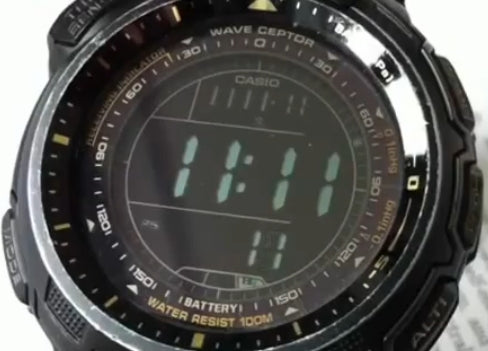
Seeing 11:11, 22:22, or 12:21 on your phone can produce a surprisingly strong impression. The pattern is immediately visible, it repeats, and when it appears at a significant moment of thought, it becomes tempting to read it as a sign. But the history of “mirror hours” is much more recent than the tables that trace them back to Babylon, ancient Egypt, or the Middle Ages suggest.
Numbers have a long symbolic history. The Pythagoreans, Kabbalists, astrologers, and occultists developed genuine numerical systems. However, reading time sequences such as 11:11 presupposes a time display in the form of juxtaposed digits. It therefore belongs above all to the world of digital watches, electronic alarm clocks, screens, and, today, the phone we check several dozen times a day.
What is a mirror hour?
In contemporary usage, a double mirror hour is a time in which the hour and minute digits repeat: 01:01, 08:08, 11:11, 22:22, or 23:23.
Reversed hours generally refers to configurations such as 12:21, 13:31, or 21:12, in which the two groups of digits correspond to each other in reverse order.
The expressions “triple hours” or “threefold hours” are even less standardized. Depending on the websites and authors, they may include 01:11, 03:33, 05:55, or other partial repetitions.
These categories are useful for classifying patterns, but they do not constitute a vocabulary inherited from a traditional school of divination. Above all, they describe what our eye recognizes on a digital display.
Did mirror hours exist in antiquity?
Not in this form.
Ancient civilizations placed great importance on numbers, proportions, calendars, the hours of the day, and the movements of the stars. The Pythagoreans, for example, developed a genuine philosophy of number and cosmic harmony. Systems of numerical symbolism subsequently passed through Late Antiquity, the Middle Ages, and modern occultism.
But that does not mean that the Greeks, Egyptians, or Babylonians interpreted “11:11” or “22:22.” Writing the time in this way simply was not how they read time.
The visual repetition HH:MM becomes particularly striking when the time appears as four aligned digits. An analog clock can naturally show 11:11, but it does not produce the graphic effect of “11:11” that lies at the heart of the contemporary phenomenon.
To place numerical symbolism in a longer history, see A History of Numerology, Beyond Numbers.
Why do digital watches change our relationship with these sequences?
The development of electronic displays makes times with repeated digits immediately recognizable.
The National Museum of American History points out that the Pulsar watch, marketed in 1972, was one of the first major successes in electronic watches with LED digital displays. The Smithsonian emphasizes how this object broke with centuries of analog watch faces: the time now appeared directly in digits.
In the following decades, LED alarm clocks, quartz watches, computers, car radios, and then mobile phones multiplied the opportunities to encounter patterns such as 11:11.
This technical history obviously does not prove that a mirror hour cannot have personal significance. It does, however, show why it is historically impossible to treat the current system as an age-old tradition transmitted without interruption.
Is a mirror hour really rare?
It is more noticeable than rare.
On a 24-hour display, there are 24 double hours per day: 00:00, 01:01, 02:02, up to 23:23. This represents one minute per hour.
If we looked at a clock at a minute chosen entirely at random, the probability of landing on a double time would therefore be 1 in 60. And the more often you check your phone or watch during the day, the more likely you are to encounter one.
What creates the mirror-hour effect is therefore not just its frequency. It is the fact that it stands out immediately among ordinary times. We remember 11:11; we forget 11:08 or 16:37 much more easily.
Why has 11:11 become the most famous mirror hour?
Because four identical “1s” create a pattern of exceptional simplicity. No other common time offers such a clear visual alignment.
11:11 has thus become established in popular culture, contemporary numerology, and discussions about synchronicity. Unlike 12:12 or 20:20, it can also be read as a repetition of four units: 1-1-1-1.
From the late 20th century and then the early 21st century onward, books and websites devoted to numerical sequences contributed greatly to its reputation. In Angel Numbers in 2005 and then Angel Numbers 101 in 2008, American author Doreen Virtue proposed meanings for sequences such as 111, 444, or 1234 and presented them as angelic messages encountered on phones, receipts, license plates, or clocks.
The Google Books entry clearly dates this literature and shows that it belongs to the contemporary spiritual market, not to medieval angelology.
Are “angel numbers” ancient?
The veneration of angels is ancient. Systems of angelology are ancient as well. What is recent is the current form of the “angel number”: a repeated sequence encountered in everyday life to which a specific message supposedly corresponds.
Ancient theologians and occultists classified angels according to hierarchies, functions, spheres, days, or correspondences. The famous system attributed to Pseudo-Dionysius the Areopagite, for example, organizes angels into nine orders.
It does not contain a chart in which “11:11 = a particular angel,” “14:14 = another,” and “22:22 = a particular message.” These associations are modern constructions.
Some contemporary charts arbitrarily assign 00:00 to Metatron, 01:01 to Uriel, 11:11 to Muriel, or 22:22 to Lauviah. There is no common historical tradition that establishes these correspondences.
Why do mirror-hour charts give different meanings?
Because there is no canon.
One site will associate 11:11 with “awakening,” another with “manifestation,” a third with an angel, a fourth with a twin flame, and a fifth with a tarot card. The authors draw on different systems, add the digits in different ways, or create their own correspondences.
This disagreement is not a problem if one acknowledges the nature of the system: a contemporary symbolic practice. It becomes problematic when a recent chart is presented as knowledge passed down since Antiquity.
What connection is there with numerology?
The connection is real, but several levels must be distinguished.
Modern numerology assigns symbolic qualities to numbers and frequently uses theosophical reduction, that is, adding the digits until obtaining a simpler value.
A person who sees 11:11 might, for example, read four units or add 1 + 1 + 1 + 1 to obtain 4. She will then interpret this four according to her numerological school: structure, order, stability, matter, or any other set of correspondences she follows.
This process constitutes a coherent method when it is presented as such. One simply should not claim that 11:11 « objectively means 4 » or that the same calculation was transmitted by all occult schools.
The Pythagoreans did attribute cosmological value to numbers, but their philosophy does not contain a dictionary of modern numerical hours.
Do mirror hours belong to astrology?
Not traditional astrology.
Astrology does indeed have an ancient theory of planetary hours. Day and night are each divided into twelve parts between sunrise and sunset, and these hours are then assigned successively to the seven traditional planets.
These hours therefore do not necessarily last sixty minutes. Their length varies with the season and latitude. The system has nothing to do with looking at a screen at 03:03 or 12:12.
The traditional astrology glossary of Skyscript describes these seasonal hours and their planetary rulers precisely.
Automatically associating 12:12 with Sagittarius or 03:03 with Virgo does not correspond to any recognized traditional astrological technique.
And what about tarot?
Same problem: tarot has no ancient table of mirror hours.
The 22 major arcana naturally lend themselves to numerical correspondence systems. It is therefore possible to reduce a time to a number and then associate it with an arcana. But the result depends on the method chosen and even on the deck's numbering.
Assigning 04:04 to the Emperor or 07:07 to the Chariot can be a modern symbolic exercise. It is not a historical rule of cartomancy.
A clearer method is to use the mirror hour as a drawing prompt: when you notice one in a significant context, draw a card and let the tarot respond to the situation instead of claiming that the hour already has a fixed card.
What does synchronicity mean according to Carl Gustav Jung?
The word comes up almost systematically whenever mirror hours are discussed, but it is often oversimplified.
Carl Gustav Jung developed the concept of synchronicity from the late 1920s onward and published it in a developed form in 1952. He sought to describe certain coincidences to which a person attributes meaning even though no obvious causal chain connects the events.
The International Association for Analytical Psychology reminds us that Jung spoke of “meaningful coincidences” associating a psychic state with an external event.
Jung never established a chart in which 11:11 would announce awakening, 15:15 love, or 21:21 success. Using synchronicity to describe the subjective experience of noticing a time at the precise moment it takes on meaning is defensible. Using it as proof that every time has a universal message is not.
Our article Understanding synchronicities explores this concept separately.
Why do we feel as though we keep seeing the same time?
Our perception does not register every piece of information with the same intensity.
A recent study presented by the American Psychological Association reminds us that our expectations and prior beliefs influence what we pay attention to. A pattern that already carries meaning is therefore easier to notice.
Psychology also uses the term apophenia to describe the human tendency to perceive patterns or connections in events that may be independent. Experimental research shows that looking for patterns in random sequences is part of ordinary human cognitive tendencies.
This does not mean that someone who attributes symbolic value to 11:11 is “imagining everything.” It simply means that there is a sound cognitive explanation for why certain sequences become particularly salient as soon as we start watching for them.
Do we have to choose between psychology and symbolic meaning?
Not necessarily.
We can understand that the human brain detects repetitions very efficiently while deciding that a given coincidence deserves reflection.
The question then changes. Instead of asking, “Did the universe objectively send me 11:11?”, we can ask: “Why does this coincidence strike me now?”
This approach preserves the symbolic richness of the experience without turning every digital display into a certain message from outside.
How can you interpret a mirror hour without an arbitrary dictionary?
Start by noting the exact context. What were you doing? What were you thinking about? Had you just made a decision, had a conversation, or received some news?
The time itself can then serve as a symbolic framework. If you work with numerology, apply a method you already know and note the calculation used. If you work with tarot, draw a card. If you use a journal, record the time and return to it a few days later.
The advantage of this method is that it does not force you to search the internet for a chart that immediately tells you “meeting your soulmate” or “a message from your guardian angel.”
A symbolic practice becomes more coherent when the interpretation follows from an acknowledged system and a personal context, rather than from a list of interchangeable predictions.
Can 11:11 become a personal ritual?
Yes. A repeated time can serve as a ritual marker without it being necessary to claim that it opens a portal.
You can decide that 11:11 is the moment to set an intention, take a few seconds of silence, or return to a question you have been considering for several days.
The power of the ritual then comes from the repetition and the attention you give it. The phone becomes a modern bell: it reminds you to perform a specific action when a pattern appears.
Presented this way, the practice is both simpler and more solid than the claim that a “universal frequency” would open for sixty seconds.
What should you do if you constantly see 22:22?
Start by looking at your routine before searching for an omen. Perhaps you regularly check your phone at this time, just before going to sleep or after a show, a journey, or a daily habit.
If the repetition remains striking, note the circumstances over several days. You will then know whether the pattern genuinely accompanies the same type of situation or whether your memory simply selects the occurrences that catch your attention.
Only then can a numerological or symbolic interpretation be added. The number 22 holds a special place in several modern systems, but that does not turn every 22:22 into the same message for everyone.
Does a reversed time like 12:21 have a particular meaning?
The symmetry is different, but the story remains the same.
12:21 catches the eye because the order of the digits is reversed around the colon. It can naturally become a symbol of return, reflection, reversal, or reciprocity.
These associations are interesting precisely because they derive from the visual form of the pattern. They do not require assuming that an ancient text assigned a specific prophecy to 12:21.
And what about triple hours such as 03:33 or 05:55?
They are closer to the repeated number sequences popularized by angel number literature.
03:33 can thus be read as the meeting of hour 3 and sequence 333. Here again, meanings vary depending on the author.
Rather than immediately mixing angels, tarot, astrology, and numerology in the same table, choose a single interpretive framework. You will then know where the meaning you assign to the pattern comes from.
Why remove the old angel, tarot, and numerology charts?
Because they gave the impression of a coherent traditional system even though they mixed several contemporary methods.
For example, the same line associated an hour with an angel, a numerical reduction, and a tarot arcana without explaining the origin of these correspondences. Some associations were incompatible with the systems they claimed to belong to.
A serious article should be able to answer the question: who established this correspondence, in which text, and according to what method? When the answer is missing, it is better not to turn a modern convention into a rule.
Do mirror hours predict the future?
No data supports considering their appearance a reliable method of prediction.
A mirror hour can prompt reflection, take on significance in a numerological practice, or be experienced as a meaningful coincidence. This belongs to symbolic experience.
It alone cannot establish that a future event will occur, that someone is thinking of you, or that a decision will be favorable.
To understand how cultures developed genuine systems of omens and consultation, see Understanding Divination Through the Ages.
What mirror hours reveal above all about our era
They show how an ordinary object can become a vehicle for symbolism.
Ancient people read the stars, the flight of birds, entrails, dice, dreams, or patterns of numbers. Today, we look at a screen. Phones have put a digital clock in almost every pocket and created thousands of daily opportunities to encounter visual repetitions.
Mirror hours are therefore an excellent example of an esoteric tradition in the process of forming. They draw on numerology, synchronicity, popular angelology, and digital culture to create a new language.
This recent origin does not make them any less interesting. It simply allows them to be studied more precisely: not as a secret from Babylon rediscovered on our phones, but as a very contemporary way of creating meaning from time.
Sources and references
For the history of the first electronic digital-display watches: Smithsonian Institution, National Museum of American History, Pulsar Electronic Wristwatch, marketed in 1972.
For the philosophical history of ancient numerical symbolism: Encyclopedia.com, “Pythagoras and Pythagoreanism”.
For Jung’s development of synchronicity: International Association for Analytical Psychology, “Synchronicity: An Acausal Connecting Principle”. Jung developed the concept starting in the late 1920s and published his major essay in 1952.
For numerical sequences interpreted as angelic messages: Doreen Virtue, Angel Numbers, Hay House, 2005, followed by Angel Numbers 101, Hay House, 2008.
For the psychology of perceiving patterns and coincidences: Rominger et al., 2024, a study on the everyday experience of meaningful coincidences, and Ellerby & Tunney, 2017, an experimental study on apophenia and pattern seeking.
For traditional planetary hours: Skyscript, “Planetary Hours”, which describes the division of day and night into seasonal hours governed by the seven traditional planets.
Cover image: digital watch photographed on November 11, 2011, displaying 11:11:11, photograph by Xantolus under a Creative Commons BY-SA license, via Wikimedia Commons.

Par Olivier of Aeternum
Passionate about esoteric traditions and the history of the occult from the earliest civilizations to the 18th century, I share some articles on these topics. I am also co-creator of the online esoteric shop Aeternum.













