



















































































































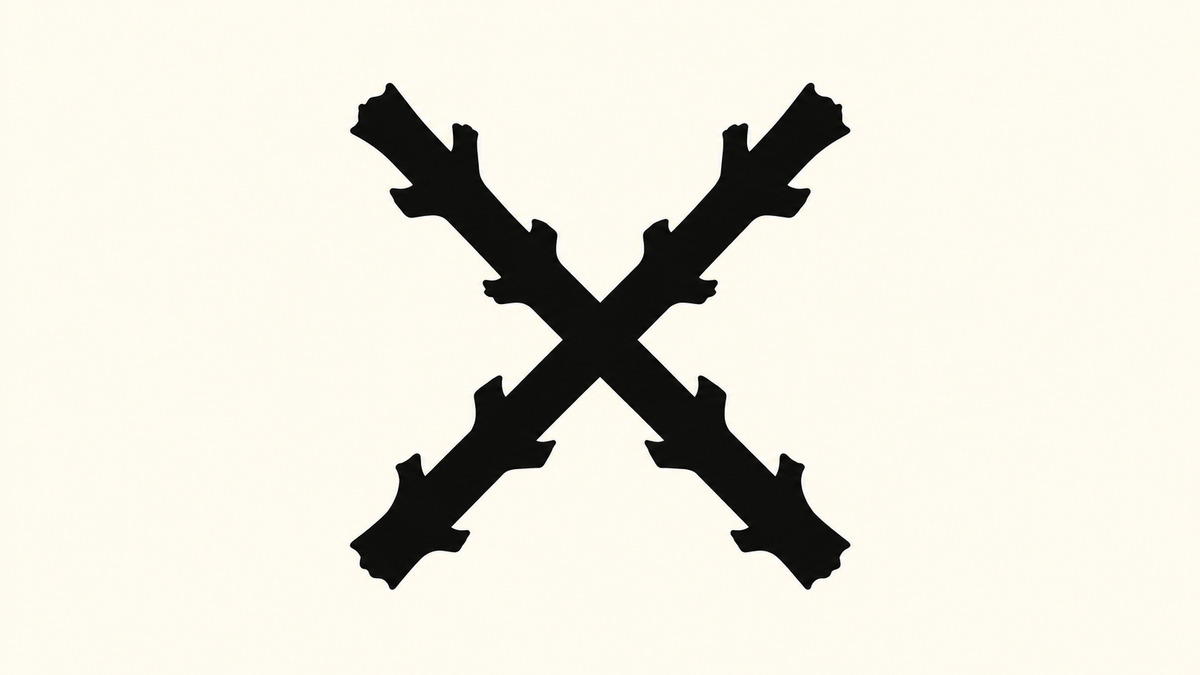
The Burgundy Cross is a red saltire formed by two crossed, knotted branches. It derives from the cross of Saint Andrew, patron saint of the House of Burgundy, and later entered Spanish heraldry after the marriage of Joanna of Castile and Philip the Fair. From the 16th century onward, it became one of the major military symbols of the Hispanic monarchy and accompanied the Tercios and royal armies for several centuries.
| Shape | Red saltire with knotted branches |
|---|---|
| Origin | House of Burgundy |
| Associated saint | Saint Andrew |
| Spain | Introduced at the beginning of the 16th century |
| Usage | Military banners and royal emblems |
Why does the cross take the shape of an X?
The cross of Saint Andrew is a saltire, a form traditionally associated with the martyrdom of the apostle. On the Burgundy Cross, the branches are depicted as two pruned tree trunks.
What is its connection with the ducal house?
Saint Andrew is the patron saint of the House of Burgundy. The saltire therefore became a dynastic symbol before leaving the duchy through marital alliances.
How did the symbol enter the Spanish monarchy?
The Spanish Army places its introduction after the marriage of Joanna, daughter of the Catholic Monarchs, to Philip the Fair. The Burgundian symbol then entered the vocabulary of the Spanish Habsburgs.
Why did it become a military emblem?
The Tercios and many regiments use the red cross on a white or colored background. During the 16th and 17th centuries, it became one of the most recognizable symbols of the forces of the Hispanic monarchy.
Where can it be found today?
It remains present in Spanish military heraldry, on historic flags, and in several units. Its contemporary use refers to military and dynastic heritage.
The design differs from the simple cross of Saint Andrew: its historical background and knotted branches give the Burgundy Cross a distinct identity.
Historical sources and reference points
The Spanish Army traces the introduction of the Burgundy Cross to Philip the Fair and its enduring use on military flags.










