



















































































































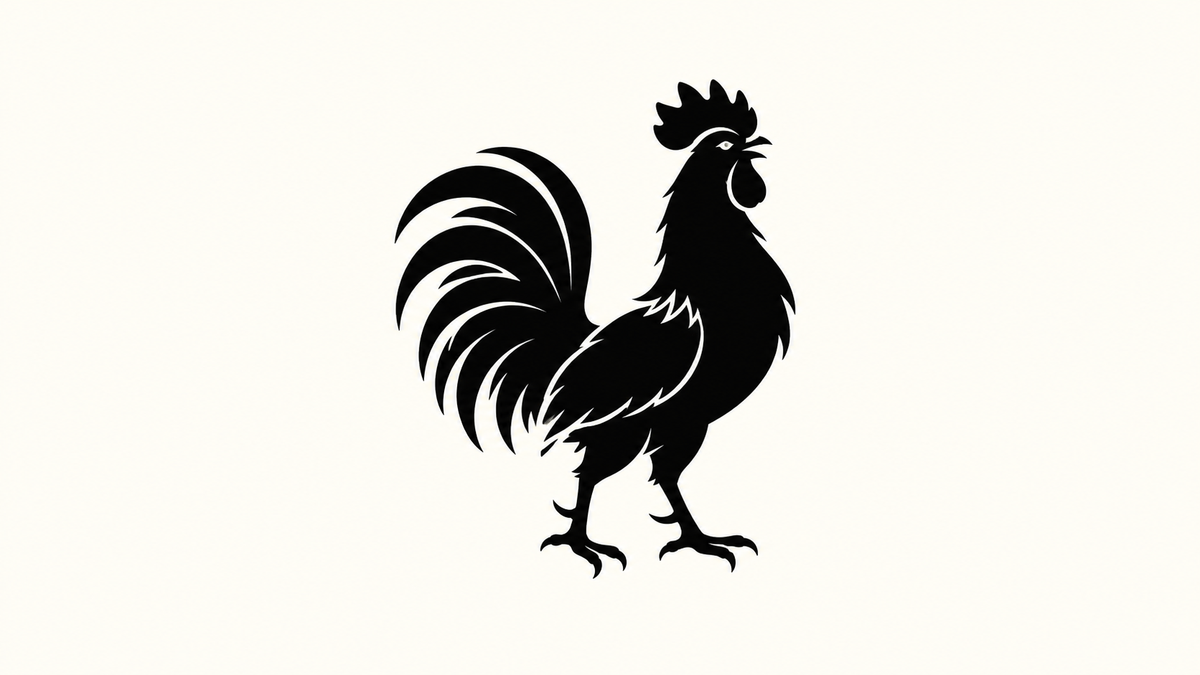
The Gallic rooster is one of France’s major unofficial emblems. Its association is based on a Latin pun: gallus can refer both to a Gaul and to a rooster. This linguistic equivalence has fueled a national imagination since Antiquity and especially in the modern era. After an intermittent presence under the monarchy, the rooster gained major political significance with the French Revolution and the 19th-century Republics.
| Animal | Rooster |
|---|---|
| Origin of the association | Latin pun gallus |
| Political rise | The French Revolution and the 19th century |
| Status | Unofficial national emblem |
| Uses | Coins, seals, monuments, sport |
Why does gallus mean both rooster and Gaul?
L’Élysée recalls that the Latin gallus means both “rooster” and “Gaul.” This pun was enough to associate the animal with the inhabitants of Gaul.
Gallic coins already depict roosters, but it would be excessive to conclude that a unified national emblem existed before France.
How did the symbol return during the Renaissance?
After a relative eclipse during the Middle Ages, the rooster reappeared in political representations associated with the king of France.
L’Élysée places a renewed rise in visibility during the Renaissance, when artists readily exploited learned wordplay about Gaul and Antiquity.
Why did the rooster become republican?
The French Revolution sought new symbols capable of breaking with the monarchy’s fleur-de-lis.
The rooster then became an image of vigilance, national pride, and Gaulish heritage. It appears on the seal of the Directory and in several republican compositions.
How did it become established in public spaces?
Under the July Monarchy, followed by the Second and especially the Third Republic, the rooster appeared on buttons, flags, coins, monuments, and official gates.
Napoleon I refused to make it the emblem of his empire, but republican regimes embraced it forcefully.
Why does it remain so closely associated with France?
Today, the rooster is omnipresent in sports, international competitions, and French popular imagery.
It complements Marianne, the tricolor flag, and the republican fasces in a plural national vocabulary.
The symbol works because it combines antiquity, an easily recognizable animal, and a simple national narrative.
Historical sources and reference points
L’Élysée traces the history of the French rooster, from the Latin pun gallus to its contemporary republican and sporting use.










