

















































































































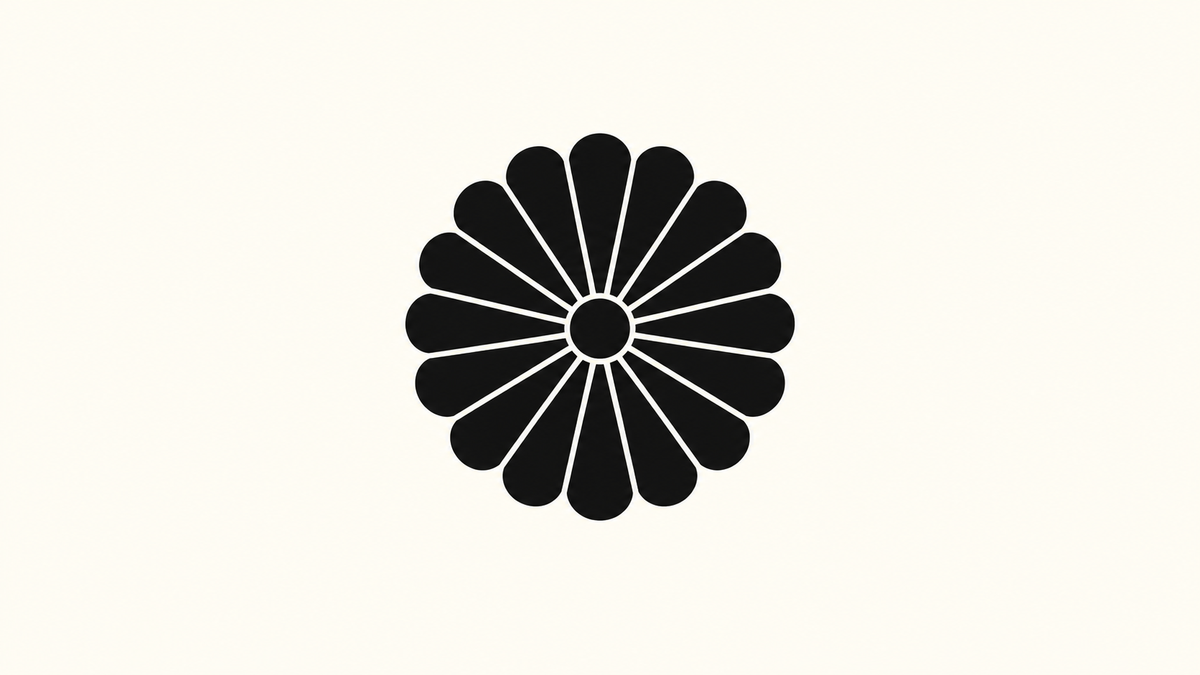
The chrysanthemum has a very long history in Japanese art, but a particular form of the flower has become the emblem of the Imperial House. The imperial seal depicts a stylized chrysanthemum with sixteen main petals, accompanied by a second row visible between them. It appears on official objects, decorations, and several places connected with the imperial institution. This precise emblem must be distinguished from the immense variety of chrysanthemum motifs used in Japanese decorative arts.
| Motif | Stylized chrysanthemum |
|---|---|
| Imperial House | Kikumon, imperial emblem |
| Classic form | Sixteen main petals with secondary row |
| Modern institution | Supreme Order of the Chrysanthemum |
| Point to note | The ordinary floral motif is not reserved for the imperial family |
Why does the chrysanthemum hold such a prominent place in Japan?
The flower arrived in Japan from China and gained a strong presence in poetry, gardens, and decorative arts.
It evokes longevity, the autumn season, and refinement in several cultural contexts.
This popularity explains why the flower exists far beyond imperial use. The symbol of the Imperial House corresponds to a highly codified heraldic version.
How can you recognize the imperial emblem?
The imperial seal is a flower seen from the front, highly regular, with sixteen radiating petals and a second row appearing between them.
The Japanese government notes that the chrysanthemum is the emblem of the imperial family.
Official objects from the Metropolitan Museum bear this crest in a clearly identifiable form, including vases presented by Emperor Meiji to foreign dignitaries.
Why did the symbol become highly visible in the modern era?
The Meiji Restoration increased the public visibility of the imperial institution and its emblems.
The chrysanthemum appears on buildings, documents, decorations, and diplomatic gifts.
An ancient floral motif thus becomes a sign of the state and modern sovereignty without losing its cultural association with the flower itself.
What is the connection with the Order of the Chrysanthemum?
During the Meiji era, Japan established the Order of the Chrysanthemum, its highest national decoration.
The Met houses a badge of this order dating from the late 19th century. The name of the honor itself shows the fusion of the imperial flower and state distinction.
The symbol thus passes from dynastic heraldry to diplomacy and official honors.
Are all chrysanthemums imperial?
No. The Japanese government recalls that the chrysanthemum is also a widespread cultural motif.
What is specifically imperial is the codified crest of the Imperial House, not every representation of the flower.
This distinction prevents overinterpreting a kimono, ceramic piece, or print in which chrysanthemums appear simply as a seasonal or auspicious motif.
Historical sources and reference points
The Japanese government recalls that the chrysanthemum is the emblem of the imperial family. The Metropolitan Museum of Art houses an imperial presentation vase bearing the chrysanthemum crest and a badge of the Order of the Chrysanthemum.










