



















































































































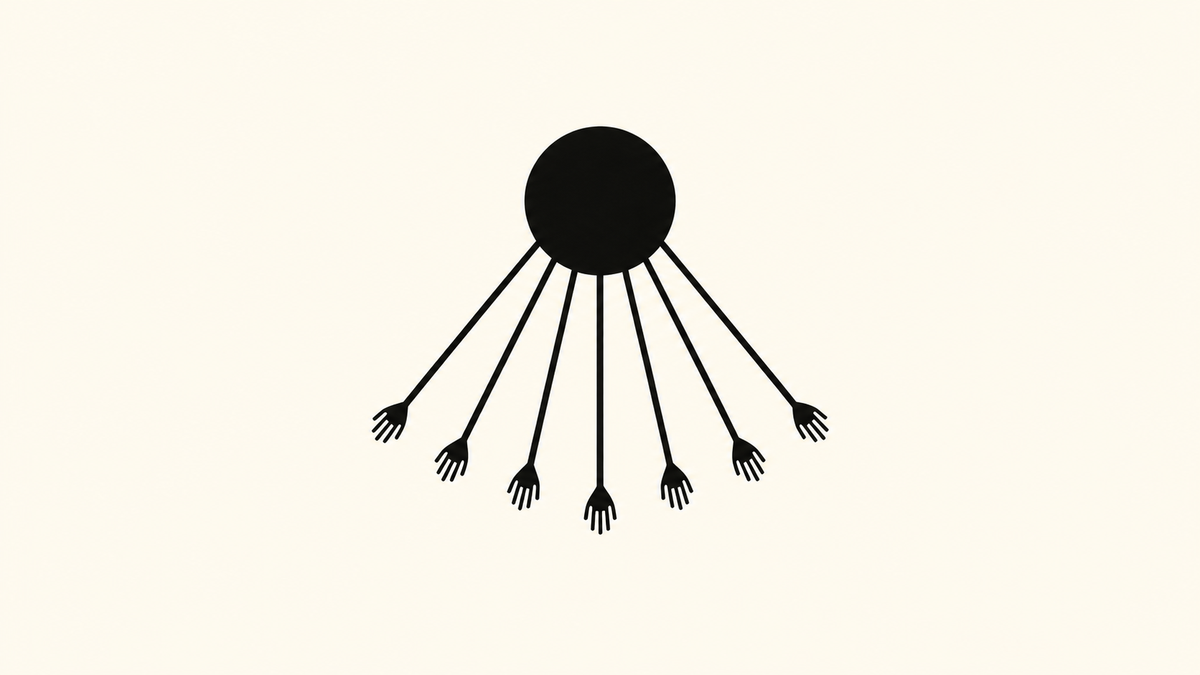
The disk of Aten represents the sun as a circle whose rays descend toward the king and his family. Each ray ends in a small human hand; several hands hold out an ankh toward the nose or mouth of Akhenaten and Nefertiti. This iconography appears during the Amarna Period and becomes the central symbol of the religion promoted by Akhenaten in the 14th century BCE.
| Form | Solar disk with rays ending in hands |
|---|---|
| Period | Reign of Akhenaten, 18th Dynasty |
| City | Akhetaten / Amarna |
| Function | Represent divine light acting on the king and his family |
| Attribute | Ankh held out to the nose or mouth |
Why do the rays end in hands?
The Metropolitan Museum describes the solar disk as the visible means by which divine power reaches the world.
The rays become arms, and their hands touch, bless, or hold out signs of life.
The image therefore transforms light into action: the sun does not merely illuminate; it acts directly.
How does the sign appear during his reign?
Akhenaten developed the cult of Aten and moved his capital to Akhetaten, present-day Amarna.
The Met explains that during the first years of his reign, the former falcon-headed representation was abandoned in favor of the disk with radiating hands.
This new sign becomes ubiquitous in Amarnian royal art.
Why do some hands carry an ankh?
The Ankh means life. In the reliefs at Amarna, a hand of Aten holds it out to the ruler’s nose or mouth.
The scene shows that life comes from sunlight and is transmitted by the god.
The symbol of the ray and that of the Ankh therefore work together in the same visual statement.
How does architecture change around Aten?
Aten's solar cult favors spaces open to the light. The temples of Amarna thus differ from the darker sanctuaries covered by many earlier traditions.
The Met connects this open architecture to a religion centered on visible light.
The solar symbol therefore does not remain on the walls: it also influences the form of the place of worship.
What is the difference from the winged solar disk?
The winged solar disk belongs to an older tradition, notably linked to Horus of Behedet and the protection of sanctuaries.
The Aten disk has no wings: its rays end in hands that interact with the royal family.
The two images are solar, but their theology and periods are not the same.
Historical sources and reference points
The Metropolitan Museum of Art describes the Aten disk as a solar symbol whose rays, ending in hands, convey divine power. Its study on Akhenaten and Amarna traces the emergence and spread of this iconography.










