


























































































Imbolc opens the first gate of Gaelic spring. The earth remains cold, but the days grow longer, the ewes begin giving milk again and the household prepares for the return of the bright season. Celebrated around February 1st, the Sabbat honors this quiet moment when life emerges from its rest without yet having regained all its strength.
Fire, water, milk and rushes make up its language. Imbolc protects what has just been born, purifies what belongs to winter and consecrates the first acts of the new year. Brigid’s traditions give it a domestic and communal dimension: the hearth is cleaned, a cross is woven, the visitor is symbolically welcomed, and health, inspiration and protection are requested for the months ahead.
The first morning of Gaelic spring
Imbolc belongs to the four great seasonal festivals of ancient Ireland, along with Beltaine, Lughnasadh and Samhain. Held at the beginning of February, it falls midway between the winter solstice and the spring equinox. The Gaelic calendar recognizes it as the beginning of spring, long before mild weather has settled in.
This season does not begin with a dazzling bloom. It is first read in the modest signs of the rural world: the light gains ground, winter stores dwindle and the lactation of the ewes announces the coming births. Fresh milk then takes on concrete value. It nourishes the household as the old provisions near their end.
In the Wiccan Wheel of the Year, Imbolc is one of the four major Sabbats. It extends the solar turning celebrated at Yule and prepares the blossoming of Ostara. Yule announces the return of the light; Imbolc asks what that light must now awaken, protect and bring into being.
From Oímelc to the February 1st festival
The early forms of the name include Imbolc, Imbolg and Oímelc. The Sanas Cormaic, an Irish glossary compiled around the 9th century, explains Oímelc as the milk of ewes and the beginning of spring. The image reflects the season’s pastoral rhythm: after the dark months, milk production resumes, making the return of fertility visible.
The Irish tale Tochmarc Emire, or The Wooing of Emer, likewise places the festival at the beginning of spring, during the time of milking the ewes. Imbolc forms a turning point in the annual cycle, rooted in animal husbandry, household nourishment, and the gradual awakening of the earth. University College Cork, edition and translation of Tochmarc Emire.
An old Irish poem devoted to the four seasonal festivals also associates Imbolc with washing the hands, feet, and head. Purification therefore belongs fully to its ritual vocabulary. It prepares the body, the hearth, and speech to receive a new season. Kuno Meyer, Hibernica Minora, 1894.
The Threshold of a Living Season. Imbolc does not celebrate a spring that has already arrived. It honors the first movement that makes it possible: longer light, new nourishment, and a home ready to welcome what returns.
Brigit, Poetry, Healing, and the Forge
Brigit’s name appears in the Sanas Cormaic. The text presents her as the daughter of the Dagda and goddess of poets. It also names two other Brigits, associated with healing and the work of the forge. Inspired speech, the art of repair, and mastery of fire thus form a coherent whole: each of these powers transforms fragile matter into a form capable of enduring. Sanas Chormaic, edition by Whitley Stokes.
February 1 also becomes Lá Fhéile Bríde, the feast of Saint Brigid. Around her, customs develop to protect the home, livestock, and health. The Christian tradition of Saint Brigid and the memory of the goddess Brigit meet at Imbolc around creation, care, speech, and renewal.
Brigit’s fire is therefore not limited to the flame of a candle. It is the fire of the poem finding its voice, the forge giving shape to metal, and the hearth preserving life at the heart of winter. In an Imbolc ritual, this flame represents less brilliance than constancy: it illuminates the next step and sustains the effort that will allow the project to grow.
Brigid’s Cross, Mantle, and Procession
Brigid's cross is among the most recognizable objects associated with the festival. Woven from rushes or straw on the eve of February 1, it takes regional forms with three or four arms. Once completed, it is placed above a door, a window, or in the stable. Its traditional function is protective: it guards the home, its inhabitants, and the animals against fire, illness, and the year's harms.
The Brat Bríde, Brigid's mantle, is a ribbon or piece of fabric left outside overnight. In the morning, it is kept in the home as a support for protection and healing. Accounts collected in Ireland describe this gesture with remarkable consistency. The fabric becomes a tangible link between Brigid's nighttime visit and the needs of the household. Dúchas, Irish archives of Brigid's festival.
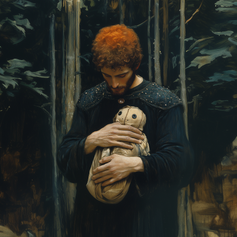
Another custom involves the Brídeóg, the “little Brigid.” This figure made of rushes, straw, or fabric was carried from house to house by groups who received food, money, or gifts. The procession extended the blessing to the entire neighborhood. It also recalled that protecting the home cannot be separated from hospitality and community ties.
In some homes, a place or a small bed was prepared for Brigid. A portion of the meal was set aside for her, and the rushes welcomed into the home were then used to weave the cross. Brigid's entrance thus reenacted the passage of the bright season through the household door. National Museum of Ireland, St. Brigid's Day customs.
The spiritual and magical meaning of Imbolc
Imbolc teaches the art of protected beginnings. A new intention does not yet require spectacular expansion. It requires a clean space, steady warmth, and words clear enough to guide action. The sabbat is therefore suited to commitments that must take root before becoming visible.
Imbolc purification frees the home from what has accumulated during winter. A physical cleaning may precede sprinkling, light smudging, or the passing of a protected flame. Each gesture separates what should remain from what has completed its role. This act of putting things in order creates real space for renewal.
Brigid’s three domains give magical work a precise direction. Poetry supports inspiration, eloquence, and the formulation of a wish. Healing accompanies restoration and the return of strength. The forge governs discipline, courage, and transformation achieved through patient work. The cross and the mantle add protection for the home, loved ones, and activities that are beginning.
Imbolc also welcomes dedication rituals. A promise made before the flame establishes the first step of a project, a course of study, or a spiritual practice. Its value lies in its measure: the chosen commitment must be one that can be honored through concrete actions during the season.
How to celebrate Imbolc today
The celebration may begin on the evening of January 31 by cleaning the room where the ritual will take place. A white cloth, a candle, a bowl of clear water, a few rushes, and a little bread make up a simple altar. White recalls milk and purification; the flame carries the return of the bright season.
A clean ribbon or piece of fabric may be placed outside to form a Brat Bríde. The cross is then woven slowly. Each branch receives an intention related to the home: health, peace, protection, work, or harmony. The completed cross is placed near the entrance and remains there until the next Imbolc.
Before the candle, the commitment for the season is spoken aloud. It may concern a work to begin, a skill to develop, a repair to undertake, or a habit to purify. A brief sentence is enough when it names a genuine action. The ritual draws its strength from the continuity that follows, not from accumulating objects.
The meal extends the welcome. Milk, butter, oat bread, porridge, honey, or a simple dish made with seasonal ingredients recall the traditional household economy of February. A symbolic portion may be set aside for Brigid, then returned to the earth in a natural and measured way.
The celebration ends with a blessing of the threshold. A little water is placed on the doorposts or poured into a vessel intended for the hearth. The candle is extinguished after the wish is spoken, while the cross remains as guardian of the home and witness to the commitment made.
The correspondences of the Imbolc sabbat
| Reference | Correspondences | Meaning |
|---|---|---|
| Date | February 1, with a celebration possible as early as the evening of January 31 | Traditional Gaelic opening of spring |
| Status | Gaelic seasonal festival and major sabbat in Wiccan classification | Passage between the heart of winter and the first signs of renewal |
| Names | Imbolc, Imbolg, Oímelc, Lá Fhéile Bríde | Ewes’ milk, the beginning of spring, and the feast of Brigid |
| Traditions | Gaelic Ireland, Irish and Scottish customs of Brigid, Wicca, and contemporary Paganisms | Meeting point of the pastoral calendar, domestic protection, and the Wheel of the Year |
| Associated figures | Brigit, daughter of the Dagda, and Saint Brigid | Poetry, healing, smithcraft, household protection, and the return of the light season |
| Ritual elements | Fire and water | Creative flame, purification, healing, and blessing of the threshold |
| Symbols | Brigid’s cross, candle, Brat Bríde, Brídeóg, threshold, and hearth | Welcome, protection, Brigid’s presence, and renewal |
| Animal | Ewe and lamb | Lactation, new nourishment, birth, and the continuity of the flock |
| Modern colors | White, red, gold, and tender green | Milk and purification, forge fire, growing light, and the first shoots |
| Plants | Rushes, reeds, straw, and the season’s first shoots | Protective weaving, flexibility, and the awakening of vegetation |
| Modern fumigations | Juniper, rosemary, and frankincense | House purification, protection, and clarity of intention |
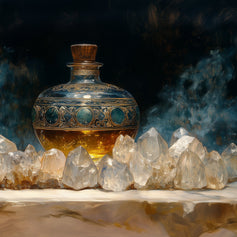
| Modern minerals | Carnelian, garnet, and rock crystal | Creative fire, tended strength, and the clarity of a new beginning |
| Foods and offerings | Milk, butter, oat bread, porridge, and honey | Household nourishment, hospitality, and restored abundance |
| Magical workings | Purification, household protection, healing, inspiration, dedication, and beginnings | Prepare a clear space and support what needs to grow |
Sources and reference texts
Tochmarc Emire, edition and translation compiled by University College Cork ; Sanas Chormaic, edition by Whitley Stokes ; Kuno Meyer, Hibernica Minora, 1894 ; National Museum of Ireland, “St Brigid’s Day” ; Dúchas, “St Brigid’s Day” ; Kevin Danaher, The Year in Ireland, 1972 ; Ronald Hutton, “Brigid’s Night”, in The Stations of the Sun ; Ronald Hutton, “Modern Pagan Festivals”, 2008 ; Doreen Valiente, Witchcraft for Tomorrow, 1978.