
















































































































Yule takes place on the threshold of the longest night. The Sun reaches its lowest point in the sky, winter begins, and the course of the light is already reversing. Each dawn now returns a few moments to the day. The sabbat celebrates this subtle turning point: warmth remains distant, but the movement of renewal has begun.
In the Wheel of the Year, Yule corresponds to the winter solstice. It brings together the ancient jól of Germanic and Scandinavian peoples, European winter customs, and the solar perspective developed by Wicca. The tended fire, evergreen greenery, shared meal, and given word form the heart of this celebration.
The Longest Night and the Return of the Light
In the Northern Hemisphere, Yule is celebrated at the time of the winter solstice, between December 20 and 22, depending on the year. This date marks the shortest day and the longest night. The solstice does not yet announce milder weather: it opens astronomical winter. Its symbolic power lies in a simple and visible fact. At the heart of the cold season, the light begins to grow again.
Wicca classifies the winter solstice among the solar sabbats, also called the minor sabbats. This term does not diminish its importance. It distinguishes the solstices and equinoxes from the four festivals held between these stations. The eight-celebration Wheel of the Year took its current form during the 20th century, then became the common calendar of many contemporary Pagan traditions. Ronald Hutton, “Modern Pagan Festivals: A Study in the Nature of Tradition”.
In this Wheel, Yule represents the first victory of light over the long night. It does not celebrate a triumphant light, but a nascent, still fragile light that must be recognized and preserved.
From Anglo-Saxon Giuli to Scandinavian jól
The name Yule belongs to the Germanic vocabulary. It corresponds to Old English ġēol or geōl and Old Norse jól. In Scandinavia, the forms jul and jól still refer to the Christmas season.
Around 725, the monk Bede described the ancient English calendar in his treatise De temporum ratione. He reported that December and January both bore the name Giuli. According to his explanation, these two months framed the time when the Sun turns back and begins to grow again. He also mentioned Modranecht, the “Night of the Mothers,” placed at the opening of the new Anglo-Saxon year. Bede, De temporum ratione, chapter 15.
In Norway, the Hákonar saga góða, written by Snorri Sturluson in the 13th century, recounts how King Hákon the Good synchronized the celebration of jól with Christian Christmas in the 10th century. The account preserves the memory of a midwinter festival that lasted several days, accompanied by beer, communal meals, and rites dedicated to peace, power, and a prosperous agricultural year. Snorri Sturluson, Heimskringla, saga of Hákon the Good.
Christianization transformed the calendar without erasing the name of the festival. Yule thus became a crossroads where ancient midwinter celebrations, the twelve days of Christmas, and, much later, the solstice sabbat adopted by Wicca met.
The feast, the cups, and the memory of the dead
Scandinavian jól first appears as a collective celebration. Families and allies gathered around the meal, beer, and consecrated cups. The home or great hall then formed the center of the social world: there, bonds, hospitality, and commitments that made it possible to face the rest of winter were renewed.
The Hákonar saga góða describes cups raised in honor of Odin for victory and power, then of Njörd and Freyr for peace and a fruitful season. Another cup honored departed parents and companions. Yule thus connected the future with memory: people asked for a good year without forgetting those who had built the lineage and community.
The sagas also mention gifts offered during this period. Giving expressed generosity, but it also confirmed a friendship, an alliance, or loyalty. Receiving, sharing, and returning formed a single movement. The Yule feast did not merely celebrate abundance: it recalled that making it through winter depended on the strength of social ties. University of Notre Dame’s Medieval Institute, study of Yule celebrations in the sagas.
A celebration of words and faithfulness. The meal, the cup, the gift, and the oath belong to the same language. Yule opens a period in which everyone renews the bonds that support the household and gives concrete form to their commitments.
The Fire, Greenery, and Boar of Yule
Fire embodies the center of the contemporary sabbat. A flame lit in the night represents the Sun resuming its course, but also domestic warmth, vigilance, and continuity. It does not drive away the darkness abruptly: it creates a hearth within it.
The great log belongs to another layer of European winter history. Medieval and early modern Christmas customs preserved large household fires, logs blessed or sprinkled with wine, and fragments kept to light the following year’s fire. In England, the name Yule log appears in the 17th century. The log then became a symbol of prosperity, protection of the home, and continuity between two years.
Holly, ivy, laurel, pine, and fir convey a similar idea. Their foliage remains visible amid stripped vegetation. Medieval churches already used holly, ivy, broom, and laurel for their winter decorations. Contemporary Yule practice takes up this greenery as a sign of endurance and preserved life. York Museums Trust, history of winter plant decorations.
The boar has an older Scandinavian foundation. The Saga of King Heidrek describes a great boar on which the king places his hand before making an oath. The traditions gathered around the sonargöltr, the consecrated boar, link the animal to Freyr, the season of prosperity, and Yule commitments. The boar thus becomes the emblem of binding words, protective strength, and anticipated prosperity. Christopher Tolkien, The Saga of King Heidrek the Wise.
The spiritual and magical significance of Yule
Yule teaches the preservation of the fire. Not everything needs to grow immediately. Some forces require rest, protection, and a framework before they can manifest. The sabbat therefore invites us to recognize what deserves to make it through the winter: a bond, a project, a promise, a home, or a part of oneself that has remained faithful despite hardship.
In the Wiccan interpretation, the rebirth of the Sun expresses the gradual return of vital power. The ritual then moves from darkness into light. A first flame appears, then lights others. This gesture represents recovery, confidence, and the renewal of strength.
Yule is suited to workings for household protection, family peace, endurance, renewal, and prosperity in the year ahead. The tradition of cups and oaths also gives it a special place for expressing a commitment. Words spoken at Yule do not describe a simple wish: they affirm what one accepts serving, preserving, or accomplishing.
The memory of the dead completes this dimension. A light, a cup, or a place symbolically left at the table can honor those who are absent. Their memory does not hold back the cycle: it gives it roots.
How to Celebrate Yule Today
The celebration can begin at dusk, in a dimly lit room. A wreath of evergreen plants surrounds a central candle. A cup, a piece of bread, a few nuts, or apples recall the shared meal and the good season requested from the ancient powers of fertility.
After a period of silence, the central candle is lit. It can then pass its flame to several smaller candles. Each light is given a name: the home, health, peace, a project, or a person to protect. The gesture remains simple. It marks what must continue to live in the months ahead.
A log may receive a word, a solar sign, or the commitment chosen for the new year. In a home without a fireplace, a beeswax candle serves the same ritual purpose. The vow gains strength when it names a real action: maintaining a discipline, repairing a relationship, defending a project, or ending a habit that drains the household.
The meal extends the rite. Bread, grains, apples, nuts, spiced drinks, and beer recall midwinter hospitality. A first cup may be raised for peace and prosperity, a second for the dead, and a third for the commitment made for the year. A non-alcoholic drink fully preserves the meaning of the gesture.
The celebration concludes with sharing or a gift. Offering food, a candle, a useful object, or words of reconciliation restores Yule to its former function: strengthening bonds at the time when winter makes solidarity essential.
Yule Sabbat correspondences
| Reference point | Correspondences | Meaning |
|---|---|---|
| Date | Winter solstice, generally around December 21 | The longest night and the return of the light |
| Status | Solar Sabbat, classified as a minor sabbat in Wicca | Major station in the Sun’s annual course |
| Historical names | Giuli, geōl, jól, jul | Germanic and Scandinavian midwinter period |
| Traditions | Anglo-Saxon and Scandinavian customs, European Christmas celebrations, Wicca | Meeting point between midwinter heritage and the Wheel of the Year |
| Celestial body | Sun | Renewing light, continuity, and renewal |
| Attested deities | Odin, Njörd, and Freyr | Victory and power for Odin; peace and a fertile season for Njörd and Freyr |
| Ancestors | Parents, companions, and departed members of the lineage | Memory, transmission, and gratitude |
| Symbols | Flame, log, cup, plant wreath, boar | Home, promise, protection, and prosperity |
| Ritual elements | Fire and Earth | Maintained light and life preserved through winter |
| Contemporary colors | Dark green, red, white, and gold | Evergreen foliage, ember, snow, and sunlight |
| Plants | Fir, pine, holly, ivy, laurel, and juniper | Endurance, protection of the home, and the continuity of life |
| Contemporary fumigations | Pine, juniper, and frankincense | Purification of the home and a solar atmosphere |
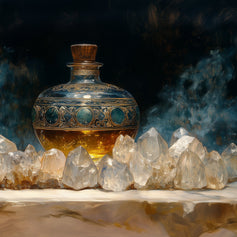
| Contemporary minerals | Garnet, onyx, rock crystal, and smoky quartz | Ember, protective night, clarity, and passage between darkness and light |
| Foods and offerings | Bread, grains, apples, nuts, beer, or spiced drink | Hospitality, sharing, and a successful agricultural year |
| Magical workings | Protection of the home, renewal, endurance, peace, prosperity, oath, and remembrance of the dead | Preserve what must make it through winter and prepare its return to the light |
Sources and reference texts
Bede, De temporum ratione, chapter 15 ; Snorri Sturluson, Heimskringla, Hákonar saga góða ; Christopher Tolkien, The Saga of King Heidrek the Wise, 1960 ; Doreen Valiente, Witchcraft for Tomorrow, 1978 ; Ronald Hutton, The Stations of the Sun ; Ronald Hutton, “Modern Pagan Festivals,” 2008.










