



















































































































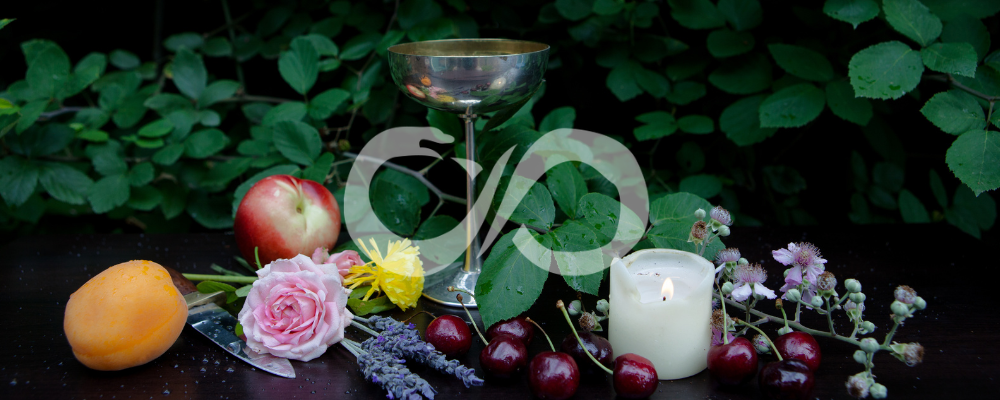
The term “Neopaganism” refers to a group of contemporary religions that draw on deities, narratives, rites, or worldviews originating in pre-Christian societies. It is neither a unified religion nor the intact return of an ancient cult. Wicca, modern Druidry, Heathenry, Hellenism, and Kemeticism have distinct histories, texts, and practices. Bringing them together under one label helps situate them, but must not erase their differences.
This clarification changes the entire way the subject is understood. Contemporary pagan religions are not religious fossils that remained motionless for two thousand years. They emerged from encounters among ancient sources, archaeology, the history of religions, Romanticism, Western occultism, nature-revival movements, and modern ritual creation. Understanding this construction does not make them any less legitimate: every religious tradition has a history. It simply makes it possible to distinguish documented facts from narratives of lineage.
What does the word “paganism” mean?
In Antiquity, the populations we now classify as pagan did not form a single bloc and did not identify themselves by that name. Greek, Roman, Gallic, Germanic, Egyptian, and Mesopotamian cults had their own deities, calendars, sanctuaries, and political frameworks. The Latin term paganus, from which “pagan” derives, changed meaning during Late Antiquity. Christian authors used it to refer to those who remained attached to non-Christian cults.
Paganism is therefore first and foremost a category created from the outside. Its contemporary use encompasses two realities that must be distinguished: the polytheistic religions of Antiquity, studied through texts and remains, and modern religions inspired by them. For the latter, scholars use “contemporary paganism,” “modern paganism,” or “Neopaganism.” Some followers prefer the first two terms, considering that the prefix “neo” places too much emphasis on the break; others accept it as a useful historical reference point.
A modern revival, not a secret survival
The idea of an underground pagan religion that had survived uninterrupted through the Middle Ages and the modern era exerted great influence in the 20th century. The Egyptologist Margaret Murray thus defended the existence of an ancient organized witchcraft cult concealed beneath European witch trials. This theory fueled the beginnings of Wicca, but it has been abandoned by historians: court records do not prove the existence of an underground, coordinated pagan Church.
Local family traditions, rural customs, folk medicine, and protective practices did indeed exist. However, they do not constitute a documented institutional continuity between ancient temples and present-day pagan groups. Contemporary religions developed primarily from the 18th century onward, then became more visible in the 19th and 20th centuries. They combine study, reinterpretation, and innovation.
This distinction avoids two extremes. The first is to present every modern rite as an exact copy of an ancient ceremony. The second reduces these religions to arbitrary inventions. Between the two lies a genuine process of reception: people read the available sources, assessed their gaps, and developed religious forms suited to their time.
Why were the 18th and 19th centuries decisive?
The Europe of the Enlightenment and Romanticism rediscovered its pre-Christian pasts from new perspectives. Antiquarians studied monuments, inscriptions, and manuscripts; artists celebrated national mythologies; and the first Druidic societies combined scholarship, fraternal fellowship, and public ceremonies. Industrialization also fueled a desire for a renewed relationship with landscapes, the seasons, and regional heritage.
In the 19th century, translations of Indian texts, research into Indo-European mythologies, spiritualism, and occult societies transformed the Western religious landscape. These circles were not all pagan, but they provided concepts, symbols, and ritual methods that certain later movements would adopt. Modern paganism therefore emerged at the intersection of several histories, rather than from a single founding revelation.
After the Second World War, groups multiplied in the United Kingdom, continental Europe, and North America. The social transformations of the 1960s and 1970s, religious feminism, ecology, and the rise of new forms of community further broadened the movement. The internet later accelerated the circulation of texts and the formation of connections, without creating these religions on its own.
Wicca: a 20th-century religion
Wicca appeared publicly in Britain in the mid-20th century. Gerald Gardner played a central role in its formation and spread. He claimed to have been initiated in the late 1930s into an older group, but the composition of the Wicca as it is known combines modern ritual materials, occultism, Freemasonry, ceremonial magic writings, Margaret Murray’s ideas, and references to pre-Christian religions. His book Witchcraft Today, published in 1954, marked a decisive moment in bringing it into public view.
Gardner did not act alone. Doreen Valiente participated in rewriting liturgical texts and became one of the major figures of British Wicca. Other traditions subsequently emerged, notably Alexandrian Wicca, associated with Alex and Maxine Sanders. From the 1970s onward, eclectic and solitary forms developed, especially in the United States, outside traditional initiatory covens.
Wicca places great importance on ritual, seasonal and lunar cycles, and divine figures often called the Goddess and the Horned God. However, this presentation is not a doctrine required by all traditions. Theologies vary: some understand deities as distinct beings, while others see them as manifestations of a divine principle, archetypes, or forces of nature.
Above all, Wicca and witchcraft are not interchangeable. A person may practice witchcraft without adhering to a pagan religion; a pagan may practice no magic at all. Wicca is a modern witchcraft religion among other forms of paganism. To learn more about its history, read our article devoted to Gerald Gardner.
Contemporary Druidry and the question of sources
The ancient Druids left no written corpus setting out their doctrine. The available information comes from Greek and Roman authors, medieval Irish and Welsh texts written in already Christianized societies, archaeology, and the comparative study of Celtic languages. These sources are indispensable, but none provides a complete manual of an ancient Druidic religion.
Contemporary Druidry has its roots in the cultural revival movements of the 18th and 19th centuries. Fraternal societies, scholars, poets, and Welsh nationalists shaped its vocabulary and ceremonies. Iolo Morganwg, whose real name was Edward Williams, played a major role at the end of the 18th century. However, some of the texts he attributed to great antiquity were actually his own composition.
Present-day orders do not all define themselves as Pagan. Some emphasize Celtic culture, poetry, community service, or ecology; others develop a polytheistic or animist religion. Progression through the ranks of bard, ovate, and druid belongs to the modern history of several orders: it cannot be presented as a proven ancient hierarchy. Our article on Neo-Druidism discusses this development in greater detail.
Heathenry, Ásatrú, and reconstructed Germanic religions
The English term Heathenry encompasses several contemporary religions focused on Germanic and Nordic heritage. Ásatrú, Forn Siðr, Odinism, and Théodism are not perfect synonyms: their organizations, orientations, and vocabularies differ from country to country. Their members draw in particular on archaeology, runic inscriptions, sagas, and the Eddas.
These sources present a particular difficulty. The Eddas and a large part of the sagas were written down in Christian medieval Iceland after the conversion period. They preserve earlier material, but reading them requires critical examination. Modern rites such as the blót, centered on offering, or the sumbel, in which words and libations circulate, vary among communities. There is no worldwide protocol fixed once and for all.
Reducing these religions to a “Viking” backdrop conceals their religious work and the debates within them. The political use of Nordic imagery has also produced racist movements. Conversely, many Heathen organizations affirm that ethnic origin does not determine access to the Germanic gods and reject racism. The principles and affiliations of each group must therefore be examined without attributing the same ideology to all of them.
Greek, Roman, Egyptian, and Celtic reconstructionist movements
Other currents seek to reconstruct specific religions with close attention to historical sources. Hellenism turns to the gods and cults of the Greek world; Religio Romana to Roman religion; Kemeticism to the traditions of ancient Egypt. Celtic, Baltic, and Slavic reconstructionist movements have also emerged.
The word “reconstruction” does not mean perfect reproduction. Ancient cults were connected to cities, families, priesthoods, and political institutions that no longer exist in the same form. Sources may be abundant for one sanctuary and almost silent about a domestic rite. Present-day groups must decide how to translate, supplement, or set aside certain elements. They debate ritual language, calendars, offerings, and the adaptation of ancient norms to present-day society.
This approach differs from eclectic paths that draw from several pantheons. Neither approach sums up the whole of modern paganism. One prioritizes the historical coherence of a cultural framework; the other more openly embraces personal or communal synthesis.
Does nature always remain at the center?
General introductions readily define modern paganism as a nature religion. The phrase is useful as long as it remains nuanced. The rhythm of the seasons, landscapes, animals, and ecological responsibility occupy a major place in many groups. Some people understand nature as sacred or as inhabited by powers with which reciprocal relationships can be maintained.
But an urban polytheist may place domestic worship, the ancestors, the gods of the city, language study, or community service at the forefront. A devotee of Greek deities does not necessarily share the theology of a Wiccan, even if both celebrate a solstice. The word “nature” is therefore not enough to define every path.
Theological positions cover a broad spectrum: polytheism, animism, pantheism, duotheism, naturalistic approaches, or combinations of several models. There is neither a central creed nor a supreme authority capable of speaking on behalf of all contemporary pagans.
Is the Wheel of the Year an ancient calendar?
The eight-festival Wheel of the Year has become highly visible in Wicca and certain modern Druidic traditions. It associates the solstices and equinoxes with four dates bearing names derived from Irish or Gaelic festivals: Samhain, Imbolc, Beltane, and Lughnasadh. In its current form, this cycle is a 20th-century British synthesis that emerged from the meeting of Wiccan and Druidic circles.
It would be inaccurate to present it as the common religious calendar of pre-Christian Europe. Ancient societies used different calendars, and modern names do not refer to the same rites everywhere. Even today, not all Druids, Wiccans, or polytheists celebrate the eight dates. Some follow a historical calendar linked to a city or region; others mark only the solstices, equinoxes, or festivals specific to their tradition.
Yule clearly illustrates these transformations. The term has ancient Germanic roots, while its place and symbolism in the modern Wiccan Wheel of the Year result from more recent history. Our article on the Yule sabbat makes it possible to examine this festival separately, provided that ancient evidence is distinguished from modern practices.
Rites, offerings, ancestors, and magic
Practices vary from one tradition to another, but several forms recur: prayers, hymns, food or drink offerings, libations, incense, household altars, calendrical festivals, meditation, music, processions, and commemorations of the dead. Their meaning depends on the religious framework. An offering may express hospitality, gratitude, respect, or the maintenance of a relationship with a deity; it is not reducible to a request for a favor.
The relationship with ancestors also requires nuance. It may involve one’s family, spiritual predecessors, the dead of a particular place, or a chosen community. It does not necessarily presuppose biological genealogy. As for magic, it holds a central place in some forms of religious witchcraft, a secondary place in others, and no place at all in some reconstructionist groups.
Objects do not define belonging. A candle, a cauldron, a divination tool, or a rune becomes religious only through its use and context. Understanding the symbol, its provenance, and its function matters more than accumulating accessories.
Studying a path without erasing its context
A serious approach begins by identifying the tradition concerned. Speaking of “pagans” in general quickly leads to attributing Wiccan concepts to Hellenes, Scandinavian liturgy to Druids, or a shared religion to all witches. It is better to research the movement’s own history, its reference texts, available academic scholarship, and the positions expressed by several communities.
Primary sources and modern studies serve different purposes. A translation of the Poetic Edda provides access to a medieval corpus; it does not automatically describe a current rite. An academic work may place this corpus in its historical context, but it does not replace the communities’ own accounts of their religious lives. Comparing them makes it possible to see where the data ends and interpretation begins.
Caution also applies to borrowing from living peoples. An Indigenous practice, a restricted ceremony, or a religious title does not become free material simply because it is presented on social media. Respect means listening to the communities concerned, understanding the conditions of transmission, and being able to forgo borrowing.
What contemporary paganisms have in common
Despite their differences, these movements share a desire to make religious heritages present again—heritages that Christianization, political modernity, and cultural transformations have distanced from the present. This desire may take the form of polytheistic worship, ecological spirituality, an initiatory path, historical reconstruction, or domestic practice.
They also share the absence of a common center. There is no pagan pope, no revealed text accepted by everyone, and no general doctrine concerning the gods, the afterlife, or morality. Authority may come from an initiatory group, an order, an association, historical study, or individual experience. This decentralization explains both the creativity of the milieu and the disagreements over words, rites, and legitimacy.
The best summary can therefore be put in one sentence: contemporary paganisms are modern religions in dialogue with pre-Christian pasts. They are neither an unchanged survival nor a mere aesthetic. Studying them requires respecting their modernity, the value of their sources, and the limits of what history allows us to assert.
Sources and further reading
For an academic overview, see Manon Hedenborg-White, “Contemporary Paganism,” in The Oxford Handbook of New Religious Movements, as well as Graham Harvey, Contemporary Paganism: Religions of the Earth from Druids and Witches to Heathens and Ecofeminists, 2nd edition, New York University Press, 2011.
On Wicca and the end of the thesis that an intact witch religion survived, see Ronald Hutton, The Triumph of the Moon, Oxford University Press, as well as John Callow, Gerald Gardner and the Creation of Wicca, Cambridge University Press, 2025.
On the history and reception of the Druids, see Ronald Hutton, Blood and Mistletoe: The History of the Druids in Britain, Yale University Press, 2009, and his overview lecture “Who Are the Modern Druids?” for Gresham College.

Par Olivier of Aeternum
Passionate about esoteric traditions and the history of the occult from the earliest civilizations to the 18th century, I share some articles on these topics. I am also co-creator of the online esoteric shop Aeternum.













Merci pour cet article tres juste
Très pertinant,complet,instructif et culturel.