



















































































































Table of contents...
Like all fields of study, alchemy created and used its own system of symbols to designate stages and substances, much like the periodic table of the elements. This system was standardized and was even partly incorporated into the Unicode computer language, which is present on all computers, and is considered a set of "special characters." Let us therefore discover alchemical symbolism.
1. The foundations of alchemy

Before discussing the symbols, we need to spend some time on their meaning. Indeed, alchemy is an art that works on different planes, which were themselves defined by alchemists.
1.1. The fundamental triad or Tria Prima
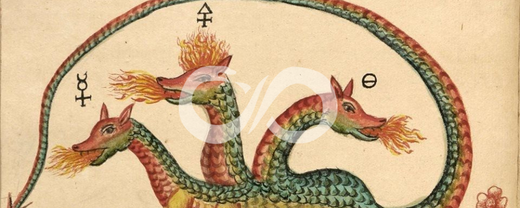
The alchemical principles are based on a fundamental triad: Salt, Sulphur, and Mercury. These three principles are essential to understanding alchemical philosophy, as they represent the fundamental aspects of matter and spirit, and their interaction is the key to alchemical transformation processes.
1.1.1. Salt
Salt symbolizes material substance, the physical body, and fixity. It is the solid and stable element that forms the basis of all matter. In alchemy, Salt represents the element that resists transformation but is ultimately purified and sublimated through the alchemical process. It is often associated with coagulation, in which substances take form and become tangible. Salt is also linked to perseverance and resistance, illustrating the most concrete and stable aspect of material existence.
1.1.2. Sulphur
Sulphur represents the soul, energy, and action. It is the active principle that initiates and supports transformation processes. Sulphur is linked to combustibility and heat, symbolizing passion and vital energy. It is considered the agent of change, capable of provoking reactions and transforming matter. In alchemical terms, Sulphur is often associated with the calcination phase, in which matter is burned to eliminate impurities and reveal its pure essence. Sulphur also embodies the duality of existence, being both creator and destroyer.
1.1.3. Mercury or Mercurius
Mercury (Mercurius) embodies spirit, fluidity, and volatility. It is the mediator between Salt and Sulfur, representing the ability to transmute and integrate opposites. Mercury is symbolized by its ambiguous nature, capable of passing from one state to another, thus illustrating the elusive nature of spirit. In alchemy, Mercury is essential to the dissolution phase, in which substances are broken down to be re-formed into a higher form. It is also associated with sublimation, the process by which volatile substances are transformed into a spiritual essence. Mercury is the element that enables harmonious interaction between body and soul, the material and the spiritual.
1.2. The four elements
In addition to the three alchemical principles, the four classical elements - Earth, Water, Air, and Fire - form another cornerstone of alchemical philosophy. Each of these elements represents a fundamental facet of material and spiritual reality, and their interaction is essential to the processes of alchemical transformation.
1.2.1. Earth
Earth is the element of stability, solidity, and physical manifestation. It represents raw matter, structure, and persistence. In alchemy, Earth is often associated with the coagulation phase, in which substances solidify and take shape. It symbolizes stability and permanence, qualities necessary for the other elements to carry out their transformations. Earth is also linked to nature's nurturing aspect, providing the foundation on which the other elements can interact.
1.2.2. Water
Water symbolizes fluidity, emotion, and adaptability. It is linked to dissolution and purification, playing a crucial role in transformation processes where elements are dissolved and reconstituted. In alchemy, Water is associated with the solution phase, in which solid substances are dissolved to allow a new recombination. Water also represents receptivity and fertility, capable of absorbing and transforming, thus illustrating the capacity for renewal and purification.
1.2.3. Air
Air is the element of thought, communication, and freedom. It is associated with volatility and expansion. Air symbolizes the mind and consciousness, facilitating the processes of sublimation and elevation of alchemical substances. In alchemy, Air is essential for the separation phase, where volatile substances are isolated to be transformed into a purer form. Air is also linked to the transmission of ideas and the diffusion of vital energy, illustrating the elusive and expansive nature of the mind.
1.2.4. Fire
Fire represents energy, passion, and transformation. It is the ultimate purifying and transmuting agent. In alchemy, Fire is essential for calcination and fermentation, where impurities are burned away and matter is transformed into a higher form. Fire symbolizes the creative and destructive force capable of bringing about radical changes. It is also associated with illumination and spirituality, illustrating the capacity for transformation and purification through heat and light.
2. Major alchemical symbols
2.1. Metals and alloys
In alchemy, metals play a central role in transformation processes and are each associated with specific symbols and particular properties. Each metal is also linked to a planet, creating a connection between the microcosm (humankind and the Earth) and the macrocosm (the universe and the stars).
  |
Gold | Gold is the most precious and sought-after metal in alchemy. It is associated with the Sun, a symbol of perfection, illumination, and immortality. Gold represents purity, light, and nobility. In alchemical operations, gold is the ultimate goal of transmutation, the realization of the Philosopher's Stone, which grants supreme wisdom and eternal life. |
| ☽ | Silver | Silver is symbolized by the Moon and represents femininity, receptivity, and purity. It is associated with the qualities of reflection and intuition. In alchemy, silver is viewed as a noble metal, close to gold in terms of spiritual value. It also symbolizes inner transformation and the soul's ability to shine in darkness, reflecting divine light. |
  |
Copper | Copper is associated with the planet Venus and symbolizes love, beauty, and harmony. It is also linked to fertility and creativity. In alchemy, copper represents the qualities of gentleness and malleability, essential in transformation processes where flexibility and adaptability are necessary. Copper is also used to illustrate the balance between masculine and feminine energies. |
| ♂ | Iron | Iron is symbolized by the planet Mars and represents strength, courage, and action. It is associated with war, energy, and determination. In alchemy, iron is a base metal often used to demonstrate the initial stages of transformation, in which raw matter is purified and strengthened. Iron also symbolizes resilience and the ability to overcome obstacles. |
| ♃ | Tin | Tin is associated with the planet Jupiter and symbolizes expansion, wisdom, and prosperity. It is linked to authority and justice. In alchemy, tin represents balance and harmony in transformation processes, bringing a stabilizing quality. Tin is also used to illustrate spiritual growth and the maturation of the soul. |
| ♄ | Lead | Lead is symbolized by the planet Saturn and represents melancholy, heaviness, and restriction. It is often considered the starting point of alchemical transmutation. In alchemy, lead embodies raw matter that must be purified and transformed into gold. It also symbolizes the wisdom and patience necessary to achieve spiritual perfection. |
| ☿ | Mercury | Mercury, also known as quicksilver, is associated with the planet Mercury. It symbolizes fluidity, communication, and transformation. Mercury is unique as an element that is liquid at room temperature, thus representing the capacity for transmutation and adaptability. In alchemy, mercury is seen as an intermediary between the material and spiritual worlds, facilitating processes of change and purification. |
| ♅ | Zinc | In modern alchemy, zinc is associated with Venus, transformation, and healing. It also symbolizes the protection and balance of energies. Although less used in traditional alchemy, it is important in contemporary metallurgical and medical applications. |
| ♆ | Platinum | Platinum is associated with the planet Neptune in modern astrology, representing spirituality, intuition, and mysticism. In alchemy, platinum symbolizes purity and resilience, qualities sought in the pursuit of transmutation and spiritual enlightenment. |
| ♇ | Plutonium | In modern alchemy, plutonium is associated with the planet Pluto, symbolizing profound transformation, power, and regeneration. Plutonium embodies the destructive and creative aspects of nuclear energy, representing radical transformations and rebirths. |
2.2. The Planets
As mentioned above, alchemical metals are intrinsically linked to the planets, with each planet bringing its own influences and qualities to matter.
| ☉ | The Sun | Associated with gold, the Sun represents perfection, light, and illumination. It symbolizes vital force, energy, and the ultimate fulfillment of alchemical goals. |
| ☽ | The Moon | Associated with silver, the Moon represents femininity, intuition, and receptivity. It also symbolizes the cycle of transformation and renewal. |
| ♀ | Venus | Associated with copper, Venus symbolizes love, beauty, and harmony. It also represents creativity and the balance of energies. |
| ♂ | Mars | Associated with iron, Mars symbolizes strength, courage, and action. It also represents determination and the ability to overcome challenges. |
| ♃ | Jupiter | Associated with tin, Jupiter symbolizes expansion, wisdom, and prosperity. It also represents authority and justice. |
| ♄ | Saturn | Associated with lead, Saturn symbolizes melancholy, restriction, and wisdom. It represents the patience and purification necessary to achieve perfection. |
| ☿ | Mercury | Associated with mercury, Mercury symbolizes fluidity, communication, and transformation. It also represents the intermediary between the material and spiritual worlds. |
| ♅ | Uranus | Uranus symbolizes change, innovation, and originality. It represents the forces of radical transformation and the breaking of old structures to enable new discoveries. Uranus embodies the spirit of revolution and progress, stimulating spiritual and material evolution. |
| ♆ | Neptune | Neptune symbolizes spirituality, intuition, and mysticism. It represents the forces of dissolution and purification, helping to transcend material reality and reach higher states of consciousness. Neptune embodies divine inspiration and the quest for unity with the universe. |
| ♇ | Pluto | Pluto symbolizes profound transformation, power, and regeneration. It represents the forces of destruction and rebirth, enabling one to overcome trials and achieve spiritual and material renewal. Pluto embodies the ability to transmute negative energies into sources of power and growth. |
| ⊕ | Earth | The Earth symbolizes stability, solidity, and materiality. It represents the foundation and structure of all matter, the initial state from which transformation begins. The Earth embodies the qualities of perseverance and fertility, essential to the process of purification and transmutation. |
2.3. The elements
In alchemy, the four classical elements - Earth, Water, Air, and Fire - are interdependent in the processes of transformation. Each element represents a fundamental quality of matter and spirit, and their interaction is necessary for the realization of the Alchemical Work.
| 🜃 | Earth | Earth symbolizes stability, solidity, and materiality. It represents the foundation and structure of all matter, the initial state from which transformation begins. Earth is associated with the Nigredo phase, the decomposition and initial purification of raw matter. |
| 🜄 | Water | Water embodies fluidity, emotion, and purification. It is essential for dissolving and cleansing impurities, thereby preparing matter for the subsequent stages of transformation. Water is linked to the Albedo phase, symbolizing purification and rebirth. |
| 🜁 | Air | Air represents thought, communication, and freedom. It is crucial for the volatilization and separation of substances, facilitating the elevation of the spirit and the expansion of consciousness. Air is associated with the Multiplicatio phase, where matter and spirit are refined and elevated. |
| 🜂 | Fire | Fire symbolizes energy, passion, and transformation. It is the ultimate purifying and transmuting agent, burning away impurities and transforming matter into a purer form. Fire is linked to the Rubedo phase, the final realization and enlightenment. |
2.4. Minerals and compounds
Minerals embody the fundamental principles of alchemy: the purification of the impure, the stabilization of the unstable, and the transformation of the ordinary into something precious and pure.
 |
Antimony | Used for its purifying and transformative properties. Symbolizes the duality and power of transforming impure elements into pure ones. |
 |
Arsenic | Used with caution for its transformative and purifying properties. Symbolizes death and rebirth. |
 |
Bismuth | L Bismuth is used for its transformative and purifying properties, symbolizing the ability to transmute base metals into nobler and more refined substances. |
2.5. Chemical compounds
In alchemy, chemical compounds are used in the processes of purification, transformation, and transmutation.
 |
Potash | It is used for its purifying and regenerative properties. It symbolizes balance and the neutralization of acids. |
|
|
Copper saffron | It is used for its coloring and transformative properties. It symbolizes heat and transformation. |
 |
Copper Acetate | It is used for its dissolving and transformative properties. It symbolizes purification and transformation. |

2.6. Alchemical Compounds
The compounds symbolize the intermediate stages of decomposition, purification, and recombination required to achieve material and spiritual perfection. These compounds are obtained in specific ways, through extraction, dissolution, mixing, or distillation.
| 🜋 | Vinegar | Used for its dissolving and purifying properties, vinegar symbolizes the acidity needed to cleanse impurities and prepare substances for transformation. |
| 🜋 | Distilled Vinegar | A concentrated form of vinegar, used for its powerful dissolving and purifying properties, symbolizing intense acidity. |
| 🜹 | Sal Ammoniac | Used for its purifying and sublimating properties, sal ammoniac symbolizes the volatility and intense purification of substances. |
| 🜔 | Aqua Fortis | Known for its ability to dissolve metals, aqua fortis symbolizes corrosive power and the purification of raw materials. |
| 🜆, 🜇 | Aqua Regia | A mixture of nitric acid and hydrochloric acid capable of dissolving gold, aqua regia symbolizes the supreme power of transformation and total purification. |
| 🜈 | Aqua Vitae | Used for its spiritual and purifying properties, aqua vitae symbolizes spiritual essence and inner regeneration. |
| 🝛 | Amalgam | A mixture of mercury and other metals, amalgam symbolizes the combination and unification of substances to create new transmuted forms. |
| 🜓 | Cinnabar | Used for its transformative properties, cinnabar symbolizes death and rebirth, as well as profound spiritual transformation. |
| 🜆 | Ferrous Sulfate | Used for its purifying and coagulating properties, ferrous sulfate symbolizes the purification and crystallization of substances. |
| 🜇 | Vitriol | A symbol of sulfuric acid, vitriol is used for its corrosive and purifying properties, representing the purification and transformation of impure materials. |
| 🜏 | Black Sulfur | Used for its transformative and purifying properties, black sulfur symbolizes the calcination phase, in which impurities are burned away to reveal the pure essence. |
2.7. Units
To measure, alchemy uses units specific to this art.
| 🝱 | Month | It is used to represent lunar cycles and the periods of time required for certain stages of the alchemical work. |
| 🝰 | Day | It represents a full day, often used to indicate the duration of alchemical operations. |
| 🝮 | Hour | It indicates shorter periods in the alchemical process, such as heating or resting times. |
| ℔ | Libra | It is used to measure substantial weights, particularly solid substances. |
| ℥ | Uncia | It is used for smaller weight measurements. |
| ʒ | Drachm | It is a unit of weight used for solid or liquid substances. |
| ℈ | Scruple | It is an even smaller unit of weight, often used for very precise measurements. |
| gr | Granum | It is the smallest unit of weight, often used to measure quantities of very precious or active substances. |
| gt | Gutta | It is used for very small volumes, particularly in solutions and elixirs. |
3. Symbols of the processes

In alchemy, transformation processes are symbolized by a series of operations aimed at purifying, decomposing, and recomposing matter to achieve ultimate perfection. Here they are in order, one after another.
3.1. Calcination or Calcinatio
Calcination (🜂) is the operation of heating a substance until it is reduced to ashes, thereby eliminating all volatile impurities. In alchemy, calcination represents purification by fire, in which the coarse aspects of matter and spirit are burned away to reveal the pure essence. This process is crucial for decomposing material and symbolic structures, allowing for complete transformation. Calcination is often symbolized by images of a furnace or intense fire, illustrating the creative destruction necessary for rebirth.
3.2. Dissolution or Solve
Dissolution (🜄) is the process by which a solid substance is broken down in a liquid, generally water, symbolizing the decomposition of fixed forms to return to a primordial and amorphous state. In alchemy, this stage is crucial for breaking rigid structures and allowing the elements to be reorganized. Dissolution also represents the purification of the soul, in which impurities are eliminated, leaving a pure essence ready to be transformed. This stage is often symbolized by images of water or dissolving liquors, and it marks the beginning of the true alchemical work.
3.3. Separation or Separatio
Separation, or Separatio ( ), is a fundamental operation in alchemy, consisting of dividing a composite substance to isolate its pure components. This process involves careful analysis and precise discernment to distinguish useful and essential parts from impurities and unwanted elements. In practice, this can be done through methods such as filtration, distillation, or decantation, making it possible to extract precious essences from raw materials. Symbolically, Separation represents a stage of inner purification, in which the alchemist must separate elevated spiritual aspects from material distractions and impure thoughts. This process is often illustrated by images of sieves or filters, emphasizing the importance of this phase in removing dross to reveal the hidden purity of the substance. Separation thus prepares the matter for a more harmonious and balanced recombination, and on a personal level, it helps the individual clarify their intentions and focus on the noblest and most divine aspects of their being. This stage is crucial for advancing toward deeper and more meaningful transformations in the alchemical journey.
3.4. The Conjunction or Coniunctio
The Conjunction, or Coniunctio (☌), is a crucial stage in the alchemical process in which separated and purified elements are recombined to form a new harmonious substance. This process symbolizes the union of opposites, such as the masculine and feminine, the material and the spiritual, or sulfur and mercury, thus illustrating the reintegration of dualities into a single coherent unity. In alchemy, conjunction represents not only the fusion of physical elements but also the unification of the individual's psychic and spiritual aspects. This stage is often associated with symbolic images of the alchemical marriage, in which the King and Queen, representing the solar and lunar principles, come together in a sacred union. The Conjunction marks a phase of renewal and creation, in which divergent energies stabilize into a state of perfection and balance. It is a moment of great transformation, signifying that the alchemical work is progressing toward higher levels of realization, integrating the purified aspects of matter and spirit into a new, illuminated, and transmuted whole.
3.5. Fermentation or Fermentatio
Fermentation (🜹) is the process of transforming organic matter through microorganisms, generally in the presence of moisture and heat. In alchemy, fermentation symbolizes putrefaction and rebirth, in which dead matter is broken down and regenerated into a new, living, and vital form. This process is essential for creating the elixir of life or the philosopher's stone, representing the cycle of death and resurrection. Fermentation is often symbolized by images of decomposing matter or bubbles indicating intense activity, emphasizing the profound and vital transformation of the essence.
3.6. Distillation or Distillatio
Distillation (🝂) is the process of separating volatile substances through heating and cooling, resulting in the purification and concentration of the essence. In alchemy, distillation symbolizes the clarification and elevation of ideas and substances, in which the purest elements are extracted and concentrated. This process is essential for refining substances and reaching higher states of purity. Distillation is often represented by alembics or distillation apparatus, illustrating the separation and recombination of essences into purer and more sublime forms.
3.7. Coagulation or Coagula
Coagulation (🜔) is the operation that follows dissolution, in which dissolved particles are recombined to form a new, solid, and stable substance. This process symbolizes the crystallization of new ideas or states of consciousness after the dissolution of old structures. In alchemy, coagulation is essential for fixing new forms and giving new life to transformed matter. This process is often represented by symbols of crystals or solids emerging from liquids, indicating a phase of solidification and concrete manifestation.
3.8. Sublimation or Sublimatio
Sublimation (🜁) is the process by which a substance passes directly from a solid state to a gaseous state without passing through an intermediate liquid phase. In alchemy, sublimation symbolizes the elevation of matter and spirit toward higher states of purity and consciousness. It is an intense stage of purification in which volatile elements are separated and elevated, leaving impurities behind. Sublimation is often represented by images of steam or smoke rising toward the sky, illustrating the soul's aspiration to reach more spiritual realms.
3.9. The Solution or Solutio
Solution, or Solutio (🜄), is a key operation in alchemy in which a solid substance is dissolved in a liquid to form a homogeneous solution. This process symbolizes the disintegration of rigid structures and the abolition of old forms, allowing hidden essences and latent potentials to be released. Solution is often carried out by immersing the solid matter in alchemical solvents, such as water or other specific liquids, which gradually dissolve the substance into its elemental components. Symbolically, this stage represents the dissolution of material attachments and fixed thoughts, paving the way for a more flexible and harmonious recombination of the elements. Solutio purifies and prepares the components for the later phases of the alchemical work, facilitating profound transformation and the creation of new, more balanced and integrated structures. By dissolving old forms, Solution creates a state of fluidity and potentiality in which the elements can interact freely and unite in new and creative ways, thereby preparing the ground for the stages of recombination and spiritual elevation.
3.10. Digestion or Digestio
Digestion, or Digestio (🜸), is an alchemical process in which a substance is heated at a constant temperature over a long period to promote internal chemical and alchemical transformations. This operation symbolizes the maturation and slow but continuous transformation of matter, reflecting the substance's gradual and profound development into a purer and more evolved form. In practice, digestion involves using a device such as the athanor, which maintains gentle, stable heat, allowing the matter to decompose and recombine homogeneously. Symbolically, Digestio represents the time and patience necessary for spiritual maturation and inner growth. It is an incubation period during which ideas, emotions, and energies slowly but surely transform, resulting in a state of deeper wisdom and understanding. Alchemical digestion is often associated with images of a cocoon or gestation, emphasizing the importance of time and internal heat in allowing the complete transformation of matter and spirit. This stage prepares the substance for the later phases of transmutation, ensuring that internal changes are fully integrated and stabilized.
3.11. Waxing or Cera
Ceration, or Cera (🝊), is an alchemical operation intended to make a substance more waxy and malleable, generally by adding liquid or melting elements to it. This process symbolizes flexibility and adaptability, which are essential for preparing the matter for the final phases of transmutation. In practice, ceration involves mixing the initial substance with materials that give it a softer, more plastic texture, thereby facilitating its handling and subsequent transformation. Symbolically, Cera represents the opening of matter and spirit to new possibilities and configurations, allowing for the harmonious and integrated reorganization of the elements. This stage is crucial for softening rigid structures and preparing the substance to accept the transformative influences of the final stages of the alchemical work. Ceration is often illustrated by images of melting wax or pliable substances, emphasizing the importance of malleability and preparation in the transmutation process. By making matter more receptive and adaptable, Ceration facilitates the achievement of alchemy's ultimate goals, leading to a complete and balanced transformation.
3.12. Multiplication or Multiplicatio
Multiplication, or Multiplicatio (✶), is an alchemical operation intended to increase the quantity and power of the philosopher's stone or an elixir. This stage symbolizes the proliferation and intensification of the spiritual and material qualities obtained through the transmutation process. In practice, multiplication involves repeating the alchemical cycles on the already transmuted stone or elixir, thereby increasing its effectiveness and power. Symbolically, Multiplicatio represents the idea that spiritual and material gains can be exponentially amplified through continuous practices and efforts. This operation is often associated with images of growth and abundance, such as trees bearing multiple fruits or vessels overflowing with elixir. Multiplication shows that the alchemical work does not end with the first transmutation, but can be continued to reach even higher levels of perfection and effectiveness. By intensifying the qualities acquired, Multiplicatio prepares the alchemist for deeper influence and transformation, both personally and in the material world.
3.13. Projection or Projectio
Projection, or Projectio (🜍)is an alchemical operation in which a small quantity of the Philosopher's Stone or another transmuting agent is projected onto a base material, generally a metal, to initiate its transmutation into gold or a pure substance. This process symbolizes the practical application and concrete realization of the alchemical work, marking the culmination of the efforts of purification and transformation. In practice, projection is the final act that triggers the sought-after transmutation, illustrating the power and effectiveness of the Philosopher's Stone. Symbolically, Projectio represents the moment when the alchemist's knowledge and spiritual abilities manifest in the material world, demonstrating the success of the alchemical quest. This process is often represented by images of light or energy radiating from the stone toward the metal, illustrating the instantaneous and miraculous transformation. Projection shows that the alchemical work, after a long series of preparations and purifications, can finally be put into practice to produce tangible and extraordinary results, confirming the achievement of transmutation and mastery of alchemical forces.
4. The Symbols of Substances
In alchemy, theoretical substances are symbolized to represent the essential stages and tools of the transformation process. These symbols serve to illustrate the philosophical and practical concepts of alchemy, with each substance having a specific meaning within the context of the alchemical work. Note that these symbols are more open to interpretation depending on the alchemist, and have not been formalized like the symbols we have seen previously. They are representations rather than symbols in the strict sense.
4.1. The Philosophical Egg

The Philosophical Egg is a central symbol in alchemy, representing the universe in miniature and the potential for total transformation. The egg is seen as a container where opposing forces meet and merge to create new life. It also symbolizes the germ of life and the process of birth and rebirth. In alchemy, the Philosophical Egg is often associated with the creation of the Philosopher's Stone, as it contains all the elements necessary for transmutation. It is also linked to the notion of continuous regeneration and renewal, where the cycle of death and rebirth is perpetual.
4.2. The Athanor (the alchemical furnace)

The Athanor, or alchemical furnace, is the crucial instrument in alchemical work, symbolizing the heat and energy necessary for transformation. It is in the Athanor that substances are heated and undergo the various processes of calcination, dissolution, and other operations. The Athanor also represents the alchemist's heart or soul, where spiritual energy is concentrated and transformed. It is often described as an eternal furnace, capable of maintaining a constant temperature necessary to allow long and delicate transformations. The Athanor therefore symbolizes perseverance, constancy, and devotion in the alchemical quest.
4.3. The Elixir of Life (Philosopher's Stone)

The Elixir of Life, also known as the Philosopher's Stone, is the ultimate goal of alchemy. This symbol represents the quintessence of perfection and immortality. The Elixir of Life is believed to possess miraculous properties, capable of transforming base metals into gold and granting immortality and the healing of all diseases. In symbolic terms, the Philosopher's Stone represents spiritual fulfillment and supreme wisdom. It embodies the perfect fusion of opposites, the material and the spiritual, the microcosm and the macrocosm, signifying the unity of all things. The Elixir of Life is the symbol of the complete fulfillment of the alchemical work, the final transformation of being into a divine and eternal form.
5. In conclusion
Our overview is now complete, and I hope it has made you want to explore this fascinating subject further. Of course, I cannot claim that this is a complete list of all alchemical symbolism, but you now know the basics for understanding most theories.

Par Olivier of Aeternum
Passionate about esoteric traditions and the history of the occult from the earliest civilizations to the 18th century, I share some articles on these topics. I am also co-creator of the online esoteric shop Aeternum.













Magnifique site/blog que vous proposer là !
Merci de votre contribution.
Anaïs