



















































































































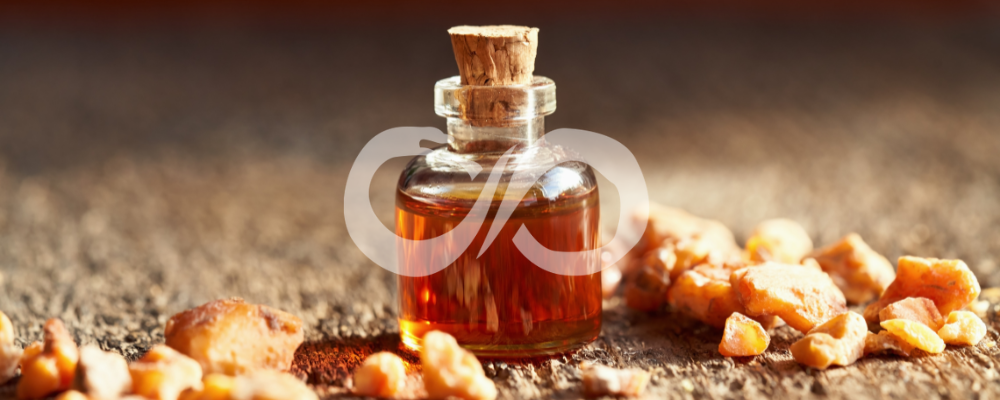
Incense resins such as frankincense, benzoin, copal, myrrh, and storax have been used for millennia in religious and esoteric practices. Each possesses magical properties that vary according to tradition. An overview.
Frankincense resin (franckincense)
Botanical origin
Frankincense, commonly referred to simply as “incense,” is an aromatic gum resin obtained from the Boswellia tree. The species primarily used is Boswellia sacra (synonym B. carterii), a small tree native to Dhofar (southern Oman). It is also found in Somalia, Yemen, and northern India (where Boswellia serrata grows). Boswellia trees belong to the Burseraceae family. By making an incision in the bark, the tree exudes whitish resin “tears” that harden in the open air and are harvested after several weeks. Frankincense has been known since antiquity for its sacred fragrance and was one of the three gifts offered to the infant Jesus according to biblical tradition (along with gold and myrrh).

Magical properties in Kabbalistic magic
In Hebrew mysticism and Western Kabbalistic magic, frankincense is considered a sacred resin associated with the highest spiritual spheres. In Hebrew, it is called lebonah and is part of the incense formula of the Temple of Jerusalem in the Bible, where it is described as “most holy.” Occultists of the Hermetic Kabbalistic tradition often associate it with the Sphere of the Sun (Sephira Tiphereth) because of its luminous and royal nature.
Indeed, frankincense is described as a solar incense, carrying high spiritual vibrations. Its planetary correspondence is the Sun in many occult correspondences, and its element is purifying Fire. Burning frankincense is seen as a way to raise the soul toward the divine: its smoke is said to rise straight toward the heavens to carry prayers. Thus, Kabbalists and magicians use it to consecrate ritual space and invoke divine energies (it should be noted that one Kabbalistic school, that of Ari Luria, even associates frankincense with the occult sephira Da’at, the mystical “point of knowledge,” emphasizing its role as a bridge between the material and spiritual worlds).
In medieval and Renaissance European magic
In Europe, frankincense has always been valued in religious and magical rituals. The Catholic Church uses it in a thurible to bless and purify places and drive away evil influences - a practice inherited from ancient rites. Medieval and Renaissance grimoires attribute purifying and consecrating properties to it. The astrological tradition reinforces the association between frankincense and the Sun: according to the planetary correspondences reported by Cornelius Agrippa, the incense of the Sun is frankincense. Burning frankincense on a Sunday (the solar day) during a conjuration attracts beneficial solar forces (illumination, success) and pleases benevolent entities. Conversely, its powerful aroma was also used to ward off evil spirits: numerous medieval exorcisms recommend fumigating with blessed incense. In The Key of Solomon and other grimoires, frankincense appears in recipes for “pontifical incense” or planetary incenses - mixed with myrrh, benzoin, or storax - to create fumigations specific to each operation. Thus, in Solomonic magic, frankincense is a standard ingredient in the “incense of art,” used almost universally to sanctify magical circles and instruments.
Properties in Wicca and Neo-Pagan Magic
In Wicca, frankincense is considered the ultimate universal incense. It corresponds to the element of Fire and the Sun, and is believed to have the power to raise spiritual vibrations, purify the atmosphere, and consecrate ritual objects or places. Its magical properties listed in Wiccan texts include protection, exorcism (the driving away of negative energies), purification, and enhanced spirituality. Its smoke is said to release powerful vibrations that uplift the soul and drive away all evil. Practitioners burn it to consecrate the magic circle, cleanse a home of harmful influences, or facilitate meditation and induce mystical visions. Frankincense is included in many Wiccan incense blends, and Scott Cunningham notes that it can be replaced with copal or pine resin when necessary (proof that its purifying role is considered comparable to that of other aromatic resins). In short, for neo-pagan witches and mages, it is a versatile, high-vibration incense symbolizing divine light.
Use in Hoodoo (African American conjure)
In Hoodoo - an African American magical tradition influenced by Christianity - frankincense holds a prominent place as sacred biblical incense. Its use dates back to the combined influence of Christian practices (Baptist churches, Catholicism) and European “books of secrets” introduced into African American culture. It is burned while reciting psalms to sanctify the home or altar and carry prayers to God. Frankincense (combined with myrrh) is viewed as an offering to God and the saints - particularly during prayer vigils or alongside novena candles. Catherine Yronwode states that frankincense is used on hot coals “during spiritual services, as recommended in the Bible.” In Hoodoo worship, frankincense is also believed to attract fortune and blessings: carrying a few grains of incense or leaving some burning brings luck and success in business. In addition, mixed with other ingredients, it is used to make condition incense (success or money-drawing incense), such is its recognized power of positive amplification.
In Santería and Afro-Caribbean traditions
In Santería (the Caribbean region, derived from the Yoruba religion blended with Catholicism) and in certain voodoo practices, frankincense was not traditionally used by West Africans (original Yoruba rites favored offerings of food, herbs, or locally fragrant woods). However, with Catholic syncretism, frankincense became an adopted aromatic offering in many Afro-Caribbean rites. For example, in Cuban Santería, frankincense is associated with Obatalá (creator god of the Yoruba pantheon, identified with Christ or the Virgin Mary) because of its solar and pure nature. Burning white incense on Obatalá’s altar is seen as a sign of respect and a way to purify the space for this deity of purity.
Likewise, during Vodou masses (a mixture of Catholic liturgy and the worship of the loa), the church thurible filled with frankincense is sometimes burned to sanctify the gathering and honor the spirits as one would honor Christian saints. In Haitian Vodou, some houngans use frankincense (called “tieno” there, or simply incense) for rituals associated with the Rada mysteries (which are generally benevolent), or for funeral ceremonies to appease the spirits of the dead. In Africa itself, frankincense is known in the Horn of Africa (Ethiopia and Somalia) for local medicinal and ritual uses, but in West Africa it was unknown before the colonial era. Today, however, through the Church or esoteric shops, it can be found on Vodou or Candomblé altars as universal purification incense. There are hardly any contradictions between traditions regarding frankincense: practically all of them see it as an agent of sacred purification, a “scent of holiness” that pleases the deities and dispels evil. In this sense, one can speak - as a contemporary author does - of a “universal” resin connecting all religions.
Benzoin resin (Benzoin)
Botanical origin
Benzoin (benzoin gum) is the aromatic resin obtained from several trees of the genus Styrax. Two Asian species are primarily harvested: Styrax tonkinensis (Siam benzoin, native to Indochina - Laos and Vietnam) and Styrax benzoin (Sumatra benzoin, Indonesia). These trees of the Styracaceae family produce a balsamic oleoresin obtained by making incisions in the bark. Historically, another Mediterranean species, Styrax officinalis (called the snowbell), provided a balm known as solid storax. As a result, benzoin was often confused with storax: in the past, the term storax referred to benzoin imported from the East. For example, the “black storax” sold commercially is actually oxidized Sumatra benzoin, with a dark appearance. The name benzoin comes from the Arabic lubān jāwī (“incense of Java”), recalling its Indonesian origin. This resin, with its sweet vanilla-like scent, is used both in perfumery and as incense.

Correspondences in Western Kabbalistic and occult magic
Benzoin does not appear in the Bible or in traditional Jewish Kabbalah (it was unknown in the Near East), but Western esotericists incorporated it into their planetary correspondences from the end of the Middle Ages onward. Notably, sources differ regarding its attribution: Agrippa (16th century) classifies storax/benzoin under the aegis of Jupiter (probably because of its uplifting fragrance and its ability to “amplify” other ingredients, qualities considered Jovial).
By contrast, the later Hermetic tradition (Golden Dawn, etc.) tends to associate it with Mercury: in modern planetary incense recipes, storax is among the incenses typically associated with Mercury. This Mercurial association is based on its lively aroma and the speed with which its smoke acts on the mind (Mercury being the planet of air and intellect). Other tables associate it with the Sun – the Wiccan tradition considering it solar and masculine. In Hermetic Kabbalah, benzoin is associated with the sephirah Hod (Mercury) or Tiphereth (Sun), depending on the author. In any case, all agree on its power of purification and as a “spokesperson”: it serves to carry intentions upward and strengthen the effect of prayers or spells. Thus, Eliphas Lévi and other 19th-century occultists viewed benzoin as an incense of Air, capable of elevating mental and spiritual vibrations during angelic invocations or works of knowledge.
In European magic (Middle Ages – Renaissance)
Benzoin did not enter Europe until the end of the Middle Ages, via trade routes with Southeast Asia. Renaissance alchemists and magicians quickly adopted it for its pleasant fumigatory properties. It appears in several fumigation recipes from that period: the “Incense of the Moon” in Pierre d’Abano’s Heptameron (13th century) uses camphor and myrrh, but later versions sometimes replace these ingredients with benzoin, a sign that it was growing in popularity.
Late magical manuscripts (17th - 18th century) mention benzoin/storax in blends intended to summon spirits or consecrate talismans. Its gentle smoke creates an atmosphere conducive to psychic relaxation and vision. A modern text summarizes that storax (benzoin) was “required in many medieval and ancient recipes,” particularly for calming, relaxing, and promoting sleep, but also that it was burned to protect oneself from negative influences. This duality is interesting: on the one hand, benzoin soothes (it was even used as a mild sedative or for insomnia); on the other, it serves as an aromatic shield against malevolence. The ancients also valued it in love magic: its vanilla-like fragrance is sensual, “inspiring love” - it appears in recipes for philters or ointments intended to arouse affection.
Magical Properties in Wicca
Wicca and contemporary magic consider benzoin a staple ingredient in incense-making, particularly for its purifying and amplifying properties. Burned on its own, benzoin gives off a balsamic scent that blesses and clarifies the space, driving away negative energies and attracting positive vibrations. It is also an incense of prosperity and abundance: it features in many rituals to increase wealth or success. In addition, benzoin is recognized for its power to amplify the potency of other herbs with which it is combined. Sorcerers therefore use it as a “booster” in blends: a pinch of benzoin in a ritual incense increases its strength and magical reach. Cunningham also states that benzoin (which he classifies as a solar resin of Air) is excellent for creating a psychic atmosphere conducive to meditation and concentration.
It is associated with the solar plexus chakra (the center of personal power) and solar deities such as Ra or Apollo, highlighting its radiant and benevolent nature. In practice, Wiccans use it to purify ritual objects (through fumigation or as an ingredient in consecration oil), consecrate circles, attract luck, and even in love spells (its gentleness encouraging affectionate energies). Benzoin is often recommended as a substitute in incense recipes when one resin or another is unavailable, demonstrating its versatility. Its elemental correspondence (Air) makes it an incense associated with the east and dawn, used to dispel negativity like a fresh breeze and carry incantations toward the sky.
Uses in Hoodoo
In African American Hoodoo, benzoin is valued for attracting luck and peace to the home. A saying from this folklore holds that burning benzoin on a hot charcoal brings luck and peace of mind. Indeed, the “peace of mind” provided by its soothing fragrance is useful after arguments or to calm a troubled home. Benzoin is thus a common ingredient in condition incense blends such as Peaceful Home (peaceful household) or Money Drawing (attracting money): it purifies the atmosphere while infusing it with a vibration of prosperity. In traditional hoodoo recipes, it is mixed with frankincense and other resins: “church incense” combines frankincense, myrrh, and benzoin to recreate the liturgical incense called Pontifical (used for blessings).
However, benzoin is not always distinguished from storax in these practices - the two terms are sometimes conflated. It is also worth noting that benzoin powder was used as a fixative in many formulas for powders to draw signs and hoodoo oils, evidence of its role as a magical support. Overall, conjure practitioners view benzoin as a “lucky” resin: it brings a gentle blessing into the home (calm, harmony) and “gives strength” to occult workings (as an energetic aid). It is therefore a background incense, used continuously to maintain a spiritually healthy and favorable atmosphere.
In Santería and African traditions
Benzoin is not traditionally used in the Yoruba religion of Ifá or in the original Vodou tradition - these cultures did not have access to this Asian resin. Moreover, their rituals focus less on resin fumigations than on local plants (leaves, wood,...). Today, in Santería or Palo Monte circles in Cuba, benzoin may occasionally be found in esoteric shops, but its use remains secondary compared with frankincense or myrrh. When it is used, it is generally under the influence of ceremonial or Wiccan magic, for the same purposes of purification and good luck. A Cuban santero may add benzoin to incense offered to Our Lady of Charity (the syncretic counterpart of Oshún) to strengthen love and prosperity in the home, but this is not a long-established Afro-Cuban custom.
Likewise, in Benin and Nigeria, benzoin is virtually unknown outside modernized esoteric circles. It can be said that African traditions do not attach any specific symbolism to benzoin, apart from that imported from the Western world: an exotic incense valued for its pleasant fragrance and cleansing power. No major contradiction emerges here, other than the absence of this component from classical African systems. Where it has been adopted (the Americas, Europe), there is a consensus regarding its properties: purification, amplification, and attraction of good luck. The only nuance is that hoodoo tradition places slightly more emphasis on its everyday lucky-charm aspect, whereas European esoteric tradition treats it as a more “cosmetic” ingredient (a spiritual perfume), and Wicca regards it as a solar incense of wealth. These differences are matters of degree rather than kind.
Copal resin
Botanical origin
The copal is not a single botanical species but a generic term for various resins collected from tropical trees, particularly in the Americas. The word comes from the Nahuatl copalli, meaning “incense.” Copal used as incense mainly comes from the Burseraceae family (the same family as frankincense and myrrh): Bursera bipinnata (white copal from Mexico) and Bursera copallifera are trees native to Mexico that produce highly fragrant copal. Different varieties are distinguished: copal oro (golden), copal blanco (white), and copal negro (black), depending on the species and quality. In general, these trees grow in Mesoamerica (Mexico, Guatemala, Honduras) as well as in the Amazon (other similar resins exist in South America under the name Brazilian copal,...). Copal can also refer to semi-fossilized resins from East Africa (Oman or Zanzibar copal, derived from Hymenaea), but in an esoteric context, the term most often refers to Central American copal. This Native American copal is harvested by cutting into the trunk; the resin that flows out is softer than frankincense, sticky, and hardens into a translucent yellowish mass. Pre-Columbian civilizations (Mayans, Aztecs) used it as a fundamental ceremonial incense, just as frankincense was used in the East.

Place in Kabbalistic and Western magic
As an incense from the New World, copal is absent from classical Western Kabbalistic sources and grimoires. Nevertheless, modern ceremonial magic has incorporated it by analogy with frankincense. Some occultists indeed consider copal a substitute for frankincense: it belongs to the same botanical family and releases smoke that is likewise purifying and sacred. In the correspondences of the Golden Dawn or Wicca, it is readily accepted that frankincense can be replaced with copal. Thus, Scott Cunningham notes that copal can replace frankincense in recipes, showing that it is credited with comparable virtues. As a sign of this assimilation, copal is sometimes also associated with the element of Fire and the Sun in the West.
However, it is not explicitly mentioned in ancient Kabbalistic or astrological texts. One could say that in contemporary Hermetic Kabbalah, copal simply inherits the solar/purifying attributes of frankincense, without any additional specific symbolism. It is used for the same purposes: consecration, spiritual elevation, and prayer. A modern Kabbalist may burn copal during a planetary rite of the Sun or to invoke a solar archangel in the absence of frankincense, and will consider its vibrational effect equivalent (some even believing that American copal, being “new” to the Western tradition, brings fresh and powerful energy).
In historical European magic
Medieval and Renaissance European magic was unfamiliar with copal, which was not imported until after the discovery of the Americas. It therefore does not appear in the classic grimoires. It was only in the 19th century, with the enthusiasm for exotic traditions, that copal may have been mentioned by a few French or English occultists intrigued by pre-Columbian incense. Éliphas Lévi mentions “copal gum” among the incenses with purifying properties in his correspondences, but this remains marginal compared with the use of frankincense or benzoin. In Europe, copal was used primarily in varnishes and lacquers (because when heated it forms a varnish) rather than as liturgical incense. Nevertheless, it is reported that as early as the 16th century, Franciscan missionaries in New Spain sent copal to Rome, where it was occasionally used during Masses to test this new “Indian” incense. In the absence of ancient esoteric sources on copal in Europe, it can be concluded that its historical magical use there is nonexistent. Any incorporation of copal into European rituals is therefore a modern phenomenon resulting from cultural exchange.
Magical Properties in Wicca and Modern Paganism
Copal has been fully adopted by modern neo-pagan practitioners, who consider it a highly purifying and spiritual incense. In Wicca, it is sometimes nicknamed “Mayan incense” and used to clear negative energies and consecrate sacred space, much like white sage or frankincense. When burned, copal releases smoke with a fragrance that is both sweet, resinous, and citrusy, perceived as soothing, invigorating, and conducive to connecting with the divine.
Modern witches note that copal creates a strong sensation of tranquil trance: ideal for accompanying meditation, yoga, or any ritual requiring clear awareness. Its widely recognized magical properties include: purification (it “cleanses” places, objects, and auras by driving away harmful entities or energies), heightened consciousness (it helps connect with spirit guides, ancestors, and higher planes), improved concentration (its scent grounds you in the present moment and calms the mind), as well as energetic healing (it is believed to have beneficial effects on the emotional level, helping restore inner balance). In Wiccan circles, it is common to burn copal during the autumn sabbats (particularly at Samhain, the festival of the dead) to honor Native American ancestors or simply to open a protected sacred space before rituals. Furthermore, due to its strong cultural connection with the pre-Christian civilizations of the Americas, copal is sometimes used to invoke the energies of the earth, unspoiled nature, or Indigenous deities. A neo-shamanic healing ritual may involve burning copal as an offering to the four directions and the spirits of the tropical forest. In short, Wicca and neo-paganism value copal as a “new” sacred resin, purifying like frankincense but with its own energetic “signature” linked to the Mesoamerican earth.
Uses in Hoodoo and Latin American folklore
In classic African American Hoodoo, copal is not among the traditional incense (once again, it arrived late). However, in the 20th century, the influence of Latino-Caribbean botanicas in the United States introduced copal into esoteric catalogs. Today, some conjure shops offer copal to Mexican American or mestizo customers, and Hoodoo practitioners may use it knowingly. Folklorists describe it as “the sacred incense of the Maya Indians of Central America”. As a result, copal is regarded as a powerful incense to offer to Indigenous spirits and cleanse away spells. A Hoodoo practitioner might, for example, burn copal to purify a haunted house, invoking the Native American spirits that protect the place. It is also found in certain modern spiritual blends: for example, a popular cleansing formula combines camphor, pine resin, and copal to drive away evil. In the Mexican tradition (curanderismo), copal is ubiquitous: it is burned during Día de los Muertos (Day of the Dead) on family altars to guide the souls of the deceased with its fragrance. This knowledge was passed on to Chicano/Tex-Mex communities, who incorporated it into their magical practices: thus, a border witch may recommend copal to cleanse a person of the “evil eye” or to attract abundance (by combining it with a prayer to Our Lady of Guadalupe, for example).
In Santería and Afro-Caribbean traditions
Afro-Caribbean religious systems of Yoruba origin (Santería in Cuba, Candomblé in Brazil) or Fon origin (Voodoo in Haiti) did not traditionally include copal in their ritual repertoire. Indeed, copal is specific to Central American cultures and does not grow in the Caribbean. However, there are areas of syncretism between Afro-descendant and Indigenous religions, particularly in countries such as Mexico, Guatemala, and even Venezuela. In these contexts, copal may have been incorporated into the rituals of certain Garifuna or Afro-Mayan communities. For example, in Mexico, there are brujos (sorcerers) who combine Afro-Cuban magic and Mayan shamanism: they use “copal pom” (Mayan copal) as an offering not to African orishas, but to nature spirits and local ancestors, before proceeding with invocations of African deities. This nevertheless remains fairly localized. In Cuban Santería or Haitian Voodoo in its pure form, copal remains almost nonexistent in ritual practice - the Catholic tradition (church incense made from frankincense) is preferred for the rare uses of incense. Nevertheless, with the spread of esoteric products, copal sometimes appears on modern Voodoo altars as “exotic” incense for experimenting with new vibrations.
A voodoo priest might, out of curiosity, burn copal to honor a loa associated with the earth or the forest (by analogy with Mayan nature gods), but this would constitute a personal innovation. Thus, in African and Afro-Caribbean traditions, there is no documented codified symbolism for copal: if it is used, it is borrowed from Indigenous Mesoamerican practices, with which it retains its original meaning (purification, offerings to the earth gods and ancestors). No glaring contradictions between traditions regarding copal can be observed: wherever it is used, it is intended to purify, consecrate, and connect the human world with the divine world. The only difference is its central importance among the Maya/Aztecs (the quintessential incense of blood and the gods), whereas it remains secondary or optional in imported systems (Western or Afro). In the West, it is seen as a substitute for frankincense; in Indigenous America, it is a pillar of worship. This cultural contrast is notable but does not constitute a contradiction in interpretation - rather, a variation in use due to geographical context.
Myrrh Resin
Botanical origin
Myrrh is an aromatic gum-resin obtained from the trunk of certain small thorny trees of the Commiphora genus, particularly Commiphora myrrha. The “myrrh tree,” or balsam tree, is native to the arid regions of the Horn of Africa and the Arabian Peninsula. It is found mainly in Somalia, Ethiopia, Djibouti, Yemen, and southern Saudi Arabia. It is a shrub approximately 3 meters tall, with a gnarled, thorn-covered trunk. Its bark is incised to harvest the resin, which flows out in “tears” that become yellow-brown when dried. Myrrh was already renowned in antiquity: it was used by the Egyptians for embalming, mentioned in the Bible (as one of the three gifts of the Magi), and featured in numerous rituals. Its name comes from the Hebrew môr (bitterness), reflecting its very bitter taste. There are different varieties of myrrh; the best known is so-called bitter myrrh (Commiphora myrrha), but sweet myrrh, known as opoponax, is also distinguished. Here, we will discuss classic bitter myrrh.

Properties in Kabbalistic magic and Hermetic symbolism
Myrrh has a profound symbolism associated with the notions of sacrifice, painful wisdom, and mystical femininity. In Kabbalah, myrrh is associated with the Sephira Binah (Understanding, the principle of the Divine Mother). Indeed, Binah is the sphere of the Grandmother (Imma), who understands the world's pain; myrrh, through its bitterness and funerary use, represents sacred suffering. An esoteric text states that “myrrh is sacred to the Great Mother, whether she is called Mary, Isis, or Binah.” Thus, burning myrrh in Kabbalah means invoking the energy of the Mother of Sorrows, who comforts the afflicted and presides over the mystery of death and spiritual rebirth. Myrrh is also present in the Bible as an ingredient in the holy anointing oil (Exodus 30:23) - it was mixed with other aromatics to consecrate priests and Temple objects. From a Kabbalistic perspective, this can be seen as a symbol of tempered severity (Binah being linked to Saturnian Severity): myrrh, bitter, is tempered by the sweetness of cinnamon and cassia in the anointing oil, reflecting the balance of the divine attributes. Furthermore, some Hermetic planetary correspondences assign myrrh to Saturn, the planet of death, time, and limits. This is consistent with its role in embalming the dead and its association with Binah-Saturn. Other authors also link it to the Moon (because of its white fragrance and its use by lunar goddesses) or even to Mars (because of its dark color and antiseptic properties on wounds, as it was used by Greek soldiers). However, most modern Kabbalists classify it under the Moon (and water) as incense of the Black Goddess, the dark aspect of the moon.
In European magic (Antiquity, Middle Ages, Renaissance)
Myrrh occupies an important place in the magical and religious history of the Mediterranean region. The ancient Egyptians regarded it as the "oil of mummies": it was included in embalming mixtures to purify and protect the bodies of the dead. According to Plutarch, Egyptian priests burned myrrh at noon in homage to the sun god Ra (frankincense at dawn, myrrh at noon, kyphi in the evening), making it a solar incense in this context. The Greeks and Romans used it in sacred and medicinal perfumery (ointments for treating wounds). In the New Testament, myrrh symbolizes redemptive suffering: it was offered to Jesus at his birth, then mixed with wine on the cross (Mark 15:23), and finally used to embalm his body in the tomb. This symbolic significance did not escape medieval monks and magicians: myrrh was regarded as the incense of sacred death and devotion. In medieval Christian rituals, it was burned during Passion ceremonies and funerals mixed with frankincense. Medieval grimoires frequently prescribe it alongside frankincense: for example, an incense recipe for consecrating a magical sword advises combining "masculine incense (frankincense) and feminine incense (myrrh)" in order to balance the forces.
Myrrh was reputed to be able to banish impure spirits when combined with frankincense - somewhat like the way the Church uses pontifical incense. Cornelius Agrippa states that myrrh, being cold and dry in nature, belongs to Saturnine influences; moreover, an ancient recipe he cites for Saturn includes frankincense and myrrh ground together. Paradoxically, other texts associate it with Venus because of its role in love ointments (myrrh was also an aphrodisiac in certain Eastern preparations). In medieval magic, it appears in love philtres inspired by the Song of Songs (where myrrh is mentioned in an erotic context, as a symbol of the beloved feminine). For example, a medieval love remedy advised carrying a sachet of myrrh and rose to become irresistible - a belief based on myrrh's intoxicating aroma.
During the Renaissance, Paracelsus and the spagyrists attributed myrrh an affinity with the soul (Spirit) more than with the body, because it preserves dead bodies yet “volatilizes the spirit” through its fragrance. They used it as incense during necromantic operations or meditation on death. Thus, a complex picture emerges: in Europe, myrrh is sometimes solar (the incense of the Sun God at noon), sometimes Saturnian (through its connection to death and burials), and sometimes Venusian/lunar (through its connection to the Mother Goddess and the perfumes of love). This multiplicity may have led to contradictory interpretations depending on the author. Nevertheless, all agree on its sacred, solemn character and its connection to mysteries. It was regarded as a more introverted and “underground” incense than frankincense: if frankincense directly raises prayer toward Heaven, myrrh opens the door to the unconscious and the world of ancestors.
Virtues in Wicca and contemporary magic
Wicca and modern esoteric traditions have synthesized these attributions to describe myrrh as a resin with feminine, lunar, and Saturnian energy. Scott Cunningham classifies it as a plant of the Moon (dark Moon) and secondarily of Saturn, emphasizing its history, which is closely linked to the sacred feminine. Thus, in Wicca, myrrh is used to honor the Goddess in her aspects of Wisdom and Death (for example, the dark Goddess Hecate or the grieving Virgin Mary). It is often burned in a blend with frankincense - this classic frankincense-and-myrrh combination symbolizes the God and the Goddess, or the Sun and the Moon, in harmony. Myrrh alone is reputed to have a highly introspective vibration: it is used for rituals of deep meditation, inner healing, and mourning. Its thickened smoke is conducive to entering an altered state of consciousness, which is why many witches burn it to communicate with the spirits of ancestors or the dead (myrrh = a bridge to the Beyond). A Wiccan article notes that myrrh “leads to rich and rewarding meditation, especially focused on introspection.
It is used to heal personal grief and connect with the dead and the underworld.” For this reason, it is found in Samhain rituals (the Feast of the Dead). In addition, myrrh also has an aspect of protection and purification that complements frankincense: its antiseptic nature on a physical level is transposed onto the esoteric level as a power to banish negative influences and seal the aura. Consequently, Wiccans use it to purify magical tools, consecrate circles (especially under the waning Moon), and protect themselves against psychic attacks. Less frequently, myrrh is incorporated into dream or astral blends: some burn it before going to sleep to induce prophetic dreams or astral travel, particularly in combination with chamomile or mint (related to its calming effect on the mind).
Emotionally, myrrh is reputed to “open the soul to let go of pain” - it is sometimes recommended to burn it after a breakup or bereavement to help release grief and regain peace. It should be noted that Wicca also values myrrh for more luminous workings: a frankincense-myrrh-cinnamon blend to bless a new project, for example, in which myrrh represents wisdom and protection surrounding the project. Thus, in modern magic, myrrh remains a versatile resin, but one oriented toward deep spirituality, healing the soul, and psychic protection rather than material requests. Its Sun/Moon duality is sometimes mentioned: some perceive it as very solar (the energy of Ra, mystical vitality), while others perceive it as moody and dark; this ambiguity echoes the different energies intertwined within it, as one author puts it: “Myrrh is a complex fragrance with multiple interconnected energies. This ancient treasure refuses to be categorized in a single way.” This observation aptly illustrates the varied interpretations it receives - which are not necessarily contradictory, merely multi-faceted.
Use in Hoodoo
In African American Hoodoo, myrrh is, like frankincense, a sacred biblical incense incorporated into practices through the Church. It is almost always used in combination with frankincense in spiritual incenses. One Hoodoo catalog thus states: “Usually burned with frankincense for healing, purification, romance, and love.” This sentence is surprising because it associates myrrh with romance and love - a lesser-known aspect that probably comes from the Song of Songs, where myrrh symbolizes sensual love (the beloved says: “My beloved is to me a sachet of myrrh, resting between my breasts”). Thus, in Hoodoo folklore, burning frankincense and myrrh together serves not only to purify a place and elevate a prayer, but can also be used in rituals for romantic reconciliation or healing relationships (hence the references to “romance, love”). In common practice, rootworkers prepare “Three Kings Incense” (or Three Kings incense) by mixing equal parts frankincense, myrrh, and sometimes benzoin, which they burn to bless a home or business - this drives away harmful influences and attracts divine blessing to the place. For personal purification, one can “wash oneself” in the smoke of a myrrh and frankincense incense while reciting a psalm, in order to rid oneself of a curse or sadness. Myrrh is also included in mojo bags (gris-gris) associated with health: a small piece of resin added to medicinal roots to strengthen the spiritual healing effect. Regarding communication with the dead, Hoodoo practitioners, who are deeply Christian, do not practice necromancy in a “pagan” manner, but during funeral Masses or the Day of the Dead, they may burn church incense (therefore containing myrrh) on graves to honor ancestors - a practice inherited from Catholicism. Myrrh also has a medicinal use in Hoodoo pharmacopoeia: ground into powder, it is used to prepare an ointment for treating cuts or infections (it is an antiseptic), and it is believed that applying it with prayer accelerates the person's spiritual healing. In summary, in Hoodoo, myrrh is regarded as a sacramental incense of great protective and healing power, often inseparable from frankincense. While Wicca tends to associate it with sadness and mystery, Hoodoo places greater emphasis on its healing and conciliatory role (healing the ailments of body and heart, restoring harmony). There is no real contradiction, but rather a difference in emphasis: where a European occultist sees myrrh as austere and funerary, a Hoodoo rootworker sees it above all as an incense of prayer that brings peace (including peace within a couple, hence love). These differences arise from the cultural context: conjure doctors incorporated myrrh through religion (as a symbol of divine love and the healing of Jesus) rather than through the pagan mythology of the mourning Goddess.
In Santería and Vodou
Like frankincense, myrrh was not used by West Africans in their original religious practices. However, syncretism with Catholicism introduced it into Afro-Caribbean ritual. In Cuban Santería, myrrh is part of the composition of “Church incense,” used to purify the temple (the casita) before the misa espiritual or ceremonies in which Catholic saints associated with the orishas are invoked. Some reserve it as an offering to the Virgin Mary (syncretized with Obatalá or Oshún, depending on the aspect), because myrrh is associated with Our Lady of Sorrows - an image corresponding to Yemayá in her mater dolorosa aspect. In Haitian Vodou, myrrh is not traditionally burned by itself, but its fragrance can be found in “Vatican incense,” sometimes used by Vodou priests when incorporating elements of the Catholic Mass. During rites for the Guédé (spirits of the dead) or Baron Samedi, which often take place around All Saints’ Day, a fragrant resin (frankincense and myrrh) may be burned on the altar of the dead to honor these spirits in a solemn atmosphere. It is interesting to note that myrrh, bitter and associated with cemeteries, corresponds well to loa such as Maman Brigitte (Baron Samedi’s wife and protector of graves) - although no traditional source explicitly mentions “burning myrrh for Maman Brigitte,” the symbolic association is coherent (Maman Brigitte is syncretized with Saint Brigid, and one can imagine offering myrrh incense to this saint). In general, Afro-Caribbean traditions have not developed their own correspondences for myrrh: they use it in the Catholic manner, that is, as sacred incense for prayer and purification, and possibly as a symbol of sacred mourning. There is therefore no strong internal contradiction - only a transmission of symbolism. We can see that some divergences in interpretation mentioned above (myrrh as solar versus lunar, etc.) are specific to Western schools. In African or Creole traditions, these subtleties do not really exist: myrrh remains a holy substance, bitter like suffering yet sanctifying and protective, without quibbling over its ruling planet. This resin thus links all these cultures by embodying everywhere the idea of the sacred mingled with the bitterness of life.
From this guide
Put it into practice
A selection of products to support your reading and practice.


Storax resin (Styrax)
Botanical origin
The storax (also spelled styrax) refers to a dark balsamic resin originally obtained from a Mediterranean shrub called Styrax officinalis (family Styracaceae). This shrub, once found in the Levant (Syria, Palestine, Cyprus), exudes through its bark a solid balm called storax or Levant benzoin. However, most storax used today actually comes from another tree: Liquidambar orientalis (family Altingiaceae), also called liquid styrax or Turkish sweet amber. Liquidambar orientalis is a tree from Turkey (the region of Asia Minor) that is incised to collect a blackish liquid resin known as liquid storax. A related species, Liquidambar styraciflua, native to the Americas (from Mexico to the United States), produces a similar balm. Commercially, a distinction is often made between “true” Turkish storax (Liquidambar) and benzoin (Asian Styrax), but the two were confused in the past. Storax resin appears as a viscous brown-black mass or in the form of aromatic blackish concretions. Its scent is sweet and balsamic, with notes of vanilla and bitter almond. Note: “styrax” is also used to refer to this resin (styrax being the Latin name), which creates confusion with the botanical genus Styrax. In summary, storax may refer either to Liquidambar balm (Asia Minor, the Americas) or to the balm of Styrax officinalis (the Levant), the latter of which is now virtually no longer used.

Correspondences in Hermetic Kabbalah and Western occultism
Storax occupies an interesting place in occult correspondences, as different planets have been attributed to it by different authors. Agrippa gives it as the principal incense of Jupiter. Indeed, in his Occult Philosophy, he lists for Jupiter: “Storax, saffron…” as a suitable fumigation, no doubt considering its rich and “royal” fragrance. Conversely, the later tradition (Golden Dawn, etc.) uses storax primarily for Mercury. A modern list of planetary offerings cites storax among the mercurial incenses recommended alongside mastic. This mercurial attribution is explained by storax’s association with the element Air and rapid mental stimulation (mercurial qualities). Moreover, some occultists give it a lunar or Saturnine nature: the sticky black resin evokes the Black Moon or Saturn. A contemporary esoteric source thus states that storax has the planetary associations of Mercury, Saturn, and the Moon simultaneously. This likely reflects the fact that storax calms the mind (Moon), protects against negativity (Saturn), while also having a volatile aromatic aspect (Mercury). In Hermetic Kabbalah, storax is likewise associated with Yesod (Moon) or Hod (Mercury), depending on the source. Eliphas Lévi mentions storax as an ingredient in certain evocatory fumigations (without specifying the planet). The Golden Dawn uses it in the Art Incense known as “Abramelin,” with frankincense and benzoin, which places it more on the side of Mercury (since Abramelin refers to Mercury/Hermes). In any case, storax is regarded as an incense of psychic energy: it is believed to promote altered states of consciousness and astral projection. Modern authors note that it is burned to induce prophetic dreams or journeys of the soul (lunar quality), while elevating logical thought (mercurial quality) and driving away evil (Saturnine quality). This versatility makes it something of a “chameleon” in correspondences, which may seem contradictory from one source to another. Overall, however, in Western Kabbalah/occultism, storax is considered linked to the mental and astral spheres, used to calm and protect, and to promote intellectual and dream magic.
In European magic (Antiquity, the Middle Ages)
Storax was already known in Greco-Roman antiquity. The Assyrians and Egyptians used it in perfumery: among the Egyptians, it was an ingredient in Kyphi (a sacred incense composed of multiple ingredients). The writings of Theophrastus and Dioscorides mention storax (styrax) as a precious balm imported from Syria. In the Middle Ages, Arab pharmacology valued it for its medicinal properties (expectorant, nerve-calming). Magically, storax appears in numerous medieval incense recipes. For example, in the Picatrix (a 13th-century astrological grimoire), storax is included in Venus incenses as a sweet aroma that attracts love. Conversely, the Liber Juratus (a text on angelic magic) uses it for Saturday conjurations (a darker aspect). In Europe, it was traditionally associated with relaxation and sleep: medieval herbals recommend burning storax in the bedroom in the evening to sleep well. By extension, it was used to facilitate divinatory dreams – Hildegard of Bingen mentions that the scent of storax “cheers the brain.” Esoterically, storax was often used in rituals for the evocation of spirits: it was believed that its pleasant smoke would please entities and encourage them to manifest without aggression. The Goetia (Lemegeton) contains incenses in which storax is combined with lignum aloes, frankincense,... to invoke a particular aerial spirit. In addition, the famous Pontifical Incense, an ecclesiastical blend for the church, contains storax alongside frankincense, myrrh, and benzoin. This means that the Church itself used storax (at least storax officinalis, called granulated storax) to scent its censers during major Masses – there is evidence of this in Europe as early as the 13th century. Through this channel, storax acquired a sacred and protective aura, being blended into blessed incense. Medieval Christian magicians therefore regarded it as a beneficial and protective component. For example, a recipe in the Grimorium Verum for banishing an evil spirit prescribes burning storax and saltpeter: storax for its soothing gentleness, saltpeter for its expulsive aspect. This combination of roles (gentleness vs. expulsion) illustrates well the use of storax as a magical calming agent – calming for the practitioner (it eases fears) and calming for spirits (it soothes them or attracts them positively). In the Age of Enlightenment, storax remained present in esoteric recipes, particularly alchemical ones (Paracelsus used it in certain quintessence distillations) and theurgical practices. In short, in pre-modern European magic, storax was perceived above all as a beneficial and prophylactic incense: it calms the mind, inspires sensual love (hence its use in certain seduction charms), and drives away negative influences. It is relatively uncontroversial; few writings criticize it. Its only complexity lies in the various planets associated with it: Saturn (because of its color and nocturnal use), Venus (because of its sweet, erotic fragrance), or Mercury (because of its mental effect). This ambiguity has persisted to the present day.
Magical Properties in Wicca and Modern Witchcraft
Contemporary witches use storax quite frequently, often in the form of Sumatra benzoin powder mistakenly called storax. In Wicca, it is considered a resin associated with the element of Earth and having multiple planetary influences (sometimes listed as an incense of Mercury or the Moon). Its main magical properties are generally said to be: protection, purification of negative energies, emotional soothing, and encouraging psychic experiences. Burning storax in the home is said to drive away negativity and balance emotions, much as dragon's blood or benzoin might be used. It is therefore used during banishing rituals or after an argument to restore vibrational harmony. At the same time, its soft fragrance is considered sensual and conducive to love: witchcraft tradition recommends it for passion or seduction incense blends. For example, a Wiccan love-attraction incense may contain storax mixed with rose and cinnamon to “inspire romantic feelings” through its aromatic component. In addition, many practitioners use it for prophetic dreams and astral projection: it is burned in the bedroom before sleep, sometimes combined with mugwort or camphor, to induce clear dreams or facilitate a gentle astral projection. This practice stems from the belief that storax relaxes the body while keeping the mind alert, ideal conditions for a trance state. Some traditional flying ointment recipes for the sabbat contained storax, probably because of its mild sedative and olfactory hallucinogenic effects. In Wicca, it is also found in blends associated with the Moon: as a more accessible substitute for camphor or sandalwood, storax is included in full-moon incense to intensify psychic energies. It is also used in fumigation during divination work (tarot, crystal ball) to open the third eye - a role it shares with myrrh or cedar. It should be noted that many modern Wiccans actually use Sumatra benzoin, which they call storax due to linguistic confusion. However, since the esoteric properties attributed to the two are similar, this does not create any major inconsistency.
Uses in Hoodoo
In African-American Hoodoo, the term “storax” is rarely used; “benzoin” is preferred. Historically, liquid storax resin was not readily available to African-American practitioners, except in the form of a tincture in the pharmacopeia (storax tincture was sold as an antiseptic). By contrast, Sumatra benzoin was sold in herbal shops under the name Gum Benjamin and took its place. Thus, in Hoodoo Herb and Root Magic, Catherine Yronwode does not provide a separate entry for storax - she includes it under benzoin, noting that gum benzoin and storax are interchangeable. Its implicit use can nevertheless be noted in certain products: the esoteric oil Black Arts Oil (for black magic workings) includes storax in some traditional recipes, as it is considered an ingredient associated with infernal spirits (probably through its Saturnian aspect). But this is a niche use. In mainstream Hoodoo, storax/benzoin is present in Pontifical incense used to bless the home, and in Van Van (the quintessential purification formula) - liquid storax is sometimes added to Van Van oil to fix the lemony fragrance and provide a warm aroma. It also serves as an olfactory base in Court Case or Peaceful Home incense, as its scent has a reputation for having a calming psychological effect (it is said to encourage people to be more conciliatory, making it useful in court or within a couple). These uses are not universal but are attested in “family recipes.” Overall, Hoodoo does not really distinguish storax from benzoin on an esoteric level: both are regarded as good-smelling resins that bring peace, luck, and protection. There is no elaborate planetary correspondence in this folklore; it is simply recognized that storax/benzoin smoke is benign and beneficial, hence its incorporation into blessed blends (such as Three Kings incense or sanctification incenses). Thus, in Hoodoo, storax can be said to share benzoin’s properties (purification, luck, calm) and has no notable contradictory interpretation - merely a lack of recognition under its own name.
In Santería and African traditions
Storax as such is absent from Afro-Caribbean and African traditions. The Yoruba and Fon had neither Styrax officinalis nor Liquidambar at their disposal, nor did they need them in their original rituals. Nor did they adopt it through Catholic syncretism, since the church incense used in Santería consists mainly of frankincense and myrrh (and sometimes benzoin), but not liquid storax, which is less common. Moreover, liquid storax from Turkey is a substance that only became available in the modern era, and even today few santeros or houngans use it. Traditional Afro-Caribbean practices instead use local plants burned as fumigants (such as sandalwood in Candomblé, or herbs such as rosemary, burned star anise, etc.) for purification, rather than previously unfamiliar imported resins. An afro-Mexican curandero might incorporate storax (black copal liquidambar) into a ritual blending Santería and Mayan shamanism, but this would be an isolated case. It can therefore be considered that Ifá/Yoruba and Vodou traditions have no traditional counterpart for storax. Any use of storax in these circles would be borrowed from Western grimoires or modern esoteric practices. Consequently, there is no interpretive divergence to note in these traditions - simply an absence of interpretation. Where storax is unknown, it inspires neither symbolic agreement nor disagreement.
Thus, these cults and customs remind us that the magic of incense is a universal symbolic language in which each culture has written a dialect, but where the essential message - the quest for connection between Humanity and the Divine through fragrant smoke - ultimately remains the same across time and space.

Par Olivier of Aeternum
Passionate about esoteric traditions and the history of the occult from the earliest civilizations to the 18th century, I share some articles on these topics. I am also co-creator of the online esoteric shop Aeternum.













Merci