



















































































































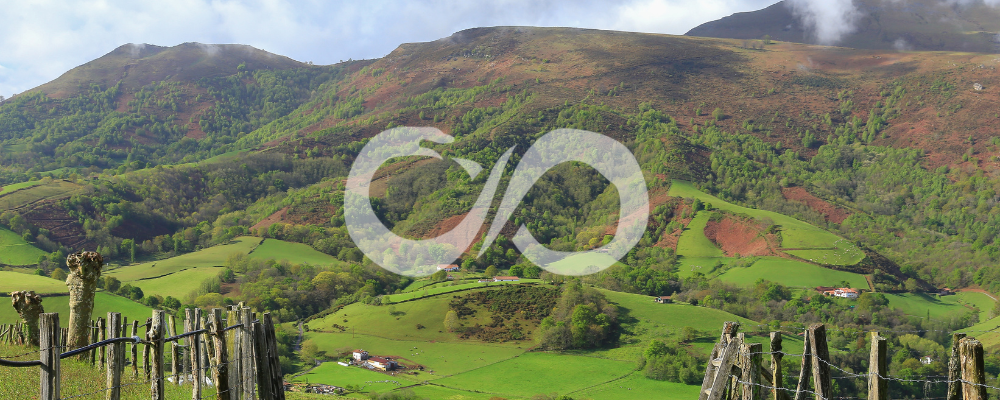
The French Basque Country is a land of mountains and legends where the figure of the witch has occupied a unique place throughout the centuries. It is said that initiated women would gather at night in caves or on mountain peaks to invoke mysterious forces. But this region was also marked by violent persecutions: in 1609, the province of Labourd was the scene of a witch hunt exceptional in scale, with around eighty death sentences - the largest ever recorded in France in this regard. Read more.
Mari and the magical traditions of the Basque Country
Long before the persecutions, the Basques maintained a rich universe of beliefs connected with nature and spirits. At the heart of local mythology is Mari, the “lady” of the mountains, sometimes described as a mother goddess living in the caves of the high peaks. It is said that Mari is served by a court of women called sorginak - that is, witches - who perform rituals in her honor. These servants of Mari were credited with powers directly connected to nature: they could bring rain or hail, protect crops, and even encourage births. Tradition also attributes to them a cult of the moon and fertility, reflecting an ancient pagan heritage that remains very much alive in these isolated lands of the Pyrenees.
Among the practices attributed to the sorginak were the famous Friday night gatherings, called akelarre in Basque. This term means “goat’s meadow” and refers to secret meetings during which witches were said to engage in all kinds of magical and festive rites, similar to sabbats. In the popular imagination, these celebrations took place away from villages, deep in caves or on wind-battered ridges, where a black goat (akerbeltz) was supposedly worshiped as a symbol of earthly power. The Basque mountains are indeed home to many places associated with protective spirits or deities, whether sacred caves or peaks considered beneficial. The Saint John’s fires, in particular, gave rise each summer to ritual leaps over the flames - a joyful act that the Inquisition later interpreted as a diabolical ruse intended to deny the fear of hell. Likewise, the Basque landscape evokes the Basajaun, the “wild lord” of the forests who watches over herds, and the Lamiñak, water spirits that roam the streams: all figures bearing witness to nature’s deep influence on local culture. In daily life, people also called upon healers and artzain xoriak (shepherd-sorcerers) to care for livestock or ward off bad luck. To protect themselves from evil influences, families nailed a large dried flower called eguzki-lore (“sun flower”) to the doors of their farms, reputed to prevent witches and evil spirits from entering the house. These immemorial traditions wove a close bond between the Basque community and the invisible world, an equilibrium that was about to be brutally challenged.
Witch hunts in Labourd in the 17th century
At the turn of the 16th and 17th centuries, religious suspicion and political unrest transformed the sorginak into targets of fierce repression. The year 1609 marked the beginning of a tragic episode. King Henry IV, alarmed by rumors of black masses in Labourd, sent two counselors from the Parliament of Bordeaux that summer to “purge” the province. Pierre de Rosteguy de Lancre, the more famous of the two commissioners, established himself in Saint-Pée-sur-Nivelle and traveled through twenty-four Labourd parishes over the course of a few months. Taking advantage of the absence of many men who had gone whale or cod fishing in Newfoundland, he relentlessly interrogated dozens of villagers - particularly women and teenage girls - whom he accused of taking part in the sabbat and making pacts with the Devil. Testimonies extracted under torture fueled a climate of terror, driving many inhabitants to flee toward the mountains or neighboring Navarre. At the end of this swift campaign, around eighty people, mostly women, were sent to the stake on Pierre de Lancre’s orders. This appalling toll made the 1609 witch hunt the most violent France had ever experienced, unique in the scale of the collective executions it brought about.
This wave of persecution in the Basque Country was not limited to the French side. On the other side of the border, the Spanish Inquisition had already taken up a similar case in the Navarrese village of Zugarramurdi. There, a series of accusations between neighbors led to the arrest of 31 people, 11 of whom would perish at the stake during a grand auto-da-fé in Logroño in November 1610. In total, the inquisitorial courts examined several thousand cases throughout the southern Basque Country, mobilizing an unprecedented judicial apparatus. Yet as early as 1611, some Spanish investigators began to doubt the reality of this alleged satanic conspiracy. Alonso de Salazar Frías, charged with investigating the matter locally after the turmoil, admitted that he had found no tangible evidence of witchcraft despite the confessions obtained. His skeptical report led the Inquisitor General to suspend all prosecutions in 1614, well before other European countries did the same. In France, Pierre de Lancre’s excesses also eventually caused unease: although his bloody crusade left a lasting mark on people’s minds, it was not followed by other hunts of comparable scale in the region. On the contrary, the Parliament of Bordeaux later overturned some of his convictions, and a royal edict of 1682 decriminalized witchcraft, officially bringing witch trials in the kingdom to an end.
Survival and legacy
Although the repression brutally interrupted the old cults, it did not completely eliminate magical practices from the Basque Country. In the rural areas of Iparralde (the northern Basque Country), many popular traditions continued to be observed, sometimes discreetly, in the centuries that followed. Healers, midwives, and beraize (fortune-tellers) continued their work among the villagers, preserving herbal remedies and protective rituals passed down from generation to generation. One ancestral rite involved passing a sick child between the branches of a split old oak tree to cure a hernia or a blood weakness. This ceremony, still documented in the 20th century, bears witness to the persistence of occult knowledge rooted in harmony with nature. Likewise, the use of the eguzki-lore nailed to house doors to ward off lightning and evil spirits has remained alive: even today, these large dried thistles can still be seen adorning Basque farms.

Memorial Oroit Mina. Source
Of course, over time, Basque witchcraft lost its clandestine and fearful character and entered the realm of heritage and remembrance. Long silenced out of fear of ridicule or condemnation, the figure of the Basque witch underwent a symbolic rehabilitation. In 2009, four centuries after the events of 1609, a commemorative sculpture entitled Oroit Mina (“In memory of the pain”) was inaugurated in the village square of Saint-Pée-sur-Nivelle, not far from the ruins of the castle where Lancre’s sinister tribunal sat. Cultural initiatives now celebrate this heritage in a spirit of reconciliation. Every summer, a Witches’ March is organized along the cross-border paths between Sare and Zugarramurdi, inviting residents and visitors to retrace the history of the Basque sabbats on foot. In Ciboure, the Sorgin Gaua (“Witches’ Night”) brings local residents together every year in traditional dress for a procession to the sound of bells, followed by dances around the fire recalling the old akelarre.
Far removed from fashionable esotericism, the Basque Country thus honors the memory of its sorginak of the past as an integral part of its identity. Those who were once accused of making pacts with demons are now recognized as guardians of a culture shaped by the mountains and the mysteries of the night, which neither the stakes nor time have managed to make disappear completely.

Par Olivier of Aeternum
Passionate about esoteric traditions and the history of the occult from the earliest civilizations to the 18th century, I share some articles on these topics. I am also co-creator of the online esoteric shop Aeternum.













