





























































































Lava is first and foremost matter in motion: molten rock rises to the surface, loses its heat, and takes on a form. The black, porous stones sold under this name preserve traces of gases and cooling in their cavities. They tell the story of the passage from Fire to Earth.
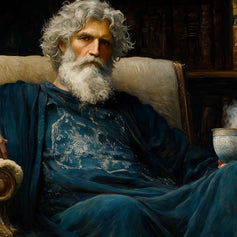
This geological account connects with a real religious heritage: in the Roman world, Vulcan governed destructive fire and volcanoes and, through his association with Hephaestus, the work of the forge. Volcanic rock can therefore accompany transformation, mastery of impulse, and the act that gives lasting form to energy.
To place this stone among related minerals, compare it with Gabbro, Diorite, and Pegmatite.
From Liquid to Stone
Magma is called lava when it reaches the surface. As it cools, it forms an extrusive igneous rock. The U.S. Geological Survey distinguishes rocks formed deep underground from those that solidify after a volcanic eruption.
“Lava Stone” is a commercial category, not the name of a mineral species. It generally refers to a dark, porous volcanic rock, often basaltic, but accurate identification requires more than a black appearance.
Basalt, Gas, and Cavities
When pressure drops, gases dissolved in lava form bubbles. If the material solidifies before they escape, they leave cavities called vesicles. The USGS explains how these holes testify to cooling.
Porosity becomes here a visible memory of movement. The stone appears motionless, but it preserves the imprint of what passed through it. This image nourishes a symbolism of transformation completed, not emotion suppressed.
Vulcan and the Forge
Volcanic cultures each have their own stories and uses; it would be wrong to merge them into a universal magic. In Roman religion, the Getty Vocabulary links Vulcan to fire, volcanoes, and fires. His association with Hephaestus adds the forge and craftsmanship.
This lineage does not mean that every piece of Lava was consecrated to the god. It offers a historical framework for working with controlled fire: not the explosion that consumes, but heat directed toward a work.
Fire becomes a work when it accepts a form. Lava reminds us that impetus has its hour, and then comes the time to cool, choose, and build.
Mars, Saturn, Fire, and Earth
Mars provides impetus, courage, and the necessary rupture. Saturn sets limits and transforms effort into structure. Fire sets things in motion; Earth receives, cools, and preserves.
Tuesday is suitable for beginning an action and Saturday for consolidating it. Black, dark red, and ash gray make up its palette. An iron nail, a circle of earth, or an extinguished candle can accompany its rites.
Transformation, courage, and form
Lava accompanies new beginnings after a rupture, projects that require channeling anger, and decisions that need to cool before being made irreversible.
It also supports construction work: setting a deadline, repeating a gesture, accepting that lasting work requires more than a moment of ardor.
Cool, then seal
Write down a decision made under the influence of a strong emotion. Place the stone above the sheet and an extinguished candle beside it. Set a deadline appropriate to the stakes: one hour, one night, or several days.
After this time, reread it and choose whether to confirm, modify, or abandon it. If you confirm, surround the decision with a black circle and say: “The fire has spoken; the earth gives it form.” Immediately carry out the first measurable step.
Correspondences and references
| Reference | Correspondence |
|---|---|
| Nature | Volcanic rock, generally basaltic in commerce |
| Texture | Fine, massive, or vesicular |
| Celestial bodies | Mars and Saturn |
| Elements | Fire and Earth |
| Days | Tuesday and Saturday |
| Domains | Transformation, courage, mastery, construction |
| Associated objects | Iron nail, earth, extinguished candle |
| Gesture | Let cool before setting |