



































































































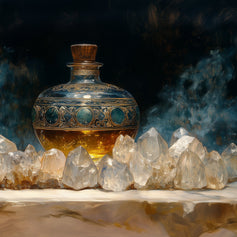















The kalasha is a ritual vase used in Hinduism and other South Asian traditions. It may be filled with water, topped with leaves and a coconut, and then placed at the center of a rite. In art, the vase overflowing with vegetation resembles the purnaghata, “full vase,” an ancient symbol of fertility and prosperity. The vessel thus becomes an image of abundance, life, and divine presence.
| Form | Bulging vase with a narrowed neck |
|---|---|
| Rite | Water, leaves, coconut depending on the ceremonies |
| Ideas | Abundance, fertility, prosperity, divine presence |
| Architecture | Terminal element of several temples |
| Related motif | Purnaghata, vase of fullness |
How can you recognize a kalasha?
The vessel has a rounded body and a short neck. In domestic or temple rites, leaves may surround a coconut placed above the opening.
The word refers both to an actual ritual vase and to a symbolic form reproduced in sculpture or architecture.
Why is it filled with water?
Water is one of the principal means of purification and consecration in Indian traditions.
The vase may hold sacred water used in a ceremony, transforming the vessel into a support for presence and blessing.
What is its connection with the purnaghata?
The Metropolitan Museum preserves images of the purnaghata, a vase overflowing with lotuses and foliage, associated with fertility and prosperity.
This iconography shares with the kalasha the idea of a full vessel whose richness manifests outwardly.
The two terms should not automatically be used as synonyms in every context, but their symbolic relationship is strong.
Why does it appear at the top of sanctuaries?
The kalasha may crown a temple or ritual structure. The British Museum shows this gilded motif at the top of a temple in a painting of the churning of the Ocean of Milk.
Its elevated position transforms the vase into a sign of fulfillment and architectural consecration.
What is the difference from the Buddhist treasure vase?
The Buddhist treasure vase is one of the eight auspicious Tibetan symbols.
The kalasha belongs to broader Indian ritual and iconographic practices. Both share an image of abundance, but their religious systems are not identical.
Historical sources and reference points
The Metropolitan Museum of Art presents the purnaghata as an ancient Indian symbol of fertility and prosperity. The British Museum documents the presence of the kalasha in Hindu ritual and architectural iconography.










