



















































































































- Vocation
- Bishop and missionary in Ireland
- Period
- 5th century
- Celebration
- March 17
Life and historical reference points
In his Confession, Patrick recounts his abduction, captivity in Ireland and the path that led him to return there as a missionary. This text and his Letter to the Soldiers of Coroticus are major sources for understanding him. His memory holds an important place in Irish Christianity. The precise dates of his life remain debated; it is more rigorous to place him in the 5th century than to present every traditional date as certain.
Recognizing his representations
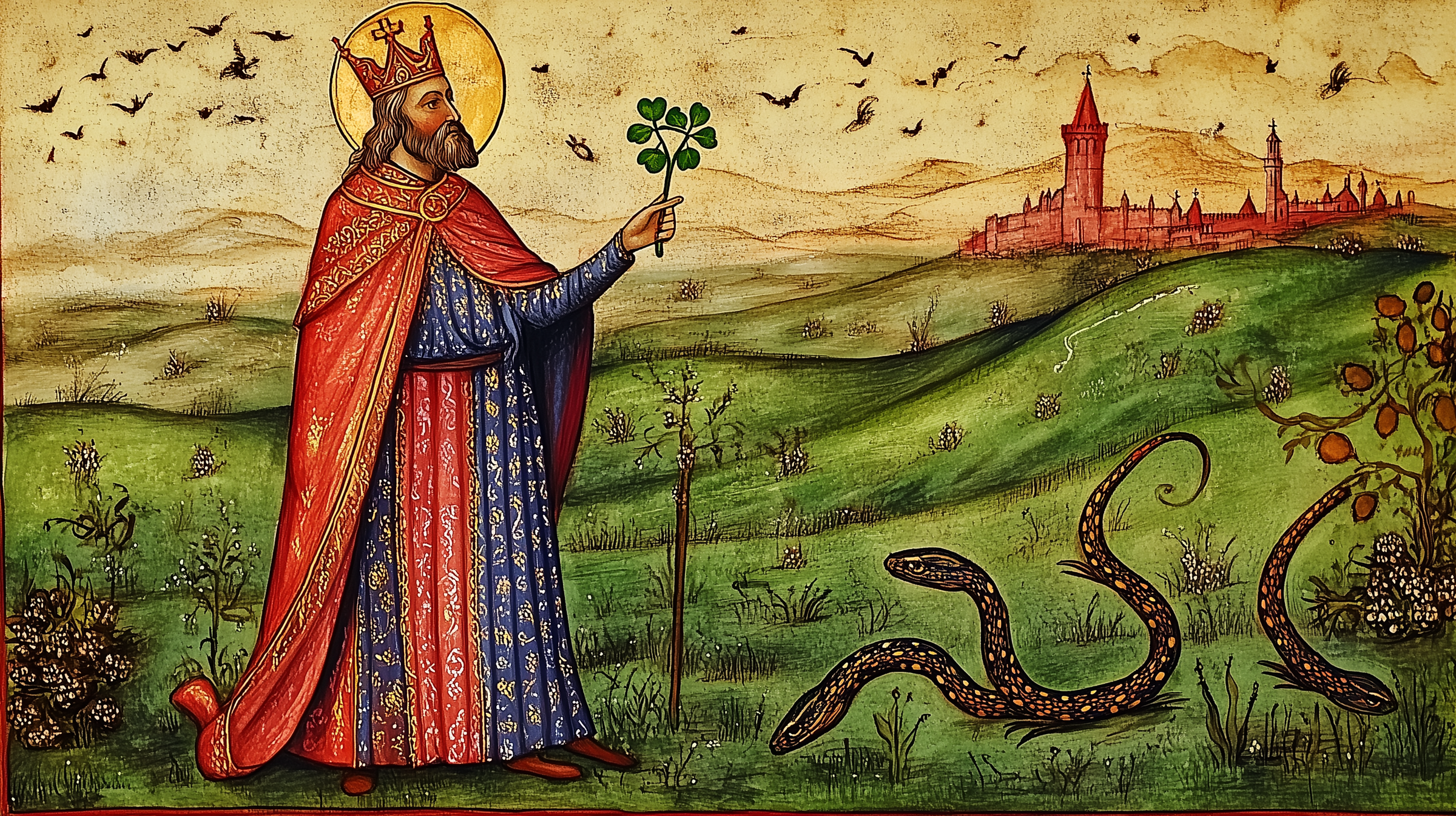
The crozier and mitre recall the bishop. The shamrock has become the popular emblem of an explanation of the Trinity. Snakes appear in a symbolic story associated with the evangelization of the island.
What must be distinguished
The expulsion of snakes and the use of the shamrock are not documented in Patrick’s writings as established biographical facts. A botanical analogy can help evoke the Trinity, but it does not describe the doctrine exactly.
Understanding his spiritual legacy
His writings highlight gratitude, mission and the rejection of violence against people. They make it possible to move beyond the folkloric image of a feast and encounter a Christian author from Late Antiquity.
Feast, memorial and intercession
The date given refers to the Roman rite or the specified local usage. The actual celebration may vary according to the calendar for the year. In the Catholic faith, asking for a saint’s intercession means asking them to pray to God; it does not mean attributing independent power to them. An image or devotional object may accompany this practice without being necessary for prayer.
Sources & reference points
Catholic-based editorial notice. Narratives and traditions are distinguished from documented facts. References consulted in October 2026.










