

















































































































Cosme Ruggieri occupies a unique place in the history of France. An Italian astrologer at the Valois court, he was one of Catherine de’ Medici’s closest advisers, to the point of influencing certain major political decisions. Between astrological consultations, royal predictions, and cases of bewitchment, his career combines documented events with traditional accounts. A portrait.
A Florentine in the Shadow of Kings
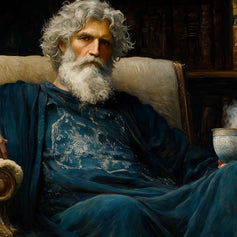
In the hushed corridors of the court of the last Valois kings, an enigmatic figure aroused fear and fascination. Cosme Ruggieri, an Italian astrologer from Florence, became one of the most intimate advisers of the powerful queen mother Catherine de’ Medici. The son of a renowned physician-astrologer nicknamed Ruggieri the Elder, who is said to have served Catherine’s father at the beginning of the 16th century, the young Cosme benefited very early from this prestigious connection. Tradition even has it that Catherine de’ Medici, childless for many years, received an encouraging prophecy from the Florentine: he supposedly predicted that she would become Queen of France and the mother of ten children, at a time when she believed herself sterile. In fact, Catherine would ascend the throne alongside Henry II and give birth to a large family, strengthening the almost mystical trust she placed in Ruggieri.
The Discreet Rise of an Astrologer at the French Court
Arriving in France with little wealth around 1571, Cosme Ruggieri sought to establish himself at the Valois court (the dynasty that ruled France from 1328 to 1589, notably through Kings Francis II, Charles IX, and Henry III). He first joined the household of the Tuscan ambassador Petrucci, then his solid education and intelligence attracted attention. The grand equerry Henri de Montmorin hired him as an Italian tutor to the young pages of Queen Elisabeth of Austria (the wife of King Charles IX). This modest teaching position became the springboard for a discreet rise: Ruggieri soon attracted the attention of Catherine de’ Medici herself, whose passion for astrology was well known.

Catherine de’ Medici
A diplomatic testimony from 1574 notes that Ruggieri, who “professed to have a thorough knowledge of judicial astrology” (predictive astrology), had gained such influence with the Queen Mother that he had “the continual ear of Her Majesty.” Catherine did not hesitate to consult him on matters of state: a dispatch dated September 2, 1572, for example, reports that she publicly asked her astrologer what attitude to adopt toward the Protestant princes held prisoner after the St. Bartholomew’s Day Massacre. Thanks to Catherine’s favor, the Florentine was no longer merely a learned courtier—he became a true adviser behind the scenes, blending divinatory arts with political intrigues.
The Medici Column and Astrological Vigils
To facilitate his occult work, Catherine de’ Medici placed remarkable resources at Ruggieri’s disposal. In 1575, she had a mysterious hollow column 28 meters high built in Paris, near her new palace, complete with a spiral staircase—the Medici Column. It led directly to a secret observatory at the top, adjoining the queen’s private apartments.

Medici Column. Source
This remarkable monument, still visible today (attached to the Bourse du Commerce in the Halles district), was intended for Ruggieri’s astrological vigils: Catherine is said to have joined him there to scrutinize the Paris sky through instruments and horoscopes before every important decision. A close friend of the queen (some claim that she had known him since childhood), Cosme Ruggieri advised her from the shadows, drawing considerable influence over the affairs of the kingdom from his knowledge of the stars.

Plan of the Medici Column. Source
The La Môle Affair: Wax Figures and Political Sorcery
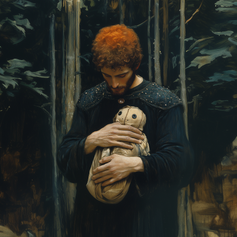
Yet the astrologer’s high favor went hand in hand with the dangers of court intrigue. His closeness to Prince François of Alençon, Catherine’s younger son and a leading figure of the “Malcontents” party, drew Ruggieri into a dark affair involving political sorcery. At the beginning of 1574, King Charles IX was dying and conspiracies stirred the court. A gentleman, Joseph de La Môle, was accused of attempting to kill the king by occult means, with the complicity of Annibal de Coconas and other conspirators linked to the Duke of Alençon. The investigation soon uncovered in La Môle’s chests a strange wax figurine pierced with needles—an effigy of King Charles IX, intended to harm him through bewitchment. This malevolent figurine was the work of Cosme Ruggieri, seriously implicating the astrologer in the conspiracy. Warned in time, Ruggieri fled on April 22, 1574, and took refuge with the ambassador Alamanni outside Paris, but he was handed over and only narrowly managed to escape. A few days later, soldiers captured a peasant in the forest of Saint-Germain-en-Laye whom they recognized as the fugitive astrologer, crudely disguised. Ruggieri was arrested and mercilessly sentenced to the galleys (forced labor as an oarsman on the royal galleys), while La Môle and Coconas were tortured, then beheaded and displayed in the Place de Grève on April 30, 1574.
However, against all expectations, Cosme Ruggieri’s sentence was never carried out. Sent to Marseille to begin his punishment, he supposedly never touched an oar: thanks to mysterious supporters, he was soon found free to move about. Better still, an official pardon was granted to him shortly afterward. In 1585, he was rewarded with the commende (financial administration) of Saint-Mathieu Abbey in Brittany, whose revenues he comfortably received while bearing the title of abbot until his death. It is ironic to think that a man versed in the occult arts could become a commendatory abbot—but such favors were not uncommon for valuable servants of the Crown. If Ruggieri benefited from such clemency, it was most likely thanks to the intervention of Catherine de’ Medici: it was whispered that the queen mother, informed of the affair’s secrets, had wanted to save her confidant. Some contemporaries even claimed that Ruggieri served as Catherine’s spy, reporting on the activities of her rebellious son Alençon, which would explain why she insisted on protecting him despite his proven offense. Whatever the truth, after 1574 Cosme Ruggieri regained the favor of those in power while remaining a notorious and controversial figure.
Persistent Suspicions under Henry IV
Ruggieri’s fate then followed the upheavals of French history. Catherine de’ Medici died in 1589, after seeing three of her sons reign in succession. Henry III, the last of the Valois, was assassinated that same year, and the Protestant King Henry of Navarre, who became Henry IV and the first Bourbon king, ascended the throne. In this new context, the Italian astrologer, now in his sixties, continued practicing his art on the margins of the court. But his reputation caught up with him in 1598, when a new accusation of bewitchment erupted: in Nantes, Ruggieri was caught in possession of a wax figurine pierced through the heart, supposedly representing King Henry IV. In the eyes of the authorities, this was a black-magic conspiracy aimed at the sovereign’s life—a clear crime of lèse-majesté. Brought before the king’s justice, Ruggieri defended himself fiercely. He claimed that, on the contrary, he had once helped save Henry of Navarre by pleading his case with Catherine during the massacre of 1572.

Massacre of St. Bartholomew’s Day. Source
To better understand this, let us clarify the nature of the St. Bartholomew’s Day Massacre, one of the most tragic episodes of the French Wars of Religion, which took place during the night of August 23–24, 1572. The massacre targeted French Protestants, known as Huguenots, who had gathered in Paris to attend the wedding of the Protestant King Henry of Navarre (the future Henry IV) to Margaret of Valois, the sister of King Charles IX. The marriage was intended to reconcile the two religious factions, but tensions were extreme. Under the influence of Catherine de’ Medici and “certain royal advisers,” King Charles IX ordered the assassination of several Protestant leaders, beginning with Admiral Gaspard de Coligny, a major figure in the Huguenot camp. The operation quickly degenerated into a general massacre: Parisian militias turned on all the Protestants present in the city. It is estimated that several thousand people were killed in Paris, and as many as 20,000 throughout the kingdom in the following weeks.
This statement refers to an episode that remained secret: it is believed that the astrologer, present beside the queen during St. Bartholomew’s Day, may have advised sparing the young Protestant prince Henry of Navarre (perhaps perceiving a royal destiny in him). Notably, Henry IV himself seems to have supported this version: informed of the affair, the king confirmed that Ruggieri had favored him in the past and ordered the old man’s immediate release. Thanks to royal indulgence, Cosme Ruggieri thus escaped the consequences of his occult practices for a second time.
Ruggieri’s final years unfolded under the regency of Marie de’ Medici, Henry IV’s widow, between 1610 and 1614. The astrologer, dean of the court magicians, remained active and sought after. He regularly frequented the circle of the regent’s Italian favorites, Marshal Concino Concini and his wife Léonora Dori (known as Galigaï), who appreciated this “brilliant mind” and his mysterious knowledge. Ruggieri even published astrological almanacs under a pen name (he signed his annual prognostications Jean Querberus), in order to spread his starry predictions more widely. In his later years, the man some called the “Queen’s Sorcerer” enjoyed astonishing longevity at the French court: he had served Catherine de’ Medici, known three Valois kings, witnessed the accession of the Bourbons, and now advised the new Medici, Marie, thereby perpetuating Florentine influence over the kingdom’s occult affairs.
A Theatrical Death and a Public Scandal
It was ultimately in March 1615 that Cosme Ruggieri took his final bow, in dramatic circumstances worthy of his legend. Sensing that his end was near, the astrologer fell gravely ill in Paris. On March 28, 1615, lying on his deathbed, he received the priests who had come to administer extreme unction with icy contempt. Ruggieri refused the Church’s last rites and brutally dismissed the priest and monks who had rushed to his bedside. According to the gazette Le Mercure françois, his final words to the astonished religious men were supposedly: “Fools that you are, all of you get out! There are no devils other than the enemies who torment us in this world, nor any god other than the kings and princes who can procure honors and riches for us.” This sacrilegious outburst, shouted on the threshold of death, scandalized the population. As soon as Ruggieri died, rumors of his impiety set Paris ablaze. An angry crowd seized his remains and dragged them through the streets, denouncing the deceased as an infamous atheist and servant of the devil. For many, there was no doubt that this renegade had sealed a pact with Satan—and that the devil himself had come to claim his soul. Sensationalist pamphlets immediately circulated, such as the booklet Terrifying Stories of Two Magicians (1615), which recounted how two sorcerers—one of them Ruggieri—were strangled by the demon during Holy Week. It was even claimed that Ruggieri’s associate, a certain César, had been carried away by the devil and then imprisoned in the Bastille, blending fiction with reality in the public imagination. The agitation became so intense that it triggered a wave of superstition in the capital. To calm the heated populace, the Parliament of Paris went so far as to revive an ancient royal edict banning sorcerers and “undesirable foreigners”: in May 1615, taking advantage of the confusion between sorcery, blasphemy, and supposedly “impious” rites, it decided to expel the last members of the Jewish community, convenient scapegoats for this excessive Catholic fervor (they had already been forbidden to reside in the kingdom of France since their expulsion in 1394). Thus, even after his death, Ruggieri continued to haunt the French court—his spectacular death marked the end of an era and seemed to close, amid the uproar of popular fears, the dark chapter of Medici occultism.
The Prophet-Mage and His Royal Predictions
Beyond the historical figure, the legend of Cosme Ruggieri flourished abundantly, blending established facts with fantastic tales, to such an extent that it is sometimes difficult to separate truth from invention. Numerous famous prophecies are attributed to him by tradition, although sources differ regarding the prophet’s exact identity and the details of each prediction. One of the best known remains the prophecy of Catherine de’ Medici’s death “near Saint-Germain.” According to some authors, Ruggieri (or, in other versions, the Italian astrologer Luca Gaurico) warned Catherine that the name Saint-Germain would prove fatal to her. Frightened, the queen immediately halted construction of the Tuileries Palace—which adjoined the Church of Saint-Germain-l’Auxerrois in Paris—and hastily moved in 1572 to a new, safer residence, the Queen’s Hotel. As a precaution, Catherine henceforth avoided any place or person bearing this ominous name. Ironically, the prediction came true in an indirect way: the sovereign died on January 5, 1589, at the Château de Blois, far from any Saint-Germain church, but the priest who administered extreme unction to her was named... Julien de Saint-Germain. Thus, “Saint-Germain” was indeed present at her final moments, fulfilling the prophecy to the court’s great terror.
The Mirror of Chaumont and the End of the Valois
Another legendary vision, worthy of an occult tale, supposedly took place at the Château de Chaumont-sur-Loire, which Catherine de’ Medici occupied after Henry II’s death. Toward the end of 1559, despairing over the future of her family line after the premature death of her husband, Catherine is said to have called on Ruggieri to pierce the veil of destiny. In a high tower overlooking the Loire, on a moonless night, the astrologer supposedly deployed all his art to reassure the queen about the future of her dynasty. The chronicles relate that in the heart of a darkened room, Ruggieri drew a magic circle and successively caused the faces of Catherine’s three sons to appear in the blackened mirror of a large looking glass. One after another, the specters of the young princes—Francis, Charles, and Henry—materialized before the stunned queen. Each apparition mysteriously spun around, completing a number of rotations corresponding to the number of years each son would reign. Francis II, the eldest, made only one turn (he was king for just one year); Charles IX made fourteen; and Henry III made fifteen. After the fifteenth revolution of the final ghost, the mirror became still, and no fourth face appeared—a sign that none of Catherine’s other sons would ascend the throne. The vision thus ended with an omen of the end of the Valois. And indeed, in 1589, upon Henry III’s death without an heir, the glorious Valois dynasty died out, giving way to the Bourbons and Henry IV, exactly as the oracle of Chaumont had implied. This story is sometimes attributed to Nostradamus, but it is more likely associated with Cosme Ruggieri.
Master of the Occult Arts
The powers attributed to Ruggieri were not limited to the stars. He was said to be a mage of many talents, initiated into various occult arts. In addition to astrology, he practiced haruspicy—the interpretation of omens in the entrails of sacrificed animals—and mastered the art of magic mirrors to obtain visions. Above all, his name remains linked to the sinister technique of bewitching through wax figurines (also known as dagydes): by sticking pins into small effigies, he supposedly could influence his victims’ fate from a distance. Such practices, halfway between sympathetic magic and sorcery, horrified and intrigued his contemporaries in equal measure. Much has also been said about Ruggieri’s role in preparing poisons or potions intended for Catherine de’ Medici, whom her dark legend readily accused of every secret crime. At the Château de Chaumont, a room still bears his name, and decades later curious bottles were supposedly displayed there, hidden in a cabinet. The writer Gabriel-Louis Pringué, visiting the site, imagined seeing the Florentine’s shadow: “Ruggieri prepared his poisons here, their bottles still locked away in his room, while reading the future of France in the stars…” This image aptly sums up the impression Ruggieri left behind: that of an occult scholar bent over his alembics at midnight, distilling some frightening brew while constellations bearing destinies drifted across the firmament.
After his death, Cosme Ruggieri did not vanish into obscurity—quite the contrary. His character, already surrounded by mystery during his lifetime, continued to fascinate later generations. In the 19th century, Romantic writers seized upon his story and enriched it with new fictions, contributing greatly to the mythologizing of Ruggieri. Honoré de Balzac, in La Confidence des Ruggieri and Le Secret des Ruggieri (1846), made him a protagonist in his saga about Catherine de’ Medici, going so far as to invent an imaginary brother for him and expand the character of “Father Ruggieri.” Alexandre Dumas, in La Reine Margot, transferred some of Ruggieri’s attributes to another Florentine (the perfumer René), thereby incorporating the astrologer into the novelistic intrigues surrounding St. Bartholomew’s Day. Later, other serial novelists, such as Michel Zévaco, perpetuated his legend by portraying him under barely disguised names. At the same time, occultists and esoteric historians regularly mentioned Ruggieri in their works. Collin de Plancy’s famous Dictionnaire infernal (1863) devoted a lengthy article to him, repeating anecdotes borrowed from Balzac and the chronicles of the period.
Four centuries later, the evocation of Cosme Ruggieri remains inseparable from the image of Catherine de’ Medici and the atmosphere of a refined occultism of the late Renaissance. Certainly, the real man remains partly elusive—was he a skilled manipulator, a genuine seer, or a little of both?—but his legacy is tangible. At once a learned astrologer, political confidant, and legendary sorcerer, Ruggieri left his mark on the history of Western occultism. But perhaps he had already predicted that...




Interessant .