



















































































































Al comienzo del Encanto de las nueve hierbas, la artemisa recibe la palabra antes que todas las demás. El manuscrito anglosajón la llama «la mayor de las plantas» y le atribuye fuerza contra el veneno, la infección y el mal que atraviesa el país. Esta posición inaugural resume su reputación europea: hierba del viaje, de San Juan y de los umbrales donde se busca protección.
Artemisia vulgaris no debe confundirse con el ajenjo, Artemisia absinthium, ni con las demás especies del mismo género. Sus hojas, verdes por la parte superior y blanquecinas por el reverso, han alimentado una historia ritual que conecta el camino, el cinturón, el fuego de junio y el sueño.
Los textos médicos y mágicos mezclan fórmulas, oraciones y preparaciones. Esta ficha recoge los gestos simbólicos que se pueden leer y trasladar sin infusión, fumigación ni consumo. La planta vendida permanece en su envase cerrado y sirve como testimonio material, nunca como ingrediente doméstico.
La hierba plateada de los caminos
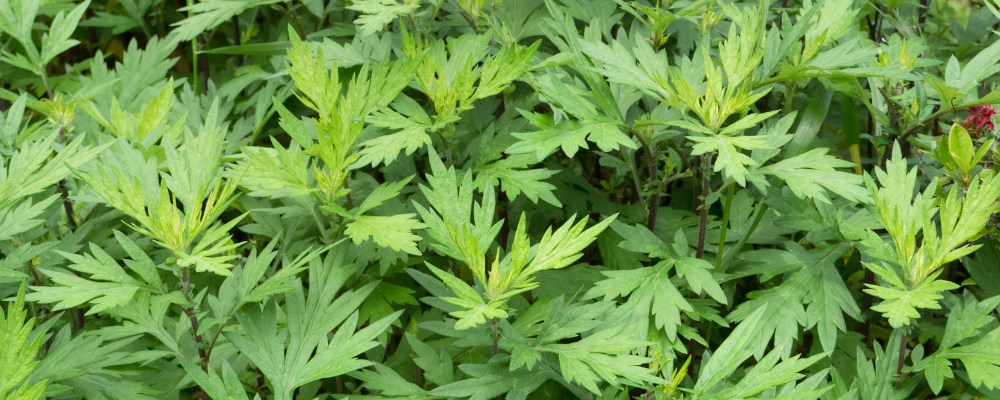
Artemisia vulgaris L. pertenece a las Asteraceae. Esta planta perenne forma tallos erguidos con hojas recortadas, oscuras por la parte superior y cubiertas de un vello claro por la inferior. Sus pequeños capítulos parduzcos o rojizos se abren en racimos ramificados a finales del verano.
Kew sitúa su área nativa en la Eurasia templada, hasta Indochina, así como en el norte de África. Crece en taludes, cunetas, terrenos baldíos y tierras removidas. Kew, Artemisia vulgaris.
Esta presencia en los márgenes explica parte de su lenguaje mágico. La artemisa acompaña a quien abandona el lugar habitado, camina entre dos territorios y luego regresa. El reverso blanco de la hoja también le da un aspecto doble: verde a la luz, plateado cuando se da la vuelta.
La mayor del Encanto de las nueve hierbas
The Lacnunga, a compilation copied at the end of the 10th or beginning of the 11th century, preserves the Charm of the Nine Herbs. Mugwort opens the series. The text addresses it directly, recalls its name of Una, and proclaims its power against several forms of harm.
The manuscript Harley MS 585 brings together recipes, Christian prayers, invocations, and charms in Old English, Latin, and Old Irish. It does not separate healing from ritual language as a modern manual would. British Library, Harley MS 585.
The formula was repeated over the plants and the person being treated. The power therefore lay as much in the words, the number nine, and the order of the plants as in their substance. For the grimoire reader, Mugwort becomes the plant that opens a protective litany.
The belt thrown into the Midsummer fire
In several Central European customs, sprigs of Mugwort were braided into wreaths or belts during Midsummer fires. The belt was worn around the body, then thrown into the flames with words intended to drive away bad luck, illness, and magical harm.
James George Frazer reports these practices in Bohemia and Germany, with wreaths viewed through the fire or kept in houses and stables. Frazer, The Golden Bough, Midsummer traditions.
Wear, cross, cast away. The belt encircles the body during the seasonal passage. The fire then receives what was meant to be left behind. The gesture marks a before and an after.
Travel, sleep, and the turned world
The English name mugwort and popular traditions have linked Mugwort to travelers. Leaves placed in shoes or kept on one’s person were believed to support walking. The roadside plant thus becomes a companion for travel and a guardian of the return.
Its modern connection to dreams rests on its place near the bed and on its image as a lunar plant. Medieval sources do not offer a universal program of “prophetic dreaming.” Rather, they show a protective herb, spoken over, carried, and mixed into ritual sets.
The fairest mystery lies in the turned leaf. By observing its pale underside, the practitioner moves from the visible to the hidden without absorbing the plant. This alternation is enough for work on paths, nocturnal memory, and vigilance.
Atar un cinturón de papel
Corte una tira larga de papel e inscriba nueve palabras de protección tomadas de su situación: umbral, camino, sueño, regreso, casa, cuerpo, nombre, palabra y medida. Ate la tira alrededor de un cuaderno cerrado y, después, lea en voz alta el primer pasaje dedicado a la artemisa en el Encanto de las nueve hierbas.
En la noche de San Juan o al emprender un viaje, desate la tira y rómpala en tres trozos. Deposítelos en un sobre en lugar de quemarlos. Escriba en el reverso qué deja atrás, qué se lleva y qué encontrará al regresar.
El producto puede permanecer cerrado a la izquierda del espacio de lectura. Una fotografía de la hoja por ambas caras cumple la función central. El rito conserva el cinturón, el número, la palabra y el tránsito sin humo ni ingestión.
Correspondencias históricas
| Referencia | Correspondencia |
|---|---|
| Nombre botánico | Artemisia vulgaris L. |
| Texto principal | Encanto de las nueve hierbas, Harley MS 585 |
| Tiempo ritual | Hogueras de San Juan y partida de viaje |
| Objetos | Cinturón, corona, zapato, camino y hoja vuelta |
| Ámbitos mágicos | Protección, tránsito, viaje, sueño y regreso |
| Soporte seguro | Producto cerrado, fotografía y tira de papel |










