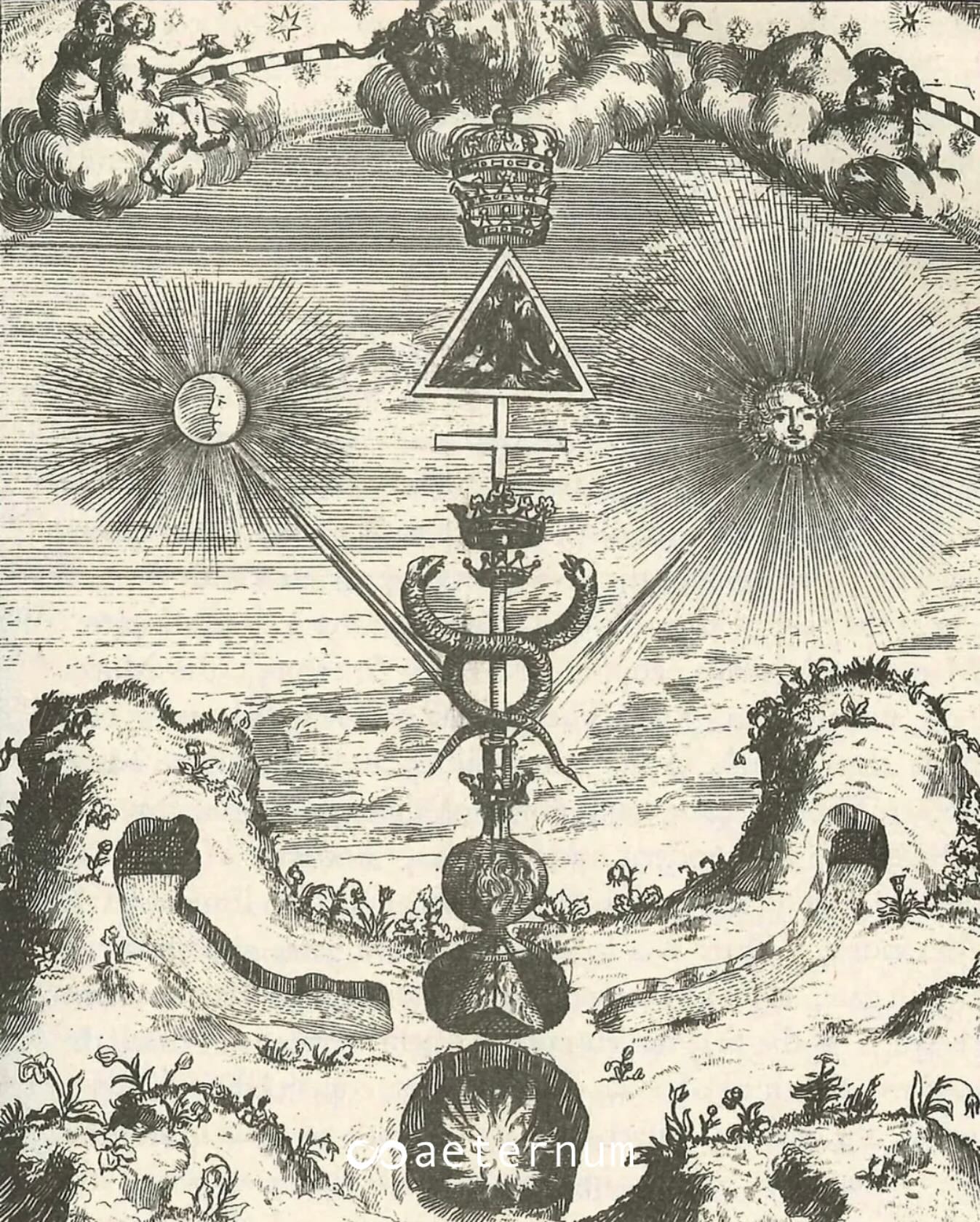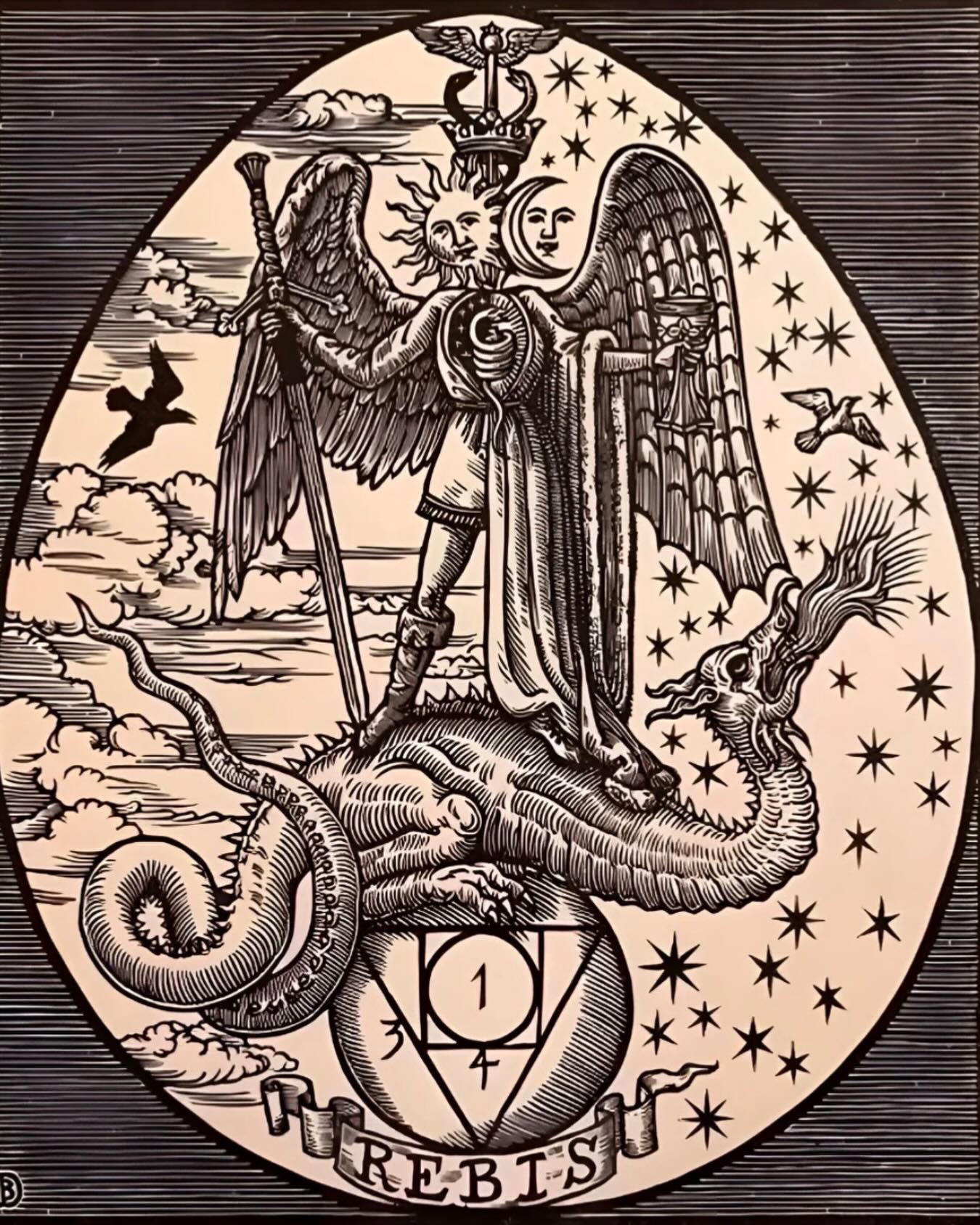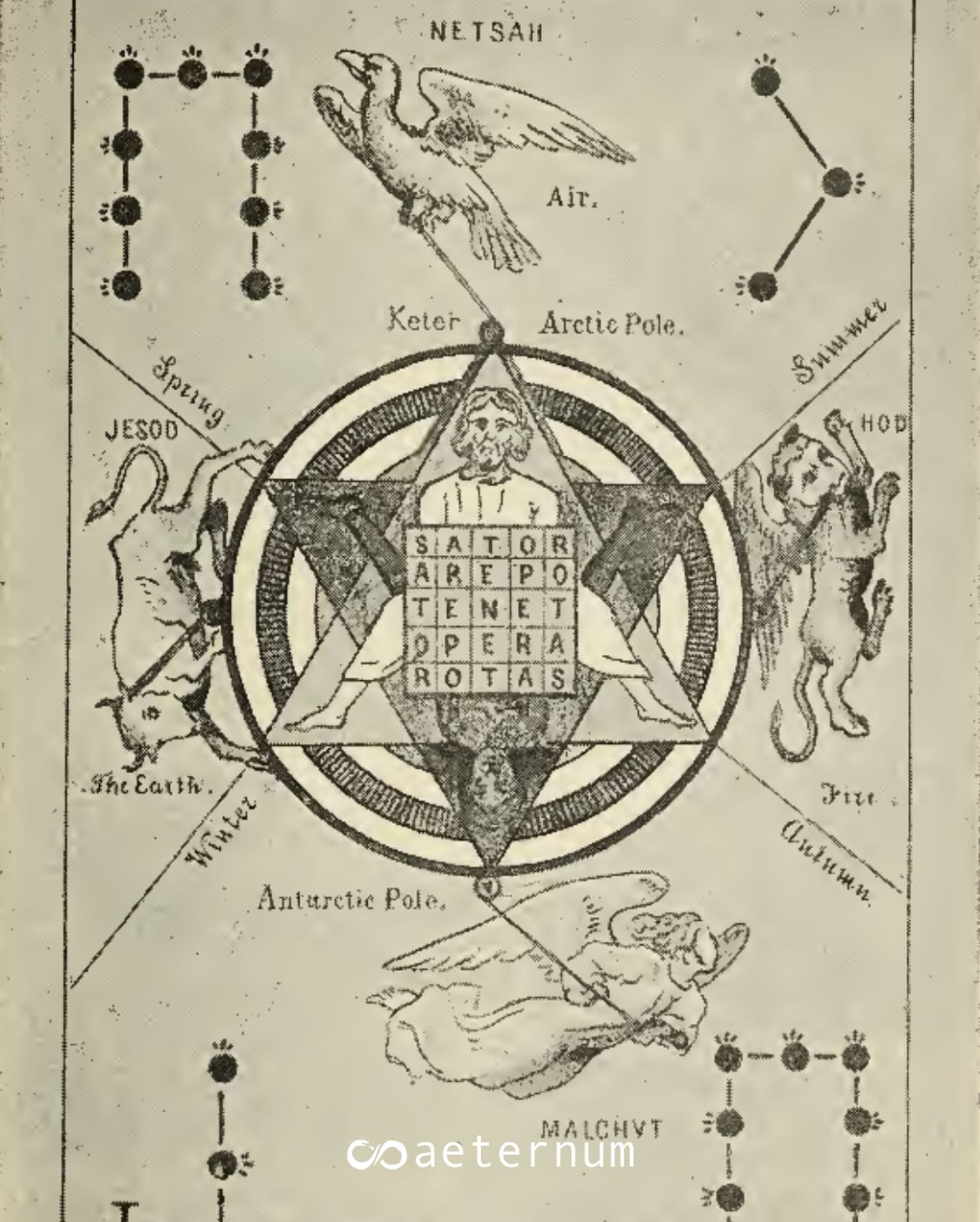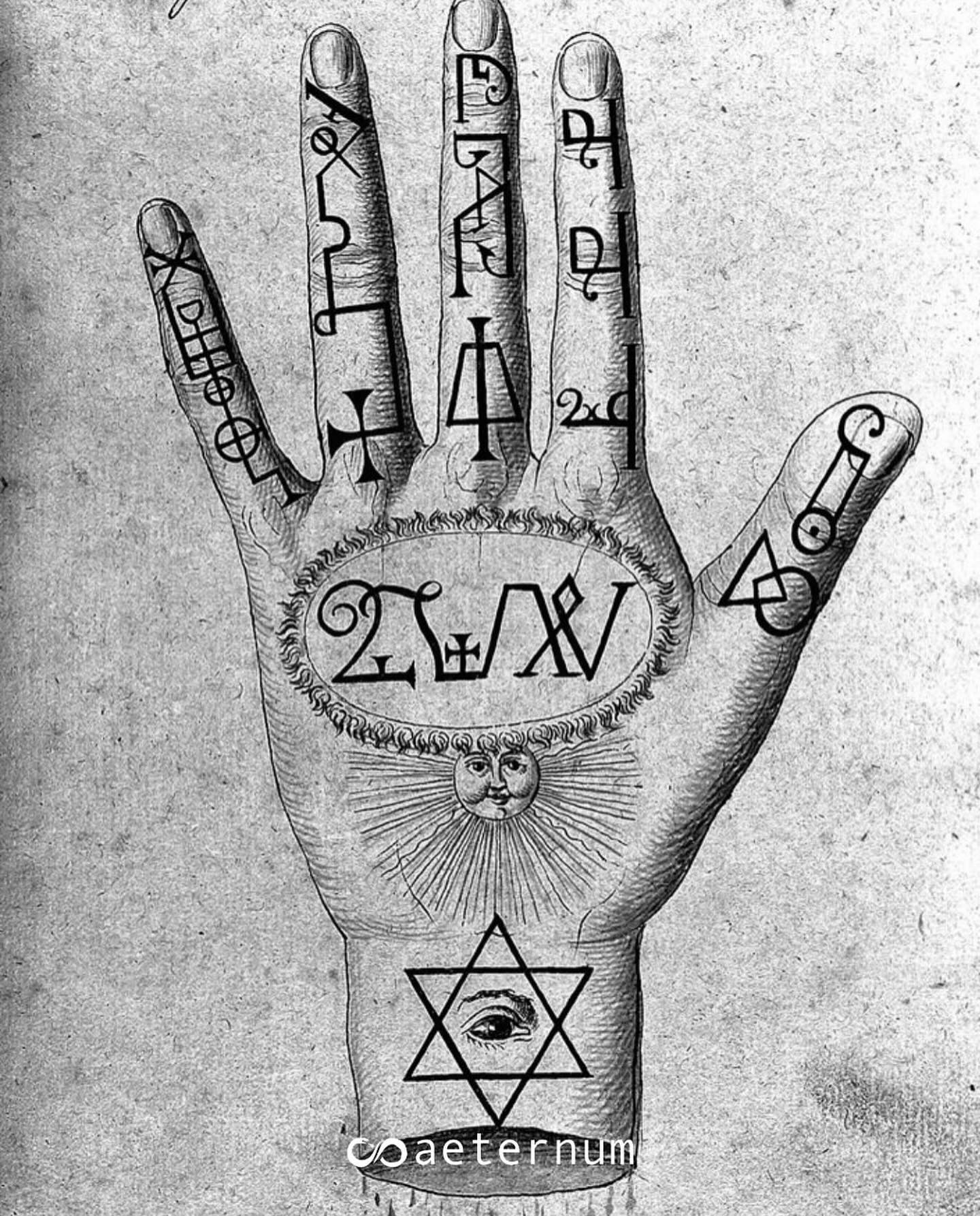






























































































The pantacle The Landscape stands apart from seals made of sacred letters. A wooded countryside, the moon, and the setting sun compose a scene that Abbé Julio relates to the passage through days and nights. It should not be reduced to a pastoral engraving: its inscription explicitly evokes divine protection against the elements.
This image helps explain a particular dimension of the collection. Julio does not rely solely on crosses and monograms; he also uses landscapes to convey an intention of protection. The figure takes on its meaning through a continuity between the road traveled, natural phenomena, and the words of the psalm.
Essential points
| Tradition | Protection of roads and the elements |
|---|---|
| Figure | Wooded countryside, setting sun, and moon |
| Applications | Travel, natural elements, and journeys |
| Source | Abbé Julio, 1908, notice no. 65 |
Reading the symbolism
The sun and the moon are not simply two celestial bodies placed there to fill the composition. Their alternation makes the entirety of a journey visible, from the hours of daylight to the night. The verse Per diem sol non uret te, neque luna per noctem takes up this temporal opposition in the language of prayer.
The notice describes the countryside, a solitary wood, the moon, and the last rays of the setting sun. Julio connects the moon with water in his Kabbalistic interpretation. The landscape thus differs from pantacles composed solely of letters: it stages the elements to which its application relates.
Per diem sol non uret te, neque luna per noctem
By day, may the sun not burn you, nor the moon by night.
In the psalm from which the formula comes, the central theme is watchfulness over the road. The text was transmitted with different numbering according to biblical traditions, but its structure remains recognizable. Julio adds to this framework an interpretation of the elements, particularly the moon and water, specific to his commentaries.
Origins and context of the pantacle
The motif of protecting the traveler holds an ancient place in psalms and prayers for departure. Abbé Julio transposes this request into an image of nature. The result is not a specialized nautical talisman: the scene recalls the succession of day and night, whether the journey takes place on land or elsewhere.
The 1908 commentary also brings natural forces into a language of correspondences. This way of reading the moon as connected with water belongs to the author's system. It does not justify replacing his notice with a detailed lunar calendar, which is absent from the surviving explanation.
Attributed effects
Julio attributes to the sign protection against accidents related to fire and water, floods, fires, and lightning. He also associates it with fortunate travel and exploration. His text also mentions healing effects: these are historical claims made by the author, without preventive or medical treatment value.
Fires, floods, lightning, and accidents appear among Julio's historical applications. This grouping reflects the opposition between fire and water as well as the idea of a protected road. Its significance is spiritual in the book, even when it addresses very material dangers.
The intention of fortunate travel obviously does not replace practical precautions during a journey. It places the pantacle within a tradition in which help and protection are requested before setting out, without turning the object into a guarantee against events.
Use according to Julio
The sign belongs to the group of paper pantacles that the practical instructions present as blessed and consecrated. In this tradition, it may be carried as an aid to prayer. Its notice does not indicate a separate rite for each destination or a planetary correspondence to apply before departure.
For Julio, preparing the support falls under the general practical instructions. No means of transport requires a specific procedure here, and nothing in this notice calls for copying the image under a particular phase of the moon. The specific instructions concern above all the figure and the verse.
Its meaning can be explored further by comparing the visible details of the plate with the printed explanation: the countryside, the trees, the setting sun, and the moon. This comparison reveals the narrative role of the image within a collection of pantacles primarily composed of signs.
Understanding the nuances of this figure
The Landscape does not address the same question as the Three Roads. The latter accompanies the search for direction in life, whereas the Landscape expresses a request for protection during travel and against the elements. The Dragon also has applications related to travel, but its imagery primarily conveys adversity.
The source and variants
Abbé Julio, The Secret Book of Great Exorcisms and Blessings, second edition, Vincennes, published by the author, 1908. Explanation and application no. 65, p. 450. Plate no. 17 of the third volume. The practical instructions on blessed and consecrated supports can be found on pp. 462–463.
Digitization: Divinity School Library, Duke University / Internet Archive.