














































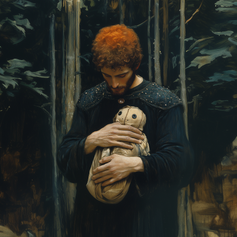
















































Marsilio Ficino (Marsile Ficin in French), born in 1433 near Florence and died in 1499, was an Italian Renaissance philosopher, humanist, and priest. Close to the Medici family, he directed the Platonic Academy of Florence, where he contributed to the revival of the thought of Plato and Neoplatonism in fifteenth-century Europe. An eminent translator from Greek into Latin, he introduced Western scholars to the works of late antiquity (Plato, Plotinus, Porphyry, Iamblichus,...) as well as esoteric writings such as the Corpus Hermeticum of Hermes Trismegistus. A portrait.
Youth and Education in Florence
Marsilio Ficino was born on October 19, 1433, in Figline Valdarno, Tuscany, into a family of physicians serving the Medici. His father, Dietifeci Ficino, was called to treat patients at Florence’s Santa Maria Nuova Hospital, where he brought the young Marsilio. Initially destined to follow his father’s medical career, Marsilio nevertheless discovered philosophy very early thanks to the encouragement of the Hellenist Cristoforo Landino. He studied the classical humanities in Florence and then in Bologna, eagerly learning Latin and especially Greek in order to read ancient texts in their original language. A passionate admirer of Plato, whom he called divine Plato, the young Ficino devoted himself almost religiously to this philosopher and undertook to promote the study of his work among those around him. Returning to Florence around 1453, he succeeded in communicating his enthusiasm for Plato to Cosimo de’ Medici, the immensely wealthy banker and patron who then ruled the city. Cosimo, captivated by the erudition and zeal of his physician’s son, took him under his protection and became a true second father to him, according to Ficino’s own writings.
The Platonic Academy of Florence
Indeed, Cosimo de’ Medici, a great lover of art and learning, dreamed of reviving the spirit of Plato’s Academy on Florentine soil. As early as 1439, the Council of Florence had attracted eminent Byzantine scholars, including the philosopher Gemistus Plethon, whose lectures on Plato dazzled the Medici court. Inspired by Plethon, Cosimo gathered around him a circle of humanists devoted to Platonic ideas. In 1459, he officially founded a Platonic Academy in Florence, entrusting its direction to Marsilio Ficino, then twenty-six years old. Cosimo provided Ficino with a villa at Careggi, in the hills near Florence, to host the meetings of this philosophical circle. There, under the protection of the Medici, Marsilio Ficino organized intellectual gatherings, literary banquets, and readings of ancient texts in the spirit of the Greek Academy. Among his close disciples and colleagues were brilliant young scholars such as Giovanni Pico della Mirandola, Angelo Poliziano, and Girolamo Benivieni, as well as patrons like Lorenzo il Magnifico (Lorenzo de’ Medici), Cosimo’s grandson. Ficino acted not as a dogmatic professor but as a benevolent guide: he conversed with his companions in the Socratic manner, preferring to ask questions and seek the truth together.

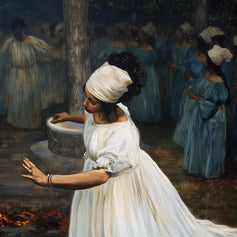
Scene at the Platonic Academy. Source
One episode illustrates the intellectual energy of this academy: on November 7, 1468, at the initiative of Lorenzo de’ Medici, Marsilio Ficino and eight other humanists gathered at the villa of Careggi to celebrate Plato’s birthday. Imitating the philosophical banquets of antiquity, they discussed love in Plato’s honor, inspiring Ficino’s famous Commentary on Plato’s Symposium (also called De amore). Marsilio Ficino also served as a mentor to the Florentine elite: he was Lorenzo de’ Medici’s private tutor in his youth, and later tutored Count Giovanni Pico della Mirandola. Until Lorenzo’s death in 1492, Ficino’s Platonic Academy remained a cultural beacon of the Italian Renaissance, attracting scholars from across Europe who were curious about Florentine Neoplatonism.
Translator of Ancient Works
Marsilio Ficino’s great achievement, which secured him a unique place in intellectual history, was his monumental project of translating and publishing the philosophers of antiquity. In the middle of the fifteenth century, Cosimo de’ Medici entrusted him with a Greek manuscript containing the complete works of Plato, with the mission of translating them into Latin. Ficino devoted himself fervently to this task: he completed the first full Latin translation of Plato around 1470, although it was not printed until 1484. This was the first time in history that a European author had translated all of Plato’s dialogues, giving the Christian West direct access to Platonic philosophy. Dedicated first to Cosimo and then to his son Piero de’ Medici, this translation became authoritative and remained in common use until the eighteenth century.
Ficino did not stop there. He also turned to the writings of Plato’s successors. In 1492, he published his translation of Plotinus’s Enneads, the great third-century Neoplatonist philosopher. Over the years, he translated or edited in Latin numerous Platonic and Hermetic authors, including Porphyry of Tyre, Iamblichus, Synesius of Cyrene, Proclus, and Priscian of Lydia. Thanks to him, Greek works previously inaccessible in Western Europe were collected, translated, and circulated among humanist circles, profoundly transforming the philosophical culture of the Renaissance. His work as a translator and exegete provided standard Latin versions of these ancient texts, which Renaissance thinkers could readily quote and comment on.
An emblematic case is the Corpus Hermeticum, a collection of philosophical treatises attributed to the enigmatic Hermes Trismegistus. Around 1460, a Greek manuscript of these Hermetic treatises was rediscovered in Florence. Convinced of the importance of these writings, which he believed to be older than Plato’s works, Cosimo de’ Medici immediately ordered Ficino to interrupt his translation of Plato and give priority to Hermes. Obeying his patron, Marsilio Ficino translated fourteen Hermetic treatises within a few months, gathering them under the title Pimander, which he completed in 1463. The Latinized Corpus Hermeticum was printed in 1471 and had an immense impact throughout cultivated Europe. It fueled humanists’ fascination with the supposed wisdom of ancient Egypt and with the tradition known as the prisca theologia—the idea that the same divine truth had been revealed to humanity’s earliest sages (Hermes, Orpheus, Zoroaster, Pythagoras, Plato,…). In addition to Hermes, Ficino is credited with translating other esoteric texts, such as the Orphic Hymns and the Chaldean Oracles, demonstrating the breadth of his curiosity about all the mystical currents of late antiquity.
Within a few decades, Marsilio Ficino had thus built a veritable humanist library. His translations brought together, in the Latin of his time, the essential works of ancient Platonism and Neoplatonism, along with Hermetic writings. This corpus, made available to Western scholars, played a crucial role in the Renaissance: it enabled the direct rediscovery of Greek sources without passing through the filter of medieval scholasticism. Erasmus, Thomas More, Rabelais, and many other readers of the late fifteenth and sixteenth centuries would draw on these newly available texts for inspiration to rebuild philosophy, theology, and science on the legacy of antiquity.
Philosophy and Major Works
On the basis of these rediscovered sources, Marsilio Ficino developed his own philosophical thought, which he presented in several synthetic works. His ambition was to reconcile the wisdom of the ancients (especially Plato and his successors) with the Christian faith, in what he called a “Platonic theology” serving revealed truth. Unlike Gemistus Plethon, who advocated a return to Plato’s pagan gods, Ficino believed that Platonism could be harmonized with Christianity and even strengthen it. He accused the rigid Aristotelianism of the medieval schools of impoverishing religion, and instead proposed a pia philosophia (“pious philosophy”) founded on the love of God and the pursuit of wisdom.

Marsile Ficin. Source
His masterwork in this regard is the Theologia Platonica de immortalitate animorum (Platonic Theology of the Immortality of Souls), written between 1474 and 1482. In eighteen learned books, Ficino offers an extensive defense of the spirituality and immortality of the human soul, drawing on Plato, Plotinus, Saint Augustine, and other “ancient theologians” dear to him. He develops a hierarchical vision of the cosmos in which the soul forms a link between the material world and God, according to the Neoplatonic scheme. The Platonic Theology, published in 1482, presents itself as a systematic synthesis reconciling ancient philosophy and Christian doctrine, anticipating in many respects the later humanist philosophy of the Renaissance. Ficino asserts that, since antiquity, divine Providence has sown scattered truths throughout all philosophical traditions, and that the thinker’s role is to gather this inheritance and offer a coherent synthesis to the Christian world. This way of presenting philosophy through the exegesis of the ancients—imitatio—is characteristic of his working method: Ficino saw himself as one link in a long chain of interpreters (the prisci theologi) who, from century to century, gradually revealed the divine mysteries hidden in the writings of pagan sages.
Alongside this philosophical-theological summa, Marsilio Ficino wrote The Book of the Christian Religion (De christiana religione) in 1474, defending the superiority of Christ’s message while acknowledging the insights of ancient philosophers. He also composed a Commentary on Plato’s Symposium (1469), devoted to the theme of love. In this work, he interprets the myth of the androgynous being and the praise of divine love in Platonic-Christian terms, coining the famous notion of “platonic love,” which would have a long literary afterlife. His ideas about the soul’s love and ideal beauty influenced Renaissance poets and writers, from Baldassare Castiglione and Pietro Bembo in Italy to the poets of the Pléiade in France (such as Joachim du Bellay and Pierre de Ronsard).
Natural Magic and Astrology
One of the most original—and controversial—aspects of Ficino’s thought lies in his interest in astral influences and natural magic. Living at a time when the boundaries between science, magic, and religion were porous, he sought to understand how celestial and spiritual forces acted upon the sublunary world. This concern led to a singular work published in 1489: De vita libri tres (Three Books on Life). Intended to improve the lives and health of scholars, this treatise combines medical and lifestyle advice, astrological considerations, and recipes belonging to what he called natural magic. Ficino explains that the stars imbue the world with a spirit (spiritus mundi) that can influence the human body and soul. According to him, the wise person can attract these beneficial influences through natural means—using the occult properties of plants and stones, singing sacred hymns (the Orphic Hymns he cherished), or wearing appropriate talismans. Such magic, he argued, was not demonic: it operated through the hidden faculties God had placed in nature and therefore belonged to the divine order of creation.
Despite these precautions, De vita attracted the concerned attention of religious authorities. Its passages on planetary talismans and appeals to the spirits of the stars appeared to some to border on witchcraft. In 1489, shortly after the book’s publication, Marsilio Ficino was accused of occult magical practices by theologians close to Pope Innocent VIII, and he risked facing trial before the Inquisition. Thanks to the intervention of powerful protectors at the papal court, he narrowly avoided conviction. Shaken by the experience, Ficino wrote to his friends in Rome to defend himself, explaining that his magic was merely a form of prayer based on ancient wisdom. The incident did not prevent him from continuing his research, but it somewhat tarnished his reputation. Long afterward, some historians of ideas would regard Ficino less as a serious philosopher than as an eccentric occultist because of his attraction to astrology and the Hermetic sciences. Nevertheless, his De vita, reprinted many times, exerted a notable influence on Renaissance astrological medicine and on reflection about the world soul (a concept that foreshadowed the anima mundi of later natural philosophers).
Relations with Renaissance Thinkers
As the leading figure of Florentine Neoplatonism, Marsilio Ficino maintained close ties with the great intellectual figures of his time. In addition to the Medici family (Cosimo and then Lorenzo), which supported him materially, he corresponded with humanists throughout Europe and welcomed many visiting foreign scholars to Florence. His friendship with Giovanni Pico della Mirandola is particularly noteworthy: after arriving in Florence in 1484, the young Count of Mirandola became almost a spiritual son to Ficino. Both shared the ideal of a philosophia perennis, that is, a universal truth running through Platonic, Hermetic, Kabbalistic, and Christian doctrines. Ficino encouraged Pico in his studies of Jewish Kabbalah and magic, although they differed on certain points (Pico would be more critical of astrology than his elder). Together, they embodied the syncretic boldness of the Italian Renaissance, seeking to unite all forms of wisdom into a single worldview.
Ficino was also connected with Angelo Poliziano, poet and philologist at the court of Lorenzo the Magnificent, whom he met at the Platonic Academy. He exchanged letters with Leon Battista Alberti, one of the first humanists of the Renaissance, and with other Italian scholars such as Giovanni Pico della Mirandola (Giovanni Pico’s nephew) and Girolamo Benivieni, a Neoplatonic poet. As a priest (he was ordained in 1473), Ficino also maintained respectful relations with high-ranking Church prelates while avoiding direct conflicts—with the notable exception of the 1489 affair mentioned above. When Savonarola established his puritanical theocracy in Florence in 1494 after the fall of the Medici, Ficino prudently withdrew to his country house at Careggi. With the deaths of Pico and Poliziano in 1494, followed by Savonarola’s execution in 1498, he saw an era come to an end. Old and ailing, he died on October 1, 1499, in his villa at Careggi, a few months after the Medici returned to power in Florence.
Reception and Posthumous Legacy
Marsilio Ficino left behind an imposing body of work, quickly disseminated throughout learned Europe. His many writings (treatises, commentaries, and letters) were compiled as early as 1491 in a first collected edition, and later in an Opera omnia printed in Basel in 1576. His correspondence, published in several volumes, served Renaissance humanists as a model of Latin elegance and philosophical reflection. Above all, his Latin translations of Plato, Plotinus, and the other Platonic authors became the standard versions for generations of readers: they were constantly reprinted and taught at universities until the seventeenth century. At the end of the sixteenth century, the University of Ferrara established a chair of Platonic philosophy occupied by Francesco Patrizi, a sign that the momentum created by Ficino continued for decades after his death.
Ficino’s thought deeply permeated Renaissance culture. His idea of a shared ancient theology (prisca theologia) inspired numerous esoteric and reforming movements. Philosophers such as Giordano Bruno and Francesco Patrizi in the sixteenth century, and later Gottfried Wilhelm Leibniz in the eighteenth century, would invoke a philosophia perennis in Ficino’s tradition. In literature, as we have seen, the notion of platonic love that he formulated influenced Renaissance love poetry. In the religious sphere, his effort to reconcile Platonism and Christianity paved the way for a more spiritual and ecumenical approach to faith, although the Catholic Counter-Reformation and later Enlightenment rationalism would diminish its legacy.
During the classical period (the seventeenth and eighteenth centuries), Ficino’s reputation declined somewhat. The new thinkers, enamored of scientific method and Cartesian clarity, saw him as a representative of the outdated speculations of the Renaissance. In the middle of the eighteenth century, the historian Brucker relegated him to a modest position among philosophers, mocking his taste for the fables of the late “Platonists.” He was criticized for his commentarial erudition and mystical leanings, deemed incompatible with the modern critical spirit. However, these harsh judgments obscured Marsilio Ficino’s true importance.
In the nineteenth and twentieth centuries, historians of philosophy reassessed his crucial role in the transition between the Middle Ages and the Renaissance. Today, it is recognized that Ficino helped “make Plato respectable” in the eyes of Western thought, broadened the understanding of the history of religions by incorporating ancient wisdom traditions, and promoted the education of the mind through philosophy. By reviving Platonic and Hermetic ideas, he prepared the ground for the great humanist syntheses of the Renaissance. His name remains inseparable from the golden age of Florentine Quattrocento, and his writings—from the Platonic Theology to the Three Books on Life—are still studied for their influence on Renaissance thought, literature, and art. Marsilio Ficino thus appears as a bearer of light between antiquity and emerging modernity, a philosopher-narrator who, through his pen and voice, rekindled Plato’s flame in Renaissance Europe.
Sources:
-
Raymond Marcel, Marsile Ficin (1433-1499), Les Belles Lettres, 1958.
-
Marsilio Ficino, Stanford Encyclopedia of Philosophy, last updated May 28, 2024.
-
Encyclopædia Universalis – Article “Marsile Ficin” (online edition, author: A. R. Jalón, 2018).
-
Paul Oskar Kristeller, The Philosophy of Marsilio Ficino, Oxford University Press, 1943 (reprint 1964).
-
Édouard des Places (trans.), Platonic Theology of the Immortality of Souls by Marsile Ficin, Les Belles Lettres, 2012 (historical introduction).