





























































































Pennsylvania pow-wow, known in Pennsylvania German dialect as Braucherei (which we discussed in our article on Alsatian magic), refers to a tradition of ritual healing that developed within Pennsylvania’s German-American communities from the colonial era onward. It consists of a set of Christian folk-medicine practices combining biblical prayers, oral formulas, sacred gestures, and household remedies, with the aim of treating illnesses in people and livestock, protecting homes from physical or spiritual harm, and promoting everyday well-being.
From European Braucherei to pow-wow
The pow-wow tradition has its roots in the popular magical and religious practices of Central Europe. In Germany and neighboring countries, traditional healers had existed since the Middle Ages - figures who might be compared to the Anglo-Saxon cunning folk - using prayers, blessings, and incantations to heal and protect. These practices, known as Brauche or Braucherei in Germanic dialects, were part of a folk Christianity in which the boundary between official religion and occult traditions remained porous. German-speaking colonists brought this body of beliefs and rituals with them when they migrated in large numbers to Pennsylvania during the 17th and 18th centuries. Pennsylvania pow-wow thus derives directly from these European customs, drawing on grimoires and collections of recipes from the Old World (such as the Romanus-Büchlein and the writings of Albert the Great), as well as traditional Christian prayers.
Once brought to American soil, Braucherei retained its Christian foundation while incorporating a variety of references. Although most colonists were Protestant, pow-wow formulas frequently invoke elements of Catholic devotion, such as the Virgin Mary or certain saints, reflecting an ancient heritage shared by both denominations. The very term “pow-wow,” applied to this German-American practice, is a lexical borrowing from Algonquian Native American languages (where it referred to a shaman or Indigenous healer); its use in Pennsylvania is explained by the analogy English speakers drew between German healers and Native medicine men. Despite this Native American name, the tradition discussed here is entirely European in origin, transplanted to America by Germanic immigrants.
In Pennsylvania German popular culture, a clear distinction is made between the Braucher (a pow-wow practitioner) and the Hexer (an evil sorcerer). Pow-wow is regarded as beneficial magic grounded in Christian faith, in contrast to Hexerei, which refers to malicious witchcraft. The role of the Braucher is to lift spells cast by a sorcerer: the Braucher acts as a spiritual healer, whereas the Hexer would be the perpetrator of occult disturbances. This opposition does not rule out some ambiguity in practice, but it emphasizes that, for the communities concerned, pow-wow belonged to a continuity with religion (it was also called “faith medicine”), rather than being a diabolical practice. Pow-wow doctors - also called brauchers, hex doctors, or powwowers - saw themselves as intermediaries between God and the patient, mobilizing the “liturgical weapons” of prayer against the influence of evil.
Establishment in Pennsylvania in the 18th century
The practice of pow-wow took root in North America with the arrival of waves of German-speaking immigrants (later called Pennsylvania Dutch) beginning in the early 18th century. These colonists, originating particularly from the Palatinate, Alsace, Switzerland, and the Rhineland, settled on the fertile lands of Pennsylvania, where they founded relatively isolated rural communities. In these frontier areas, which lacked trained physicians, traditional healers naturally found their place and perpetuated the art of pow-wow. Testimonies attest that these healing rituals were being practiced in Pennsylvania by the end of the 18th century.
During the 19th century, the pow-wow tradition flourished on Pennsylvania German farms and in villages. It transcended religious affiliations: whether Lutheran, Mennonite, Amish, or members of the Reformed Church, many local residents turned to powwow doctors to treat children, spouses, or livestock. In Berks County, for example, pow-wow “was part of everyday life” for many people well into local history. Some practitioners acquired regional renown and could even advertise their services in the local press at the beginning of the 20th century. However, pow-wow generally remained an informal, community-based activity: healers primarily worked at another occupation (farmer, miller, and so on) and did not request fixed payment for their treatments, accepting at most a spontaneous gift in thanks. This discretion and perceived lack of payment, regarded as guarantees of sincerity, contributed to the tolerance the practice enjoyed within rural communities.
While retaining its Christian core, Pennsylvania pow-wow evolved and grew richer through contact with the New World. Over the generations, brauchers supplemented their knowledge with local recipes or borrowings from other North American folk traditions when these harmonized with their Christian worldview. Thus, traditional herbal medicine (herbal teas, ointments, and poultices made from native plants) became interwoven with pow-wow rituals, to the point that it is difficult to draw a clear line between “natural” remedies and incantations in Pennsylvania folk medicine. Similarly, symbolic techniques such as burying or “transferring” an illness into a tree were practiced both by German healers and by their neighbors of other backgrounds.
J. G. Hohman’s Long Lost Friend: the pow-wow bible
In 1820, a German-speaking immigrant named Johann (John) George Hohman published a small book in Reading, Pennsylvania, entitled Der Lange Verborgene Freund - literally “The Long Hidden Friend” - which soon became known in its English version as The Long Lost Friend. This pocket booklet, compiled by Hohman from various European sources and his personal experience, would become the standard reference work of Pennsylvania pow-wow throughout the 19th century.
Hohman himself is an intriguing figure. Of Bavarian origin, he arrived in Pennsylvania around 1802 as an indentured servant, managed to buy his freedom, and established himself as a printer and peddler of religious and secular books. In 1819, observing the daily lives of Berks County farmers and their need for remedies, he assembled a collection of prayers, remedies, and household recipes, which he published the following year. Hohman disappears from the records after 1846, but his work continued to be reprinted many times, first in German and then in English, thereby passing through generations of practitioners. Notably, an English edition from the early 20th century even added the word “Pow-Wows” to the title, definitively cementing the association between the term powwow and this healing tradition.
The Long Lost Friend provides valuable insight into the pow-wow repertoire of the 19th century. From its preface, Hohman asserts the protective purpose of his book: he promises that “whoever carries this book on their person” will be safe from all dangers and will perish neither by fire nor by water, nor without receiving the last rites. This statement illustrates the mindset of the author and his readers: simply possessing this collection of prayers was perceived as a spiritual talisman conferring divine favor (Hohman even cites Psalm 50:15, “Call upon me in the day of trouble: I will deliver thee, and thou shalt glorify me,” to justify the use of sacred formulas in times of danger). Hohman also takes care to clarify that this is not a grimoire of harmful magic: his Lost Friend contains no spell for causing harm or “casting a hex,” only prayers against evil and remedies for healing. The work thus presents itself as a manual of good Christian magic, in harmony with faith.
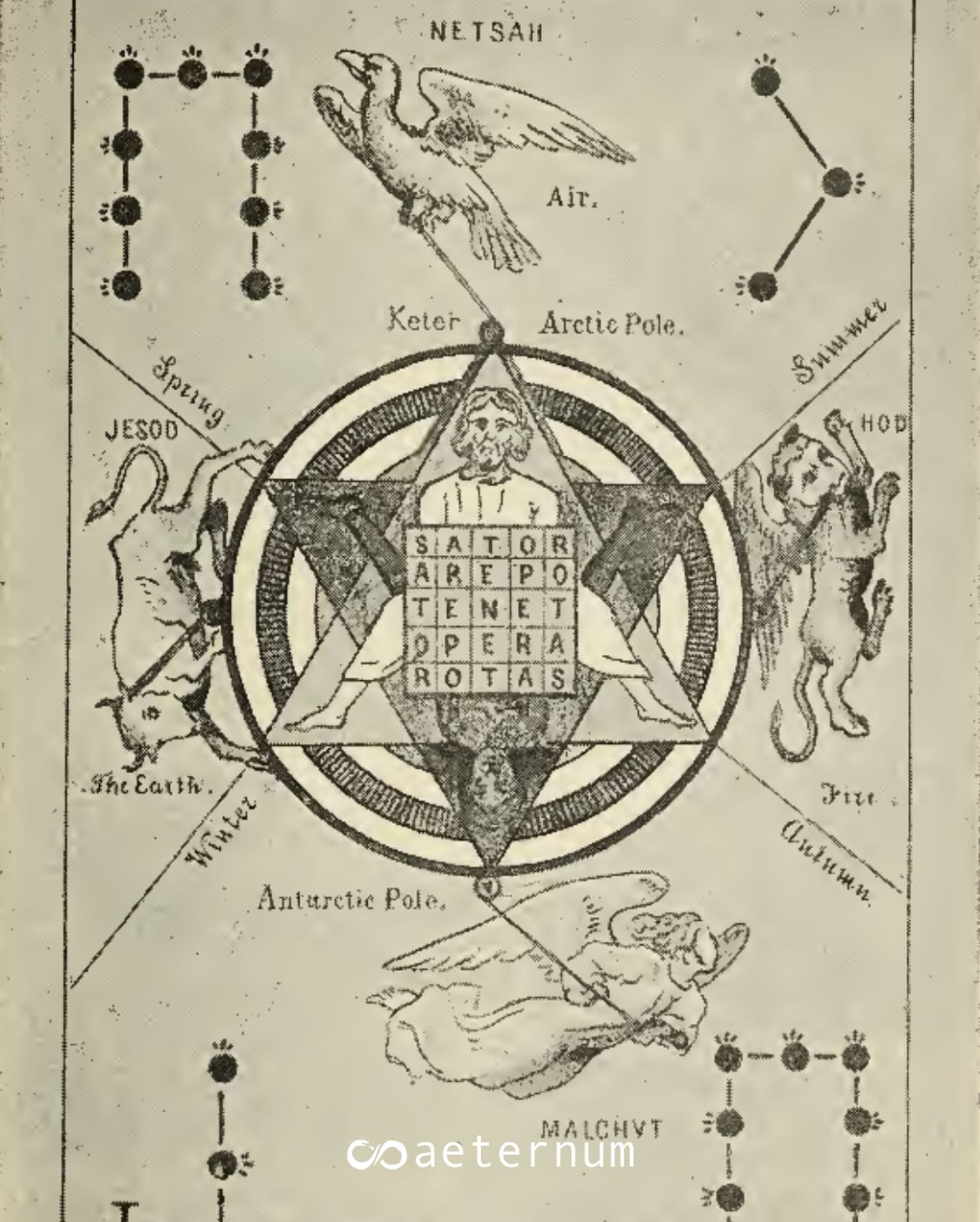
The contents of Long Lost Friend combine empirical remedies with mystical-religious incantations, reflecting the dual nature of pow-wow. It contains very concrete household-medicine recipes, such as dried pig’s bladder powder to be swallowed as a remedy for incontinence. Alongside these are numerous oral formulas intended for healing or protection, to be spoken in specific circumstances. A typical example is the charm for stopping bleeding: “Blood, you must stop until the Virgin Mary bears another son,” a formula to be repeated three times in succession. This unusual injunction - since it suspends the hemorrhage until an impossible event (Mary had only one son, Jesus) - relies on faith in the Virgin’s intercession to bring about a healing miracle. Similarly, to extinguish a fire without water, Hohman advises writing the famous Latin magic square SATOR AREPO TENET OPERA ROTAS on a plate and then throwing it into the fire, which should go out immediately. This ancient European palindrome is a good example of an esoteric element integrated into pow-wow practice while being presented as an effective “secret” transmitted through tradition.
Hohman’s sources are sometimes explicitly cited in the text. He draws in particular on the legendary Book of Secrets attributed to Albert the Great (Albertus Magnus), a highly popular medieval collection of magical recipes, as well as the enigmatic Sixth and Seventh Books of Moses. These latter two works - pseudo grimoires supposedly written by Moses - circulated among sorcerers and healers in Germanic countries. Hohman refers to them for certain prayers and occult seals, while warning that these books can only be used with great Christian piety: according to the notice he reproduces, the user must be a good Christian, otherwise “the incantations will be ineffective.” It should be noted that the Sixth and Seventh Books of Moses include an entire chapter detailing the use of biblical Psalms in magic, with each psalm associated with a particular protective or healing virtue. This reminder highlights how central the recitation of psalms and Bible verses is to the pow-wow arsenal.
Finally, The Long Lost Friend also bears witness to certain unspoken rules surrounding the practice. Hohman emphasizes the duty to help others: he goes so far as to write that anyone who neglected to use a known charm to save a neighbor’s limb or eyesight would “make themselves guilty of a sin.” This moral injunction reflects the altruistic spirit of traditional pow-wow: the Braucher’s knowledge is regarded as a gift from God to be used for the good of the community. Hohman also alludes to the controversies his book might provoke among the clergy, and takes care to justify himself by grounding its legitimacy in the Bible itself (hence the quotation from Psalm 50).
Pow-wow rituals and practices
Pennsylvania pow-wow is characterized by a variety of rituals that appear simple, combining sacred words with symbolic gestures. Healing generally begins with the practitioner reciting a formula or biblical passage in a low voice (sometimes without producing any audible sound), while performing an appropriate ritual gesture. The laying on of hands or anointing with blessed oil are also common techniques, always accompanied by prayers. Power is not regarded as inherent in the gesture itself, but as emanating from God: through faith and sacred words, the healer becomes a channel for divine grace.
Several typical elements recur in pow-wow rituals. First, invocation of the Christian Trinity is omnipresent. Many formulas begin or end with the words “In the name of the Father, the Son, and the Holy Spirit”, sometimes spoken in Latin (In nomine Patris et Filii et Spiritus Sancti) in the more solemn versions. This use of Latin, unusual among Protestants, reveals the antiquity of the blessings used and the historical Catholic influence on the tradition. The use of the Bible’s Psalms is another pillar of pow-wow: certain psalms are considered effective against specific ailments and are therefore recited in full during the ritual. For example, Psalm 91 (the Qui habitat) is traditionally recited for the protection of the home, while Psalm 23 (The Lord is my shepherd) may accompany a request for healing, each verse invested with protective power through the reciter’s faith.
Everyday objects serve as material supports for the rite. A piece of bread, a rope, a nail, a coin, or a simple glass of water can become an instrument of sacred power once associated with the proper formula. Thus, a handwritten Braucherei manual from around 1830 states that in cases of rabies (hydrophobia), the SATOR square should be written on buttered bread and fed to the patient as an antidote. Similarly, for healing warts, some recipes instruct the healer to rub the wart with a coin and then throw away or bury it: the “transferred” illness is believed to depart with the discarded coin. Other practices draw on natural cycles: certain ailments are treated during a specific lunar phase (for example, on the first Friday of the new moon, to “transfer” an illness into a tree by plugging a nail or a strand of the patient’s hair into it). These rites echo cosmological beliefs in which the moon, the sun, or the day of Christ’s Passion are all factors that enhance the effectiveness of a blessing if scrupulously observed.
The domestic setting is pow-wow’s preferred stage. Most healings take place in the home of the patient or the Braucher, in familiar surroundings. A blessed candle may sometimes be lit, or the Bible opened to a particular psalm during the session, in order to create a prayerful atmosphere. Blessed objects (holy water, salt, and crucifixes) may be arranged around the patient. For protecting the house or stable, pow-wow also offers various seals and inscriptions to be placed on doors.
Pow-wow is not limited to words: it also includes the making of talismans and amulets. Experienced healers sometimes make small protective sachets (similar to gris-gris) containing biblical verses written in German and arranged in unusual ways (upside down or in a circle). A typical amulet consists of a tiny piece of parchment inscribed with the invocation “Nazarenus Jesus Rex” (“Jesus of Nazareth, King [of the Jews]”), inserted into a cloth pouch worn around the neck. This kind of amulet, derived from European traditions, is believed to ward off evil influences and protect the person wearing it. Himmelsbriefe, or “letters from Heaven,” printed documents bearing divine blessings to be displayed at home, also belong to the domestic-protection arsenal associated with pow-wow (they promised to preserve the household as long as the sacred letter remained there). Here we see that the boundary between religious devotion and folk magic is narrow: for practitioners, possessing a written relic of the Word of God or a sanctified object is a natural extension of their faith into everyday life.
Finally, an essential aspect of traditional pow-wow lies in the faith of both patient and healer. These rituals are not merely mechanical formulas: healing is believed to result from the fervor with which the prayer is spoken and the patient’s trust in God’s help. The Braucher therefore takes care to ensure the spiritual commitment of the person being treated. The patient is often asked to participate, for example by answering “Amen” to the prayers, reciting the Lord’s Prayer, or repeating the healing formula three times themselves to seal its effectiveness. This interactivity emphasizes the nature of a shared prayer more than that of operative magic. In cases of suspected bewitchment (a hex cast by a sorcerer), faith also serves as a shield: the healer acts as a guide who restores courage and confidence to the victim, who believes that no spell can withstand the invocation of God’s name. If the patient doubts or reveals the ritual to skeptics, there is a fear that the charm will be “broken.” Hence the former tendency to keep these consultations secret alongside conventional medical treatments - doctors were not necessarily told that pow-wow was also being used, for fear that they might object or make fun of it.
Today, the pow-wow tradition in Pennsylvania survives mainly through cultural memory and documentation efforts. Pennsylvania German heritage centers, museums (such as the Glencairn Museum), and specialized researchers have collected the accounts of the last practitioners and assembled the objects, manuscripts, and printed works connected with this practice for exhibition and study.
Sources:
-
David W. Kriebel, Powwowing Among the Pennsylvania Dutch: A Traditional Medical Practice in the Modern World, Penn State University Press, 2007
-
Patrick J. Donmoyer, Powwowing in Pennsylvania: Braucherei and the Ritual of Everyday Life, Pennsylvania German Cultural Heritage Center, Kutztown University, 2017
-
John George Hohman, The Long Lost Friend (original German edition: Der langverborgene Freund, 1820)
-
Don Yoder, Pennsylvania German Immigrants, 1709–1786, Genealogical Publishing Co., 1980
-
Don Yoder, Occult Tradition in Pennsylvania: The Pow-Wow Tradition and the Braucherei, unpublished lectures and journal articles
-
Alfred L. Shoemaker, The Pennsylvania Dutch and Their Healing, Pennsylvania Folklife Society, 1959
-
Emma R. Putnam, “Folk Healing Practices among the Pennsylvania Germans,” The Journal of American Folklore, vol. 49, no. 194, 1936
-
Marion J. Nelson, The Pennsylvania Germans: A Persistent Minority, The Pennsylvania German Society, 1983

Par Olivier of Aeternum
Passionate about esoteric traditions and the history of the occult from the earliest civilizations to the 18th century, I share some articles on these topics. I am also co-creator of the online esoteric shop Aeternum.