



















































































































|
1. The history of offerings |
If you practice the magical arts and worship one or more deities, it is natural to show your gratitude for what you have received and for what you asked for if you had a particular intention. It is a sign of respect that will satisfy the deity in question and ensure the effectiveness of your future spells. So let us see how to master the art of offering.
1. The history of offerings
Since the earliest days of humanity, the act of making offerings has been a central element of religious and spiritual practices. Offerings served not only to honor deities and spirits, but also to establish communication and obtain favors. While today they take the form of objects or foods, in the past they also took the form of animal or human sacrifices. This may certainly seem barbaric, but it is important to consider that this act was proof of respect and devotion toward a higher entity, intended to ensure good relations between mortals and deities by offering what one has most precious.
1.1. Offerings among the Egyptians

The Egyptians firmly believed in life after death and considered offerings essential to ensuring the well-being of the deceased in the afterlife. Funeral offerings included food, drinks, jewelry, and personal belongings. Temples dedicated to gods such as Ra, Isis, and Osiris also received regular offerings of bread, beer, fruit, and meat, accompanied by complex rituals and prayers. These acts were intended to nourish the gods and maintain cosmic order, Ma'at.
1.2. Offerings among the Greeks

In Greece, offerings were an integral part of religious rituals and festivals. The Greeks offered animal sacrifices, wine libations, and the first fruits of the harvest to appease and honor the Olympian gods such as Zeus, Athena, and Dionysus. Offering practices also included precious objects such as gold and silver statues, placed in temples as acts of devotion and gratitude. The Panathenaea, festivals in honor of Athena, were marked by processions and animal sacrifices, highlighting the importance of offerings in Greek religious life.
1.3. Offerings among the Romans
The Romans, influenced by the Greeks, also made offerings to honor their gods and household spirits, the Lares and Penates. Animal sacrifices, wine libations, and food offerings were common. Roman religious festivals, such as the Saturnalia, included public and private offerings to ensure the gods' favor and the prosperity of the community. Roman emperors often made lavish offerings to demonstrate their piety and power.
1.4. Offerings among the Celts
The Celts occasionally practiced human sacrifice, particularly for divination or to appease the gods during times of crisis, as was the case with the druids, for example. Roman texts report human sacrifices by immolation, notably in the famous "wicker man," a large wooden structure filled with human and animal victims and then burned.

1.5. Offerings among the Aztecs
The Aztecs are probably best known for their human sacrifices, which were at the heart of their religious practices. They believed that human sacrifices were necessary to appease the gods and maintain cosmic balance. The sun god, Huitzilopochtli, required sacrifices to fight the forces of darkness and ensure the sun rose each day. Sacrifices were often performed at the top of pyramids, where the victims' hearts were offered to the gods after being torn out.

2. Types of offerings
Let's now discuss the possible types of offerings. As you might expect, we will set sacrifices aside and focus on the two types of offerings that are widespread today: material and immaterial.
2.1. Material offerings
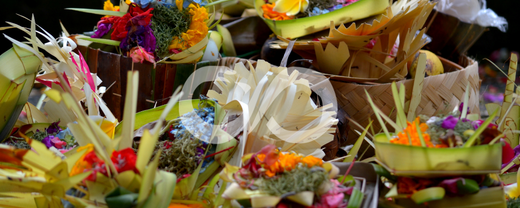
Material offerings are physical objects offered during rituals and ceremonies. These objects are often chosen for their symbolic value and their ability to represent the practitioner's intentions.
| Food and drink | Food is one of the most common material offerings. It may include fruits, vegetables, seeds, bread, cakes, alcoholic beverages (such as wine or beer), and cooked dishes. In many traditions, the food offered is then shared with ritual participants, symbolizing communion with the deities or spirits invoked. |
| Jewelry and valuables | Jewelry, gold and silver coins, as well as other precious objects, are often offered to honor deities and demonstrate the practitioner's devotion. These objects are often chosen for their beauty and intrinsic value, symbolizing material sacrifice and spiritual wealth. |
| Handicrafts | Handcrafted objects, such as sculptures, paintings, weavings, and pottery, are also used as offerings. These objects, created with care and intention, serve to demonstrate the practitioner's devotion and skill, and are often consecrated during specific ceremonies. On a larger scale, monuments and even entire buildings may also be included. |
| Incense and candles | Incense and candles are commonly used in rituals to purify the space and create a sacred atmosphere. The fragrances of incense and the light of candles are offered to deities as symbols of clarity, purity, and spiritual communication. |
2.2. Intangible offerings
| Prayers and chants | Prayers, chants, and mantras are common forms of intangible offerings. By reciting sacred words, the practitioner directs their intentions directly to deities or spirits, expressing respect, gratitude, and devotion. |
| Meditation and contemplation | Meditation and contemplation are forms of offerings in which the practitioner devotes time to connecting inwardly with spiritual energies. These practices promote inner peace and communion with the divine. |
| Acts of service | Acts of service, such as volunteering, helping others, and charitable works, are intangible offerings that demonstrate a commitment to the spiritual principles of compassion and generosity. By helping others, the practitioner honors the values of their faith and manifests their devotion in a tangible way. |
| Time | Devoting time to spiritual practices, such as participating in ceremonies, retreats, or pilgrimages, is a form of immaterial offering. The time devoted to these activities reflects the importance placed on spiritual growth and connection with the divine. |
2.3. Natural Offerings
Natural offerings use elements directly sourced from nature to honor deities and spirits. These offerings are often chosen for their intrinsic connection to natural forces and their specific energies.
| Plants and Herbs | Plants, flowers, and herbs are common offerings. They may be used fresh, dried, or in the form of tinctures and essential oils. Each plant has its own symbolic and energetic properties, used to attract certain influences or blessings. |
| Stones and crystals | Stones and crystals are often offered for their energetic properties. Each type of stone is associated with specific qualities, such as healing, protection, or mental clarity. Crystals can be placed on altars, worn, or used in rituals. |
| Water | Water is a powerful offering, symbolizing purification, healing, and connection with the elements. Sacred water sources, such as rivers, lakes, and oceans, are often used in rituals to bless and purify participants and objects. |
| Fire | Fire, represented by candles, torches, or campfires, is used to symbolize transformation, purification, and spiritual illumination. Rituals involving fire may include burned offerings to convey intentions and prayers to deities. |
| Earth | Natural elements such as sand, earth, shells, and feathers are also used as offerings. Each element is chosen for its specific significance and connection to the energies of the earth and nature. |
3. The Role of Offerings
Offerings serve as mediums for conveying the practitioner's intentions, prayers, and wishes to deities, spirits, or ancestors.
3.1. Offerings for Creating a Sacred Connection
Offerings help establish a sacred bond between the practitioner and spiritual entities. By offering something of value, the practitioner shows their respect and desire to connect with spiritual forces. This act of giving creates a sacred space where spiritual communication can be established. Offering a symbolic object or gesture is a demonstration of respect and reverence. By giving something precious, the practitioner shows that they recognize the power and importance of spiritual entities. This process involves opening the heart and mind, making the practitioner more receptive to the messages and energies of spiritual entities. It creates an open channel of communication where intentions and prayers can be clearly received and interpreted. Offerings are often integrated into complex rituals that include prayers, songs, and meditations. These rituals serve to strengthen the bond between the practitioner and spiritual forces, creating an atmosphere of sacredness and mutual respect.
3.2. Offerings to appease and honor the deities
Offerings are often made to appease or honor deities and spirits. They demonstrate devotion and gratitude, which are essential for maintaining a harmonious relationship with these entities. For example, in many traditions, offerings are made to thank the gods for blessings received or to ask for specific favors. By offering something precious or symbolically meaningful, the practitioner shows that they recognize and appreciate divine interventions in their life. This may include offerings of food, drinks, or flowers, or even intangible gestures such as prayers and songs. These acts of devotion help maintain a positive and balanced relationship with the deities, ensuring their goodwill and protection.
3.3. Offerings to convey intentions
Offerings serve as vehicles for conveying intentions and prayers. The symbolic nature of the offering itself, along with the rituals that accompany it, helps clarify and strengthen the practitioner's intentions. Prayers accompanying offerings may express requests for healing, protection, or spiritual guidance. When the practitioner offers a symbolic object or gesture, they invest that gesture with a specific intention, which is then carried toward spiritual entities. This transmission process is amplified by the rituals surrounding the offering, creating a framework in which intentions can be clearly expressed and received. Offered objects, such as candles, incense, or stones, act as receptacles for these intentions, carrying them into the spiritual world.
3.4. Offerings to strengthen ritual energy
Offerings increase ritual energy and enhance the effectiveness of rituals. The combination of sacred objects, ritual gestures, and prayers creates a powerful synergy that facilitates spiritual communication and the manifestation of intentions. Each element of the ritual helps raise the energy of the practitioner and the sacred space, creating an environment conducive to connecting with spiritual entities. The objects offered, whether material or immaterial, add a tangible dimension to the act of devotion, reinforcing the ritual's impact. This energetic synergy helps focus the practitioner's intentions and transmit them more effectively to the invoked spiritual forces. By incorporating offerings into their rituals, practitioners can not only express their devotion but also create optimal conditions for the manifestation of their wishes and the reception of divine blessings.
4. Offer your gifts
4.1. Present your offerings
An offering is not merely a gift. As we have seen, it carries deep symbolic meaning. Making an offering should never be taken lightly. It is a sacred act that requires preparation, devotion, and respect for the spiritual entities to which it is dedicated. Here are some detailed steps for preparing and presenting offerings appropriately and meaningfully.
Preparing an altar dedicated to the deity you are honoring is the first crucial step. Since the altar is a sacred space where offerings are presented and rituals are performed, it must be carefully prepared. Choose a quiet, respected place in your home or in a natural setting, and make sure it is clean and purified. Decorate the altar with symbolic objects associated with the deity, such as statues, images, candles, flowers, and colored fabrics, arranged harmoniously.
Offerings should be chosen according to the deity's preferences and attributes. Select objects that have symbolic meaning and spiritual value, then purify them before presenting them. Purification can be done by washing with pure water, fumigating with incense, or blessing them with specific prayers. This step removes negative energies and consecrates the offerings, making them worthy of the deity.
Offerings on the altar should be presented with devotion and respect. Arrange the offerings aesthetically and with symbolic significance, accompanied by prayers, songs, and ritual gestures. The prayers should express your devotion, gratitude, and intentions, while songs and mantras help raise spiritual energy and attract the deity's attention.
Inviting the deity to share a meal with you is a highly appreciated and meaningful gesture. If you have planned a meal, such as a sabbat meal, set aside a portion for the deity. Prepare the meal with care and intention, choosing foods associated with the deity or having particular symbolic significance. Place this portion on the altar or in a place dedicated to the deity, accompanied by prayers and thanks. Symbolically sharing the meal in the deity's presence strengthens the spiritual connection and expresses your gratitude for the blessings received.
4.2. Choose your offerings
Offerings may vary depending on the spiritual tradition and the deity or entity to whom they are intended. It is difficult to list everything here, but you can consult our Arcane Grimoire to learn about suitable offerings.
| Fresh fruit |
Offered to goddesses of fertility and abundance, such as Demeter (Greece), Ceres (Rome) or Oshun (Yoruba). |
| Bread and cakes | Used in offerings to Hestia (Greek goddess of the hearth), Brigid (Celtic goddess of the hearth and healing), or household spirits in European traditions. |
| Wine and beer | Offered to Dionysus (Greek god of wine and revelry), Bacchus (his Roman equivalent) and Thor (Norse god associated with beer and protection). |
| Gold or silver jewelry | Dedicated to deities of wealth and beauty such as Lakshmi (Hindu goddess of fortune) or Aphrodite (Greek goddess of love and beauty). |
| Incense | Burned to honor solar or celestial deities such as Ra (Egyptian sun god), Apollo (Greek god of light and truth) or Amaterasu (Japanese sun goddess). |
| Herbs | Lavender for Hecate (Greek goddess of magic and the night) for protection and purification, sage to purify sacred spaces and honor ancestral spirits in Native American traditions, rosemary in rituals for Athena (Greek goddess of wisdom) for mental clarity and protection. |
| Stones and crystals | Amethyst for Bacchus/Dionysus, rose quartz for Aphrodite/Venus, obsidian for Tezcatlipoca |
| Water | Spring water for Tlaloc (Aztec god of rain), seawater for Poseidon (Greek god of the sea) or Yemaya (Yoruba goddess of the sea). |
I hope this presentation has given you a clearer understanding and will help you make your offerings respectfully and effectively.

Par Olivier of Aeternum
Passionate about esoteric traditions and the history of the occult from the earliest civilizations to the 18th century, I share some articles on these topics. I am also co-creator of the online esoteric shop Aeternum.













