



















































































































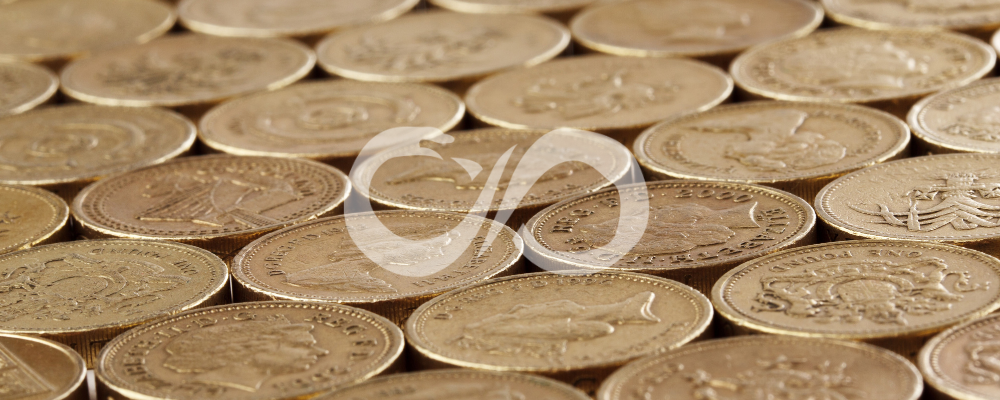
The relationship between money and the sacred is as old as money itself. From the first metal coins to modern banknotes, the pursuit of prosperity has followed subtle paths. Thus, long before economic theories, our ancestors were already invoking gods, spirits, and rituals to explain abundance or scarcity. Exploring the link between magic and money.
1. Gold and Offerings, the Sacred Origins of Money
Few people know it, but the origins of money are closely bound up with ritual and the sacred. Before serving commercial exchange, money was born in temples and ceremonies. Some theories suggest that, at the dawn of civilization, coins replaced food offerings in sacrificial rituals. In other words, paying with coins was originally a religious, even magical, act: people symbolically offered money where they had once shared bread or livestock in sacrifice. In these sacred banquets of Antiquity, taking part in the sharing of the consecrated victim created a bond of loyalty among community members and sealed an alliance with the deity. The emergence of currencies of different values gradually “secularized” these exchanges, but at the time, a payment retained the trace of this original spiritual pact, in which economic exchange extended the alliance between humans and gods.
From then on, money carried a dual nature: a tangible good facilitating transactions, it also retained a symbolic aura inherited from the sacred. The first coins minted in gold and silver - precious metals shining like the sun or moon - held as much spiritual as economic value. Gold in particular, incorruptible and gleaming, was venerated in many cultures as a divine metal. In ancient Egypt, it was called “the flesh of the gods” and associated with the sun. To possess gold was to hold a fragment of solar power, and therefore a little of the divine essence. From Antiquity onward, an ambiguous link began to emerge: money attracted devotion as much as covetousness. Temples became the world's first vaults, guardians of treasures offered to the gods. In Mesopotamia, offerings to the gods could be redistributed by priests as rations or precious pieces, blurring the boundary between economics and worship. Money then circulated through an enchanted circuit: it passed between humans and their gods, giving material form to blessings or wishes in the ringing of a coin.
2. From Gods of Prosperity to Spirits of Wealth
If money has sacred roots, it is not surprising that almost every culture has personified wealth in the form of a deity or guardian spirit. Rather than a dry list of pantheons, let us imagine a spiritual tour around the world where abundance is queen, embodied by different figures who, each in their own way, illustrate the link between wealth and transcendence.

Representation of Lakshmi
In India, a gentle light shines: it is the goddess Lakshmi, seated on a lotus flower, a symbol of purity and fortune. For millennia, Hindus have invoked her during festivals, particularly Diwali, the festival of lights, so that she may grant prosperity and well-being to the household. Goddess of wealth, beauty, and abundance, Lakshmi is honored with prayers and lit lamps, and images of her show her pouring a rain of gold coins from the palm of her open hand. This maternal vision of wealth - fortune that nourishes and protects - is found elsewhere under other names: thus, in ancient and modern China, people worship Caishen, the god of prosperity, whom they invoke especially during the Lunar New Year. In every Chinese household at New Year, his portrait or statuette is displayed, incense is burned, firecrackers are set off to drive away evil spirits, and small red envelopes filled with money (the hóngbāo) are distributed as a sign of good luck for the coming year. Here, money takes on a red hue, the color of joy and a talisman against misfortune, and the banknote becomes a messenger of benevolent wishes.

Lamps in honor of Caishen
Still in Asia but in a completely different context, let us consider Japan’s Shinto temples, where worshippers throw coins into wooden boxes and ring a bell to attract the attention of the kami, these guardian spirits, praying for success in business or a good rice harvest (a synonym for wealth). This gesture recalls a practice widespread throughout the world: offering a coin to the waters. Whether it is a Celtic sacred well, a Roman spring, or a Baroque fountain, throwing money into the water amounts to nourishing the spirit of the place in exchange for a wish. This is a late adaptation of a very ancient pagan rite: every running body of water houses a deity who can be appeased with an offering. Thus, the famous coin toss into Rome’s Trevi Fountain perpetuates an ancient ritual in which people sought the goodwill of water gods to obtain luck and protection. Nowadays, tourists mainly hope to return to Rome one day, but without knowing it, they are repeating an ancient propitiatory offering.
Further west, in the Greco-Roman world, it was the goddess Fortune (Tyche among the Greeks, Fortuna among the Romans) who held the cornucopia. Capricious and sometimes blindfolded, she dispensed prosperity according to her own pleasure. The Romans, pragmatic as they were, offered prayers to Fortuna for the prosperity of the city and families, while also striking coins bearing the effigy of that same Fortune. Among the Greeks, the god Ploutos also personified wealth, depicted as a child holding a cornucopia, sometimes blind to symbolize the injustice of the distribution of riches. Here again, mythology acknowledges between the lines that money has its share of mystery: it comes and goes according to laws beyond human understanding, almost divine.

Goddess Tyche holding Ploutos in her arms. Source: Wikipedia
Further south, ancient African civilizations were no less involved in integrating money into their spiritual world. In West Africa, among the Yorùbá, the spirit of wealth is called Ajé. In myths, Ajé is described as a powerful Orisha (deity) who presides over commerce and prosperity. A traditional praise song, an oríkì, addresses her in these words: “Ajé, benefactress who provides for all human needs… You have made a servant a king”. Venerated through offerings of cowries - those small shells once used as currency - Ajé embodies the idea that wealth elevates and transforms: it can just as easily raise up the humble as lead the wise astray. The thousands of cowries found in West African tombs attest to the ritual importance of these shells, treasures of the sea imbued with the power of abundance.
From India to China, from Greece to Africa, humanity has therefore populated the realm of money with countless spiritual beings. Far from being naïve, these customs reflected a social reality: wealth was perceived as the product of a cosmic order, not mere chance. Honoring the gods of fortune or performing rituals to attract abundance amounted to aligning oneself with the harmony of the world, so that it might favor us. But alongside established cults, there were also more secret practices for influencing fortune: this was the domain of spells, talismans, and other forms of operative financial magic, in which individuals attempted to sway their monetary destiny through occult means.
3. Spells and Talismans for Attracting Prosperity
By delving into the magical papyri of Greco-Roman Egypt or medieval grimoires, we discover a wealth of spells and enchantments designed to attract money. Far from being concerned only with love or curses, the magicians of antiquity also thought about filling their purses! In the famous Greek Magical Papyri (dating from the first centuries of our era), we find recipes to prosper in business or ensure the success of a commercial venture. These documents, a mixture of prayer and incantation, reveal a surprisingly pragmatic approach to magic: the aim is not to see a rain of gold coins fall from the sky, but to create the conditions conducive to success. One example: a spell recommends crafting a wax figurine representing a beggar and placing it near one’s shop or home in order to attract a large and generous clientele. The papyrus assures that “thanks to this figurine, wealth and success await whoever possesses it”. It is striking to note that the spell’s primary aim is to increase customer traffic - a kind of ancestor of magical advertising! - rather than to make money appear directly through enchantment.
Similarly, another ancient spell describes the making of a talismanic ring to give its wearer the aura that attracts good business. By engraving certain formulas and consecrating the ring, the magician obtained a ring that made its wearer “liked by all, trustworthy and pleasant, granting qualities that led to becoming famous, great, admired and rich”. More than a simple money magnet, this magic sought to link social capital with financial capital: being rich also means being introduced to the powerful, being loved and respected, and these spells understood that. Greek magical texts call upon the gods to “open the paths” to fortune, for example by forming friendships with affluent people or winning the favor of the public. It is therefore a magic of opportunity: creating a favorable atmosphere around oneself where good opportunities arise and money can circulate.
In medieval and Renaissance Europe, where the pursuit of wealth sometimes ran up against religious prohibitions, financial magic took other forms. Alchemy is its most emblematic expression. Under the guise of scholarly pursuit, generations of scholars sought the Philosopher's Stone, that miraculous substance capable of transmuting lead into gold. Although rooted in a mystical view of the world, alchemy also reflects an economic aspiration: finding the secret to unlimited gold production, that is, wealth. Alchemists such as Nicolas Flamel in Paris and Basil Valentine in Germany described their experiments using spiritual vocabulary. For them, transforming base lead into pure gold also symbolized the illumination of the soul. The Philosopher's Stone promised not only an infinite quantity of gold, but also the healing of all diseases and the prolongation of life. This ideal reveals the profound ambivalence toward wealth: is it a material good to accumulate, or the outward sign of inner perfection? In the alchemist's laboratory, furnaces and retorts became the setting for a double miracle – economic and spiritual.

17th-century Flemish painting depicting an alchemist in his workshop. Source: Britannica
For many alchemists, amassing gold was not enough: one also had to be worthy of it. This moral requirement reappears, in inverted form, in folk witchcraft. In the Middle Ages, the Church condemned greed as a deadly sin and viewed any attempt to make money through occult means with deep suspicion. Practicing "money magic" in Christendom was thus equated with making a pact with the devil. This is how the figure of Faust, or the greedy sorcerer who sells his soul in exchange for wealth, came into being. The motif of the demonic pact spread through European traditions: according to the belief, a desperate individual could sign a contract with Satan, trading eternal salvation for earthly favors – youth, power, and of course immediate fortune. But as the legend of Dr. Faust reminds us, such pacts rarely work to the mortal's advantage… This fear of ill-gotten wealth reflects the idea that money, if it comes from occult or dishonest sources, carries a curse within it. The story of King Midas perfectly illustrates this ambivalent moral: after wishing that everything he touched would turn to gold, Midas had his wish granted – and was condemned to famine and despair, because even his bread and daughter turned into solid gold. The coveted "golden touch" proved to be a punishment. Through this myth, the Ancients were already teaching that magical wealth, obtained without limits, can become a deadly trap.
Thus, between benevolent spells and cautionary tales, the financial magic of old oscillated between dreams and fear. On the one hand, there was the hope of finding a formula, an amulet, or a pact to become wealthy; on the other, distrust of money that came too easily, possibly tainted by spiritual impurities. This dialectic would persist through the centuries, expressing itself differently according to the era – from village prosperity rituals to modern philosophies of abundance. Before concluding, let us pause for a moment over a few famous symbolic rituals surrounding money, to see concretely how this financial magic manifested itself in everyday life.
4. Symbolic rituals of prosperity around the world
Several customs aimed to attract financial luck or celebrate abundance. Here are some, chosen for their historical and cultural significance, which illustrate the diversity of the symbolism of wealth:
-
Throwing a coin into a spring or fountain – A universal gesture found from antiquity to the present day. As we have seen, this practice comes from an ancient pagan rite consisting of offering a coin to water spirits in exchange for a granted wish. Village wells in Europe often had their own “lucky coin,” and the Trevi Fountain in Rome perpetuates this tradition: it is said that a coin thrown over one’s shoulder will ensure the visitor’s future return to Rome. Beyond the tourist wish, the act is a mini-sacrifice to the powers of water so that they may favor us, a sign that money can serve as a silent prayer when it falls into the water.
-
The Chinese New Year ritual – Every year, during the Spring Festival, Chinese families perform rituals to attract luck and prosperity. Homes are decorated in red and gold, auspicious colors, and people pay homage to the god of Fortune, Caishen, particularly on his festival day, when incense sticks are burned in his honor. One of the best-known symbols is the exchange of red envelopes (hóngbāo), given to children and relatives. These envelopes, filled with a few banknotes, carry wishes for wealth and success in the coming year – their red color is believed to ward off evil spirits, while the golden characters printed on them wish for happiness (fu) and prosperity (cai). This is a ritual in which the spiritual dimension (driving away evil, invoking luck) blends with material generosity.
-
Prayer to Lakshmi during Diwali (India) – Diwali, the Festival of Lights, is one of the key moments in the Hindu calendar, celebrating the victory of light over darkness and abundance over scarcity. During this festival, people perform the Lakshmi Puja, a ceremony dedicated to the goddess of wealth. Families light rows of oil lamps (diyas) to illuminate Lakshmi’s path to their homes. Beautiful offerings (lotus flowers, sweets, rice) are placed before her images, and mantras are recited to attract her blessings of prosperity. Traditionally, doors and windows are opened wide that evening so that Lakshmi can enter without obstruction, symbolizing the welcoming of divine abundance. Interestingly, on this night, many Indian businesses prepare their annual accounts while invoking Lakshmi: the goddess literally presides over the closing and opening of the accounting books, ritually uniting financial management and the sacred.
-
Money talismans and good-luck charms in Europe – European magic is full of small prosperity rituals rooted in folk wisdom. It is considered a good omen to keep the first coin earned in a new business or one’s first paycheck, and to carry it at all times or display it in one’s office: this ensures that money “stays” instead of slipping away. In some regions, people used to nail a coin above the front door to attract fortune to the home. Another still-common good-luck charm is the horseshoe, hung above the fireplace or door. Although it is best known for driving away evil, it is also said that a horseshoe found by chance and hung in one’s home attracts good luck in general - including financial luck. The ancients explained that iron, a metal forged by fire, carried solar and beneficial energy; its crescent shape recalled the moon and symbolized fertility. Nailing this symbol in one’s home amounted to inviting abundance under one’s roof. Likewise, in France, the tradition of the galette des rois on Epiphany conceals a fève inside the cake (formerly a small porcelain object depicting a king or... a bag of money!). Whoever finds it becomes “king” for a day and is supposed to have good luck - reflecting the idea that discovering a symbol of wealth in one’s slice of cake is a favorable omen for their future finances.
Each culture has thus created its own rituals, sometimes modest, sometimes spectacular, to win fortune's favor. Whether throwing coins, burning offerings, wearing a symbol, or honoring a deity, these practices bear witness to a universal truth: money is not merely a matter of calculation; it is also a matter of heart and belief.
5. Magic and Money in a Calculated World
As we explore the history of financial magic, we realize that money has always been far more than a means of exchange or a number on an account. It crystallizes hopes, anxieties, and deeply human aspirations. In times of economic uncertainty, prosperity rituals multiply, expressing the need to regain a foothold through symbolism when reality is no longer within our control. Conversely, during prosperous periods, gratitude is ritualized: people thank the gods and offer part of their gains as sacrifices or alms, thereby perpetuating the virtuous cycle of shared abundance.
Far from being a mere vestige of the past, this spiritual imprint of money continues today in other forms. Certainly, contemporary rationality has relegated gods and spirits to the status of myths for many, but quasi-ritual behaviors toward money remain widespread. Don’t people say “knock on wood” to preserve their luck in gambling? From Las Vegas to the New York Stock Exchange, how many traders wear their “lucky” tie on days of heavy speculation, unknowingly reproducing the act of carrying a personal talisman? Modern lotteries, with their drawings on lucky dates and their tickets played “because those are the numbers from my dream,” recreate a form of popular magic in which chance is warded off through symbolism.
Certain current religious movements, such as prosperity theology in certain evangelical circles, openly reconcile faith and wealth by preaching that financial prosperity is a sign of divine blessing - thus reconnecting, in another way, with the ancient idea that fortune smiles upon the virtuous who are loved by God. In other contexts, we see the return or reinvention of wealth cults.
Thus, exploring the link between money and spirituality reveals a constant: whether trading shells, minting gold coins, or speculating on the stock market, human beings seek to tame fortune through meaning and the subtle. Financial magic expresses the irreducible uncertainty attached to wealth. Making a living is not merely a matter of effort and reason; it also means dealing with the unpredictable, fate, and luck - forces that societies have personified and ritually courted. Through financial magic, people dialogue with the invisible to ward off fear of scarcity and invite abundance. Whether serious or self-interested, this approach quietly tells a profoundly human story: that of our quest for a better life, in which material well-being goes hand in hand with harmony.
Sources:
-
William H. Desmonde, Magic, Myth and Money: The Origin of Money in Religious Ritual (1962) - theory of the ritual origins of money.
-
Venticinque, Philip. F., “Wealth, Profit, and Social Capital in the Greek Magical Papyri.” Greek, Roman, and Byzantine Studies 59 (2019) - study of abundance spells in the Greco-Egyptian magical papyri.
-
Devdutt Pattanaik, “The ancient story of goddess Lakshmi—bestower of power, wealth and sovereignty.” Quartz India (2015) - mythological account of Lakshmi.
-
Times of India, “Laxmi Mantras you can chant on Diwali to attract wealth and happiness.” (2024) - description of invocations to Lakshmi during Diwali.
-
Wikipedia (en), “Caishen” - article on the Chinese god of wealth, Caishen.
-
African Poems, “Salute to Aje, Goddess of Wealth” - translation of a Yoruba poem honoring the Orisha Ajé, goddess of wealth.
-
Romecabs Blog, “Tossing a Coin in Trevi Fountain: Myths and Rituals” - pagan origin of tossing coins into fountains.
-
Google Arts & Culture, “8 Things to Know About the Lucky Red Envelope” - symbolism of red envelopes for Chinese New Year.
-
Britannica (en), “King Midas” - summary of the myth of King Midas and his fateful golden touch.
-
Britannica (en), “Philosopher’s stone” - article on the Philosopher’s Stone and the transmutation of metals into gold.
-
Wikipedia (en), “Deal with the Devil” - motif of making a pact with the Devil to obtain wealth and power.
-
The Taoist Online (Jack Mason), “Prosperity Magick Part 2: The Ancient Greeks” - accessible analysis of prosperity magic among the Greeks, citing Venticinque.

Par Olivier of Aeternum
Passionate about esoteric traditions and the history of the occult from the earliest civilizations to the 18th century, I share some articles on these topics. I am also co-creator of the online esoteric shop Aeternum.













