



















































































































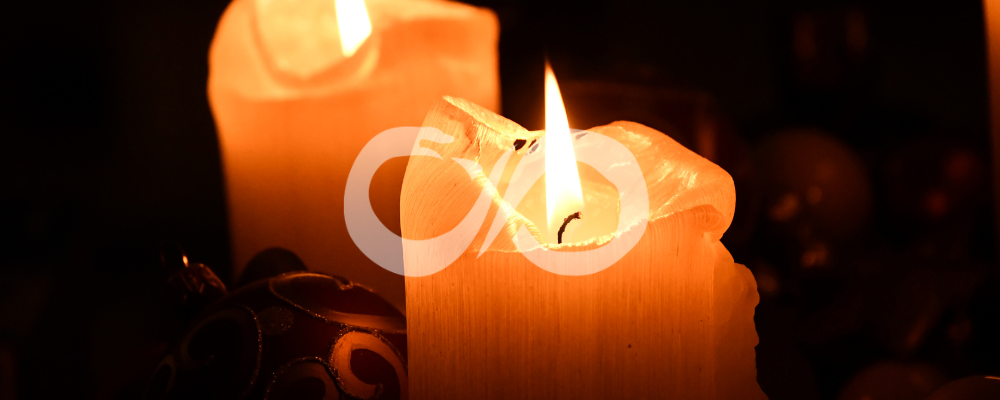
Candles have held a special place in magical arts and spiritual traditions for millennia. Both a source of light and a ritual instrument, the candle serves as a bridge between the material world and the spiritual world. Exploration and uses.
Ancient Uses
The use of candles dates back to Antiquity. The earliest forms of candles consisted of rudimentary torches: the ancient Egyptians dipped reeds in fat or wax to create primitive lamps. The Romans perfected the technique by developing candles made from beeswax, which was purer and less odorous than animal fat. These ancient candles were used not only for lighting, but also in religious rites: the Greeks lit candles during ceremonies dedicated to Artemis (goddess of the moon and light), and the Romans offered candles to household deities.
In India and Asia, oil lamps (terracotta diyas) were used instead in sacred rituals, but the intention remained the same: to honor the divine through flame. Indeed, almost all civilizations have recognized a mystical power in flame: to burn is to transform and purify. Lighting a candle means invoking change or calling upon a spiritual presence.
Divine Symbol in the Middle Ages
In the European Middle Ages, candles took on a central spiritual dimension, particularly within Christianity. The flickering light of candles embodied the presence of God: each flame symbolically represented the “light of Christ” or the breath of the Holy Spirit illuminating souls. Medieval churches, especially Gothic cathedrals, were lit with candles during Masses and ceremonies, making the candle a sacred object. Obtaining quality candles (made of beeswax, supplied by monasteries) was even a skilled craft, so great was the demand for worship.
Alongside liturgical uses, ordinary people and folk-magic practitioners also incorporated candles into their customs. In European traditions, candles are believed to possess powers of divination and protection. People observed how the flame burned to interpret omens: the direction of its flickering could foretell fine weather or a storm, a clear and steady flame heralded good luck, while a flickering flame or one casting unusual shadows could be interpreted as an ill omen or a sign of impending death. In Brittany or Scotland, it was believed that if a candle went out by itself, this meant that a spirit was present in the room. Many medieval superstitions thus closely linked the small flame to the invisible world.
Rites of light and protection
Several European traditions illustrate the protective and sacred role of candles. Candlemas (February 2) is emblematic: originating in Roman purification rites and later Christianized, this feast of the “Presentation at the Temple” is marked by the blessing of candles. Candlemas candles were once carefully kept at home as true talismans. They were lit during times of great danger to invoke divine protection. Likewise, in the countryside, these sacred candles were used to bless seeds in spring to ensure good harvests, or to watch over the sick and dying by surrounding them with sacred light.
Candles also play a role in folk magic for breaking spells and casting curses. Less well known is that the same blessed candles could be used in witchcraft rituals. A custom recorded in Bigorre (southwestern France) in the 19th century shows how thin the boundary between devotion and malefice could be: women deceived by their husbands would stick cross-shaped pins into a Candlemas candle, then go and burn it at midnight at a crossroads. It was believed that as the wax melted in the flame, the unfaithful husband would waste away in turn, the victim of a vengeful spell. Conversely, people believed that lighting blessed candles around a sick person's bed could absorb their illness - the flame taking on all their ailments before going out, thereby marking the hoped-for recovery.
From the grimoire to folk traditions
During the Renaissance and the modern era, the symbolism of the candle became even richer. Ceremonial magic grimoires from the 17th - 18th centuries detail the use of specific candles in rituals: they include the recipe for the sinister Hand of Glory. This European talisman consisted of the severed hand of a hanged man, used as a candlestick for a candle shaped from the same victim’s fat. Legend has it that when lit, it rendered everyone present except the bearer immobile, facilitating nighttime thefts, and that it could only be extinguished with milk.
Furthermore, over the centuries, lighting candles has remained a ritual gesture rooted in everyday life. Think of the birthday candles: this European custom originated in Ancient Greece (as a tribute to Artemis) or in medieval practices, and continues today in the form of a small wish ritual (you make a wish while blowing out the candle). Similarly, lighting a candle on the windowsill on All Saints’ Eve (the eve of the Feast of the Dead) was, in the British Isles, a way to guide wandering souls - a tradition that later evolved into the Halloween pumpkin lantern.
Types of candles and ritual forms
There are many types of candles, differing in both shape and function, and each has found its place in European magical or spiritual practices over time. Here are the main categories and their traditional uses:
-
Altar candle and classic candle: the altar candle is the long, undyed beeswax candle (white or ivory) traditionally used in churches. Its slow burn and clear flame make it the very emblem of continuous prayer. Beyond the Church, classic candles are those once used to light homes. In folk magic, a new candle could represent a person or serve as a neutral tool for any type of spell. Medieval grimoires often prescribed using candles made of “virgin wax” (that is, new candles made of pure beeswax) to ensure the ritual’s purity.
-
Votive candles and tealights: these are small candles contained in a glass or container. In the Catholic tradition, they are lit for a saint or for the deceased (hence the name “tealight,” as it symbolically keeps watch over the soul). In esotericism, votive candles are valued for short-term rituals or for dedicating to a specific intention. They generally burn for a few hours.
-
Novena candles: larger than votive candles, these candles are poured into a large tinted glass or one decorated with an image of a saint, and are made to burn for approximately nine consecutive days. Very common in popular Catholic worship (novena prayers to saints, prayers to the Virgin Mary, etc.), they have also been adopted into contemporary magic. Their long burning time makes them an ideal medium for requests requiring perseverance. Derived from Christian devotion, the novena candle has thus become a versatile magical tool, used both by the faithful and by witchcraft practitioners who charge it with protective or healing intentions over time.
-
Ritual candles colored throughout: it has become easy to dye wax and make candles in every color. This led to the development of candle magic based on color correspondences. Historically, magicians or witches had to be resourceful: for example, they could superficially dye a candle (with natural paint or by wrapping it in fabric of the desired color) in order to incorporate color symbolism into their spells.
-
Figurative candles (dagydes): in traditional magic, specially shaped candles are sometimes used to strengthen the connection with the target or intention. A dagyde is a magical effigy representing a person - it can be made of wax. A small human figure is then made from wax and lit like a candle in order to act upon the intended person (this process resembles the famous voodoo doll, except that here the effigy is consumed by fire). Accounts of witch trials mention witches who fashioned wax images of their victims to curse them by making them slowly melt. These figurative candles concentrate the symbolism and enable a very direct form of sympathetic magic: whatever is done to the figurine (melting, burning, sticking pins into it,...) affects the real target through imitation.
-
Sectioned or multi-wick candles: some traditions use special candles such as the seven-knob candle (a long, knobby candle divided into seven segments) or the multi-wick candle. The seven-knob candle, particularly popular in Afro-Caribbean and South American practices (voodoo, Santería, hoodoo), involves burning one knob per day while accompanying the burning with specific prayers - it is a numbered variation of the novena, with the number 7 being magical.
Candle colors and their symbolic correspondences
One of the best-known aspects of candle magic is the attribution of meanings to colors. Each color emits a particular vibration and is associated with certain energies, emotions, or areas of life. As early as the late Middle Ages, European witches and healers used symbolic color elements - certain recipes mention white or black candles depending on the objective: white for beneficial rites, black for conjurations or banishments. More generally, color symbolism was naturally applied to candles once techniques made it possible to color them.
Here are the main color families and their commonly accepted correspondences in the practice of magical candles (particularly in Europe):
| White | Color of purity, the sacred, and spiritual light. A white candle is used for any ritual of purification, peace, spiritual elevation, or prayer. It is also a neutral and versatile color: a white candle can replace any other if one is unavailable, because it contains the full spectrum of colors within it. Traditionally, it is lit to invoke divine protection, sincerity, and truth. (In the Church, all altar candles are white or ivory to symbolize Christ.) |
| Black | Contrary to popular belief, black is not always “evil” in magic, but it is associated with mystery, the absorption and banishment of energies. A black candle is used to drive away negativity, break a spell (hence its use in uncrossing), or work on one’s shadow (exploring fears and blockages). In some traditions, it can also facilitate communication with the afterlife or spirits (because black represents the nocturnal veil between worlds). |
| Red | Color of blood, fire, and life - it is the shade of passion and vital force. A red candle is ideal for work related to carnal love, sexuality, fertility, or simply to inspire courage and energy. In Western magic, red also symbolizes victory and triumph (we speak of red magic for rituals of love or passionate domination). Be careful: since red is very powerful, it is used to stimulate rather than calm; it is not chosen for a peace or gentle healing ritual. Historically, vivid red was an expensive color - its use was reserved for important things, hence its strong symbolic association with power and ardent love. |
| Pink | A gentler variation of red, pink is associated with romantic and affectionate love, gentleness, friendship, and reconciliation. A pink candle is used to attract a harmonious relationship, foster tenderness in a couple, or work on self-esteem and universal love. Traditionally, pink also evokes femininity (in its loving and protective aspect). It is often used in prayers or spells to soften a conflicting situation or heal emotional wounds. |
| Blue | Color of the sky and water, blue is associated with serenity, healing, and truth. Blue candles (especially light blue) are lit to promote inner peace, meditation, physical or emotional healing, and quiet protection. Deep blue can also be used in legal or administrative matters, symbolizing justice and sincerity. |
| Green | Symbol of nature, growth, and abundance. A green candle is the preferred tool for rituals of financial prosperity, material success, or fertility (crop growth, desired pregnancy). It is used to attract money, improve one's career, or promote physical healing (in color magic, green is the color of physical healing because it represents natural balance). In the European countryside, green was the color of vegetation spirits: burning a green candle was an offering to the forces of the earth so they would be generous (harvests, livestock,...). |
| Yellow / Gold | Solar colors par excellence. Yellow and gold symbolize success, glory, and mental creativity. A bright yellow candle helps stimulate the intellect, communication, and joy of life. It can be chosen for work related to success in exams, obtaining a job (yellow being linked to the professional sphere and Mercury, the planet of intelligence and commerce), or simply attracting good luck. Gold candles are even more powerful on a spiritual level: they represent divine blessing, wealth, and enlightenment. In some esoteric practices, gold is the color of connection with the divine (by analogy with the Sun, the source of life). Lighting a gold candle is, in a way, “stacking the odds in your favor” and invoking celestial forces to support your request. |
| Gray / Silver | Gray is a color of neutrality and transition. A gray candle can be used in rituals of moderate banishing or for calm after the storm. It is said to help dispel evil without aggression and gently neutralize negative energies. Silver, meanwhile, is associated with the Moon: a silver candle is used for clairvoyance, psychic intuition, dream work, or to support prayers (it is considered a “receptive” color that amplifies requests made to spirits). In some rituals, a silver candle is lit alongside other candles to speed the fulfillment of a wish in the spiritual realm. |
| Violet / Purple | These shades, once royal and sacred, are linked to spirituality, wisdom, and psychic power. A purple candle promotes deep meditation, karmic healing, and connection with higher realms. It is used to develop intuitive abilities, ask spiritual guides for advice, or strengthen authority (over oneself or a situation). Purple combines the fire of red with the spirituality of blue, which is why it is often recommended for anything involving the transmutation of a negative situation into a positive experience. Historically, since purple was the liturgical color of penitence and mystery (used during Advent and Lent in the Church), its magical use carries a connotation of seriousness and depth. |
| Brown | The color of raw earth, brown is associated with stability, protection of the home and material possessions. Lighting a brown candle can help find lost objects (in some rural traditions, brown is said to “root” the intention and allow what is missing to return to you). It is also used for pets and the home: it is a color of grounding and connection with nourishing earth. In some grimoires, a brown candle was used for spells intended to resolve domestic or land-related problems (land sales, livestock fertility,...), everything related to tangible property. |
Obviously, there are many variations (some practitioners distinguish sky blue from royal blue, red from burgundy,...). But the correspondences above cover the main recognized symbolic areas. It should be noted that these color correspondences, although widespread, are not dogmatic: depending on local or personal traditions, differences may be found.
Ritual preparation of candles: anointing, engraving, and consecration
A candle is not merely an inert object in a magical context: it is considered appropriate to prepare and consecrate it before lighting it, in order to charge it with energy and bind it to the intended purpose. Ancient grimoires as well as modern practices emphasize this preparation period, which greatly enhances the ritual’s effectiveness.
Initial purification
Traditionally, a new candle is always used for a given ritual, so that no previous influence can interfere. Before working with it, it can be symbolically purified – by passing it through the smoke of a purifying incense (pontifical incense, sage, benzoin,...), or by sprinkling it with a little holy water. This amounts to “erasing” any residual energy and declaring that this candle will henceforth serve a sacred purpose.
Anointing (or “dressing” the candle)
Anointing consists of coating the candle with consecrated oil or an oil suited to the intention. This gesture has strong symbolic significance: to anoint is to bless and charge the object, as one would a person (think of the anointing of kings or priests). In candle magic, anointing oils made from blends of essential oils, infused plants,... are used, possessing properties corresponding to the ritual. To proceed correctly, you must rub the candle with the oil in a specific direction that reflects the intention:
-
If you wish to attract something to yourself (love, prosperity, success,...), anoint the candle from top to bottom. This means starting at the top of the candle (the wick side) and moving down toward the base, as if to “bring down” blessings upon us or manifest the stated wish on earth.
-
If you wish to banish or drive away an influence (illness, bad luck, negative entity,...), you do the opposite: coat it from the bottom upward, from the base toward the wick, to push the evil outward, upward, and beyond our sphere.
In practical terms, you can pour a drop of oil into your palm or onto your fingers and massage the candle in the required direction. Some recommend using the right hand to anoint from the center upward, and the left hand from the center downward, in order to thoroughly impregnate the entire surface. The essential thing is to visualize during this process that you are “filling” the candle with your energy and the desired intention. Anointing is intended to consecrate the candle to a specific purpose.
Engravings and Inscriptions
It is common to engrave symbols, sigils, words, or numbers into the candle wax before lighting it. Once again, the idea is to personalize and focus the energy. You can use a pointed tool (awl, needle, athame,...) to write a person's name on the candle (useful if the candle represents someone in the ritual), or to draw symbols (pantacles, pentagrams, crosses, zodiac signs, magical sigils). In hoodoo and voodoo traditions, the request or wish is engraved directly.
In certain European practices, the request is written on a small piece of parchment paper, which is then attached to the candle or inserted inside the wax. One traditional method, if the candle is wide enough or if you make the candle yourself, is to unroll the sheet of wax (for rolled wax candles) and write your wish on the inside before rolling it up again. This symbolically “hides” the intention at the heart of the candle, which, as it burns, will release that intention into the universe.
Charging and Consecration
Once the candle has been anointed and engraved, it is ready to be charged. The charge consists of imbuing it with your mental and spiritual energy. The simplest method is to hold the candle between both hands, close your eyes, and concentrate intensely on the objective. In some traditions, the candle is blessed with the four elements: it is passed through incense (Air), blessed water is dripped onto it (Water), it is passed through the flame of another sacred candle or touched with a glowing coal (Fire), and it is rubbed with salt or touched to the earth (Earth). These consecration rituals vary; what matters is to regard the candle as no longer a simple decorative taper, but rather as a dedicated magical instrument.
Ritual Lighting
The way the candle is lit is also important. Traditionally, wooden matches are used rather than a modern lighter, out of respect for the fire element (the sulfur in the match also adds its own small touch of purification). One can also light a pilot candle (a taper) and use it to light the other candles in the ritual, rather than striking several matches.
Depending on the situation, candles are sometimes lit in a precise order (particularly in rituals where several candles of different colors are arranged according to the cardinal points or the elements). It is important to remain focused and respectful of the fire: in some traditions, the flame is considered a manifestation of a fire spirit (a salamander, or the Holy Spirit in the Christian view). Consequently, one avoids “profaning” it with abrupt or irreverent gestures.
Extinguishing
A golden rule in candle magic: never blow out a ritual candle. Indeed, blowing with the mouth is interpreted as a lack of respect toward the Fire element, and above all as the risk of dispersing the magical energy that has just been projected. Extinguishing the candle with a breath could “drive away” the spirit or cancel the work accomplished. It is therefore preferable to use a snuffer (a small cone on a handle) to cover the flame until it dies for lack of oxygen, or to pinch the wick between two wet fingers to extinguish it. Moreover, in many rituals it is recommended to let the candle burn completely rather than extinguish it, especially if it is a small candle. Letting the candle burn all the way down means that the work has been brought to completion and that the offering has gone entirely to the forces invoked. If the candle must be extinguished (for safety reasons or because it is long-burning), it should therefore be done without blowing.
Interpreting the flame or candle pyromancy
Among the divinatory arts associated with candles, flame reading holds a special place. As early as Antiquity, people practiced lychnomancy (divination by the flame of an oil lamp). With candles, this practice became accessible to everyone and was passed down. Observing the behavior of a candle flame during a ritual or prayer can provide indications about the influences present and the potential success of the working. Here are some common traditional interpretations in candle pyromancy:
| Steady, clear flame | If the flame burns straight, without flickering or producing smoke, it is generally a good sign. It is interpreted as a validation of the intention. The way is clear, and the energy is flowing well. In witch's terms: your intention is aligned, and the energy is responding positively. A steady flame often means that the invoked presence (angel, saint, spirit) is favorable and listening to the prayer. |
| Flame that constantly flickers or dances | A flame moving in all directions, when there is no noticeable draft, suggests that there is agitation on the invisible plane. It is said that an entity (spirit, deceased person,...) may be present and responding to the call. This can be interpreted in two ways depending on the context: either the spirit is helping and manifests through the dancing flame, or there is instability in the request (conflicting emotions or energetic obstacles). In any case, a highly mobile flame indicates that “something” is happening beyond the visible. |
| Flame flickering only occasionally | If the candle burns quietly and then, at times, the flame begins to tremble or lean sharply, pay attention to the precise moment, as it is probably a specific message. |
| Tall, lively flame that grows | When the flame is noticeably taller than when lit, and seems to be growing in intensity, this is considered a very favorable sign indicating a strong magical presence. This means that the invoked energy is truly there and powerfully supports the ritual - your request is highly likely to succeed quickly, carried by this vigorous flame (it is sometimes said that the flame greedily “eats” obstacles). |
| Weak flame or small glowing point | Conversely, if the flame is very small, struggles to catch, or dwindles to a glowing ember on the wick without really rising, the time is not favorable. The answer may be negative or delayed. In this case, it is recommended to extinguish the candle (respectfully) and repeat the ritual at another time, because a feeble flame indicates either a lack of energy (you are not focused enough or the environment is unfavorable) or a refusal from the invoked forces. |
| Flame that flickers and makes noises (sparks, crackles) | A flame that sputters and makes little noises suggests resistance. Tradition says that this expresses “interference” or intense, uncontrolled emotions. If you are performing a protection ritual and the flame crackles a lot, it may be a sign that a negative energy is trying to resist or that the person being protected is surrounded by a great deal of disruption. This is not necessarily bad, but it indicates that the work of active cleansing is underway. |
| Presence of excessive smoke | If the candle produces a lot of smoke (black smoke rising from the wick) at the beginning, this may mean that negative energies are being driven away - the black smoke representing this evil dissipating. However, if the candle starts smoking in the middle of the ritual for no apparent reason, it is sometimes interpreted as a message. |
| Candle that goes out on its own | This is undoubtedly the clearest sign. If, despite taking every precaution (no draft, wick at the correct length), the candle goes out before burning completely, this indicates that the ritual is ending abruptly. There are two main interpretations: either “the message has been received” by the invoked forces, and the candle goes out because it is no longer necessary to burn any longer (a favorable case), or, on the contrary, the magical action is blocked or rejected, and the dying flame symbolizes failure or a refusal. To determine which interpretation applies, rely on your intuition and the context. |
Of course, interpreting a flame is a subtle art. It is not about falling into excessive superstition over every little flicker. It is more a symbolic reading, a dialogue with the invisible. Many physical factors (wick quality, draft, wax composition) can influence the flame, so discernment is essential.

Par Olivier of Aeternum
Passionate about esoteric traditions and the history of the occult from the earliest civilizations to the 18th century, I share some articles on these topics. I am also co-creator of the online esoteric shop Aeternum.













