































































































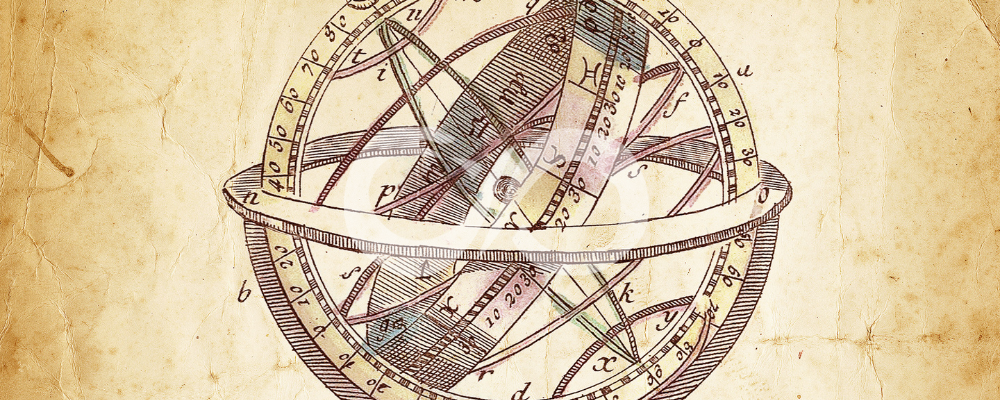
In magic, there is one variable that should not be overlooked: the right timing. Behind this simple idea lies a system of calculation more than two thousand years old, used by astrologers, magicians, and herbalists to align their actions with the rhythm of the sky. Mastered by true magicians, we explain here how to calculate them yourself.
Note that this calculation is somewhat complex. The good news is that our esoteric shop offers you a simple and free online planetary hours calculator by clicking here.
What are planetary hours?
Since antiquity, magical traditions have divided the day into twenty-four unequal hours, each ruled by a planet. This division rests on two pillars: the cycle of the Sun and the so-called Chaldean order (the traditional ranking of the seven celestial bodies visible to the naked eye according to their apparent speed across the sky, from slowest to fastest). The day is divided into two halves: from sunrise to sunset (daytime), and from sunset to the following sunrise (nighttime). Each half is divided into twelve segments called planetary hours. Unlike civil hours, their duration varies according to the season and geographical location.
The planets involved are the seven so-called “classical” planets, visible to the naked eye: Saturn, Jupiter, Mars, Sun, Venus, Mercury, and Moon. This fixed order is called the Chaldean order. It is based on the apparent speed of the celestial bodies as seen from Earth, from the slowest (Saturn) to the fastest (Moon).
The planet that rules the first hour after sunrise gives its name to the day:
-
Sunday: Sun
-
Monday: Moon
-
Tuesday: Mars
-
Wednesday: Mercury
-
Thursday: Jupiter
-
Friday: Venus
-
Saturday: Saturn
This arrangement is attested in Vettius Valens (2nd century) and Firmicus Maternus (4th century), and was described in detail during the Renaissance by Heinrich Cornelius Agrippa in his De Occulta Philosophia, Book II, Chapter 34.
Why use them in magic?
In magical practices, planetary hours can strengthen a ritual, prayer, operation, or even a simple intention by aligning it with a planet’s symbolic influence. Each planet represents a set of qualities that guide the action:
-
Saturn: separation, blockage, banishment, old age, endings, mourning, limitation, silence
-
Jupiter: prosperity, success, authority, justice, growth, legitimacy, dignity
-
Mars: combat, courage, sex, anger, sharpness, conflict, passion, vitality
-
Sun: power, clarity, health, confidence, honor, radiance, success
-
Venus: love, beauty, pleasure, harmony, sensuality, art, union, fertility
-
Mercury: speech, writing, commerce, travel, cleverness, intelligence, deception
-
Moon: dreams, cycles, emotions, fertility, water, memory, illusion, imagination
The goal is simple: choose a time when the ruling planet fully supports the intention being pursued. A love prayer becomes more powerful under Venus, a binding-removal working under Saturn, and communication work under Mercury. This principle of temporal correspondence runs throughout all Western natural magic.
How do you calculate them?
The calculation is based on three times:
-
T₁: sunrise time
-
T₂: sunset time
-
T₃: next day’s sunrise time
Based on this data, two formulas make it possible to divide the time:
- Length of the day = Sunset time − Sunrise time
- Length of the night = Next day’s sunrise time − Sunset time
Then, each portion is divided into 12 equal segments:
- Length of a daytime planetary hour = Length of the day ÷ 12
- Length of a nighttime planetary hour = Length of the night ÷ 12
Each hour obtained in this way is assigned a planet according to the Chaldean order. The first hour of the day begins with the planet of the day. The second hour takes the next planet, and so on. Once the twelve daylight hours have passed, the nighttime hours continue this sequence without starting it over.
Which time zone should you use?
To obtain precise planetary hours, always base them on the local legal time of the place where you are. This involves two things: knowing your official time zone and knowing whether you are on standard time or daylight saving time.
That said, it is easy to get lost among all the different measurements. But don't worry—we'll explain:
-
UTC (Coordinated Universal Time): this is the global base time. It never changes and has neither winter nor summer time. All time zones are expressed as differences from it (for example: UTC+1, UTC−5). It is used for atomic clocks, aviation, and astronomy, but does not correspond to any everyday civil use.
-
GMT (Greenwich Mean Time): historically corresponds to the mean solar time at the Greenwich meridian (0° longitude). It is equivalent to UTC but is mainly used as a historical reference. Used in the United Kingdom, especially in winter.
-
CET (Central European Time): the time zone used as standard legal time (in winter) in many Central European countries, including France, Germany, Italy, Spain, Belgium, the Netherlands, Switzerland, Poland, the Czech Republic, Austria, Croatia, Slovenia, ... → CET = UTC+1
-
CEST (Central European Summer Time): the summer version of CET, used during the daylight-saving period. → CEST = UTC+2
In other words: if you are in Paris in January, the local time is CET (UTC+1). In July, it is CEST (UTC+2). If you live in Réunion, you are on UTC+4 all year round because the island does not observe daylight saving time.
UTC time is useful only as a reference. Never use it directly to calculate your planetary hours unless you live on the 0° meridian without daylight saving time. What matters are the sunrise and sunset times in your actual time zone, with seasonal adjustments included. This is what ensures an accurate calculation.
A small example?
Let us take an example if we are in Paris on June 21, 2025:
-
T₁: 05 h 46 CEST
-
T₂: 21 h 56 CEST
-
T₃: 05 h 47 CEST (June 22)
Thus:
- Length of the day = 16 h 10 min → 970 minutes, so 970 ÷ 12 = 80 minutes 50 seconds
- Length of the night = 7 h 51 min → 471 minutes, so 471 ÷ 12 = 39 minutes 15 seconds
June 21, 2025 is a Saturday. Saturn therefore rules the first hour. The following hours are Jupiter, Mars, Sun, Venus, Mercury, Moon, then Saturn again, and so on. The thirteenth hour, which begins the night, continues the sequence logically in the same order.

Par Olivier of Aeternum
Passionate about esoteric traditions and the history of the occult from the earliest civilizations to the 18th century, I share some articles on these topics. I am also co-creator of the online esoteric shop Aeternum.