






























































































The common bean was domesticated separately in Mesoamerica and the Andes, then joined agricultural systems in which its climbing stem depends on a living support. Among several Indigenous peoples of North America, Bean, Corn, and Squash form the Three Sisters: each transforms the conditions of the others. Much later, the English tale of Jack made the bean a vertical passage to a dangerous house. The plant carries a magic of relationship, ascent, and exchange whose debts must remain visible.
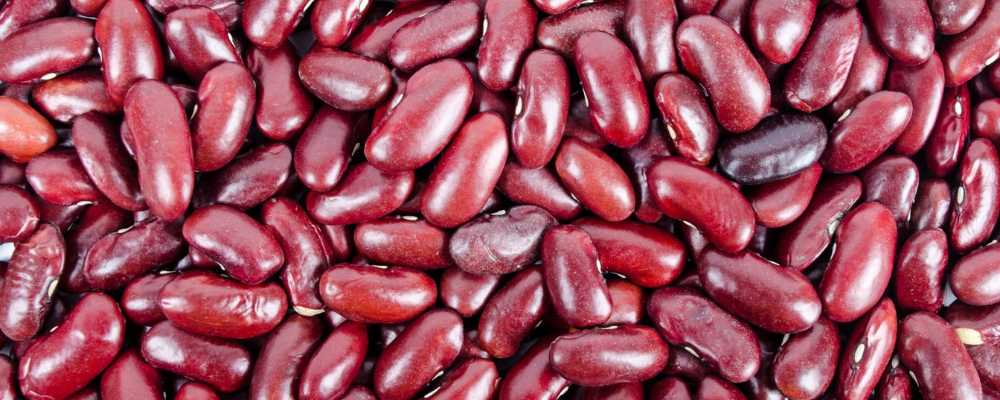
The common bean is Phaseolus vulgaris L., an annual Fabaceae with trifoliate leaves. Climbing forms twine around a support, while dwarf forms remain compact. The pods contain seeds of highly varied sizes and colors.
The agricultural history of the Americas predates European tales by several millennia. This chronology distinguishes a plant domesticated by the peoples of the Americas from the magic bean in the story published in London. Current practice traces the supports, exchanges, and consequences of an ascent without ritual sowing, ingestion, or the burial of an offering.
A vine domesticated on two American continents
Phaseolus vulgaris produces twining or erect stems depending on the variety. Its papilionaceous flowers produce pods whose seeds display a great diversity of shapes, patterns, and colors.
Kew accepts the species and places its native range from Mexico to northwestern Venezuela and northern Argentina. Kew, Phaseolus vulgaris.
Wild forms climb and disperse their seeds when the pod opens. Domestication selected pods that were easier to harvest, larger seeds, and cycles adapted to cultivation.
The common bean thus links mobility and restraint. Its stem seeks support, while the pod preserves the harvest until the human hand intervenes.
Two centers of domestication
Genetic analyses distinguish two major gene pools of the common bean, Mesoamerican and Andean. Each gave rise to an independent domestication event.
A study of wild and cultivated forms describes these parallel trajectories and their different losses of diversity. Molecular study of common bean domestications.
The cultivated plant therefore does not come from a single center from which all varieties are copies. Two human histories transformed the same species from distinct populations.
A single species can comprise several cultivated lineages. Today’s diversity preserves the choices, movements, and adaptations of different communities.
The Bean among the Three Sisters
In the Three Sisters system, Corn provides a stalk that the Bean can climb. Bacteria associated with the roots of legumes contribute nitrogen to the soil, while Squash leaves cover the ground and limit evaporation.
The United States National Agricultural Library brings together Haudenosaunee sources on these nourishing plants, their practices, and their ceremonies. USDA, the Three Sisters of Indigenous American Agriculture.
The system is not merely a gardening trick. Stories, rules, gratitude, and responsibilities accompany agronomic relationships.
The magic of the Bean becomes a form of mutual support. Climbing requires a trellis, nourishing the soil requires microbial partners, and retaining moisture requires another form of plant life.
Jack’s Magic Bean
The first known edition of The History of Jack and the Bean-Stalk was published in London by Benjamin Tabart in 1807. Jack trades a cow for beans, climbs to a giant’s dwelling, and brings back riches.
The Hockliffe Project preserves the images from this edition and points out that the story circulated in other forms before its publication. Hockliffe Project, 1807 edition of Jack and the Bean-Stalk.
The tale transforms rapid growth into an axis between earthly poverty and heavenly wealth. Yet the ascent opens a house that belongs to someone else, involving theft, pursuit, and a fall.
This magic therefore calls for an examination of the exchange. What is the value of the cow given away? Who owns the goods brought back? What risk descends with the one who climbs?
Mapping a supported ascent
Draw a climbing bean stem around a support. On the support, write the people, tools, and resources that make your progress possible.
Place three leaves on the stem. The first bears what you receive, the second what you return, and the third the boundary you will not cross.
At the top, draw a door. Write what is behind it based on verifiable facts, then note the owner, access condition, and consequence of refusal.
At the base, draw a closed pod containing five drawn seeds. Assign each seed an act of reciprocity. Begin the ascent only after securing the first one.
Historical correspondences
| Reference point | Correspondence |
|---|---|
| Botanical name | Phaseolus vulgaris L. |
| Family | Fabaceae |
| Agricultural histories | Mesoamerican and Andean domestications |
| Cultural contexts | Three Sisters and an English tale published in 1807 |
| Magical domains | Support, reciprocity, ascent, exchange, and boundary |
| Safe form | Drawn stem, support, door, and pod |