




























































































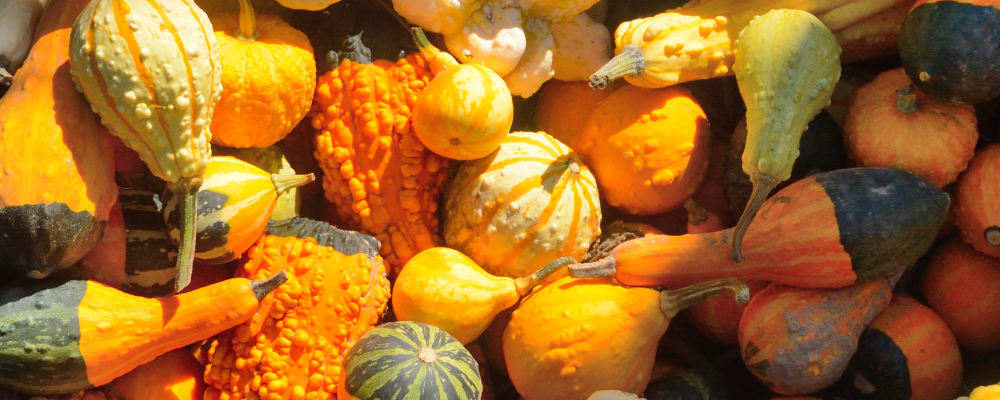
The Squash vine trails along the ground, swells a fruit beneath a hard skin, and lends its flesh to transformations. Long before Cinderella’s carriage and Halloween lanterns, the peoples of the Americas had domesticated its wild forms. Its magic unites three realities: a very ancient American plant, a European tale in which the form changes at midnight, and a lantern whose material changed as it crossed the Atlantic.
The word “squash” covers several species and hundreds of cultivars. This fact sheet uses Cucurbita pepo L. as its reference point because the species includes zucchini, pattypan squash, several pumpkins, and ornamental squash. Fruits called squash or pumpkins also belong to Cucurbita maxima, C. moschata, or C. argyrosperma.
Magical practice respects these distinctions. Cinderella’s fruit is a potiron in Perrault’s French text, translated as pumpkin in English. The European lantern was first carved from a turnip or other roots, before the American pumpkin gave it a larger shell.
A Species with Many Forms
Cucurbita pepo belongs to the Cucurbitaceae family. The annual plant bears broad, rough leaves, tendrils, and yellow flowers divided into male and female flowers on the same plant. The fruit is a specialized berry called a pepo, enclosed by a rind whose hardness varies with the cultivar.
Kew classifies the species as a cultigen originating in Mexico and highlights the breadth of its cultivated forms: jack-o’-lantern pumpkins, zucchini, pattypan squash, marrow squash, and ornamental gourds. Kew, Cucurbita pepo.
The angular, ribbed stalk helps identify C. pepo, but a photograph of the fruit is not always enough. Market names follow cuisine and shape more than taxonomy. “Pumpkin,” “squash,” and “gourd” therefore do not refer to the same species everywhere.
This plasticity lies at the heart of its magical interpretation. A single species can become an elongated fruit, a ridged disk, or a large orange sphere. The transformation does not come from material without an identity: it comes from a cultivated lineage that humans selected over thousands of years.
Domestication Before the European Tales
Fragments of Cucurbita pepo discovered in northern Mexico date from between 7000 and 5500 BCE. This depth places squash among the first domesticated plants in the Americas. Early human selection also concerned the seeds and the rinds that could be used as containers.
The squash entered agricultural systems alongside corn and beans. Its vines covered the ground, its fruits could be stored, and its seeds provided a dense resource. The symbol of abundance here comes from an agricultural reality based on selection, storage, and cooperation among crops.
Europeans discovered Cucurbita after transatlantic voyages. Images of pumpkins in European tales and festivals therefore postdate contact with the Americas. This chronology prevents projecting an orange pumpkin into a medieval European rite.
The grimoire can acknowledge the magic of preservation without erasing the first cultivators. A hard skin protects the seeds through winter; it is a living chest, shaped by agricultural labor and the passing down of knowledge.
Cinderella’s carriage and midnight
Charles Perrault published Cinderella, or the Little Glass Slipper in 1697. The godmother has a pumpkin brought to her, hollows it out, and strikes it with her wand. The fruit becomes a golden carriage. At midnight, the change must be reversed.
The English version of the tales renders potiron as pumpkin. The text links the squash to a transformation limited by an hour, not to permanent prosperity. Charles Perrault, Tales of Passed Time.
The carriage preserves the garden’s memory. Magic changes its use and appearance, but midnight recalls the raw material and returns every borrowed form to its original shape.
This boundary gives the fruit a clear place in rites of passage. It accompanies an occasion, an outfit, a role, or a favor that has a beginning and an end. The charm does not abolish time: it requires knowing when to return.
From turnip to pumpkin lantern
The carved lantern was not born with the pumpkin. In the British Isles, faces were carved into turnips and other root vegetables. In North America, the large, hollow, easy-to-carve pumpkin became the emblematic base for the jack-o’-lantern.
The Library of Congress directly recalls that the lantern was originally a turnip. Library of Congress, history of the jack-o’-lantern. The change in vegetable shows how a custom migrates and adopts a local plant.
The Squash then becomes a face and a luminous shell. The flesh is removed, eyes are opened, and a light source is placed behind the skin. Threshold protection rests on a crafted object, visible from the outside and perishable.
The mystery of the lantern does not require imagining a Celtic pumpkin outside its continent. It lies in the adaptation: an old carving gesture meets an American fruit and produces a new form, now recognizable throughout the world.
Giving the transformation a duration
Draw a whole Squash, then a carriage within its outline. Beneath the fruit, write the occasion that calls for a change of role: interview, journey, performance, negotiation, or celebration. Indicate the start time and end time.
On the left, note what you are taking with you. On the right, note what you will return at the symbolic stroke of midnight: costume, temporary authority, expense, or expectation. This division prevents you from confusing a role received for a time with your identity.
Place the closed sachet near the drawing until the appointed end. Cross out the carriage upon your return and leave the Squash visible. The rite draws on Perrault and the preserving skin without a candle, knife, ingestion, or fruit left to rot.
Historical correspondences
| Reference | Correspondence |
|---|---|
| Botanical reference | Cucurbita pepo L. |
| Other cultivated species | C. maxima, C. moschata, and C. argyrosperma |
| Origin | Domestication in the Americas |
| Literary source | Perrault, Cinderella, 1697 |
| Magical domains | Transformation, duration, threshold, and storage |
| Safe form | Dated drawing and closed product |