




























































































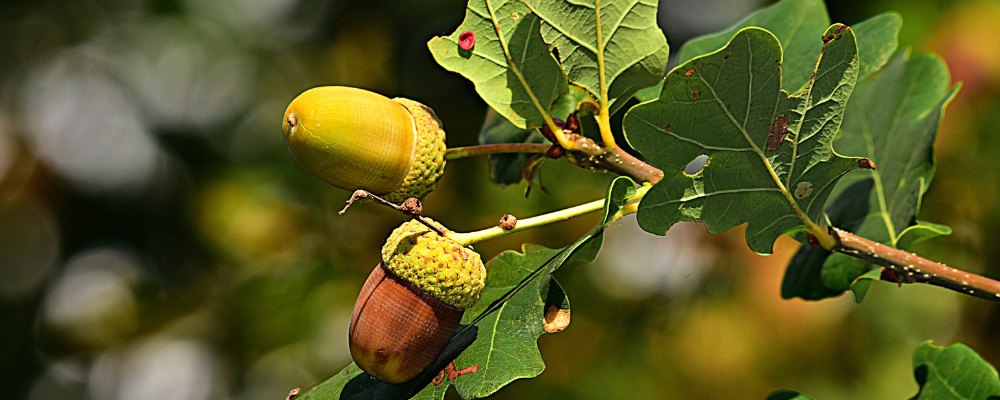
The Oak carries longevity in its trunk, nourishment in its acorns, and the speech of the gods in the rustling of its leaves. At Dodona, an oak delivered Zeus's answers. In Pliny, mistletoe found on an oak becomes the center of a Gallic ceremony. Two stories, two worlds, one tree that serves as a threshold between sky, speech, and community.
The word oak refers to more than four hundred species in the genus Quercus. This entry takes Quercus robur L., the English Oak, as its European reference point. Bark, a leaf, or an acorn sold without a Latin name does not allow all the stories of the genus to be attributed to a specific species.
Magical interpretation distinguishes the Greek oracle of Dodona from Pliny's Roman account of the Druids. These sources do not describe a common Oak cult throughout Europe. They show two situated religious uses, separated by language, geography, and time.
One Quercus among several hundred
Quercus robur belongs to the Fagaceae family. This deciduous tree has lobed leaves with short petioles and acorns hanging at the end of a long stalk. This fruit stalk explains the name English Oak.
Kew places its native range from Europe to Iran. Kew, Quercus robur. The Sessile Oak, Quercus petraea, bears acorns with almost no stalk and leaves with longer petioles.
The two species hybridize and have shared woodlands, landscapes, and uses. Ancient texts may also refer to other Mediterranean oaks. The entry therefore keeps the genus visible whenever a historical identification remains open.
Longevity, the hardness of its wood, and the breadth of its crown explain part of its symbolic power. The acorn adds an image of reserve: a small form contains the possibility of a massive tree.
The Speaking Oak of Dodona
At Dodona, in Epirus, Zeus and Dione answered visitors through an oracular sanctuary associated with an oak. Herodotus recounts the story of two black doves that departed from Thebes in Egypt; one settled on an oak and ordered that Zeus's oracle be established. Herodotus, Histories, 2.55.
Other texts mention the leaves, priests, and words coming from the tree. The oak becomes a collective mouth: the wind, foliage, bronze objects, and human interpretation compose the response.
This oracular model cannot be reduced to “listening to a tree.” It presupposes a sanctuary, officiants, written questions, and religious authority. The grimoire can retain its discipline of questioning and attention to sound without claiming to reproduce the oracle.
Pliny, the druids, and oak mistletoe
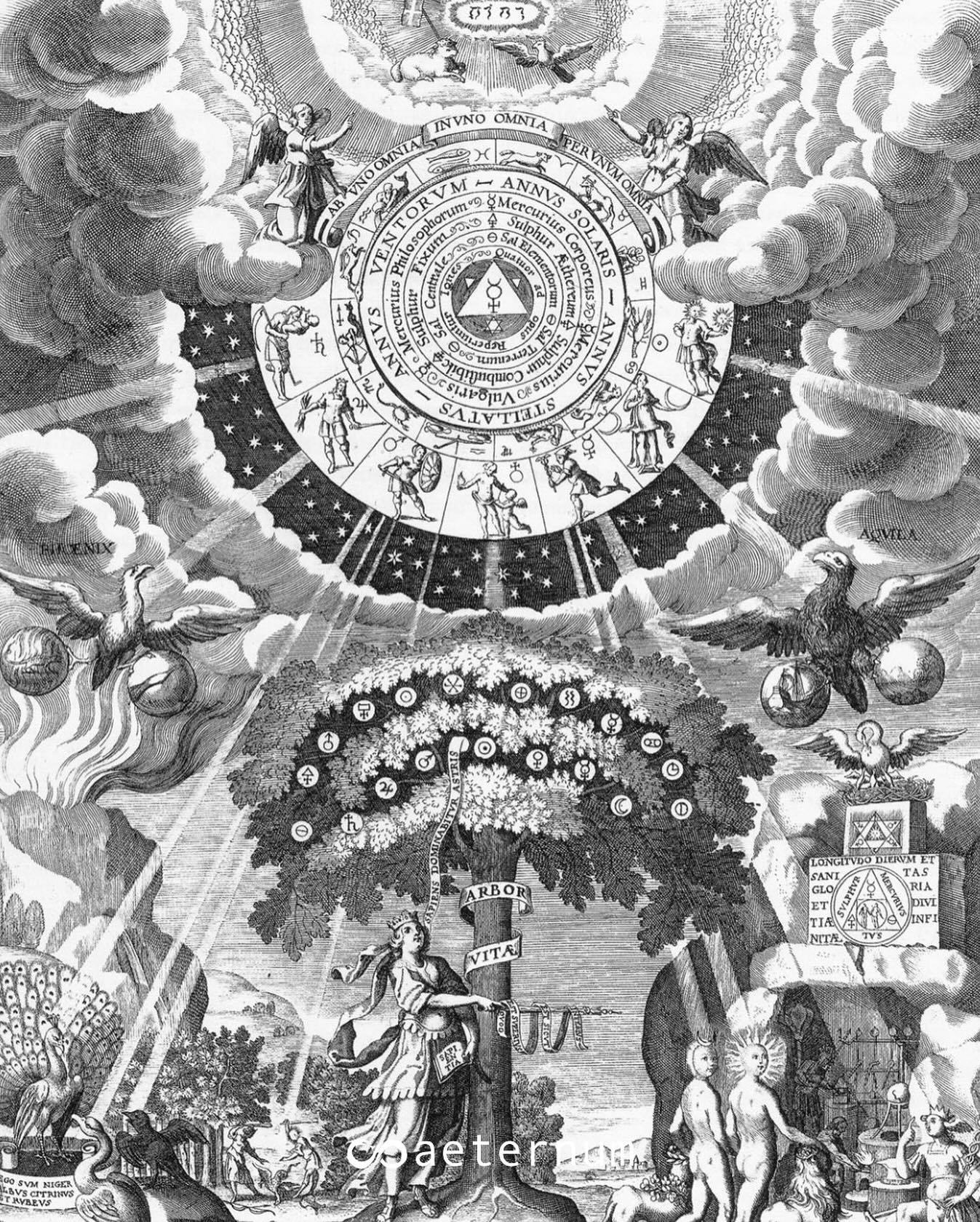
In the 1st century, Pliny states that the druids of the Gallic provinces regard mistletoe and the tree that bears it as sacred when that tree is an oak. He describes cutting it on the sixth day of the moon, a priest dressed in white, a golden sickle, and two white bulls. Pliny, Natural History, Book 16, Chapter 95.
This passage is the only complete ancient description of this ceremony. It comes from a Roman author who calls the druids magicians and judges their practices from a distance. It should therefore not be turned into a direct manual of Gaulish religion.
The oak is the altar; the mistletoe is the material that is cut. Confusing the two erases the structure of Pliny's account.
The tree here bears a celestial election. What grows on it is interpreted as a sign from the sky, while the community organizes time, clothing, and sacrifice around this encounter.
The acorn, the crown, and duration
Before the spread of cultivated grains, acorns served as food in several regions, after preparations intended to reduce tannins. Greek and Roman authors associated them with an age of frugal living that preceded agriculture.
The oak-leaf crown also honored civic and military strength. In Rome, the corona civica rewarded the rescue of a citizen. The tree then links real protection, public debt, and the memory of an act.
In later European magic, these images support endurance, sovereignty, justice, and defense of the home. Their coherence comes from the wood, the crown, the acorn, and religious narratives, not from an invisible frequency.
The mystery of the Oak is a mystery of scale: the acorn fits in the hand, the tree outlives several human lifetimes, and its speech at Dodona guided collective decisions.
Formulating a question for the oracle
Write a question that a real action can answer. Set aside formulas that require a total prediction. Place three options below it that you can verify.
Draw an oak leaf around the question and an acorn beside each option. Place the closed sachet to the left of the page, then read the text aloud near an open window.
Choose the option that allows the first concrete test, and note the result. The work takes up the question of Dodona and the acorn's reserve without claiming to convey Zeus's voice. It requires neither burning nor ingestion.
Historical correspondences
| Reference | Correspondence |
|---|---|
| Botanical reference | Quercus robur L., pedunculate oak |
| Genus | Quercus, several hundred species |
| Greek oracle | Zeus and Dione at Dodona |
| Gallic source | Pliny, oak, mistletoe, and lunar ceremony |
| Magical domains | Question, sovereignty, protection, and duration |
| Safe form | Written question, drawn leaves, and closed product |