
















































































































The almond lies behind three coverings: the fruit skin, the hard shell, and the seed coat. In the Book of Exodus, the form of the almond blossom shapes the cups of the menorah, the golden lampstand of the sanctuary. The hidden seed thus encounters an architecture of light. Its magic works with what must remain protected until the moment it illuminates.
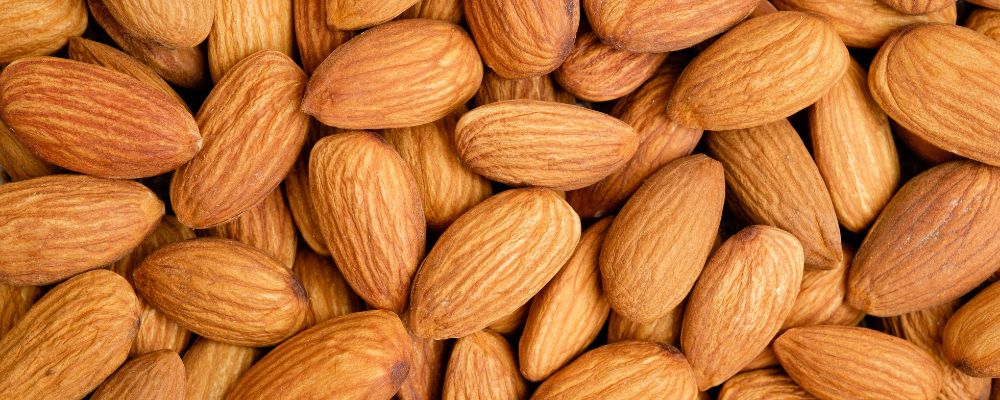
The almond is the seed of Prunus amygdalus Batsch, a tree in the Rosaceae family also known as Prunus dulcis. Botanically, the fruit is a drupe: a dry, fleshy covering around a stone, after which the shell encloses the almond.
The central ritual source for this entry is found in the instructions for the menorah in Exodus. The text does not place edible almonds on the lampstand: it gives the cups, buds, and petals the form of an almond tree. Current practice reprises this relationship between container, measure, and light.
The Seed Behind the Shell
Prunus amygdalus is a small deciduous tree. Its white or pinkish flowers appear on the branches. The green, velvety fruit dries as it ripens, splits open, and reveals the hard stone containing the seed.
Kew accepts the name Prunus amygdalus and treats Prunus dulcis as a synonym. The cultivated tree is traced to a Transcaucasian origin. Kew, Prunus amygdalus.
The shell is not the seed itself. It belongs to the fruit’s stone and protects the almond. This distinction prevents reducing the plant to the food placed on a table.
In magical language, the coverings represent degrees of access. The pulp meets the world, the shell withstands impact, and the skin keeps the living reserve safe. Every opening requires its tool and its moment.
The Almond Blossom in the Menorah
In chapter 25 of Exodus, the menorah must be fashioned from a single piece of beaten gold. Six branches extend from the central stem. On each branch, three cups take the form of almond blossoms, accompanied by buds and petals.
The central stem bears four cups of the same shape. Seven lamps are then arranged to illuminate the space in front of them. The almond blossom thus becomes a model of goldsmithing in the service of sacred light. Exodus 25, the form of the menorah.
The text emphasizes the continuity of the piece: branches, buds, and petals emerge from the same metal. The multiplication of forms does not break the unity of the lampstand.
The light takes the form of the first flower. Almond-tree cups give the seven lamps a botanical architecture.
Cups, branches, and proper measure
A cup receives without possessing all the light. Each branch bears several receptacles, and the whole shares a central axis. This composition makes it possible to conceive of a function distributed among several guardians.
The sanctuary measure regulates the weight of the gold and the organization of the object. The magic of the almond gains a discipline here: what is kept must have a quantity, a place, and a purpose.
The shell provides the boundary, while the cup provides the opening. Keeping a resource without ever opening it makes it sterile. Exposing it without a container scatters it. The almond brings these two gestures together in succession.
The light in question belongs to the biblical context of the sanctuary. A personal practice can draw on ideas of vigilance and measure while respecting this religious origin.
Sweet and bitter under the same name
Sweet almonds cultivated for food and bitter almonds may look alike. Their difference becomes clear in the taste, but tasting an unknown seed exposes you precisely to the danger you are trying to identify.
Bitterness can signal a high amygdalin content, a compound capable of releasing cyanide. The mystery of the shell then receives a firm rule: the hidden interior must be judged neither by the commercial name nor by appearance alone.
This duality gave the almond a symbolic power of discernment. Two similar seeds can lead to opposing uses. The shell demands a reliable origin before any decision.
In magical practice, the seed remains represented. The symbol preserves the idea of a hidden reserve and avoids the risk of misidentified bitter material.
Building seven cups of light
Draw a central stem and six branches, three on each side. At the end of each branch and at the top of the stem, draw a cup in the shape of an almond blossom.
In the seven cups, distribute seven resources that sustain your vigilance: information, time, person, limit, reserve, word, and action. Each resource receives an amount or frequency.
Then surround each cup with a drawn shell. Leave an opening for the resources that need to circulate this week. Close those that remain in reserve until a specific date.
Place the drawing to the left of an unlit candle or an electric lamp. Read from the center toward the branches, then choose a single resource to use. Put the page away once the action is complete.
Historical correspondences
| Reference | Correspondence |
|---|---|
| Botanical reference | Prunus amygdalus Batsch |
| Part concerned | Seed enclosed in the fruit's pit |
| Ritual source | Exodus 25, menorah cups in the shape of almond blossoms |
| Symbolic structure | Shell, cup, branch, and light |
| Magical domains | Reserve, moderation, discernment, and vigilance |
| Safe form | Drawing of seven cups, with no real seed |










