















































































































The eighth rune of the Elder Futhark, Wunjo bears a name associated with joy, pleasure, and well-being. Yet the Old English Rune Poem describes neither ecstasy nor luck falling from the sky. It evokes a person who experiences little hardship and enjoys prosperity, happiness, and an adequate dwelling. Wunjo’s joy therefore has solid ground: sorrow eases, needs are met, and life regains a habitable balance.
In a contemporary reading, Wunjo speaks of harmony, satisfaction, welcome, and a happy outcome. It may mark the end of tension, the quality of a connection, the pleasure of work completed, or the feeling of having found one’s place. Its presence also invites us to verify the reality of this harmony: solid joy can be shared without denying what remains to be resolved.
This guide begins with the rune’s name and the Old English poem devoted to it. It separates philological data from modern divination. Wunjo thus retains a sober voice, far from promises of perpetual happiness and the planetary or mineral correspondences added to the runes in the modern era.
Wunjo in the Elder Futhark
Wunjo, written ᚹ, occupies the eighth position in the Elder Futhark and closes its first group of eight signs. Its phonetic value is w. The Common Germanic name *wunjō is reconstructed by comparison with forms attested in the ancient Germanic languages. Old English has wynn, meaning joy or pleasure, and the rune appears under the name Wenne in Bruce Dickins’s edition.
The sign survived in the Anglo-Frisian futhorc, where it was used to represent the sound w. It no longer appears as an independent rune in the later Scandinavian Futhark. There is therefore no Norwegian or Icelandic stanza devoted to Wunjo. This absence signals neither a symbolic disappearance nor a secret: it results from the evolution of the alphabet and its sound values. For the history of runic systems, Michael P. Barnes’s Runes: A Handbook provides a methodical framework.
Joy That Has a Place
The original meaning of Wunjo is not limited to a passing mood. The poem’s vocabulary connects joy with the absence of hardship, prosperity, and an adequate dwelling. It describes a condition in which a person can breathe because pain no longer governs their entire existence. Happiness takes its place in an orderly life, within a space where one feels safe.
This image gives Wunjo a collective dimension. A house is not merely a roof: it can represent home, hospitality, and one’s acknowledged place within a group. The rune therefore suits questions of understanding, integration, and conviviality, without promising that every disagreement will disappear. It names the moment when bonds become livable again and everyone can receive their share of joy.
\The heart of Wunjo:\ joy is not something one imposes on the mind. It appears when sorrow recedes, a relationship finds harmony, and life offers a safe enough place to welcome pleasure.
The English Rune Poem
The Old English stanza devoted to Wenne states, in Bruce Dickins’s translation, that felicity belongs to one who knows little suffering, sorrow, or anxiety, and who possesses prosperity, happiness, and a sufficient dwelling. The original text and its translation are available in Runic and Heroic Poems of the Old Teutonic Peoples, published by Cambridge University Press in 1915.
The formula does not say that the happy person has never suffered. It defines well-being by contrast with the burden of hardship. It also connects the inner state to concrete conditions. The final image, that of a sufficiently adequate dwelling, restrains limitless interpretations: Wunjo speaks less of luxury than of comfort, stability, and moderation.
The runic poem is not a manual of omens. Moving from lexical meaning to divinatory interpretation belongs to a more recent practice. The text serves here as a semantic foundation, not proof that an identical type of reading existed in medieval England.
Meaning of Wunjo in a reading
Wunjo indicates a state of satisfaction, restored harmony, or the joy that follows a resolution. It may announce a favorable reception, an agreement, a celebration, recognition of an effort, or the feeling of finally being in the right place. Its answer is positive when the facts confirm well-being and that well-being can be shared.
\For work,\ Wunjo may indicate a harmonious team, a favorable outcome, or the happy completion of a stage. It reminds us that success is not measured solely by gain: the quality of the environment, mutual respect, and pride in one’s work all contribute to the result.
For relationships, it speaks of complicity, reconciliation, welcome, and shared pleasure. On its own, it does not guarantee a lasting union. It describes the happy quality of the connection at the time of the reading and asks whether both people can inhabit the same agreement without silencing their needs.
As advice, Wunjo invites us to recognize what is going well, give thanks sincerely, and create the conditions for sharing. Joy then ceases to be a distant reward: it becomes something we name, protect, and offer to others.
Reversed or challenged Wunjo
The rune poems establish no reversed meaning. Modern divinatory schools introduced this method. When orientation matters in a reading, reversed Wunjo may indicate obstructed joy, superficial harmony, disappointment, or difficulty accepting what is nevertheless good.
It can also describe the price of an artificial peace. The group appears united, but one topic remains forbidden; a celebration masks exhaustion; the need to please others erases a boundary. The rune does not command anyone to choose sadness. It asks us to make the agreement more genuine, even if an uncomfortable conversation must take place.
Without orientation, this challenging aspect is interpreted through the question and the surrounding signs. It is important to distinguish delayed happiness, empty pleasure, exclusion from the group, and a simple difficulty recognizing one’s good fortune.
Wunjo with other runes
The combinations below offer a modern reading framework. They bring together the meanings of the names and the imagery of the poems; no medieval text presents them as fixed formulas.
Gebo and Wunjo unite giving and joy. Together, they evoke a happy exchange, an alliance, a celebration, or a relationship in which pleasure arises from fair reciprocity.
Fehu and Wunjo connect resources with contentment. They may speak of material security, profitable work that inspires pride, or comfort to be shared. Possession is not enough: it must genuinely improve life.
Wunjo and Hagalaz show joy interrupted by a sudden event. A celebration may be postponed, an agreement disrupted, or a source of comfort called into question. The rest of the reading will show what can be salvaged.
Wunjo and Naudiz place contentment alongside necessity. Joy exists within a restricted framework, or deprivation reveals what truly matters. They invite us to distinguish what is necessary from what is superfluous without idealizing deprivation.
Wunjo and Othala bring joy and inherited domain closer together. They may refer to the home, returning to a familiar place, family happiness, or the delicate question of who has the right to belong to the group.
Working with Wunjo in magic
Runic inscriptions with magical functions exist, but their supposed efficacy lies in words, formulas, and objects situated within a context. Nothing proves that an isolated Wunjo served as a general recipe for bringing about happiness. The study by Mindy MacLeod and Bernard Mees, Runic Amulets and Magic Objects, shows the variety of these uses and the caution their interpretation requires.
In current practice, Wunjo can accompany an act of gratitude, a reconciliation, or the preparation of a welcoming place. First, name a concrete joy: renewing a dialogue, celebrating an outcome, making a home more hospitable, or restoring a group’s cohesion. The rune can be drawn on the page where this commitment is written.
The ritual gesture benefits from being followed by a real action: thanking someone, repairing an offense, opening your table, taking rest, or finishing what clutters the home. Wunjo does not compel anyone to harmony. It gives form to the will to create a space where joy can be received without deceit.
Wunjo correspondences and guides
| Guide | Correspondence |
|---|---|
| Sign | ᚹ |
| Alphabet | Elder Futhark; rune retained in the Anglo-Frisian futhorc |
| Position | Eighth rune; end of the first ætt |
| Phonetic value | w |
| Reconstructed name | Common Germanic *wunjō |
| Attested form | Old English Wenne; related word wynn |
| Primary meaning | Joy, pleasure, bliss |
| Poem image | Little suffering, prosperity, happiness, and a sufficient dwelling |
| Favorable reading | Agreement, satisfaction, welcome, celebration, happy outcome |
| Challenged reading | Disappointment, exclusion, empty pleasure, superficial peace, difficulty receiving |
| Question posed | What real joy can you recognize, inhabit, and share? |
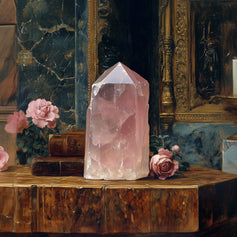
| Rejected attributions | Jupiter, Venus, Leo, air, rose quartz, the heart chakra, and the Sun card: ancient runic sources do not establish these correspondences. |
Reading guide: Wunjo does not decree happiness. It shows the conditions that make it possible: a sorrow that loosens its grip, a sincere agreement, needs being met, and a place where joy can remain.










)