
























































































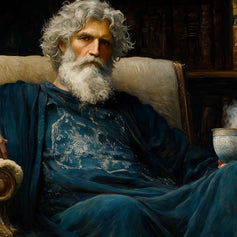


























As the seventh rune of the Elder Futhark, Gebo embodies the gift. The English poem does not celebrate a decorative present: it describes what brings honor and dignity, then what nourishes and supports a person deprived of any other help. Giving commits the worth of the giver, transforms the condition of the recipient, and creates a bond between them.
In a contemporary reading, Gebo speaks of exchange, contracts, alliances, assistance, and reciprocity. It may announce a gift, a meeting, cooperation, or an agreement. However, it asks us to consider what each party gives, receives, and may eventually have to return. A free offering is not the same as a benefit used to create an obligation.
The symmetrical shape of ᚷ reinforces this idea of balance, but this visual interpretation does not replace the ancient name. Gebo teaches that a relationship is measured less by the perfect equality of objects than by the recognized fairness of the exchange.
Gebo in the Elder Futhark
Gebo, written ᚷ, occupies the seventh position in the Elder Futhark and represents the g sound. Its reconstructed name, *gebō, means “gift.” Old English gyfu or giefu belongs to the same family as German Gabe and English gift. Here, the lexical meaning is clear and does not depend on a modern resemblance to a cross or two lines meeting.
Gebo has no stanza in the Norwegian and Icelandic rune poems because the Younger Futhark reduced the alphabet to sixteen signs and did not retain this rune as an independent character. Its main testimony is therefore found in the Old English rune poem. Michael P. Barnes explains this divergence between the rune series in Runes: A Handbook.
The gift that creates a bond
In ancient Germanic societies, gift-giving was inseparable from relationships. A present could express friendship, acknowledge a service, support a person, or confirm loyalty. It brought honor to the giver and a place to the recipient. The value of the gesture lay as much in the bond it created as in the object transferred.
This logic helps explain the difference between generosity and spending. Gebo does not ask you to give at random or impoverish yourself to prove your goodness. It draws attention to the gesture that nourishes a fair relationship, recognizes a contribution, or restores balance.
However, every gift can contain an expectation. A favor demands something in return, a gift imposes closeness, and assistance allows the giver to take control. Gebo therefore requires examining the visible and implicit conditions of the exchange.
The heart of Gebo: giving and receiving create a relationship. The fairness of the bond depends on the parties' freedom, the recognized value, and the obligations they clearly undertake.
Gebo in the English Poem
The Old English rune poem states that generosity brings credit and honor, upholds dignity, and then provides help and sustenance to those who are broken and deprived of everything. The stanza connects two dimensions: the gift elevates the person who gives it and genuinely helps the person who receives it.
This image goes beyond a correspondence with love or partnership. Gebo concerns the circulation of a good, social recognition, and the duty to provide support. It can unite friends, allies, a leader and his men, but it can also mark help given to someone who cannot immediately give anything in return.
The text and notes are available in Bruce Dickins's edition, Runic and Heroic Poems of the Old Teutonic Peoples. The poem offers no omen and associates the rune neither with Venus nor with a predestined romantic union. It provides a broader foundation: honor, support, reciprocity, and dignity.
Meaning of Gebo in a Reading
Gebo announces an exchange that commits the parties involved. It can represent a gift, assistance, a partnership, a contract, an invitation, or a benefit received. Its tone is favorable when everyone understands what they are giving and accepting. The rune does not always demand strict equality; it requires recognized reciprocity.
For work, Gebo can indicate collaboration, a business agreement, fair compensation, or the support of a partner. It invites you to value every contribution and formalize commitments. A service presented as free can be costly if it creates an obligation that was never named.
For relationships, the rune favors sharing, connection, and mutual commitment. It guarantees neither marriage nor a perfect union. It asks whether attention, time, desire, and responsibilities flow in both directions. Receiving with dignity belongs to Gebo just as much as giving generously.
As advice, it invites you to propose a clear exchange. You must say what is being offered, what is expected, and what remains freely chosen. The rune may also recommend accepting help without turning gratitude into submission.
Contrary Gebo
The form ᚷ retains the same appearance when turned around. Gebo therefore has no obvious visual reversal. Its contrary aspect is read through the question, the position, and the neighboring runes. It appears when the exchange becomes unequal, forced, or opaque.
The rune may then signal a poisoned gift, a hidden debt, an unbalanced contract, help used to control someone, or a person who gives without ever accepting anything in return. It may also show ingratitude, a refusal to acknowledge another person's contribution, or the exhaustion of the one who carries the relationship alone.
In the face of this Gebo, the terms must be made visible. What does each party owe? What have they actually consented to? Can they refuse without suffering reprisals? Balance returns when the gift becomes free again and the obligation is given a name.
Gebo with other runes
The following combinations provide a structure for a contemporary reading. They are not ancient formulas.
Fehu and Gebo connect resources with giving. They may indicate a payment, a profit-sharing arrangement, financial support, or a transaction whose value must be recognized by both sides.
Ansuz and Gebo associate speech with agreement. They may announce a promise, a contract, a negotiation, or a verbal commitment. Here, words create a real obligation.
Raido and Gebo bring together the journey and cooperation. They may describe a shared mission, a joint journey, progress as a pair, or a partnership that requires a schedule and clear responsibilities.
Gebo and Wunjo show an exchange that brings satisfaction and cohesion. A gift is well received, an alliance bears fruit, or joy comes from sincere reciprocity. This harmony must be maintained through concrete actions.
Gebo and Naudiz place the gift under necessity. They may signal a debt, indispensable aid, an exchange accepted for lack of choice, or a burdensome obligation. Solidarity must be distinguished from imposed dependence.
Working with Gebo in magic
No ancient source provides a universal formula in which Gebo, drawn alone, would guarantee love, marriage, or reciprocity. Runic objects with a magical function associate the signs with precise words, names, and intentions. This material is studied by Mindy MacLeod and Bernard Mees in Runic Amulets and Magic Objects.
Contemporary work with Gebo can accompany an offering, an agreement, or the restoration of an exchange. The act begins with two clearly named terms: what is given and what is received. The rune may be drawn between them, not to compel the other party, but to commit the person performing the ritual to keeping their word.
In an offering, one must choose a recipient and a reason. In a partnership, the ritual should lead to a conversation or a written agreement. To restore reciprocity, one can make the return that was neglected: offer thanks, pay, return a favor, or publicly acknowledge assistance. Gebo draws its strength from real exchange.
Gebo correspondences and reference points
| Reference | Correspondence |
|---|---|
| Sign | ᚷ |
| Alphabet | Elder Futhark |
| Position | Seventh rune; first ætt |
| Phonetic value | g |
| Reconstructed name | Common Germanic *gebō |
| Attested form | Old English gyfu or giefu |
| Primary meaning | Gift, present, generosity |
| Poem imagery | Honor, dignity, aid, and sustenance granted to those who lack everything |
| Favorable reading | Fair exchange, gift, alliance, contract, support, reciprocity |
| Challenging reading | Hidden debt, forced gift, dependence, unequal contract, lack of reciprocation |
| Question asked | What does each party give, what do they receive, and what obligation arises from this exchange? |
| Excluded attributions | Venus, Libra, the Air element, crystal, chakra, the Lovers card, and Friday: the rune poem does not establish these correspondences. |
Reading guide: Gebo does not promise an ideal union. It reveals the quality of the exchange and the freedom with which each person gives, receives, and responds to their commitments.










)