




























































































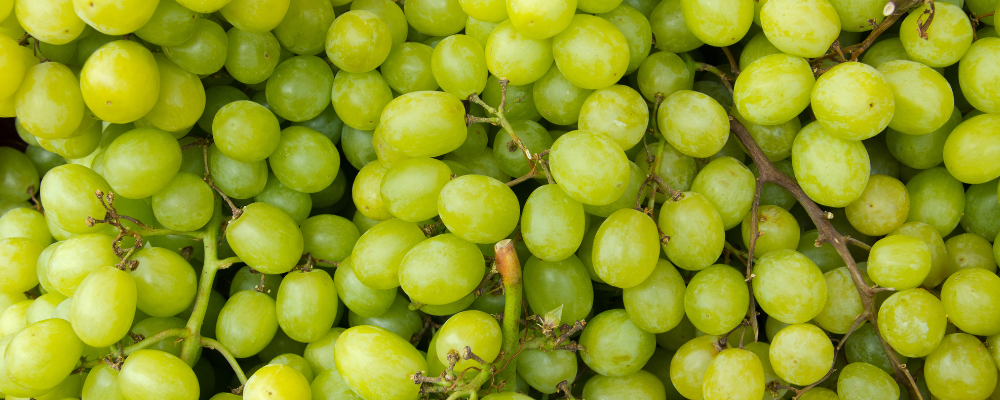
The grape is the visible promise of the vine: separate berries brought together on a single rachis. In Greek images, a satyr may eat the clusters before they become wine. On other vases, a basket of grapes joins Dionysus’s banquet. The fruit thus carries a magic distinct from that of the vine: offering, counting, sharing, drying, and choosing the moment when sweetness becomes fermentation.
The grape is the fruit of Vitis vinifera L. Each berry has a skin, a pulp rich in water and sugars, and, depending on the cultivar, seeds. The berries attach to pedicels gathered along a branched framework, the rachis.
The fruit follows a path distinct from the vine, pruning, and seasonal return. The grape speaks of a result that has reached maturity, still open to several destinies: being eaten, shared, dried, pressed, or fermented. Its magic begins with this irreversible choice.
The Berry Borne by the Cluster
The grape is a botanical berry. Its skin bears a waxy bloom that limits water loss and shelters microorganisms. The pulp accumulates sugars and acids during ripening. Its color depends on the cultivar’s pigments and their concentration in the skin.
Kew accepts Vitis vinifera and places its native range from central and southeastern Europe through Central Asia and northern Iran. Kew, Vitis vinifera.
A cluster does not always ripen perfectly uniformly. Each berry receives light, water, and sugars according to its position. The fruit therefore offers a more nuanced image than a simple “everything is ready”: a collective result can contain several degrees of completion.
The Fruit Before Wine
A Greek lekythos at the Metropolitan Museum shows a seated satyr eating grapes. The fruit is neither pressed nor poured: it lies directly between the cluster and the mouth, in Dionysus’s procession.
The entry clearly identifies the gesture and dates the vase to the 5th century BCE. Metropolitan Museum, satyr eating Grapes. The scene recalls that Dionysus belongs to the plant and the fruit before belonging solely to wine.
The fresh Grape carries immediate sweetness, the short season, and consumption without transformation. This stage suits works of reception and gratitude: recognizing what is already ripe before seeking to convert it into something else.
Before intoxication comes a cluster: a fruit can be received without being immediately transformed.
The basket at Dionysus's banquet
On an Attic pelike painted around 420–410 BCE, Dionysus reclines at a banquet while a basket of Grapes and Vine branches place the scene within his domain. The fruit is presented, available, and shared in the dining space.
The Metropolitan Museum describes the god, the clusters, and the composition of the vase. Metropolitan Museum, basket of Grapes at a banquet. The basket matters as much as the fruit: it gathers and transports what would otherwise be dispersed.
The Grape thus accompanies works of hospitality and distribution. An entire cluster does not indicate that everyone receives the same portion. The act of serving determines the circulation, the first beneficiary, and what remains for the absent person.
The mystery of concentrated sweetness
When the Grape dries, the water decreases and the sugars become concentrated. The fruit wrinkles, loses volume, and gains shelf life. It appears diminished while carrying a denser flavor.
This transformation produces a reserve magic very different from fermentation. Nothing is added: time and air remove part of the material. The result becomes more portable, longer-lasting, and easier to count.
Raisins suit projects that must survive a period of scarce resources. However, they also remind us that concentration increases risks: a small volume can represent a great deal of sugar, work, or power. The measure must follow the actual density.
Sharing the bunch without breaking it
Draw a bunch of fifteen berries. Divide them into three groups: five for what is received, five for what is shared, and five for what is kept. Give each berry a concrete name.
Draw the stem that connects the three groups and write the common source on it: work, land, person, inheritance, or contract. Without this line, the results appear disconnected from what produced them.
Circle the berry that should be distributed first and date the action. Keep the page with your budget or calendar. The ritual uses the architecture of the bunch without ingestion, food offerings, or alcohol use.
Historical correspondences
| Reference point | Correspondence |
|---|---|
| Source plant | Vitis vinifera L. |
| Botanical type | Berry clustered in a bunch |
| Major figure | Dionysus and the satyrs |
| Transformations | Fresh fruit, drying, pressing, and fermentation |
| Magical domains | Ripeness, sharing, reserve, and choice |
| Safe form | Bunch spread across paper |