




























































































Spelt enters Isaiah’s field as a border cereal. The farmer scatters some seeds, aligns other crops, and places spelt at the edge of the plot. This position gives the grain a more precise magic than abundance without boundaries: it marks the border that allows the field to remain orderly. Its other mystery belongs to archaeobotany, because spelt has no simple origin; its history is intertwined with that of bread wheat, hybridizations, and several centers of cultivation.
Kew accepts the name Triticum aestivum subsp. spelta (L.) Thell. and treats Triticum spelta L. as a synonym. It is a hulled wheat: at harvest, the husks remain attached to the grain and require a dehulling stage.
The selected sources bring together the biblical text, taxonomy, and archaeobotanical research. They do not present Spelt as a magical cereal of the Celts or Germanic peoples without specifying a place or period. Current practice uses the design of a cultivated border to organize resources and limits, without scattering grain or preparing a mixture.
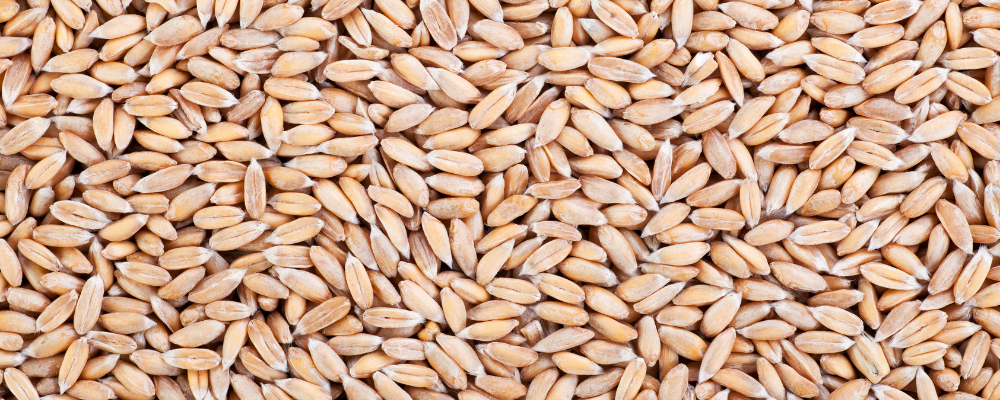
A hulled wheat in its husk
Triticum aestivum subsp. spelta is an annual cereal. Its ear bears spikelets that separate into fragments at maturity. The glumes adhere to the grain, unlike those of free-threshing wheats, which are easier to thresh.
Kew accepts this subspecies and describes it as a cultigen originating in western Transcaucasia. The taxonomic database includes Triticum spelta among its synonyms. Kew, Triticum aestivum subsp. spelta.
The hulled grain remains enclosed after threshing and must be dehulled before milling. This husk provides protection during storage, but it requires time and an additional tool.
The magical correspondence comes from this real cost. Useful protection does not merely close: it also provides for the authorized way to open, the person responsible, and the time of passage.
Spelt at the edge of the field
Isaiah 28 describes a farmer who prepares the soil and assigns a place to each seed. Cumin and nigella are scattered, while wheat, barley, and Spelt are given orderly places.
According to the translation, Spelt stands at the edge of the field. The passage continues by assigning each crop an appropriate threshing method. Isaiah 28:23–29, the order of the field.
The boundary is not wasted ground. It forms part of the agricultural plan and gives shape to what lies at the center. Spelt does not protect the field through an invisible force: its position makes the organization legible.
The border belongs to the culture. Spelt marks the boundary from within the plan, like a living line that preserves the order of the seeds.
The archaeobotanical mystery of its origin
The history of Spelt resists a linear narrative. Charred grains and spikelets must be distinguished from other hulled wheats, while genetics reveals complex relationships with hexaploid common wheat.
A recent archaeobotanical synthesis examines the inventions, innovations, and origins of Spelt. It considers several trajectories rather than a single domestication event completed nine thousand years earlier. Study on the origins of Spelt.
This mystery requires no added legend. It comes from the cereal itself: morphology, crossbreeding, human movements, and agricultural practices echo one another in the remnants of the past.
The magic of Spelt can therefore work with composite lineage. A current resource carries several inheritances. Recognizing them protects against narratives of purity, absolute antiquity, and isolated origin.
Husk, storage, and access
The hulled grain retains its glumes after harvest. The grain must be dehulled before milling or cooking. Each husk delays use but can also protect the reserve.
This succession distinguishes security from availability. A resource that is too open is lost; a resource that is too closed becomes inaccessible when needed. Isaiah’s border and the grain’s glume pose the same question on two scales.
In material magical work, spelt accompanies budgets, reserves, and access rules. It helps determine what remains at the center, what forms the boundary, and which procedure allows entry.
Abundance then becomes organized capacity. It accounts for what exists, protects a portion, plans its opening, and refuses to let the symbol replace a real supply.
Drawing a nourishing boundary
Draw a rectangular field. In the center, write the resources intended for everyday use. On the boundary, place those that ensure continuity: reserve, contract, copy, backup person, or delay.
For each boundary element, draw a closed glume and write the opening condition. A date, authorization, or quantified threshold must replace any vague wording.
Add a path that crosses the boundary at a single point. Name the person responsible for this access and the document that records it.
Review the field from the outside toward the center. If the boundary blocks a necessary resource, create an opening. If it protects nothing, reduce it. Keep the plan with the relevant budget or file.
Historical correspondences
| Reference point | Correspondence |
|---|---|
| Botanical name | Triticum aestivum subsp. spelta |
| Family | Poaceae |
| Grain characteristics | Hulled wheat requiring dehulling |
| Biblical source | Isaiah 28, spelt placed at the boundary |
| Magical domains | Limit, reserve, access, succession, and continuity |
| Safe form | Written plan of a field and its boundary |