




























































































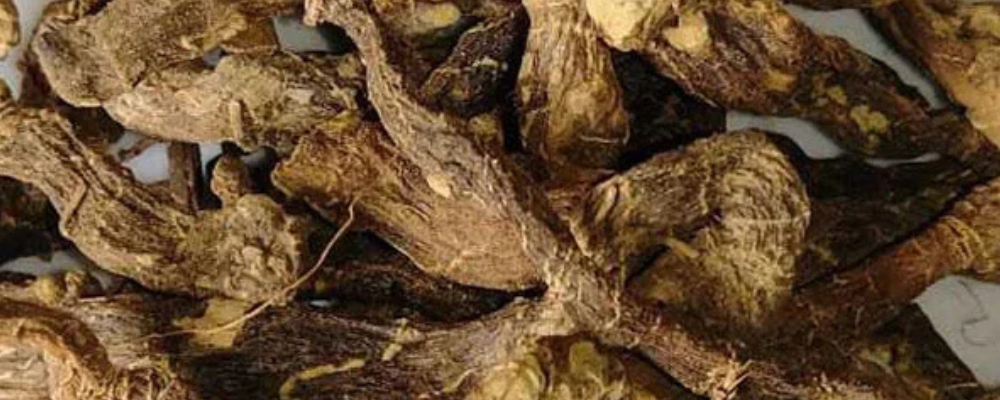
A Mandrake root does not enter a collection like an ordinary herb. Its silhouette may evoke a body, but it may also have been carved, assembled, or replaced by a Bryony root. Before any magical operation comes the investigation: what plant, what provenance, what preparation, and what history are actually found in the sachet?
This sheet complements the one devoted to the whole plant. It follows the root as an object: medicinal material from Antiquity, a figure in herbals, a talisman called Alraune, an imitation commodity, and a cabinet specimen. The mystery lies as much in its journey as in its form.
Mandrake contains toxic tropane alkaloids. A dried root does not become edible and must not be burned. The Aeternum product remains closed, labeled, and separate from food, beverages, incense, and skin.
A Root, a Name, and an Origin
The expected botanical name is Mandragora officinarum L., a Mediterranean nightshade with a rosette of leaves, purplish flowers, and yellow fruits. Its taproot may divide and suggest limbs.
Kew recognizes the species and specifies its distribution as well as its synonyms. Kew, Mandragora officinarum.
A root sold under the name Mandrake must retain its label, lot number, supplier, and date. Its human form proves nothing: a piece may be naturally forked, reshaped, or from another species.
The Plant Body in Manuscripts
Medieval herbals depict the Mandrake as a man or woman whose leaves emerge from the head. The drawing makes the doctrine of signatures visible: the root resembles a body, so it is believed to have power over the body, fertility, and desire.
The British Library preserves several images of harvesting with the help of a dog, featuring a horn, rope, and a figure protecting himself from the cry. British Library, harvesting a Mandrake in manuscripts.
The cry turns uprooting into a moral drama. The plant does not allow itself to be possessed without a living being paying the price. The reader may see it as a warning against harvesting, trade, and limitless curiosity.
Bryony, sculpture, and false Mandrake
As early as the Renaissance, herbalists denounced the making of false Mandrakes from Bryony. The root is carved into a human figure, pierced, and then replanted so that young shoots imitate hair.
Folkard brings together these accounts of roots sold, dressed, and kept as talismans. Richard Folkard, “Mandrake”. The history shows that a magical object can acquire a reputation even when its botanical identity is false.
Provenance is part of the rite. Naming the material and keeping a record of its journey protects the object from the falsehood that accompanied its trade for centuries.
The Alraune kept in its box
In Germanic countries, the Alraune is a carved root kept as a familiar spirit or household talisman. It is dressed, washed on set dates, given its own box, and entrusted with money, questions, or protection for the home.
In France, accounts of the hand of glory or mandrake describe objects that are fed, consulted, and passed down. The versions intersect with roots said to come from the blood or semen of a hanged man, an image linking the plant to the gallows and forbidden riches.
Arabic sources on sīmiyāʾ offer another history of the Mandrake, in the form of talismans and natural magic practices. Study of the Mandrake in sīmiyāʾ. These traditions should not be merged into a single recipe.
Consecrate the container, not the root
Without opening the sachet, place it in a rigid box reserved for this object. Attach a sheet inside the lid stating the botanical name, provenance, date, toxicity, and sources consulted.
Make a miniature garment out of paper or fabric and place it beside the sachet, never around the root. Add a written question, then close the box. The following month, open it only to reread the question and write your answer.
The consecration applies to the box, the inventory, and the commitment to safeguard it. It requires no oil, water, smoke, or contact with the product. The root remains visible through its packaging and physically separated.
Historical correspondences
| Reference | Correspondence |
|---|---|
| Expected botanical name | Mandragora officinarum L. |
| Object | Dried, natural, carved, or substituted root |
| Figures | Plant body, extracting dog, Alraune, and hanged man |
| Contexts | Medieval herbals, Germanic household magic, and sīmiyāʾ |
| Magical domains | Oracle, household protection, fertility, wealth, and provenance |
| Safe form | Sealed sachet, labeled box, and paper wrapping |