




























































































Mabon celebrates the autumn equinox, when the Sun crosses the celestial equator and the day approaches the length of the night. In the Northern Hemisphere, light now gives way: nights grow longer, the last harvests join the stores, and the earth prepares for rest. The sabbat holds together visible abundance and the dark season that is approaching.
The festival brings together three threads that should be recognized. Its timing is astronomical, its name belongs to the modern history of the Wheel of the Year, and its imagery draws from a remarkable Welsh tale. Around them unfold European end-of-harvest customs: the last sheaf, communal meals, autumn fruits, settled accounts, and protection of the home before winter.
In the Wheel of the Year, Mabon follows Lammas or Lughnasadh and precedes Samhain. The first fruits of August become a harvest that is weighed, shared, and preserved. Items from the Mabon collection accompany this threshold: gratitude, balance, consecration of the fruits of labor, and preparation for the dark half of the year.
The equinox and the entry into the dark half
The September equinox occurs around September 22 or 23. At that precise moment, the center of the Sun crosses the celestial equator from north to south. The two hemispheres then receive comparable illumination. In the Northern Hemisphere, this event marks the beginning of astronomical autumn; in the Southern Hemisphere, it marks the beginning of spring.
The word equinox comes from the Latin aequinoctium, formed from the ideas of equality and night. Day and night approach the same length, without forming two perfectly identical halves. Atmospheric refraction and the Sun’s apparent diameter slightly extend the day. The exact equality, called equilux, falls a few days after the autumn equinox depending on latitude. The Met Office clearly distinguishes between equinox and equilux.
The Sun rises near the east and sets near the west. After this passage, its daily arc descends and nights prevail until the spring equinox. The date varies from year to year and may differ depending on the time zone. The Royal Observatory Greenwich presents the astronomical movement and its dates.
This balance is therefore not a motionless state. It marks the moment when the order reverses: the light that has dominated since Ostara falls beneath the length of night. Mabon teaches a living balance, comparable to the beam of a scale passing through its center before continuing its motion.
The equinox is a doorway, not a pause. Day and night meet at the very moment their relationship changes. The rite does not seek to freeze the forces at work: it acknowledges what is shifting and prepares the person to walk with the new season.
How the Equinox Came to Be Called Mabon
Early Wiccan authors referred to this festival with expressions such as “autumn equinox” or “autumn sabbat.” Its place already belonged to the cycle of the eight festivals, but it did not yet bear the Welsh name now widely used.
The name Mabon entered the American Pagan calendar around 1970 through the efforts of Aidan Kelly. His naming work sought to give the equinoxes and solstices names capable of corresponding to the four major seasonal sabbats. The historian Ronald Hutton traces this development in “Modern Pagan Festivals: A Study in the Nature of Tradition”.
Kelly chose Mabon ap Modron, a character from medieval Welsh literature. The name then spread through Neopagan publications and calendars, until it became the common name for the autumn equinox in much of contemporary Wicca. The British tradition has more often retained the expression Autumn Equinox, while other traditions use Alban Elfed.
This story gives the festival its proper significance. Mabon is a modern ritual name, chosen to connect a solar moment with a Welsh figure of disappearance, captivity, and return. The ancient story and the contemporary festival echo one another without being conflated.
Mabon ap Modron, the Son Who Was Abducted and Found
In Welsh, Mabon ap Modron means Mabon son of Modron. His name is connected to the Brittonic Maponos, the “Great Son” or “Divine Son,” while Modron corresponds to Matrona, the “Great Mother.” Inscriptions from Gaul and Britain attest to Maponos, whom the Romano-Celtic world associated with Apollo. The literary Mabon preserves the memory of this ancient pairing of Mother and Son.
His great tale is found in Culhwch and Olwen, one of the stories collected under the title Mabinogion. Mabon is taken from his mother when he is only three nights old. Years later, Arthur’s companions must find him, because he alone can control the dog needed to hunt the formidable boar Twrch Trwyth.
The quest travels back through time along a chain of increasingly ancient animals. The envoys question the blackbird, the stag, the owl, and then the eagle. Each has watched the landscape change over an immense lifetime, but none knows Mabon’s prison. At last, the eagle leads the seekers to the salmon of Llyn Llyw, old enough to have heard the captive’s complaints behind the walls of Gloucester.
Carried by the salmon, Cei and Gwrhyr reach the prison. Arthur’s warriors attack the fortress, Cei breaks through the wall, and carries Mabon out of the dungeon. The son torn from his mother returns to the world, then takes part in the hunt on his horse. The complete text of Culhwch and Olwen in Charlotte Guest’s translation preserves every stage of this release; the translation by Sioned Davies published by Oxford University Press now restores the oral force of these Welsh tales.
Ancient Mabon thus appears as a divine son, a prestigious prisoner, and a freed hunter. The modern festival finds in his story a language suited to the waning of the light: something disappears beneath the earth or behind the stone, passes through a period of confinement, and then returns when the time and allies have come together.
Mabon’s release requires all the memory in the world. No animal possesses the answer alone. Each one leads the quest toward an older witness, until they reach the salmon who knows the prison. The tale makes listening, patience, and alliance the true instruments of return.
End of the Harvests, the Last Sheaf, and Michaelmas
Mabon’s fleshy roots appear in the customs surrounding the completion of the harvests. Their date followed the weather, region, and grain rather than a fixed astronomical day. When the last cart left the field, the period of concentrated labor gave way to the harvest’s end feast, called Harvest Home in the British Isles.
The final grain received special attention. A few stalks might be left standing, then cut during a sickle game. Elsewhere, the last sheaf was called the “neck,” the “mare,” the “maiden,” or the “harvest queen.” The straw was tied, braided, or shaped, then hung in the house or barn until the following year. The collections of the Pitt Rivers Museum preserve several of these harvest trophies.
In Cornwall and Devon, the ceremony known as Crying the Neck raised the final ears of grain above the circle of reapers. The cries carried across the heights, then the decorated sheaf returned to the farm. The gesture proclaimed that the grain had been brought in and that the shared work had held firm to the end. The cutting, the cry, and the meal formed the three stages of a completed harvest’s end.
The grape harvest follows the same logic through another substance. The ripe cluster becomes juice, then time and fermentation transform it further. Grapes, apples, walnuts, pears, and squash belong to Mabon’s seasonal language because they ripen around the European autumn. The sabbat thus receives the land’s true abundance instead of relying on a uniform backdrop.
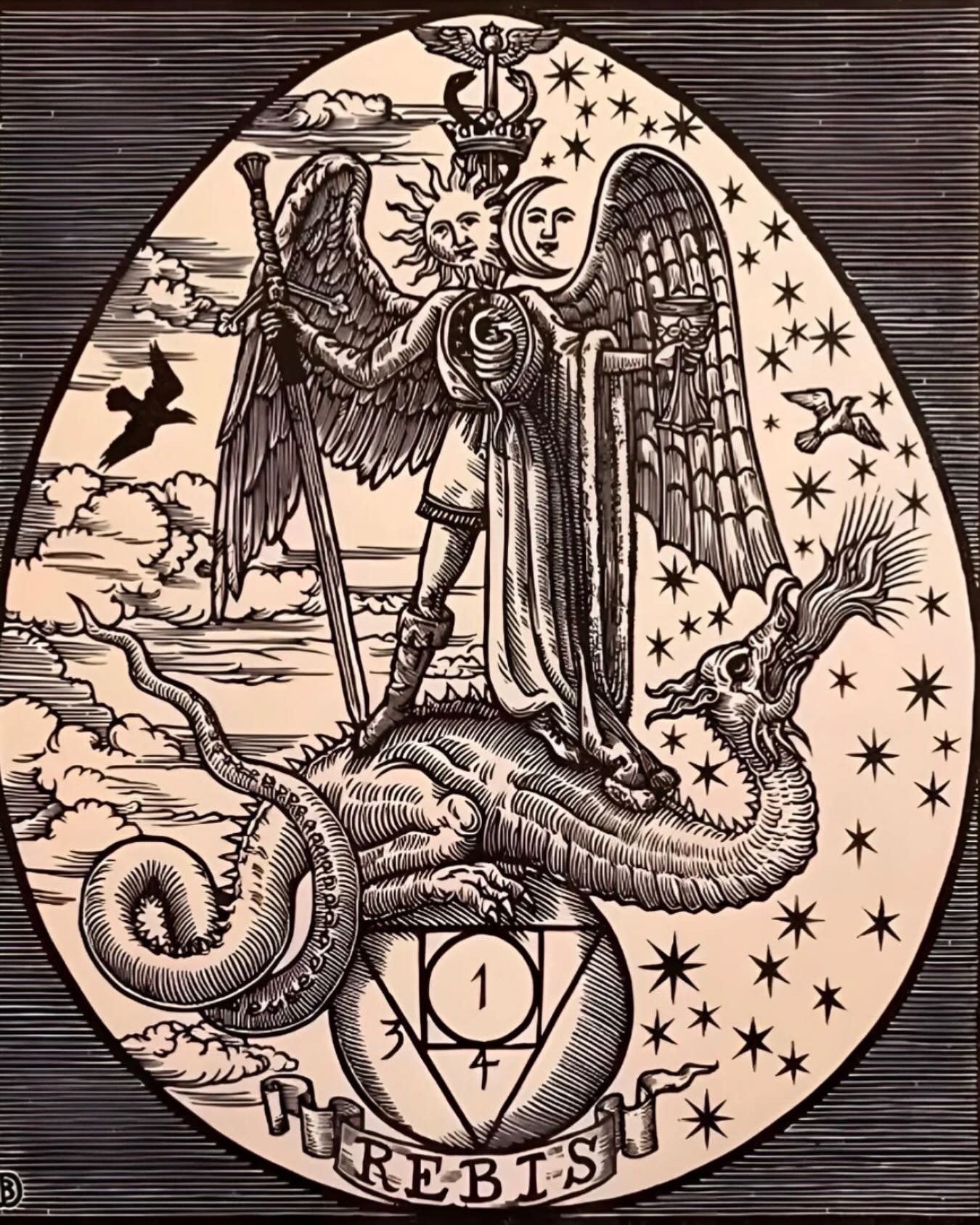
Near the equinox, Michaelmas on September 29 long marked a major turning point in the British rural calendar. Michaelmas brought the agricultural year to a close, opened a new accounting period, and was among the days when rents and commitments were settled. The archangel striking down the dragon, equipped with a sword and scales, brought images of protection, judgment, and fair measure to the season.
Blackberries themselves were part of the Michaelmas calendar. A Scottish and British tradition advised against picking them after September 29, the date on which the devil, cast out of heaven, was said to have soiled the brambles during his fall. The National Trust for Scotland presents this Michaelmas custom. It reminds us that the harvest has a limit: a day comes when we must stop taking and leave the rest to the wild world.
The spiritual and magical meaning of Mabon
Mabon first invites us to weigh the harvest. It is no longer enough to hope or display the first fruits: we must measure what has actually been produced, received, lost, or preserved. The sabbat supports assessments, the closing of a cycle, the settlement of a debt, and the recognition of commitments that have borne fruit.
Gratitude takes a material form here. A harvest involves the land, the weather, the work, the tools, the knowledge, and human connections. Giving thanks means acknowledging this chain, then returning a portion of what has been received. A gift, a shared meal, and support given to someone become magical acts when they truly extend the circulation of abundance.
The balance of the equinox favors workings of justice, reconciliation, and adjustment. A ritual balance can receive two objects representing what one gives and receives, what one keeps and releases, or the time devoted to work and the time returned to rest. The aim is not to make the two pans identical, but to restore a fair relationship between them.
The story of Mabon ap Modron opens a working of deliverance. It accompanies what must emerge from confinement, regain its place, or return to the light after a long wait. The salmon represents the memory that knows the way; the prison stone, the boundary to break; the horse and the hunt, the action that becomes possible after liberation.
The final sheaf concerns the preservation of strength. Grain brought into the granary, fruit preserved in jars, and straw hung up teach us not to dissipate all abundance at the moment of the celebration. Mabon is well suited to protecting resources, income, supplies, the household, and health before the colder months.
The proximity of Saint Michael’s Day strengthens workings of defense and discernment. The sword cuts through what threatens, the scales judge the right proportion, and the defeated dragon represents contained disorder. This Christian correspondence does not replace the sabbat: it adds an ancient ritual power to the threshold of September, particularly suited to protecting the home and resolving a matter.
How to Celebrate Mabon Today
Observing the Solar Passage
Observe the sunrise or sunset on the day of the equinox. Face east at dawn or west at dusk, then mark the celestial body's position in the landscape. Light one pale candle and one dark candle on either side of a bowl of grains. Name the passage that has been completed and the one that is beginning.
Weighing the Harvest
Place on two trays, or two pieces of cloth, the signs of what the year has given and what it has asked. A seed can represent a beginning, a coin an income, a thread a relationship, and a leaf a completed work. Remove what no longer needs to be carried and consecrate what deserves to be kept.
Share an end-of-harvest meal
Prepare a meal with foods that are genuinely available in your region: bread, apples, grapes, nuts, root vegetables, squash, honey, cider, or fruit juice. Before eating, everyone may name a kindness received since spring. Set aside a portion to share with a person, organization, or neighbor rather than leaving an offering outdoors.
Create a harvest trophy
Braid a few perfectly dry stalks of wheat, barley, or oats, or tie together a bouquet of fallen leaves. Hang this form near the place where supplies are kept. It represents the protected fruit until the next cycle. A modern creation gains strength when it remains simple and respects the available materials.
Follow the animals of Mabon
Lay out five symbols for the blackbird, deer, owl, eagle, and salmon. For each one, ask a question older than the previous one: what do you see today, what have you kept for a year, what have you kept since childhood, what comes from your lineage, what remains beneath all these layers? Finish before the salmon and listen for the answer that indicates the prison to open.
Protect the home before winter
Clean a threshold, check a supply, and repair a useful object. Place a white candle, an apple, and a representation of scales, a sword, or a key near the entrance. Ask for protection, balance, and discernment for the dark season. The apple should then be eaten and the candle extinguished without leaving any waste outdoors.
Conclude with an act of restitution
Return a borrowed object, settle a small debt, thank someone, or pass on a portion of your harvest. This gesture gives the ritual a tangible conclusion. Mabon then becomes a festival of connection: what has ripened does not remain enclosed, but returns in an exchange capable of nourishing what follows.
Correspondences of the Mabon Sabbat
These correspondences bring together the astronomical equinox, the Welsh tale of Mabon ap Modron, European end-of-harvest customs, and the ritual practices of the contemporary Wheel of the Year.
| Correspondence | Association of Mabon |
|---|---|
| Date | September equinox, around September 22 or 23 in the Northern Hemisphere |
| Place in the Wheel | Between Lammas or Lughnasadh and Samhain; solar festival of the autumn equinox in contemporary Wicca |
| Names | Mabon; autumn equinox; Autumn Equinox; Alban Elfed in some contemporary Druidic traditions |
| Solar moment | The Sun’s passage from north to south of the celestial equator; the Sun’s entry into Libra according to the tropical zodiac |
| Figures | Mabon ap Modron and his mother Modron in Welsh tradition; Saint Michael in the Christian calendar on September 29 |
| Animals in the story | Blackbird, deer, owl, eagle, and salmon as guardians of a growing memory; horse and boar in the hunt for Twrch Trwyth |
| Elements | Earth for the harvest, reserves, and return to rest; Water for salmon, pressed fruit, and transformation |
| Direction | West in contemporary ritual correspondences associated with sunset, Water, and autumn |
| Colors | Harvest gold, ochre, rust, dark red, brown, forest green, and grape purple |
| Plants | Wheat, barley, oats, grapevine, apple tree, hazel, oak, bramble, ivy, and autumn leaves |
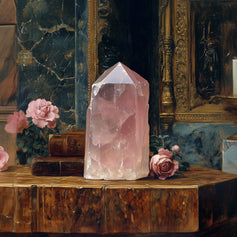
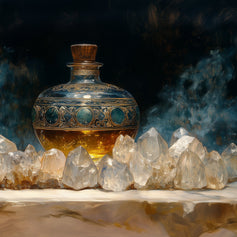
| Stones | Carnelian, garnet, citrine, tiger’s eye, red jasper, and smoky quartz in contemporary esoteric correspondences |
| Symbols | Scales, setting sun, full basket, last sheaf, sickle, apple, bunch of grapes, cornucopia, key, sword, and granary |
| Magical domains | Gratitude, reflection, balance, justice, closure, sharing, release, preservation, protection of resources, and preparation |
| Offerings | Bread, apples, grapes, nuts, honey, cider, fruit juice, wine, grains, the last share of the harvest, or a food donation |
Precautions
A safe and measured autumn celebration
A safe and measured autumn celebration
Sources and reference texts
Royal Observatory Greenwich, “What and When Is the Autumnal Equinox?” ; Met Office, “Understanding Equinoxes and Solstices” ; Ronald Hutton, “Modern Pagan Festivals: A Study in the Nature of Tradition,” 2008 ; Sioned Davies, The Mabinogion, Oxford University Press, 2007 ; Culhwch and Olwen, translated by Charlotte Guest ; Ronald Hutton, “Harvest Home,” in The Stations of the Sun ; Pitt Rivers Museum, “Harvest Trophies” ; National Trust for Scotland, “St Michael’s Day and Michaelmas Traditions”.