

















































































































Canasite occurs as layered masses or flattened crystals, ranging from yellowish green to grayish green. Its name brings together the major elements that compose it: calcium, sodium, and silicon. This scholarly construction offers a fertile image: a complex whole that we learn to break down in order to organize it more effectively.
Described in the 20th century, Canasite has no documented ancient magical correspondence. Its current symbolism can nevertheless remain faithful to its material. Mercury presides over language and combinations; Saturn over layers and structure; Earth receives the components, while Air enables us to name them.
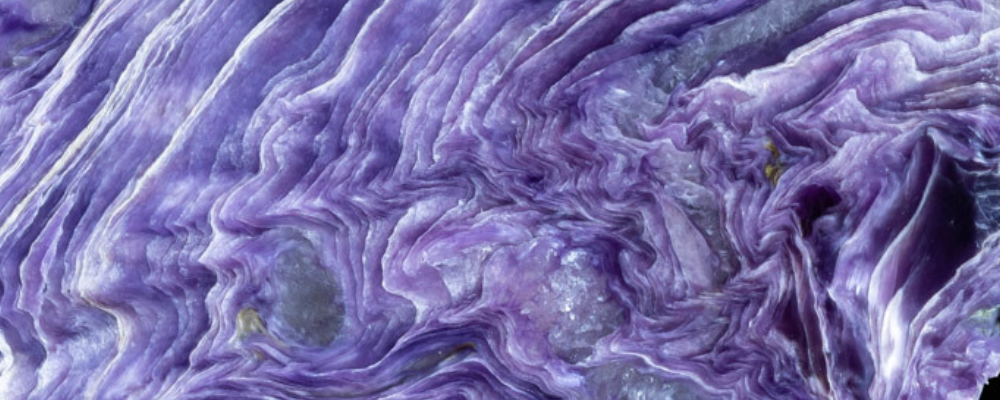
To place this stone among related minerals, compare it with Feldspar, Charoite, and Datolite.
A Composite Name
The name Canasite was formed from calcium, the Latin natrium for sodium, and silicon. The Mindat entry confirms this etymology, which is directly linked to its composition.
The word functions as a small mnemonic formula. It reminds us that a difficult whole becomes easier to understand once its parts, relationships, and order are recognized.
A Sheet Silicate
Canasite is a complex silicate containing sodium, potassium, calcium, fluorine, and hydroxyl groups. The Handbook of Mineralogy describes it as monoclinic, with very good cleavage and a hardness of around 5 to 6.
Its aggregates may appear as blades, fibers, or compact masses. The stone thus unites several elements in a stable architecture while retaining planes along which it can split.
From Alkaline Massifs to the Collection
Canasite was described from material from the Khibiny Massif, on Russia’s Kola Peninsula. The page devoted to the Khibiny Massif reveals the exceptional mineral variety of this alkaline complex.
Other occurrences are associated with alkaline rocks, particularly in the Murun Massif region. Its presence in complex mineral assemblages lends itself to a language of cooperation: no single part explains the whole.
Naming the parts does not break the unity. On the contrary, it reveals where the burden lies, who carries what, and which relationship must be adjusted for the whole to remain coherent.
Mercury, Saturn, Earth, and Air
Mercury governs names, categories, and movement between elements. Saturn holds the framework, boundaries, and layers. Earth corresponds to the gathered materials; Air, to the analysis that makes their arrangement intelligible.
Wednesday is suitable for sorting information, and Saturday for distributing responsibilities. Three cards of different colors, brought together beneath a single stone, are sufficient for the ritual work.
Composition, Roles, and Articulation
Canasite accompanies projects burdened by too many parameters: a team, a move, an administrative file, a commercial offer, or a schedule. It invites you to separate the components before seeking an overall answer.
It also supports the proper assignment of roles. When everyone knows what they contribute, what they receive, and what does not belong to them, complexity ceases to be confusion.
The Components Ritual
Write the name of the project in the center of a sheet. Around it, place three cards: “matter,” “person,” “deadline.” On each one, write what truly belongs to that category, then place the Canasite at the point where the three cards touch.
Say: “I distinguish without dispersing. Each part receives its name, place, and boundary.” Then choose one adjustment to make during the day.
Correspondences and references
| Reference | Correspondence |
|---|---|
| Nature | Mineral species, complex silicate |
| Celestial bodies | Mercury and Saturn |
| Elements | Earth and Air |
| Days | Wednesday and Saturday |
| Ritual colors | Gray-green, pale yellow, black |
| Domains | Composition, roles, analysis, articulation |
| Associated objects | Three cards, pencil, central diagram |
| Gesture | Give each component a name and a place |










